
Latest News
UNHCR Warns: 11.6 million people face loss of aid amid deepening funding crisis
UNHCR says it will reach only 45,000 women in 2025, less than half the number it served last year.

The UN Refugee Agency (UNHCR) has issued a stark warning that up to 11.6 million displaced and vulnerable people could be left without life-saving assistance this year due to a dramatic shortfall in humanitarian funding.
In a new report, UNHCR revealed that despite receiving $2.5 billion in contributions by mid-2025—just 23% of its global budget—it now faces an $8.1 billion shortfall against projected needs of $10.6 billion.
The agency expects to raise no more than $3.5 billion by the end of the year, roughly the same level of funding it received a decade ago, despite the number of forcibly displaced people reaching a record 122 million.
“This situation is unsustainable,” the report states. “Less funding equals less assistance, and that translates into real human suffering.”
The financial strain is already triggering severe cutbacks across all areas of UNHCR’s operations:
- 50% reduction in non-food assistance and shelter
- 35% cut in healthcare programs
- 34% reduction in education initiatives
- 25% decrease in legal support services
- 23% cut to gender-based violence response programs
- 7% reduction in voluntary repatriation efforts
“No area of intervention is fully funded,” the report says, noting that the further from Europe a region is, the deeper the gap becomes. While Europe receives 34% of the required funding, the Middle East and North Africa region receives just 20%.
UNHCR warns that these cuts are “not just statistics”—they represent millions of people who will be left without access to food, shelter, healthcare, education, or legal protection.
The agency highlighted Lebanon and Afghanistan as two of the most severely affected countries.
Lebanon, already buckling under the weight of economic collapse and conflict fallout, hosts over 1.4 million Syrian refugees and approximately 400,000 Palestinians. Due to funding shortages, UNHCR has already reduced its assistance programs in the country by 47%.
In recent months, more than 100,000 new Syrian arrivals have entered Lebanon, but resources are now so limited that the agency cannot provide basic shelter or support. Community programs designed to foster social cohesion have also been halted, threatening fragile stability in host communities.
In Afghanistan, where more than 1.5 million Afghans have been forcibly repatriated from Iran and Pakistan, the situation is becoming increasingly desperate. Tehran has signaled plans to expel up to 4 million undocumented Afghans, many of whom are women and children.
Due to funding cuts, protection activities have been reduced by over 50%, severely weakening programs for women’s empowerment, mental health, and prevention of gender-based violence. UNHCR says it will reach only 45,000 women in 2025, less than half the number it served last year.
Financial support for returnees has also been slashed. Refugee households now receive just $156, with an additional $40 per person for transportation—barely enough for basic food, let alone housing.
“These cuts increase exposure to harmful practices such as early marriage, child labor, and exploitation,” the agency warned.
The UNHCR cautioned that its shrinking operational capacity could accelerate new waves of displacement in already unstable regions such as South Sudan, Uganda, and Chad. The agency says the current map of budget cuts could quickly become a map of new humanitarian emergencies.
Despite the worsening outlook, UNHCR insists it has the expertise and infrastructure in place to deliver support where it is most needed. What is missing, it says, is global political will.
“UNHCR’s commitment remains steadfast,” the report concludes. “But without an urgent wave of international solidarity and new funding, decades of progress in protecting the world’s most vulnerable could be lost.”




Latest News
Kyrgyz President calls for continued regional support for Afghanistan
Japarov also underscored the importance of continued humanitarian assistance, urging regional countries to uphold their commitments to supporting Afghanistan.
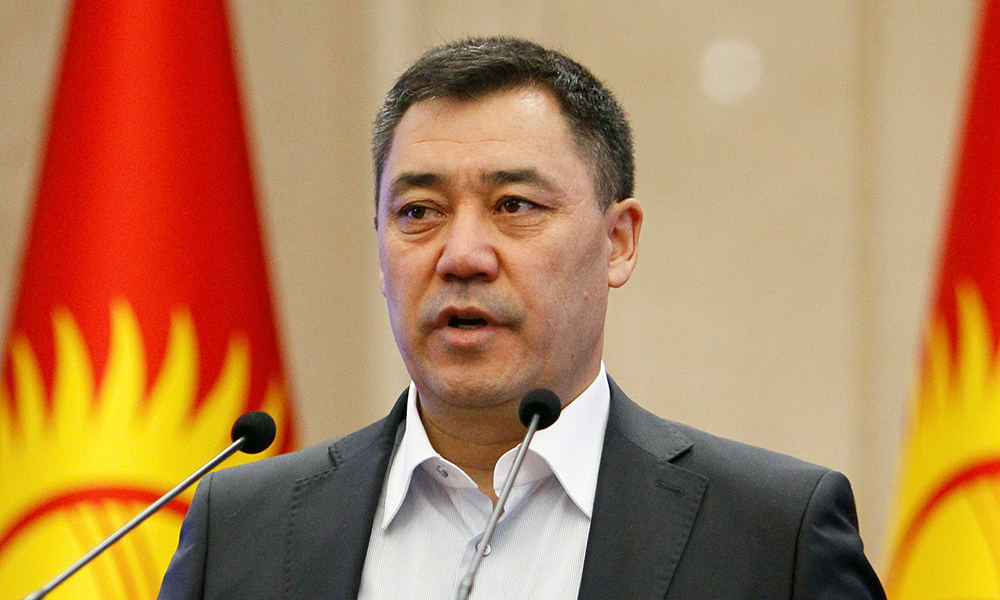
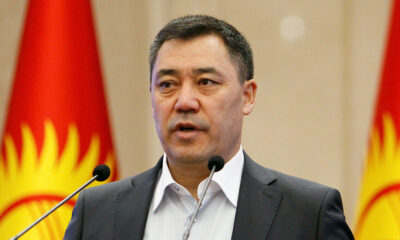
Kyrgyz President Sadyr Japarov has called on regional countries to maintain their support for Afghanistan, stressing that a stable and peaceful Afghanistan would benefit the entire region.
Speaking at a consultative meeting of the leaders of Central Asian countries and Azerbaijan, Japarov highlighted the importance of continued assistance to the Afghan people and stronger regional cooperation to address shared security challenges.
He emphasized the need to enhance cooperation among regional countries to combat terrorism, drug trafficking and organized crime.
Japarov also underscored the importance of continued humanitarian assistance, urging regional countries to uphold their commitments to supporting Afghanistan.
Latest News
Afghanistan, Iran seek to expand trade and transit through western border crossings
The Herat governor called for greater attention to expanding trade and transit through Herat, Farah and Nimroz provinces.
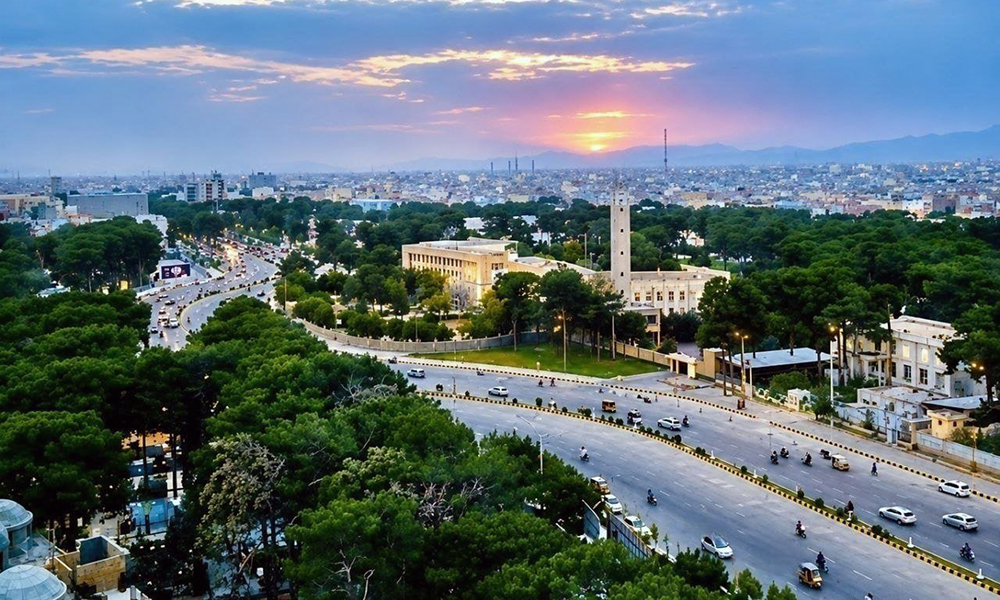
Herat Governor Maulana Islam Jar has met with an Iranian delegation led by Mohammad Mohsen Zanganeh, a member of Iran’s Islamic Consultative Assembly, to discuss expanding bilateral trade, strengthening economic ties and facilitating cross-border transit.
According to a statement from the Herat Governor’s Press Office, the meeting was also attended by Farah Governor Mohammad Hafiz Mujahid and Nimroz Governor Abdul Manan Mahmoud.
Officials from both countries discussed ways to increase commercial exchanges and improve the use of western border crossings to facilitate the movement of goods between Afghanistan and Iran.
Welcoming the Iranian delegation, Islam Jar said Afghanistan had made progress in the economic, industrial and commercial sectors, while major infrastructure projects were also underway.
He also highlighted the Islamic Emirate’s efforts to combat drug cultivation and trafficking, saying progress had been made in this area.
The Herat governor called for greater attention to expanding trade and transit through Herat, Farah and Nimroz provinces, stressing that increased commercial activity could benefit both countries.
According to the statement, Islam Jar said the Islam Qala, Abu Nasr Farahi and Nimroz border crossings were ready to operate around the clock to facilitate trade and transit.
Meanwhile, Zanganeh thanked the Afghan people for their hospitality and said Afghanistan had made considerable progress over the past five years.
He expressed support for expanding trade and transit cooperation and increasing the movement of goods through the three western border crossings, pledging to work towards advancing these objectives.
The meeting reflects ongoing efforts by Afghanistan and Iran to strengthen economic cooperation, improve cross-border transportation and expand regional trade connectivity.
Latest News
US senator cites Afghanistan visits in Pentagon ‘cover-up’ allegations over Iran war
“The reason was made up,” Murphy said, arguing that the decision was not about safety but a “cover-up.”
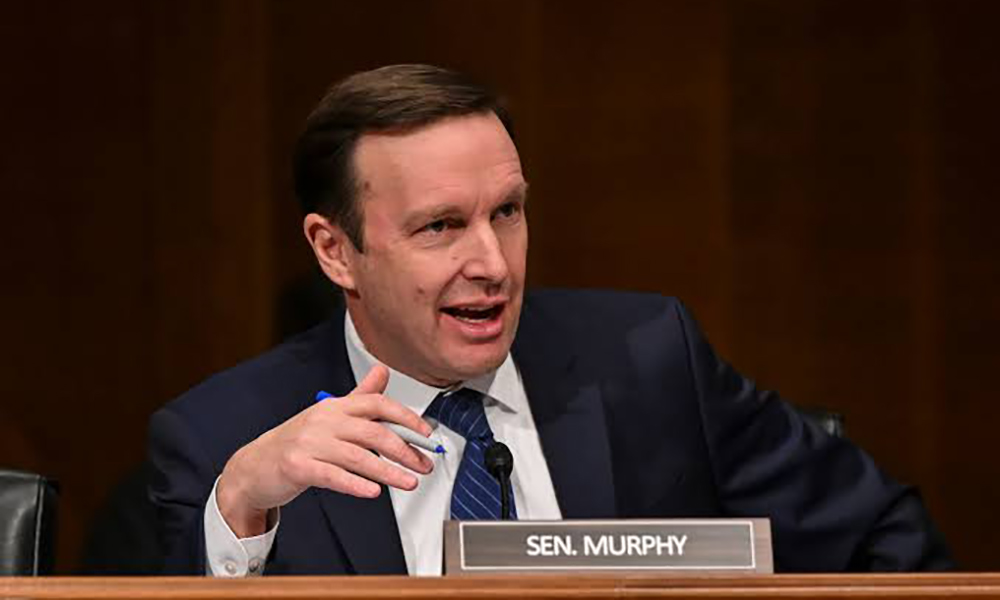
US Democratic Senator Chris Murphy has accused the Pentagon of attempting to conceal the costs and damage associated with the war on Iran after he was denied access to US military facilities in the region.
Speaking to CNN, Murphy rejected officials’ explanation that the visit was blocked for security reasons, pointing to his previous visits to US military positions in Iraq and Afghanistan during active fighting.
“The reason was made up,” Murphy said, arguing that the decision was not about safety but a “cover-up.”
Murphy also said that US Defense Department officials in the region refused to brief him at the US embassy. However, he said the State Department allowed him to inspect damage to the diplomatic mission, which he described as extensive.
“The attack on the US embassy happened at night. Had it happened during the day, there would have been lots of Americans killed,” Murphy said.
The senator’s remarks have raised questions about transparency surrounding the financial costs and reported damage linked to the conflict.


US imposes sanctions on ICC amid dispute over international prosecutions

Former ICC judge Navi Pillay wins 2026 Nobel Peace Prize

Bangladesh reach 317/8 on Day One against Afghanistan in Test match

Kyrgyz President calls for continued regional support for Afghanistan

Afghanistan, Iran seek to expand trade and transit through western border crossings

EU and FAO launch €5m programme to strengthen Afghanistan’s agrifood sector

Omar Zawak, Toofan Herat secure victories in Afghanistan Champions League

Houthi advance in Yemen puts U.S. in a new bind

Cricket Bonanza: Afghanistan set for packed international schedule

Afghanistan Champions League Season 6 kicks off today: Abu Muslim Farah face Sarsabz Yashlar

Tahawol: CSTO meeting on Afghanistan reviewed

Saar: Guterres’s talks with Pakistani officials on Afghanistan discussed

Tahawol: Consequences of US war in Afghanistan reviewed

Saar: Expulsion of Afghan refugees from Pakistan discussed

Tahawol: Discussion on outcome of Moscow Format meeting
-
 Sport5 days ago
Cricket Bonanza: Afghanistan set for packed international schedule
-

 Sport5 days ago
Afghanistan U19 to face Bangladesh, Oman in Youth ODIs
-
 Regional5 days ago
Yemeni government launches offensive to seize all areas from Iran-backed Houthis
-

 Latest News4 days ago
Ariana Afghan Airlines ends 15-year control of ticketing and operational systems by Pakistani firm
-
 World4 days ago
▶️Saudi Arabia, Turkey, Pakistan activate Mecca defense pact
-

 Sport5 days ago
ACL: Abu Muslim Farah maintain momentum with 2-0 win over Arman FC
-

 World5 days ago
Trump picks John Coale as special presidential envoy for hostage affairs
-
 Regional4 days ago
Yemeni government forces seize strategic strait from Houthis