
Latest News
US defense chief Hegseth downplays NATO allies’ role in Afghanistan war

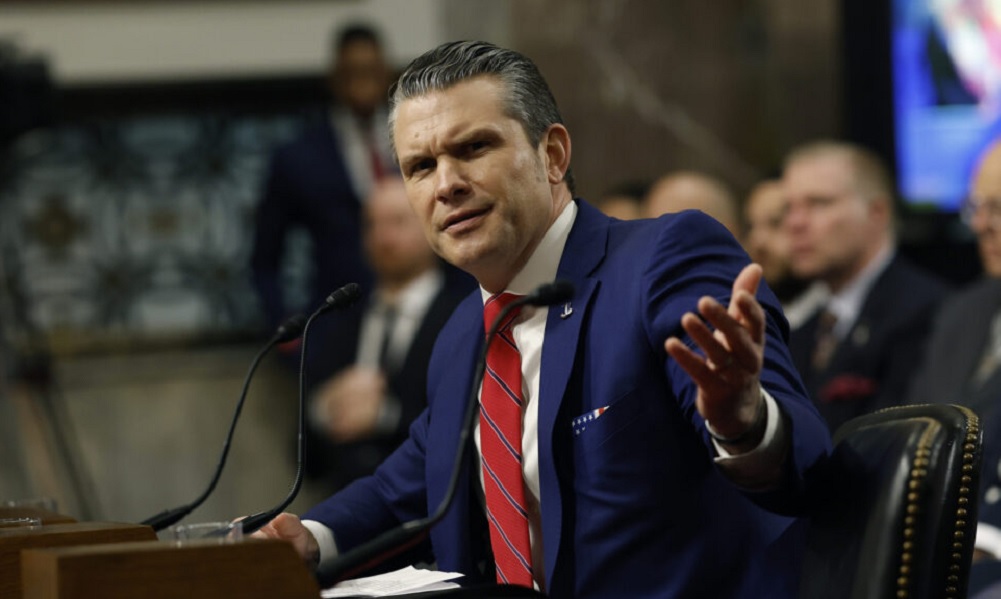
US Defense Secretary Pete Hegseth on Wednesday appeared to minimize the contributions of America’s NATO allies during the war in Afghanistan. His comments echoed a recurring message from the White House and President Donald Trump: that NATO member nations must bolster their defense spending to meet alliance commitments.
Speaking before the US Senate Armed Services Committee hearing, Hegseth recalled a remark often made by U.S. troops during his own service in Afghanistan. Referring to the ISAF (International Security Assistance Force) patch worn by coalition soldiers, he said it was jokingly interpreted by many U.S. soldiers as “I saw Americans fighting.”
“Ultimately it was a lotta flags. Lotta flags. [But it] was not a lot of on-the-ground capability,” Hegseth continued in disparaging the NATO troops. “You’re not a real coalition, you’re not a real alliance, unless you have real defense capability, and real armies that can bring those to bear.”
His comments sparked immediate criticism from Senator Chris Coons, who pointed to the significant sacrifices made by NATO allies after 9/11, when the alliance invoked Article 5 for the first time. Coons emphasized that countries like Denmark, despite their small populations, endured high per-capita casualties — second only to the U.S.
“Let’s just make clear for the record that our military partners in Afghanistan included many who served and died,” Coons said.
Hegseth pushed back, saying his remarks weren’t meant to disregard those sacrifices.
“Don’t try and make it look like I don’t care about the investments of our partners,” said the secretary. “Of course I do. I recognize that there were lives lost from other countries. But the bulk of the effort was Americans.”
Over the two-decade war in Afghanistan, 31 other countries joined the U.S.-led effort. The U.S. suffered 2,461 military deaths, with the UK next highest at 457. Other NATO allies also lost personnel in combat and non-combat incidents.



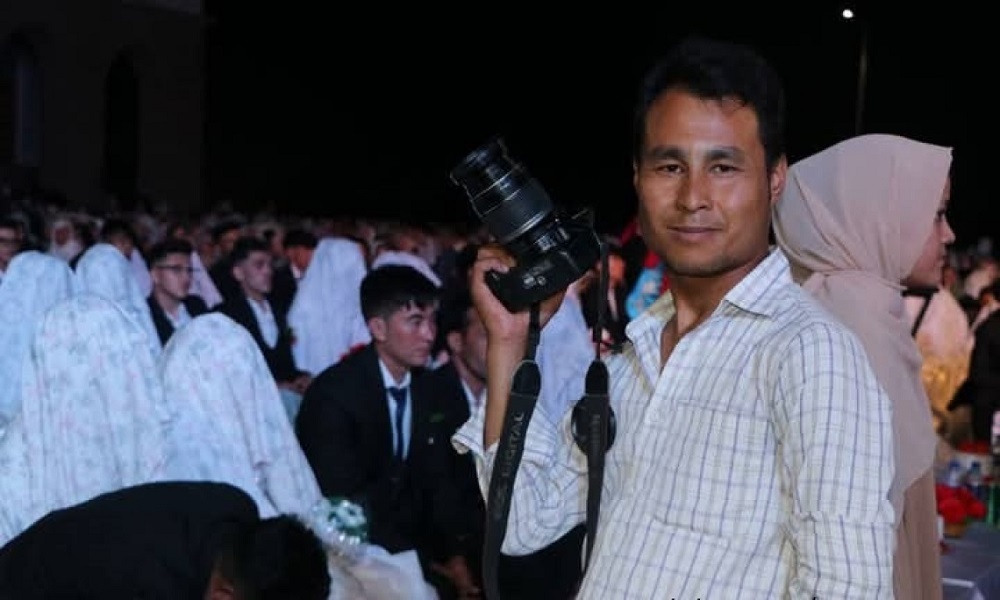
The Afghanistan Journalists Center (AFJC) has announced that Mahdi Ansary, a reporter for the Afghan News Agency (AFKA), has been released after serving one and a half years in Bagram prison.
In a statement welcoming his release, AFJC emphasized that the fundamental rights of this journalist—who had been tried and imprisoned on charges of cooperating with exiled and foreign media—were “seriously” violated.
Ansari was arrested on October 5, 2023, after returning from his workplace in Kabul.
He was sentenced on January 1, 2024 by the Kabul Primary Court to one and a half years in prison on charges of “propaganda against the Islamic Emirate.”
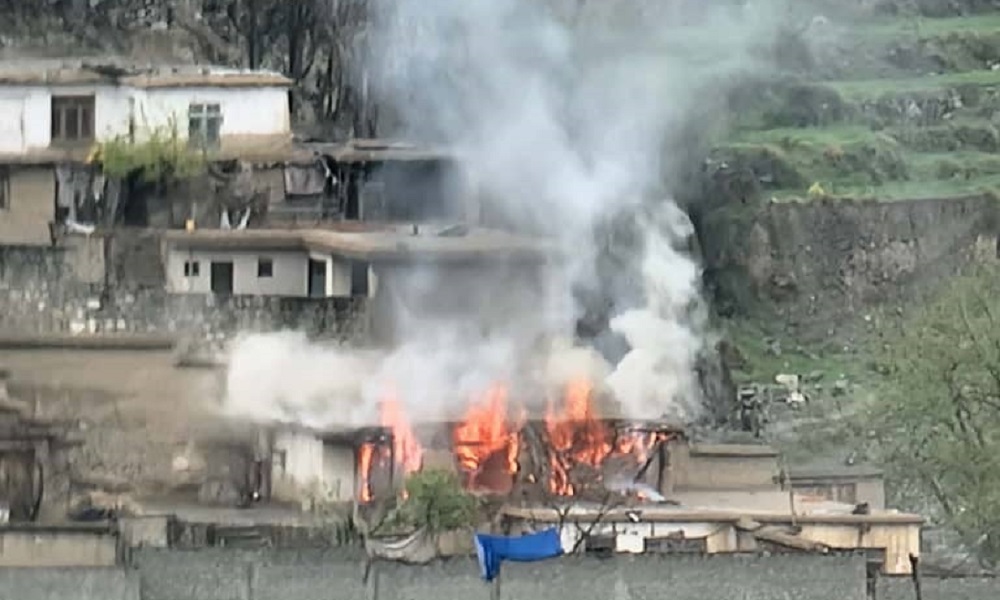
Farid Dehqan, spokesperson for the Khas Kunar police command, said that rocket attacks by the Pakistani military regime are still ongoing in the province.
These attacks come despite earlier announcements by the Pakistani military of a temporary ceasefire for Eid.
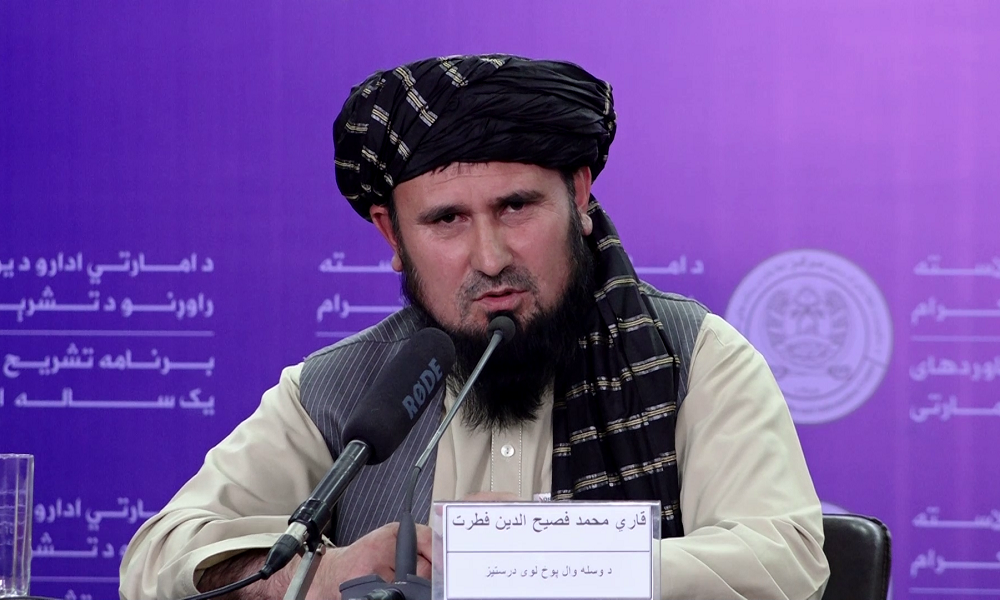
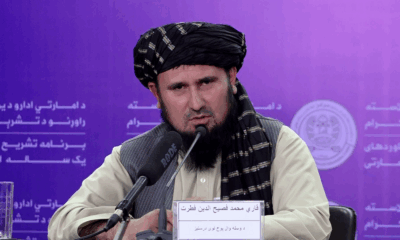
Afghanistan’s Chief of Armed Forces, Fasihuddin Fitrat, said in his Eid message that Pakistan’s military regime has violated the ceasefire along the Durand line.
According to the Eid message released by the Ministry of Defense, several civilians were killed in attacks carried out by Pakistani forces in border areas.
Fitrat added that the continuation of Pakistan’s attacks despite the ceasefire “demonstrates a lack of commitment and deception” on the part of the country.
He stressed that the Islamic Emirate has refrained from retaliatory action in order to prevent further deterioration of the situation and has remained committed to the ceasefire.
However, he warned that if such attacks are repeated, “the ceasefire will become meaningless,” and the Islamic Emirate will deliver a “decisive response” to Pakistan’s actions.
It is worth noting that the Islamic Emirate and Pakistan reached a temporary ceasefire on the occasion of Eid al-Fitr through mediation by Qatar, Turkey, and Saudi Arabia.


Trump compares Iran strikes to Pearl Harbor in meeting with Japan’s leader

Afghanistan national buzkashi falls short in Kokpar World Championship semifinals

Mahdi Ansary, local journalist, released from prison

Pakistan’s rocket attacks still ongoing on Nari district, Kunar

FIFA Council highlights football’s role in peace, announces record investments

Pakistani military jet downed in Afghanistan’s Jalalabad, pilot captured alive

Afghan Air Force conducts airstrikes in Islamabad, other cities

Afghanistan welcomes investment and technology partnerships with India

Prominent Muslim scholar issues fatwa calling for Afghanistan-Pakistan ceasefire

Afghan air force strikes key Pakistani military installations in retaliatory operation

Tahawol: Temporary ceasefire draws broad support

Saar: Emphasis on resolving conflicts through diplomacy

Tahawol: Global reactions to Pakistan’s recent attacks discussed

Saar: Consequences of Pakistani airstrikes on Afghans discussed

Tahawol: Pakistan’s new attacks on Kabul hospital discussed
-
 Latest News4 days ago
IEA Supreme Leader issues Eid-ul-Fitr message urging unity and support for Islamic system
-

 Business4 days ago
Turkmenistan, Afghanistan discuss steps to speed up land acquisition for TAPI pipeline
-
 Latest News2 days ago
IEA announces temporary pause in defensive operations against Pakistan for Eid
-
 Sport3 days ago
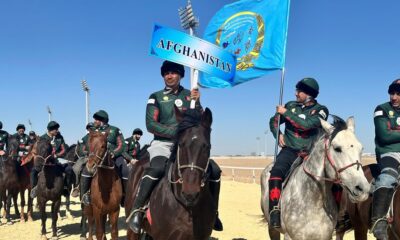
Afghanistan national buzkashi team defeats Hungary 14–0
-
 Latest News2 days ago
Pakistan opposes normal Afghanistan–India relations: Shaheen
-
 Latest News4 days ago
CAIR-Texas calls for probe after Afghan refugee dies in ICE custody
-
 Latest News4 days ago
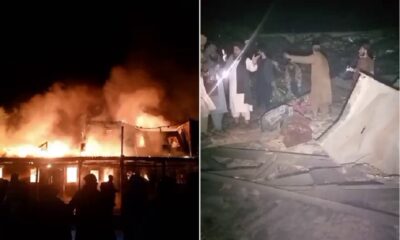
IEA condemns alleged airstrike by Pakistan on drug treatment hospital in Kabul
-
 Latest News3 days ago
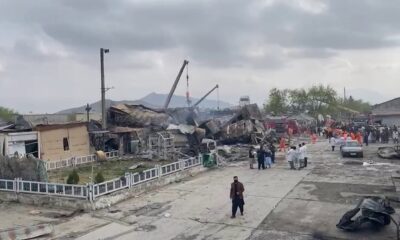
Afghanistan warns Pakistan of ‘teeth-breaking’ response after deadly Kabul bombing