
World
Powerful 7.6 earthquake hits northern Japan, tsunami warnings issued
At Kuji Port in Iwate, a 70-centimeter tsunami was recorded, while Hokkaido observed waves of 50 centimeters in Urakawa Town and 40 centimeters at Mutsuogawara Port.

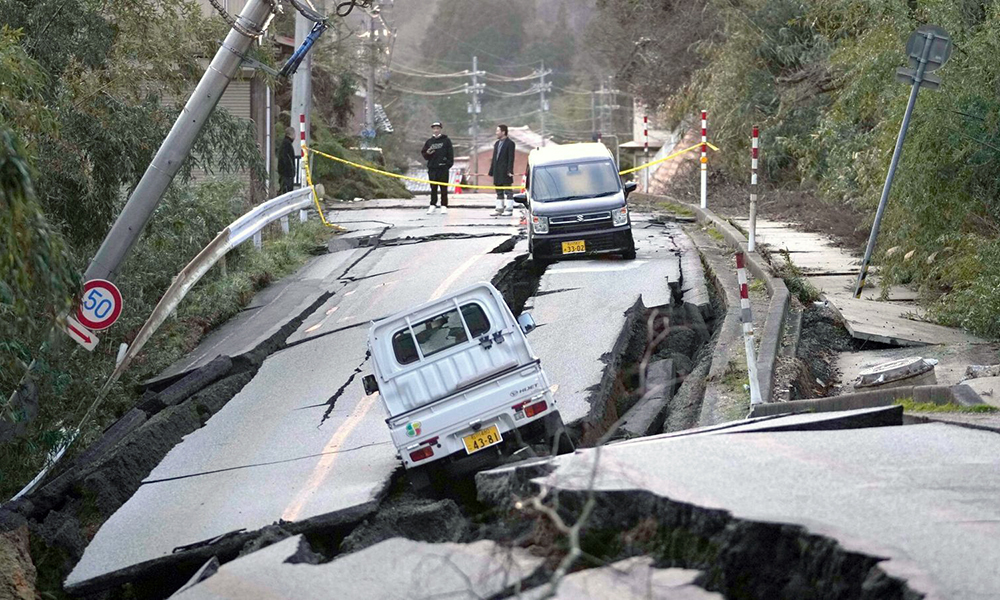
A powerful magnitude 7.6 earthquake struck northern Japan late Monday night, prompting tsunami advisories and an unprecedented alert for a potential “mega quake” along the country’s Pacific coast.
The quake occurred at 11:15 p.m. off the eastern coast of Aomori Prefecture at a depth of 54 kilometers. Authorities initially issued tsunami warnings for Iwate Prefecture as well as coastal areas of Hokkaido and Aomori.
USGS has recorded the quakes magnitude at 7.6. However, Japanese officials have stated it was a 7.5 magnitude quake.
At Kuji Port in Iwate, a 70-centimeter tsunami was recorded, while Hokkaido observed waves of 50 centimeters in Urakawa Town and 40 centimeters at Mutsuogawara Port.
As of 1:00 a.m., officials confirmed six injuries in Aomori, with residents hurt by falling objects or during attempts to evacuate. More than three hours after the quake, the tsunami warnings were downgraded to advisories, though authorities continue to urge residents to stay clear of the shoreline.
Japan’s Meteorological Agency has issued a rare alert warning that a much larger earthquake could follow. A potential mega quake—magnitude 8 or higher—could generate tsunamis along the Pacific coast from Hokkaido down to Chiba.
Residents in the affected areas have been urged to review evacuation routes, prepare emergency supplies, secure household furniture, and ensure access to food, water, and portable toilets. Officials say people along the Pacific coastline should remain on high alert for the next week, although no formal evacuation recommendation is currently in place.
This is the first time Japan has issued an alert under this category since it was created in 2022.
Morikubo Tsukasa, a disaster preparedness official with the Cabinet Office, said: “Based on global earthquake statistics, there is a possibility that a large-scale earthquake with a magnitude of 8 or higher could occur as a follow-up along the Japan Trench or Chishima Trench off Hokkaido. It is unclear whether such an event will happen, but everyone should take precautions to protect their lives.”








World
Trump rejects latest Iranian proposal to end war, US official says
According to officials familiar with the discussions, Iran’s latest plan would delay talks over its nuclear program until after the fighting ends and maritime disputes in the Gulf are resolved.
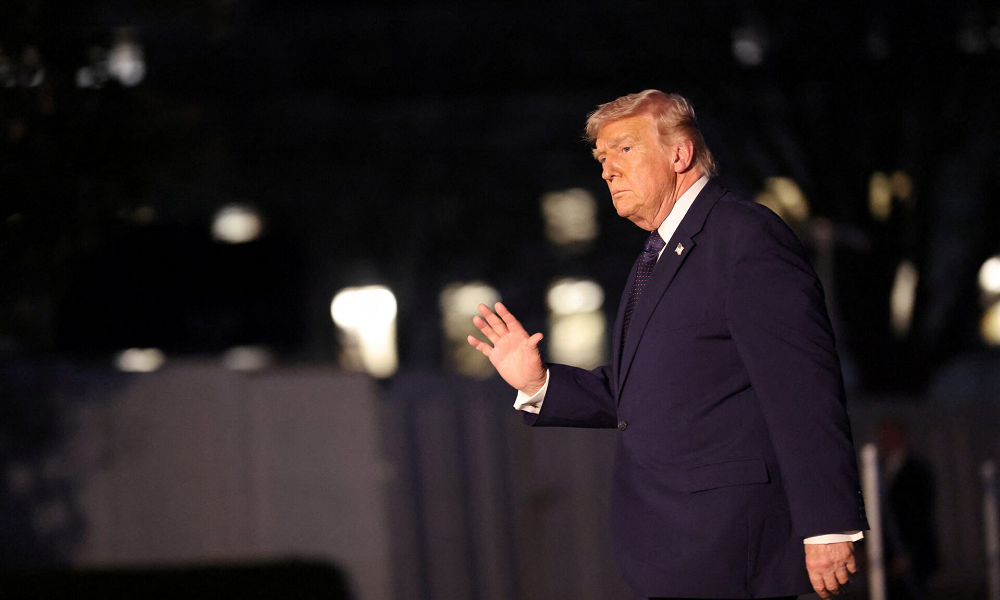
U.S. President Donald Trump is reportedly dissatisfied with Iran’s latest proposal aimed at ending the two-month conflict between the two countries, according to a U.S. official, raising fresh doubts over prospects for a ceasefire.
The renewed diplomatic setback comes as the war continues to disrupt global energy markets, drive inflation concerns and deepen regional instability.
According to officials familiar with the discussions, Iran’s latest plan would delay talks over its nuclear program until after the fighting ends and maritime disputes in the Gulf are resolved.
That approach is believed to have angered Trump, whose administration insists that any agreement must address Iran’s nuclear activities from the outset.
A U.S. official briefed on a Monday meeting between Trump and senior advisers said the president was unhappy with the proposal because it postponed one of Washington’s core demands.
White House spokeswoman Olivia Wales declined to discuss negotiations publicly, saying the United States “will not negotiate through the press” and had already made its red lines clear.
Iranian officials say their proposal envisions a phased process beginning with an immediate end to U.S. and Israeli military operations, followed by guarantees against renewed attacks.
The next stage would address the U.S. naval blockade and the future of the strategically vital Strait of Hormuz, one of the world’s most important oil shipping lanes.
Only after those issues are settled would broader negotiations begin on Tehran’s nuclear program, including Iran’s demand for recognition of its right to enrich uranium for civilian purposes.
Iran has long maintained that its nuclear activities are peaceful.
Diplomatic Efforts Continue
Iranian Foreign Minister Abbas Araqchi has recently travelled to Pakistan, Oman and Russia in an effort to build support for negotiations.
During a visit to Moscow, Araqchi met President Vladimir Putin, who reportedly offered diplomatic backing.
Planned peace talks in Islamabad were also dealt a blow after Trump cancelled a proposed visit by special envoy Steve Witkoff and adviser Jared Kushner.
With no clear breakthrough in sight, oil prices rose again in Asian trading on Tuesday as traders focused on continued disruption to shipping through the Strait of Hormuz.
Ship-tracking data indicated that maritime traffic through the chokepoint has dropped sharply since the conflict began, with several tankers reportedly turned back in recent days.
Before the war, more than 120 vessels passed through the strait daily. Analysts say that number has fallen dramatically, increasing pressure on global energy supplies.
Trump is also facing growing domestic pressure to end the war, particularly as economic concerns mount and public support weakens.
Iranian officials say Washington has failed to meet its military objectives, while the White House insists pressure will continue until U.S. demands are met.
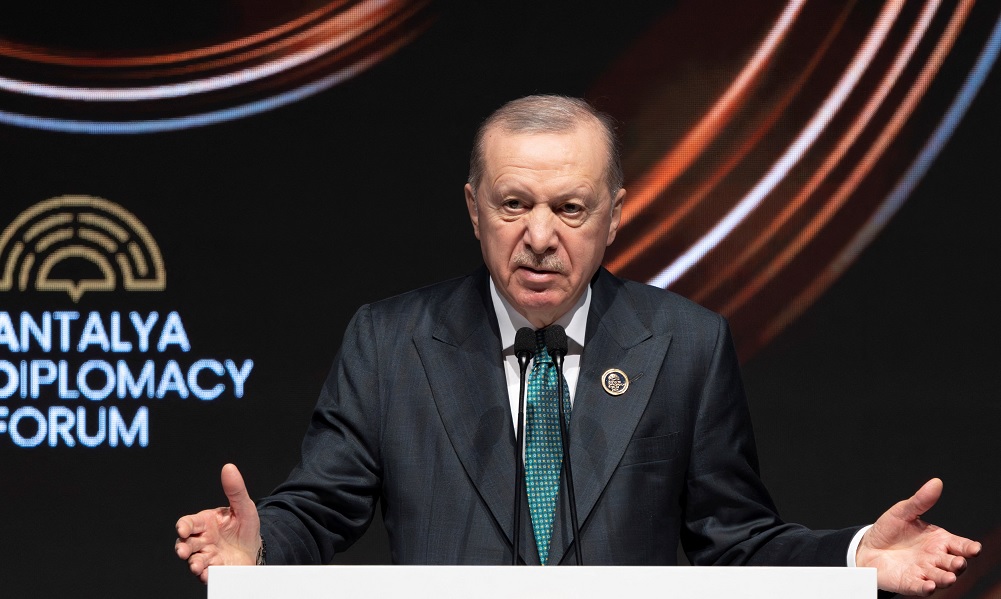
Turkish President Tayyip Erdogan offered his support for U.S. President Donald Trump in a phone call following a shooting at the White House Correspondents’ Association dinner, the Turkish presidency said late on Sunday.
“Erdogan said he saw the incident as a heinous act against democracy and press freedom,” the presidency said in a statement on X, Reuters reported.
Earlier, Erdogan had condemned the incident in a separate statement on X, saying he was happy that Trump and first lady Melania Trump were unharmed.
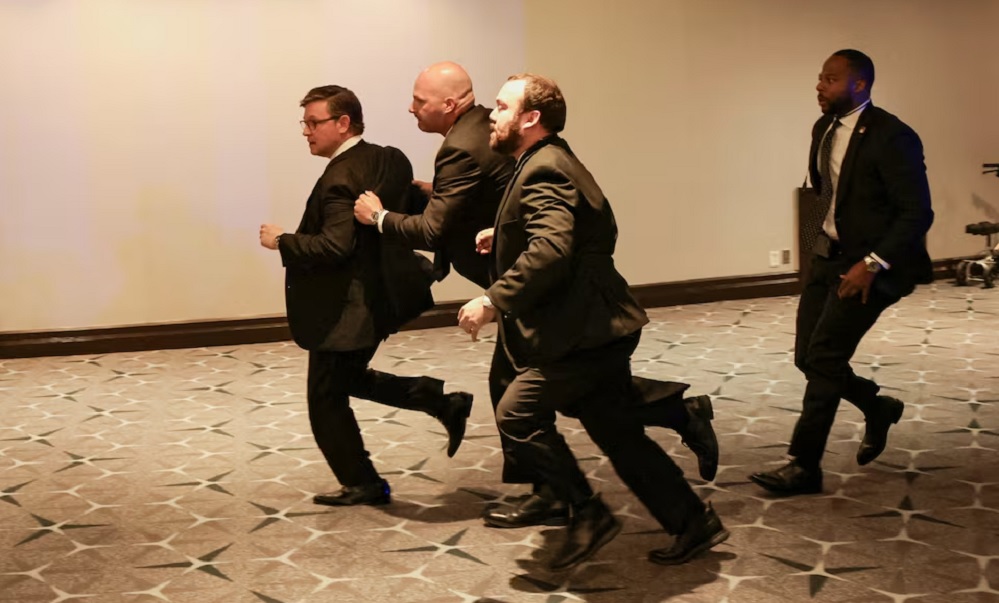
President Donald Trump and first lady Melania Trump were rushed out of the White House Correspondents’ Association dinner by Secret Service agents on Saturday night after a man armed with a shotgun tried to breach security, officials said.
The armed man fired at a Secret Service agent, an FBI official told Reuters. The agent was hit in an area covered by protective gear and not harmed, the official said.
All federal officials, including Trump, were safe. About an hour after Trump was rushed from the event, he posted on Truth Social that a “shooter had been apprehended.”
“Quite an evening in D.C. Secret Service and Law Enforcement did a fantastic job,” Trump added.
‘GET DOWN, GET DOWN!’
Shortly afterwards, he posted, “The First Lady, plus the Vice President, and all Cabinet members, are in perfect condition.” He said he would be holding a White House press conference on Saturday night.
Anthony Guglielmi, a Secret Service spokesman, said the service was investigating a shooting near the main screening area at the entrance to the event.
After the sound of shots, dinner attendees immediately stopped talking and people started screaming “Get down, get down!” Many of the 2,600 attendees took cover while waiters fled to the front of the dining hall.
Security agents pushed cabinet officials to the ground, including Secretary of State Marco Rubio, Health Secretary Robert F. Kennedy Jr., and Interior Secretary Doug Burgum.
Other security personnel in combat fatigues stormed the stage and evacuated Trump and his wife. Some security personnel took up position on the stage, pointing their rifles into the ballroom. Cabinet members were then evacuated from the venue one by one.
Trump and the first lady bent down behind the dais before being hustled out by Secret Service officers. Trump stayed backstage about one hour, a source told Reuters. “We are staying,” he was overheard saying, the source said.
The event eventually was canceled for the evening. Trump posted on social media that he hoped it could be rescheduled in 30 days.
Saturday was the first time Trump has attended the correspondents’ dinner as president.
He was the subject of two assassination attempts in 2024, after he left the White House in 2021 and while he was campaigning for reelection.
The most serious occurred while Trump was campaigning at an outdoor rally in Butler, Pennsylvania, in July 2024. Trump was shot and wounded in his upper ear by a 20-year-old gunman. The gunman was shot dead by security personnel.
Just over two months after the Butler shooting, Secret Service agents spotted a man wielding a gun and hiding in bushes at the Trump International Golf Club in West Palm Beach, Florida, while Trump was on the course. It was deemed an assassination attempt and the suspect was sentenced to life in prison in February.
The site of Saturday’s dinner, the Washington Hilton, was the scene of an attempt on the life of President Ronald Reagan, who was shot and wounded by a would-be assassin outside the hotel in 1981.


Tahawol: Russia’s claim over Afghanistan’s instability discussed

Saar: Conflict situation between Afghanistan-Pakistan discussed

IEA approves electronic system for managing official correspondence and documents

Afghan women’s refugee team cleared to compete in FIFA competitions

Dozens of media violations reviewed as Afghanistan expands licensing in 1404

IEA supreme leader orders replacement of foreign terminology in official documents

Afghanistan hosts inaugural Afghanistan–Central Asia Consultative Dialogue to strengthen regional cooperation

Russia backs Uzbekistan–Afghanistan trade hub, praises regional economic cooperation

Tripartite agreement to launch new Russia–Turkmenistan–Afghanistan transit corridor

Kazakhstan eyes rare metals mining projects in Afghanistan and Rwanda
Tahawol: Russia’s claim over Afghanistan’s instability discussed
Saar: Conflict situation between Afghanistan-Pakistan discussed

Tahawol: Russian special representative trip to Kabul discussed

Saar: World’s reactions to Pakistani attacks in Kunar discussed

Tahawol: Kabul and Riyadh Push to Expand Ties
-
 Latest News3 days ago
Bayat Power extends gas supply deal with Afghan Gas
-

 Sport4 days ago
Afghanistan, Uzbekistan and Tajikistan secure top spots at Kabul wrestling festival
-

 Latest News5 days ago
UK considers talks with IEA over deporting Afghan asylum seekers
-
 Latest News3 days ago
IEA responds to Global Terrorism Index 2026, highlights security gains
-

 Latest News5 days ago
Afghanistan-Pakistan talks in Urumqi were positive: Muttaqi
-
 Regional5 days ago
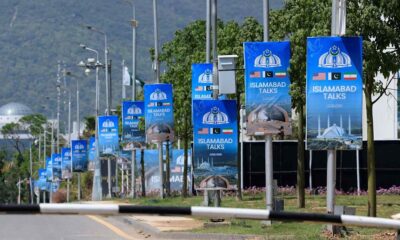
Iran’s foreign minister arrives in Pakistan, Trump expects offer satisfying US demands
-

 Latest News4 days ago
Afghanistan seeks Russian investment to boost power sector development
-

 Latest News3 days ago
Six Pakistani soldiers killed in clashes with Afghan forces in Kandahar