
Regional
Pakistan repays $3.45 billion loan to UAE

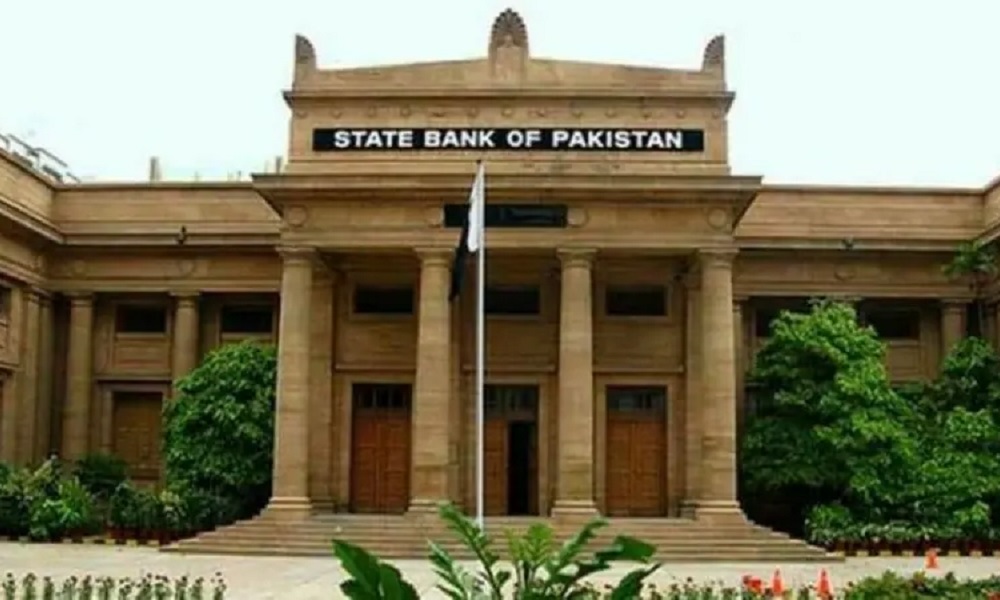
Pakistan has repaid the full $3.45 billion it owed to the United Arab Emirates, the State Bank of Pakistan said on Friday.
According to the Pakistan’s central bank, $1 billion was returned to the Abu Dhabi Fund for Development on April 23, while the remaining $2.45 billion had been repaid to the UAE earlier in the week. “This completes the repayment of total deposits of $3.45 billion to UAE,” the bank said in a statement posted on X.
The repayment comes after Pakistani officials signaled earlier this month that the country intended to settle roughly $3.5 billion in obligations to the UAE before the end of April. A senior official described the move as a deliberate decision to uphold “national dignity,” despite the anticipated strain on foreign exchange reserves.
The funds were originally extended in 2019 as part of financial support from the UAE to help Pakistan stabilize its balance of payments. However, in March, Islamabad was unable to secure a rollover of the facility—its first such setback in seven years—raising concerns about short-term financing needs.
Separately, the central bank reported that Pakistan’s foreign reserves stood at $20.63 billion as of April 17. During April, the country also received $3 billion in deposits from Saudi Arabia, including a $1 billion tranche on April 21.
Pakistan’s external position remains under pressure but is being managed as part of ongoing stabilization efforts tied to reforms supported by the International Monetary Fund. Analysts warn that risks persist, particularly due to volatile energy prices and tight global financial conditions.


Regional
US imposes sanctions on 13 tied to Iran weapons procurement
Treasury Secretary Scott Bessent said, “Treasury will not tolerate any support to the regime and will continue to identify, expose, and isolate Iran’s enablers.”
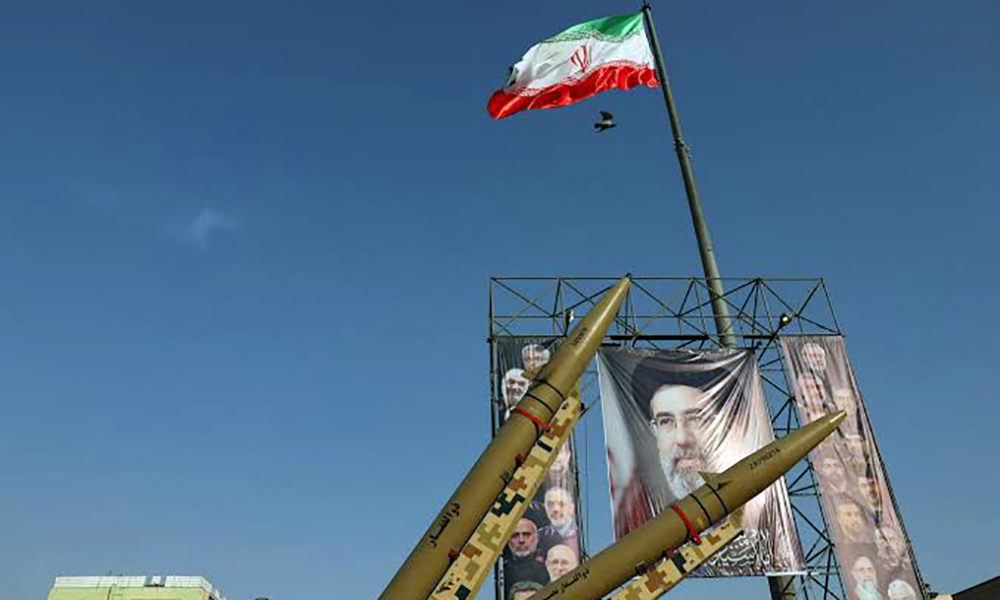
The US government announced fresh sanctions on Tuesday against 13 individuals and entities, including some based in Russia, China, Hong Kong and Pakistan, saying they helped Iran procure weapons and components.
The sanctions announced by the Treasury and State departments are part of the Trump administration’s effort to isolate Iran economically and force it to negotiate an end to the war that began with a US-Israeli strike on Iran on February 28.
Treasury Secretary Scott Bessent said, “Treasury will not tolerate any support to the regime and will continue to identify, expose, and isolate Iran’s enablers.”
Treasury said the sanctions were aimed at degrading Tehran’s ability to reconstitute its weapons programs, while increasing the costs for those who supported its procurement efforts.
Those targeted in Tuesday’s sanctions announcements include:
Seyyed Asghar Alizadeh Tabatabai, a Beijing-based representative of Iran’s Ministry of Defense and Armed Forces Logistics agency, who Treasury said had coordinated the procurement of finished weapons systems and dual-use components in China on Iran’s behalf.
Iran-based Kavoshcom Asia R and D Group, which Treasury said had procured electronics including connectors for Iran Aircraft Manufacturing Industrial Company.
Hong Kong-based EC Mojo Technology Co Limited, which Treasury said had provided electronic components in support of Kavoshcom’s procurement efforts, and EC Mojo’s China-based representative Li Fen.
Pakistan-based Waseem Pasha Tajammal, who serves as chairman of Cavalier Group, a privately owned defense company with locations in Pakistan and internationally.
Joint Stock Company Experimental Design Bureau Named After A.S. Yakovlev, a Russia-based aircraft manufacturer.
MG-Flot LLC, a Russia-based shipping company whose vessels transport weapons for the Russian government.
Saha Airlines, an Iran-based airline affiliated with the country’s air force.
Brett Erickson, managing principal with Obsidian Risk Advisors, said the latest sanctions action would do little to impede Iran’s ability to launch missiles and drones in the Strait of Hormuz. “This is optics management for the Trump administration to claim ‘We’re hammering them,’ when the reality is we’re poking them with a toothpick,” he said.
Regional
US, Iran separately talk with mediators in latest bid to end war
US officials separately spoke with mediators on Monday, US President Donald Trump told reporters at the White House, without giving further details.
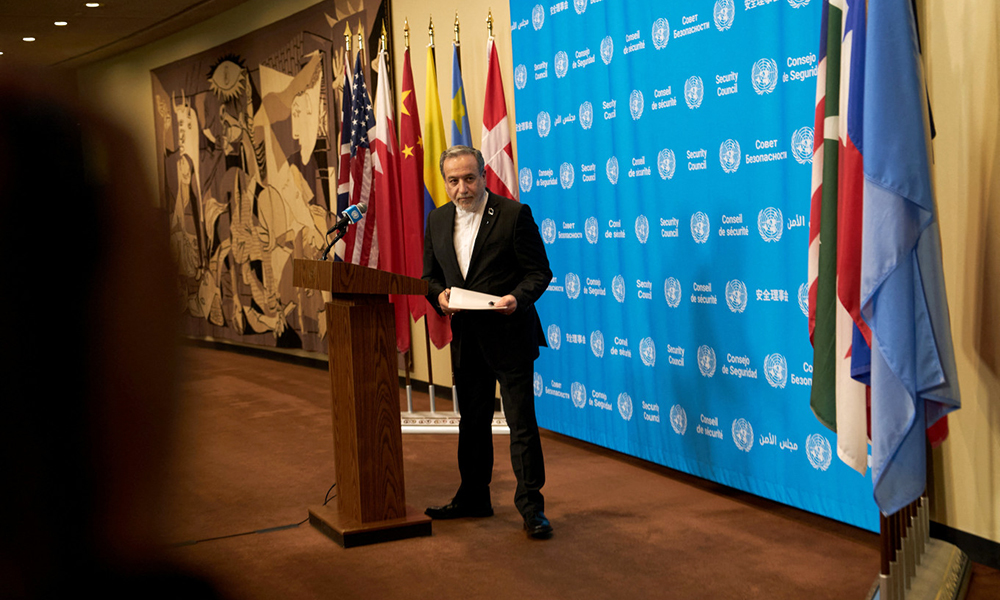
US and Iranian officials spoke separately with mediators on Monday as part of a renewed effort to end seven months of war, according to officials of both countries, Reuters reported.
Any further talks are expected to focus on an amended version of a seven-day proposal that Iran presented last week on the sidelines of the United Nations General Assembly, an official briefed on the negotiations told Reuters.
The war began in late February with US and Israeli attacks on Iran, killing thousands of people over seven months and shocking global markets as vital waterways for oil remained choked. The US and Iran have twice previously agreed to ceasefires in mediated peace talks, in April and June. Those agreements quickly unraveled.
Iranian Foreign Minister Abbas Araqchi, who remained in New York after attending the General Assembly, said Iran expected to receive the US response to its latest ceasefire proposals and its conditions for restoring passage of maritime traffic in the Strait of Hormuz, according to state news agency IRNA.
“If the Americans claim they are seeking an agreement or a peaceful solution, we have presented that solution,” Araqchi said.
US officials separately spoke with mediators on Monday, US President Donald Trump told reporters at the White House, without giving further details.
Iran’s seven-day plan envisages an end to all hostilities in Iran and Lebanon, the unfreezing of billions of dollars’ worth of Iranian assets, an end to sanctions on Iranian oil and the lifting of the US blockade on Iranian ports.
Iran would then allow the reopening of the Strait of Hormuz, a vital conduit for oil tankers, and the two sides would also resume talks on Iran’s nuclear program and Trump’s wish to seize or eliminate its highly enriched uranium, read the report.
Trump said on Saturday he had rejected Iran’s proposal, saying Iran wanted a swift agreement because of the crippling economic pressure it is under. However, he also told Axios on Sunday that he expected US negotiators to engage in further talks this week.
Araqchi said on Sunday that mediators had not formally conveyed a US rejection, and that Iran was awaiting Washington’s definitive position before deciding its next steps.
“Our conditions are clear, and any move toward reopening the Strait of Hormuz is contingent on these conditions being met,” he said on Sunday, adding that only a negotiated solution could resolve the impasse.
Regional
Floods, landslides kill 56 in India and 14 in Nepal
In India, the Central Water Commission said 30 river-monitoring stations across seven states indicated a “severe situation”.
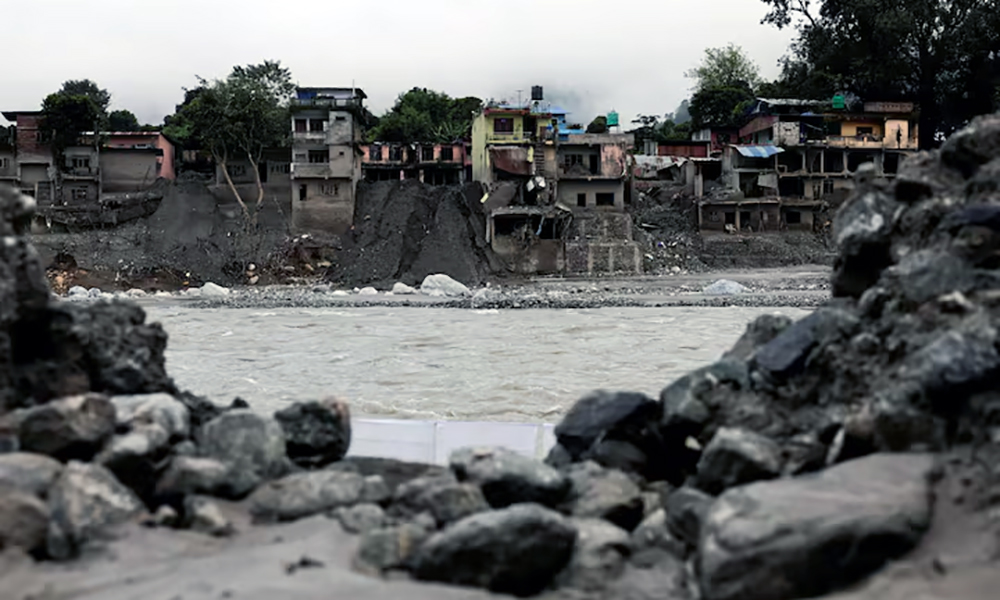
Heavy rain and storms have triggered floods and landslides that killed 56 people in India, while in Nepal, 14 have died and another 11 are missing, with authorities there warning on Sunday that more flash floods are possible, Reuters reported.
India’s northern state of Uttar Pradesh recorded 66.5 mm of rain between September 25 and the morning of September 27, compared with a normal 7.6 mm for the period, Hrishikesh Bhaskar Yashod, the state’s relief commissioner, said on Sunday.
Authorities are carrying out rescue operations in waterlogged areas and distributing relief, while officials have been told to assess crop damage and provide compensation.
In addition to the 56 deaths, 46 people have been injured and more than 1,000 houses have been damaged.
Nepali authorities warned of possible flash floods in 49 of the country’s 77 districts, with more than half facing high flood or flash-flood risks as water levels in major rivers and tributaries continued to rise.
Shanti Mahat, a spokesperson for the National Disaster Risk Reduction and Management Authority, said Rasuwa and Nuwakot, areas hit by last month’s deadly floods that killed more than 1,450 people and left thousands still missing, should remain “alert” but were not currently considered high-risk areas.
Power supply has been completely disrupted in the Manang, Mustang, Myagdi and Baglung districts, with authorities working to restore electricity, energy ministry officials said.
Flooding of the Rahuganga River damaged the structure and transmission-line towers of a 40-megawatt hydropower project, Water Resources and Energy Minister Biraj Bhakta Shrestha said.
In India, the Central Water Commission said 30 river-monitoring stations across seven states indicated a “severe situation”.
Several major rivers, including the Ganga, Gandak, Kosi, Bagmati and Narmada, were above danger levels, read the report.
Floods and landslides also disrupted telecommunications in parts of Nepal after damage to optical fibres and power supplies, Communications Minister Bikram Timilsinha said.
In a separate incident in Nepal, 10 local workers were also missing after an avalanche buried the base camp of the 7,126-metre (23,379-ft) Himlung Himal in the northern Manang district, hiking officials said.
The workers had been setting up tents for foreign climbers, who were not present when the avalanche struck.


Afghanistan, Belarus discuss expanding industrial and trade cooperation

Karzai condemns Pakistani airstrikes on Kunar and Helmand

Moscow to host 8th meeting of Afghanistan consultations on October 5

Da Afghanistan Bank reports increase in public bank deposits

Pakistani airstrikes kill nine Afghan civilians, injure 11

Saudi energy group signs major Afghanistan deals covering gas exploration and pipeline plans

Iranian clubs to face Gulf opponents at neutral venues in Asian Champions League Elite

Khalilzad: Afghanistan ready to attract major investment

Ariana Television Network secures exclusive rights to Afghanistan’s 2026/27 cricket series

El Niño likely to intensify, may become strongest ever recorded, WMO says

Tahawol: Improvement in Afghanistan-China relations discussed

Saar: Expanding ties with regional and global countries discussed

Tahawol: Absence of Afghanistan’s envoy at UNGA discussed

Saar: Assessment of war between Afghanistan and US discussed

Saar: Afghanistan’s image at UNGA
-

 Sport4 days ago
Afghan bodybuilder Ali Bilal finishes runner-up at Mr Olympia for third straight year
-

 Latest News4 days ago
Afghanistan says 28 killed, 32 captured in Nuristan operation
-
 World4 days ago
Trump rejects Iranian proposal to open Hormuz and end fighting
-

 Sport5 days ago
Afghanistan Champions League: Omar Zawak Herat beat Toofan Herat 1-0
-
 Latest News4 days ago
UNDP, UN Women launch financing initiative for Afghan women entrepreneurs
-

 Sport3 days ago
Afghanistan vs India Asian Games quarter-final abandoned without a toss
-

 Business5 days ago
Ariana Afghan Airlines increases Kabul-Delhi cargo flights
-
 Latest News4 days ago
Germany reports 488 Afghans for possible deportation, 267 have no criminal convictions