
Latest News
First day of 2021 starts with assassination of Ghor journalist

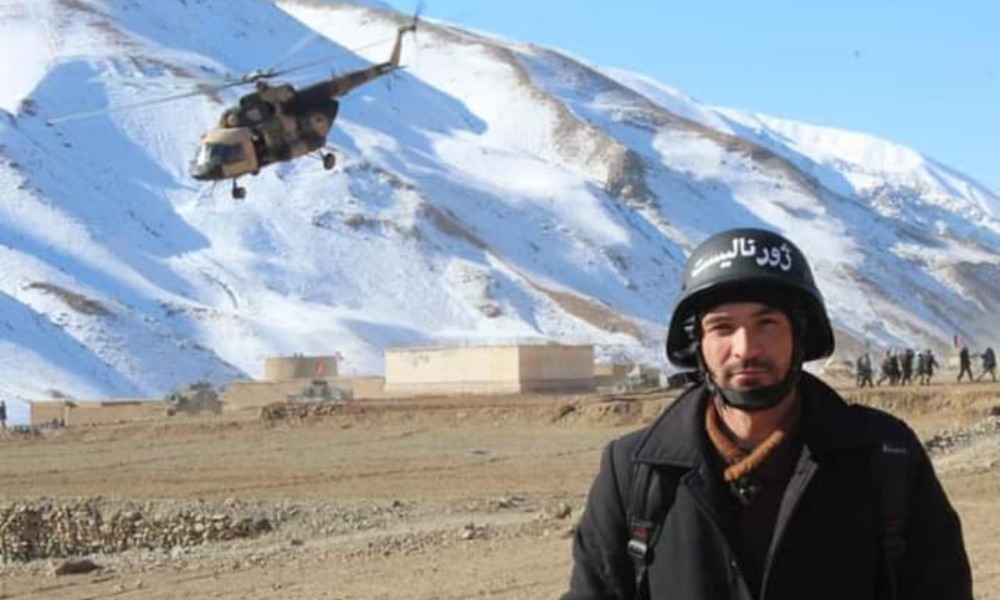
Bismillah Adil, a journalist and civil society activist in Ghor, was assassinated on Friday in Feroz Koh city, the center of the province, local officials confirmed.
Adil was head of Radio Sada-e-Ghor, local radio in Ghor, and was killed by unknown armed men in Dara-e-Taimur village on the outskirts of Feroz Koh city, officials added.
The deputy governor of Ghor has confirmed the incident to the media.
Reports indicate that Adil was also attacked twice in the past by gunmen but he survived.
So far no group claimed responsibility for the attack.
This comes a week after a journalist in Ghazni, Rahmatullah Nikzad, who was head of the journalists’ union in the province, was killed in an attack by armed men outside his home in Ghazni city.
Meanwhile, yesterday Special Forces from the Afghan National Directorate of Security (NDS) have arrested two men in connection with the assassination of Nikzad.
According to the statement, the perpetrators are Taliban militants who were among the 5,000 prisoners freed by government earlier this year under the terms of the US-Taliban agreement.
The militants were identified as Hamidullah and Zikrullah and “were among 5,000 Taliban prisoners that reunited with the Qari Obaid group, who are responsible for targeted killings in Ghazni,” read the statement.
“In the last two months, they (suspects) have assassinated Rahmatullah Nikzad, a judge and two Ghazni revenue department staff members in the province,” the statement read.

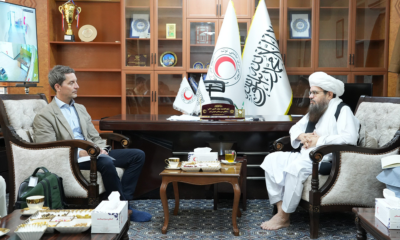
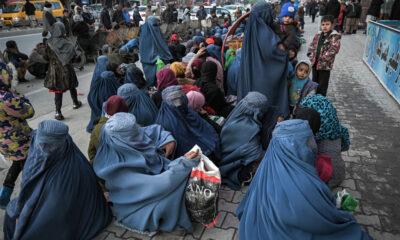


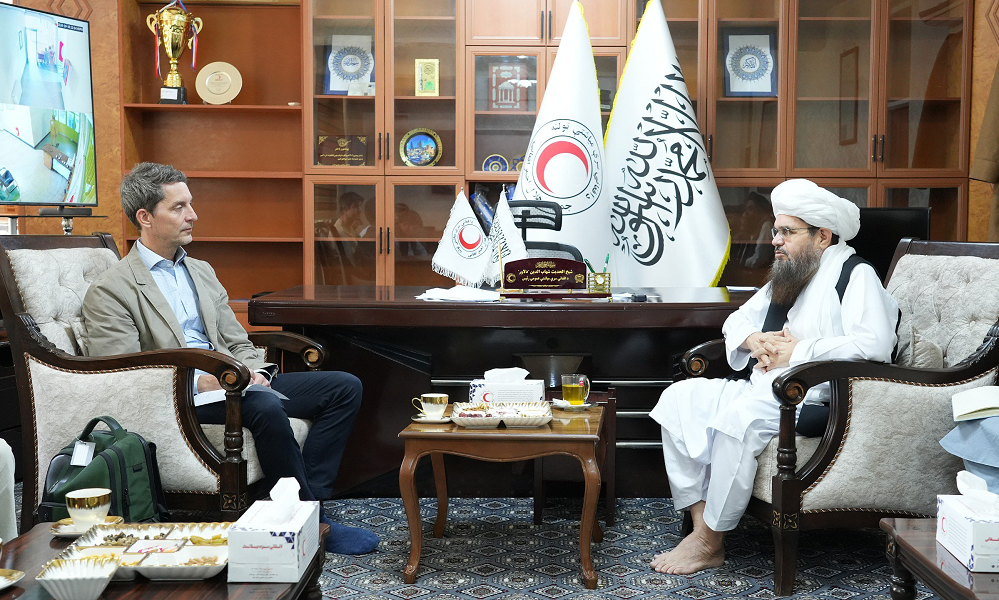
The Afghan Red Crescent Society (ARCS) has discussed expanding humanitarian cooperation with representatives of the Austrian and Danish Red Cross societies, focusing on assistance for vulnerable families and support for returning Afghan refugees to achieve self-reliance.
According to an ARCS statement, Shahabuddin Delawar, president of the organisation, met with representatives of the two societies to discuss Afghanistan’s humanitarian needs.
Delawar thanked the Austrian and Danish Red Cross societies for their continued assistance to the Afghan people, particularly their support following the earthquake in Kunar province.
He said decades of hardship and crises had left many Afghans facing serious challenges and in need of humanitarian assistance.
Delawar also outlined the ARCS’s healthcare and humanitarian programmes and its efforts to support vulnerable families.
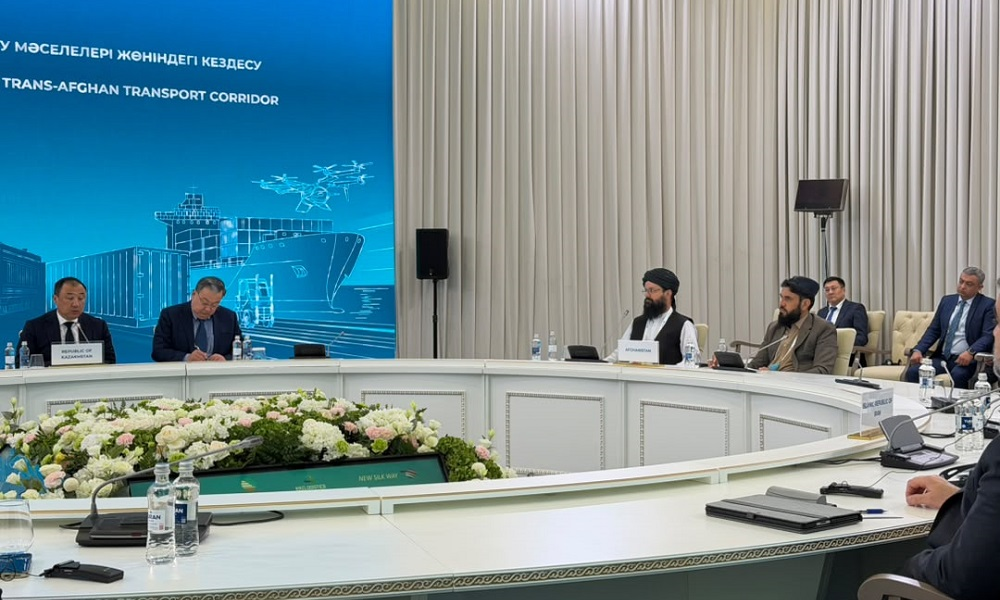
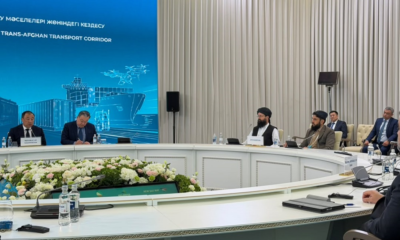
Abdul Karim Fateh, director general of the Afghanistan Railway Authority, led a technical delegation to the 14th Regional Meeting of the Economic Cooperation Organization (ECO), held in Astana, the capital of Kazakhstan.
Mohammad Ashraf Haqshinas, spokesperson for the Ministry of Public Works of the Islamic Emirate of Afghanistan, said the meeting discussed new railway projects, increasing rail freight volumes, digitizing transportation processes among member states, and the role of digitalization in facilitating trade and transit. The Trans-Afghan Railway project and the Balkh–Herat–Kandahar railway project were also among the topics discussed.
In his address, the Director General of the Afghanistan Railway Authority highlighted Afghanistan’s strategic geographical location and stressed the importance of railway development and strengthening regional connectivity.
He said Afghanistan currently has around 400 kilometers of operational railway lines, through which nearly five million tonnes of commercial goods are transported annually.
According to Fateh, construction work on approximately 100 kilometers of railway lines along routes in Herat and Faryab is underway. He also said that studies and detailed designs for the approximately 900-kilometre CASA railway corridor have been completed.
Fateh also announced the launch of technical and economic studies for the Afghan Trans railway corridor under a trilateral agreement between Afghanistan, Uzbekistan and Pakistan. He said these projects could play an important role in strengthening connectivity between Central and South Asia, expanding trade and transit, and reinforcing regional economic cooperation.
He concluded by stressing that, in light of improvements in the security situation and Afghanistan’s strategic geographical position, the country is ready to play an effective role in strengthening regional connectivity and economic prosperity through the development of transport infrastructure and expanded cooperation with ECO member states.
Meetings with Regional Representatives
On the sidelines of the meeting, the Director General of the Afghanistan Railway Authority also met with representatives from Kazakhstan, Uzbekistan, Pakistan and Iran. The discussions focused on implementing the Afghan Trans and Balkh–Herat–Kandahar railway projects, as well as attracting investment for the latter. Fateh assured the representatives that the Afghanistan Railway Authority would cooperate in implementing these projects.
In a separate meeting with a representative of Iran’s railway authority, discussions covered the transportation of commercial goods from Kazakhstan and Uzbekistan to the Torghundi port by road freight vehicles, followed by onward rail transport from Torghundi to Iran.
The possible launch of passenger train services between Afghanistan and Iran was also discussed. According to the information provided, passenger train services between the two countries will begin once Afghanistan has completed the necessary preparations.
During a meeting with a representative of Kazakhstan’s railway authority, the two sides also discussed launching practical work on the Torghundi–Herat–Spin Boldak railway project. The Kazakh representative further outlined Kazakhstan’s efforts to establish a dedicated air corridor to facilitate travel between the two countries and reduce travel time and costs.
The Economic Cooperation Organization (ECO) comprises 10 member states, including Afghanistan, and aims to expand economic cooperation and strengthen regional ties.
Latest News
Iranian envoy warns Western interventions threaten regional security
Referring to developments in Afghanistan, Iraq, Libya and Ukraine, Jalali said Western interference had contributed to regional security challenges.
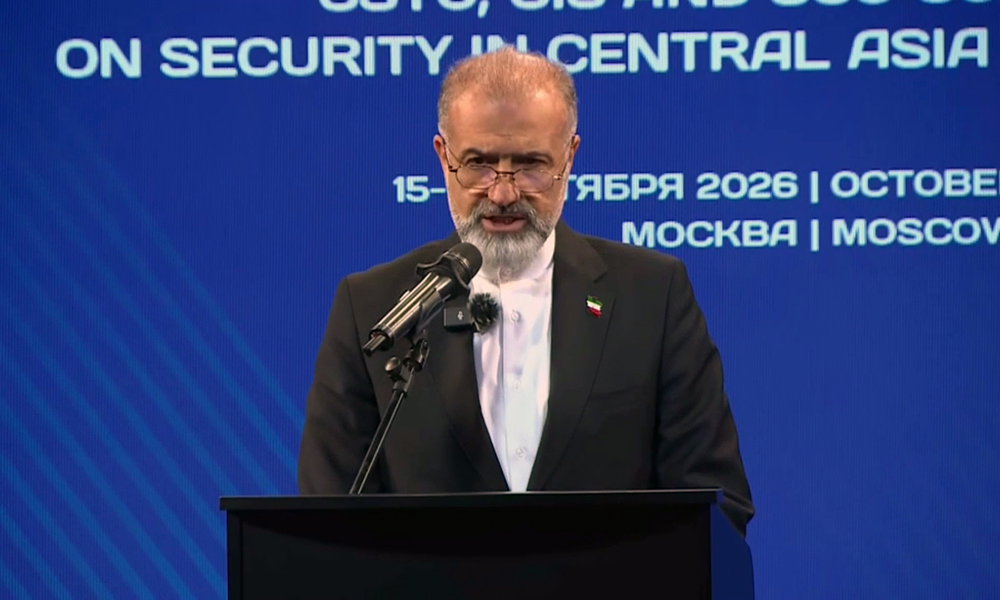
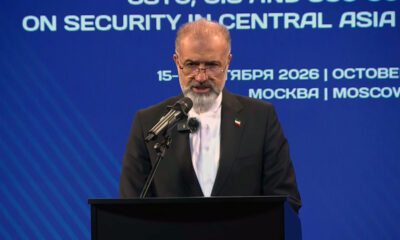
Iran’s ambassador to Russia, Kazem Jalali, has warned that Western military interventions and involvement in regional conflicts threaten security and stability across the Middle East and neighboring regions.
Jalali made the remarks on Friday during a joint conference organized by the Collective Security Treaty Organization (CSTO), the Commonwealth of Independent States (CIS) and the Shanghai Cooperation Organization (SCO), which focused on regional security and Afghanistan.
Referring to developments in Afghanistan, Iraq, Libya and Ukraine, Jalali said Western interference had contributed to regional security challenges.
“What has happened in recent years as a result of Western interference in the affairs of Afghanistan, Iraq and Libya, and subsequently the war in Ukraine, is clear evidence of the threatening nature of the Western presence to the security of our region,” he said.
Jalali also said Iran had faced what he described as Western intervention and military aggression over the past year.
The conference brought together representatives of regional organizations and countries to discuss security challenges in Central Asia and Afghanistan.


Afghan Red Crescent, Austrian and Danish counterparts discuss humanitarian cooperation

Saar: Discussion on harsh criticism of Pakistan at Moscow meeting

Afghanistan railways chief attends ECO regional meeting in Kazakhstan

Iranian envoy warns Western interventions threaten regional security

Russian deputy prime minister to visit Afghanistan soon for trade and economic talks

Cricket Bonanza: Afghanistan set for packed international schedule

Afghanistan says 28 killed, 32 captured in Nuristan operation

Silk Road highway in Wakhan corridor now reaches the China border

CNN, MS NOW and Politico sue Trump, challenging White House ban

Dogharoun handles 60% of Iran’s exports to Afghanistan
Saar: Discussion on harsh criticism of Pakistan at Moscow meeting

Tawsia: Efforts to increase energy production capacity in Afghanistan

Saar: Review of state officials’ visits to Kabul over past month discussed

Tahawol: Kyrgyzstan’s rejection of Afghan refugees discussed

Saar: Central Asia’s trade alternative to Pakistan discussed
-
 Sport3 days ago
Afghan futsal coach: Brazil tournament is first step towards new goals and World Cup
-
 Latest News3 days ago
Afghan official says Durand Line crossings to remain closed until Islamabad accepts demands
-
 Latest News2 days ago
India, Russia hold security talks on Afghanistan and Pakistan amid regional tensions
-
 Sport4 days ago
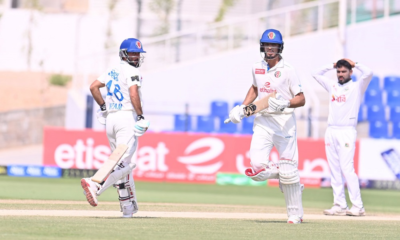
Afghanistan hold Bangladesh to dramatic draw in Abu Dhabi Test
-
 Latest News3 days ago
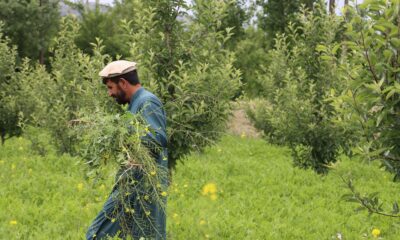
Afghan farmers adopt climate-resilient innovations to improve food security
-

 Tahawol5 days ago
Tahawol: Kabul’s criticism of Islamabad’s policy toward Afghanistan
-
 Latest News3 days ago
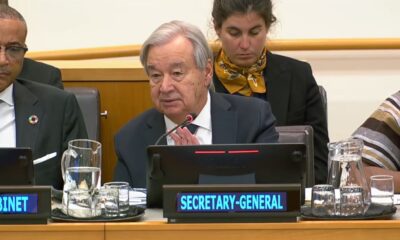
Guterres proposes 60 job cuts at UNAMA
-

 Latest News5 days ago
Russia warns against return of US military infrastructure to Afghanistan