
Latest News
Ghani reopens case of Farkhunda lynched by mob

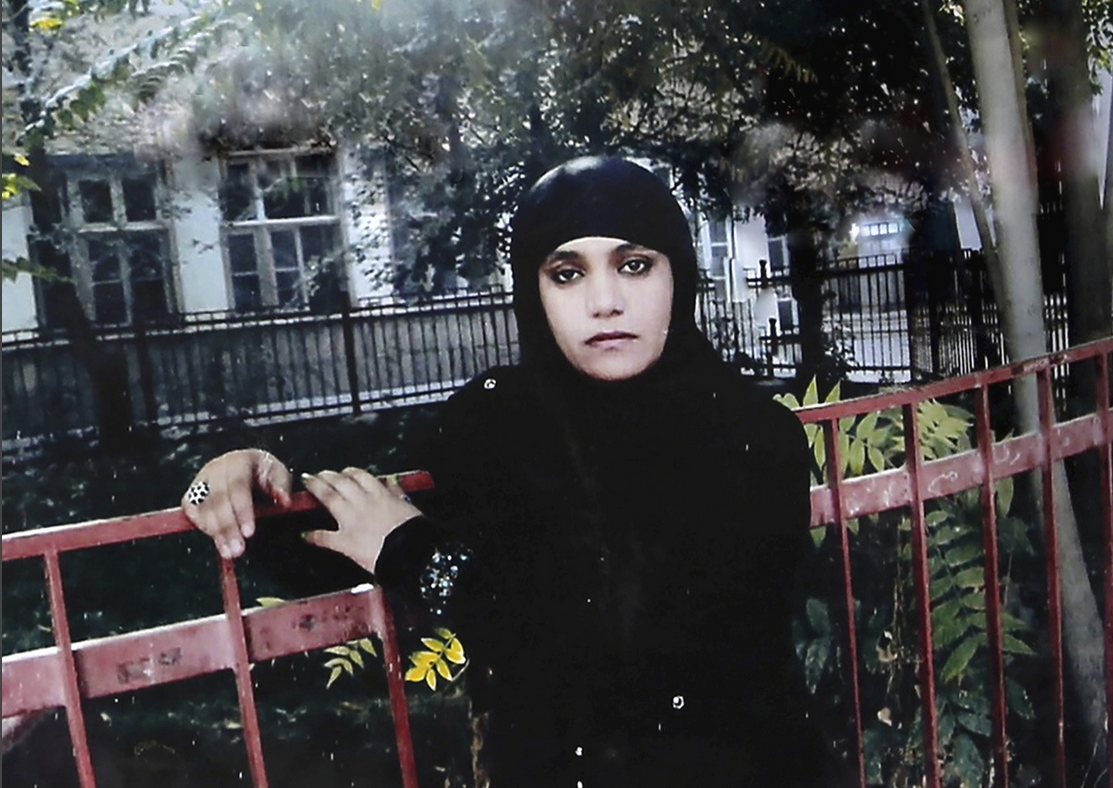

President Ashraf Ghani has ordered the government to reopen the case of a woman beaten to death last year by a frenzied mob outside a Kabul shrine, just days after the country’s highest court reduced the sentences of the 13 men convicted of her murder.
Ashraf Ghani’s move comes ahead of the first anniversary of Farkhunda Malikzada’s killing and as a leading international rights group issued a report slamming Afghanistan’s judicial system over its failure to deliver justice in the high-profile case.
In its statement, Human Rights Watch called it a “bitter irony” that the Supreme Court in Kabul had confirmed the reduced sentences on March 8, the International Women’s Day.
The 27-year-old Malikzada was attacked and lynched on March 19 last year outside a shrine in the Afghan capital after one of the men in the group shouted that she had burned a Quran, the Muslim holy book — an accusation that was later found to be false.
The brutal slaying stunned the country and led to calls for reform of the judicial system, long plagued by corruption, partisanship and incompetence, and stronger protection for women from violence.
A spokesman for Ghani, Zafar Hashemi, said the newly-appointed attorney general had been instructed by the president to “make justice for Farkhunda his top priority and reopen the case.”
“The president has assigned a senior and dedicated adviser from his legal team to follow up and provide support to Farkhunda’s family lawyers,” Hashemi told The Associated Press. “He asks for regular reporting on her case and puts significant pressure on law enforcement authorities to make sure that justice is delivered.”
Four men were originally sentenced to death for Malikzada’s murder and another nine were handed long prison sentences. However, the Supreme Court this week upheld a lower court’s decision to reduce the sentences for all convicted.
Three of the death sentences were commuted to 20 years in prison and the fourth to 10 years. The other nine men convicted in the case also had their prison terms slashed. Initially, 30 men were charged with Malikzada’s murder.
Footage taken on cell phones of the attack showed Malikzada being punched, kicked and beaten with wooden planks, after which the crowd threw her from a roof, ran over her with a car and crushed her with a block of concrete. They then set her body ablaze on the bank of the Kabul River.
The incident triggered widespread demonstrations, across Afghanistan and internationally, demanding justice for women in a country where they are widely treated with contempt and where they have their constitutional right to protection from violence routinely breached. An Afghan civil rights group has erected a memorial to her on the river bank.
The New York-based rights group said that by commuting the death sentences, the Afghan justice system “averts the further cruelty of capital punishment,” but added that justice had not been done for Malikzada.
“At every stage of this case, the Afghan criminal justice system failed to adequately investigate, hold to account or appropriately punish those responsible,” HRW said.
Shukria Jalalzay, the director of the Afghan Women’s Coordination and Promotion Organization, said rights groups continued to exert pressure on Ghani to keep his word on ensuring justice for Malikzada.
“It has been almost a year and slowly the punishments for those convicted of her murder are decreasing,” she said. Like many activists, Jalalzay said she believes the police’s role in the attack resulted in the politicization of the case.
The cellphone footage from the attack has shown police stood by watching while Malikzada was being beaten to death. A total of 19 police were prosecuted for their failure to prevent her death. HRW noted that “the court lightly disciplined only 11” policemen. Those hearings were separate from the trials of the attackers.
“Justice has not been served,” Jalalzay said.
Hashemi, the president’s spokesman, said that under the Afghan constitution Ghani “cannot interfere in affairs of the judiciary.” He added that the president “personally follows on support” provided to Malikzada’s family.
In the year that has passed since the lynching, most of Malikzada’s family has left Afghanistan for Tajikistan, after her father, Mohammad, told the AP that they had received death threats during the early stages of the court cases. He said the children in the family could not go to school and the adults could no longer go to work, and that they felt abandoned by the government and the justice system.
Source: AP

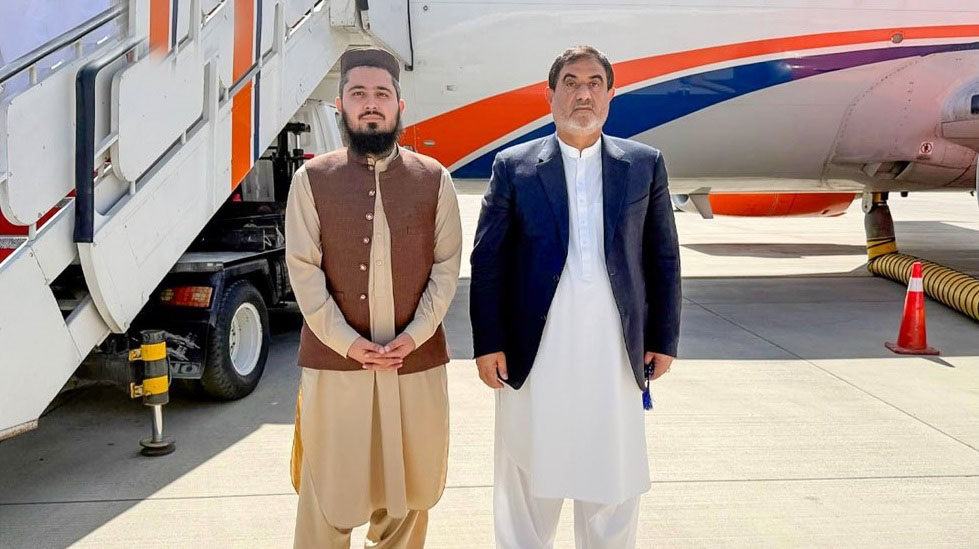
Sayed Karim Hashemi, chairman of the Afghanistan Chamber of Commerce and Investment (ACCI), has begun an official visit to Uzbekistan, India, and Kyrgyzstan as part of efforts aimed at strengthening Afghanistan’s regional economic ties.
ACCI said in a post on Saturday that the visit is focused on enhancing regional economic cooperation, attracting foreign investment into Afghanistan, and creating broader trade opportunities for Afghan businesses and traders.
Latest News
Central Asia–Afghanistan dialogue underscores regional connectivity and stability
Participants stressed that improved infrastructure links and stronger economic partnerships could play a key role in promoting stability and facilitating greater regional integration.
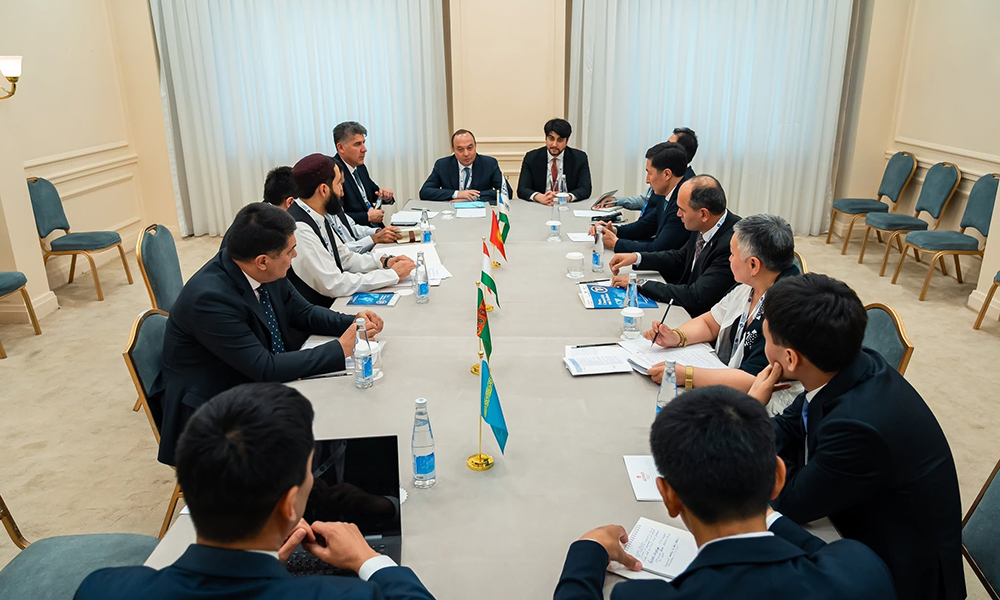
Policymakers, analysts, and regional stakeholders gathered on the sidelines of the Termez Dialogue on Connectivity between Central and South Asia to discuss the future of regional connectivity, economic cooperation, and stability between Central Asia and Afghanistan.
According to the Center for Strategic Studies Afghanistan, participants highlighted Afghanistan’s strategic position as a vital link between Central and South Asia, emphasizing the need for sustained engagement, practical cooperation, and inclusive economic initiatives to strengthen regional ties.
The discussions focused on expanding trade corridors, enhancing transport and energy connectivity, and fostering trust through continued dialogue among regional partners. Representatives from the Center for Strategic Studies, the Ministry of Foreign Affairs, and the Islamic Emirate of Afghanistan shared perspectives on regional priorities and opportunities for deeper cooperation.
Participants stressed that improved infrastructure links and stronger economic partnerships could play a key role in promoting stability and facilitating greater regional integration. They also underscored the importance of maintaining constructive dialogue to address common challenges and advance shared development goals.
The meeting concluded with a renewed commitment to building a stable, connected, and prosperous region. Attendees agreed that closer cooperation between Central Asian countries and Afghanistan is essential for unlocking broader economic opportunities and strengthening regional connectivity.
Latest News
IEA’s supreme leader chairs cabinet meeting in Kandahar, urges stronger religious education and public service
The IEA leader stressed that strengthening the country’s Islamic system depends on expanding religious education and increasing public awareness of Islamic teachings.
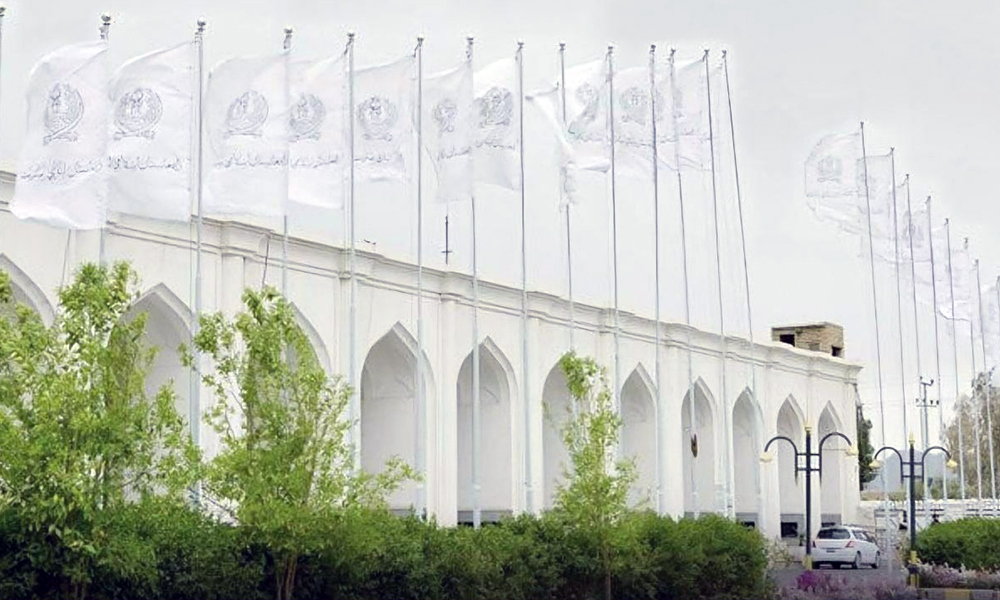
The supreme leader of the Islamic Emirate of Afghanistan (IEA), Hibatullah Akhundzada, chaired a meeting of the Council of Ministers in Kandahar, where he called for greater emphasis on religious education, justice, accountability, and public service, according to Deputy Spokesman Hamdullah Fitrat.
Speaking at the meeting, Akhundzada provided guidance to cabinet members on carrying out their responsibilities, implementing Sharia-based directives, addressing public concerns, and serving citizens with sincerity and commitment, Fitrat said.
The IEA leader stressed that strengthening the country’s Islamic system depends on expanding religious education and increasing public awareness of Islamic teachings. He urged officials to uphold Islamic values, provide religious guidance, and work to protect society from influences he described as harmful to moral and religious principles.
Akhundzada also underscored the importance of justice, humility, accountability, and ethical conduct among government officials, saying their actions should reflect Islamic teachings and set a positive example for the public.
According to Fitrat, the supreme leader further called for the expansion of Islamic education nationwide, noting that knowledge and strong religious conviction contribute to stability and effective governance.
The Council of Ministers also reviewed the implementation of previous decisions and discussed a range of administrative, economic, social, and political issues. Officials presented progress reports on ongoing programs, while decisions were taken on measures aimed at improving educational services and strengthening the country’s economic and political sectors.


ACCI chairman embarks on regional tour to boost trade and investment

Iranian private sector delegation arrives in Kabul to boost trade and investment cooperation

Central Asia–Afghanistan dialogue underscores regional connectivity and stability

IEA’s supreme leader chairs cabinet meeting in Kandahar, urges stronger religious education and public service

Iran warns Afghan migrants against unauthorized anti-IEA protests

Norway’s Viking-inspired World Cup team photo goes viral

Large blast near Beit Shemesh part of pre-planned test: Israeli defense firm

Trump returns from China with stability but little progress

Afghanistan announce squad for India series

Afghanistan, Russia sign military cooperation agreement

Tawsia: Increase in Afghanistan’s saffron exports discsused

Tahawol: Middle East crisis and future of Islamic world discussed

Saar: Kabul-Islamabad informal talks in Istanbul discussed

Tahawol: Fresh Pakistani military attacks on Afghanistan discussed

Saar: Emphasis on continued Indian support for Afghanistan discussed
-
 International Sports4 days ago
Norway’s Viking-inspired World Cup team photo goes viral
-

 International Sports3 days ago
One Day to Go: Everything you need to know about FIFA World Cup 2026
-

 International Sports4 days ago
Upsets and historic milestones highlight men’s action at Rome Taekwondo Grand Prix
-
 Latest News4 days ago
Karzai, UK envoy react after protest dispersed in Herat
-
 Latest News4 days ago
Uzbek company keen to establish mineral processing plant in Afghanistan
-
 Latest News3 days ago
Pakistani airstrikes on civilian areas in three Afghan provinces kill 13
-
 Sport2 days ago
Afghanistan A edge India A by four runs in rain-hit Tri-Nation opener
-
 Latest News4 days ago
Afghan central bank, AACC discuss expanding banking, trade and investment ties