
Latest News
HPC: Peace Talks with Taliban ‘Next Week’

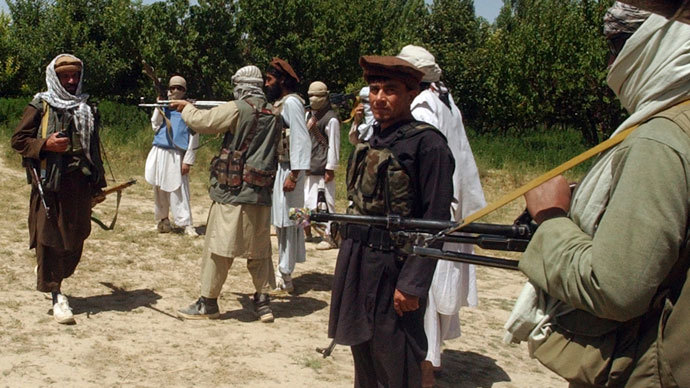

Afghanistan High Peace Council (HPC) on Wednesday said that Afghan government official negotiation with the Taliban group will begin next week.
Deputy of HPC said that the Talks will be carried out in China or one of the Arabic countries.
The statement came after that earlier Afghanistan’s most prominent peace envoy held secret talks with former Taliban officials in China, accelerating regional efforts to bring the insurgency to the negotiating table.
People familiar with the movement said the three Taliban who attended the China talks have strong ties to Pakistan’s spy agency, and that they aren’t authorized to speak on behalf on the insurgency about reconciliation.
“The Afghan government will start peace talks with the Taliban in the near future,” Abdul Hakim Mujahid, deputy of HPC said, adding that the government would keep the Afghan people informed of any progress in talks with the Taliban “from the beginning to the end of the process.”
Brokering a peace deal with the insurgents is a priority for Ghani, who took office in September.
The government of Afghanistan is close to beginning direct peace talks with Taliban insurgents.
HPC claims that Islamabad has the ability to persuade Taliban to end the war; a country that had never stood by its commitments against Afghanistan.
In 2013, the Taliban briefly opened a diplomatic office in the Persian Gulf sheikdom of Qatar after clandestine talks involving the United States and the European Union.
Angry that Afghans had been excluded, Karzai refused to participate and roundly criticized the effort, which quickly fell apart.
An Afghan official who has been in contact with the Taliban delegation in Qatar but was not authorized to speak to the news media, said one option being considered was to name a former Taliban official to lead the High Peace Council, the Afghan government body that liaises with the insurgency.
The top candidate is Motassim Agha Jan, a finance minister under the Taliban government that ruled Afghanistan in the late 1990s.
Motassim, the former chairman of the political committee of the Quetta Shura, the Taliban’s Pakistani-based top leadership, for years has called on the group to to engage in the political process.
The peace council, long seen as ineffective, has previously been led by former Afghan President Burhanuddin Rabbani and his son Salahuddin, who were closely allied with slain former militia commander Ahmad Shah Massoud, one of the top leaders of the Afghan jihad against Taliban rule.
Taliban officials in Doha, Qatar’s capital, “said they can’t support [Motassim] publicly, but they also will not stand in the way,” the Afghan official said.
Some Afghan officials warn that the government must proceed with caution.
Afghan political analysts stressed that Islamabad had never been honest in its commitments but this time it should fulfill its promises.
Pakistan’s support is widely seen as critical for a peace process to work. Much of the Taliban leadership has been based in Pakistan since the regime was toppled in 2001, and its fighters have used the lawless border areas between the two countries as an operational base.
Afghan and Western officials have long accused Pakistan of effectively controlling the Taliban insurgency, an allegation Islamabad has repeatedly denied, even as it acknowledges it has some influence over the movement.
Since taking office, Ghani has rolled out a complex strategy aimed at forcing the Taliban leadership to accept that their cause — replacing his government with an Islamist emirate — is hopeless. He has enlisted the support of regional countries believed to protect, fund and arm the Taliban, including Pakistan.
Reported by Fawad Naseri

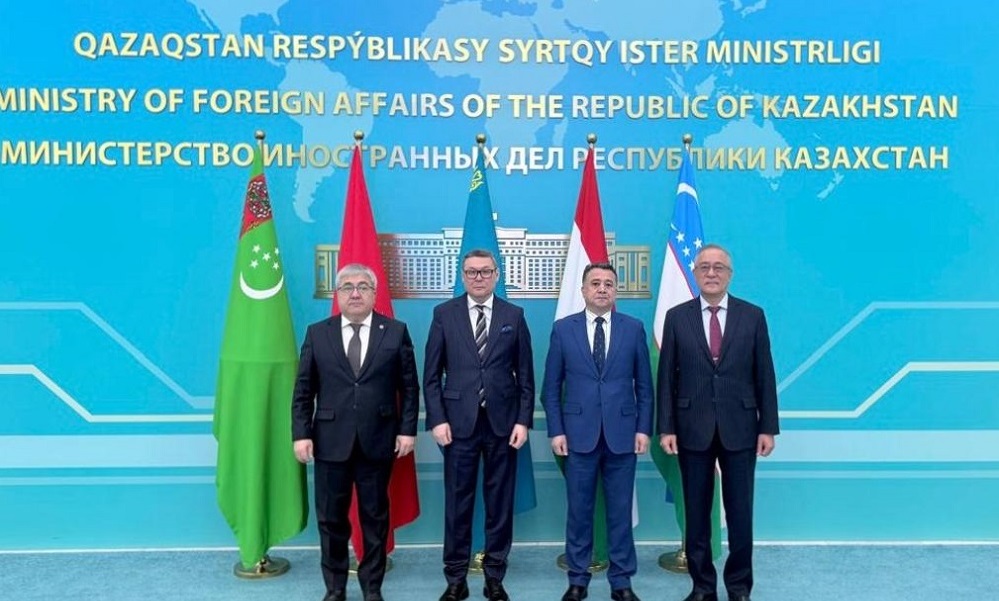
An extraordinary meeting of the Regional Contact Group of Special Representatives of Central Asian countries on Afghanistan was held at Kazakhstan’s Ministry of Foreign Affairs.
The gathering brought together representatives from Kazakhstan, Kyrgyzstan, Tajikistan, and Uzbekistan to discuss the situation in Afghanistan and explore avenues for practical cooperation, Kazakh foreign ministry said in a statement.
Yerkin Tukumov, Special Representative of the President of Kazakhstan for Afghanistan, emphasized the country’s commitment to constructive dialogue and identifying practical solutions to address pressing issues related to engagement with Kabul.
Discussions focused on enhancing trade and economic ties, expanding transit and transport corridors through Afghanistan, and addressing regional security concerns. Participants stressed the need for coordinated efforts among Central Asian states to ensure stability and promote sustainable development in Afghanistan.
The meeting concluded with a reaffirmation of the participants’ readiness to continue regular consultations and maintain working-level contacts under the framework of the Regional Contact Group.
Latest News
Afghanistan’s defense ministry unveils new military uniforms for armed forces
Speaking at the ceremony, Qari Fasihuddin said the uniform is designed to reinforce order, discipline, and a shared sense of purpose within the ranks.
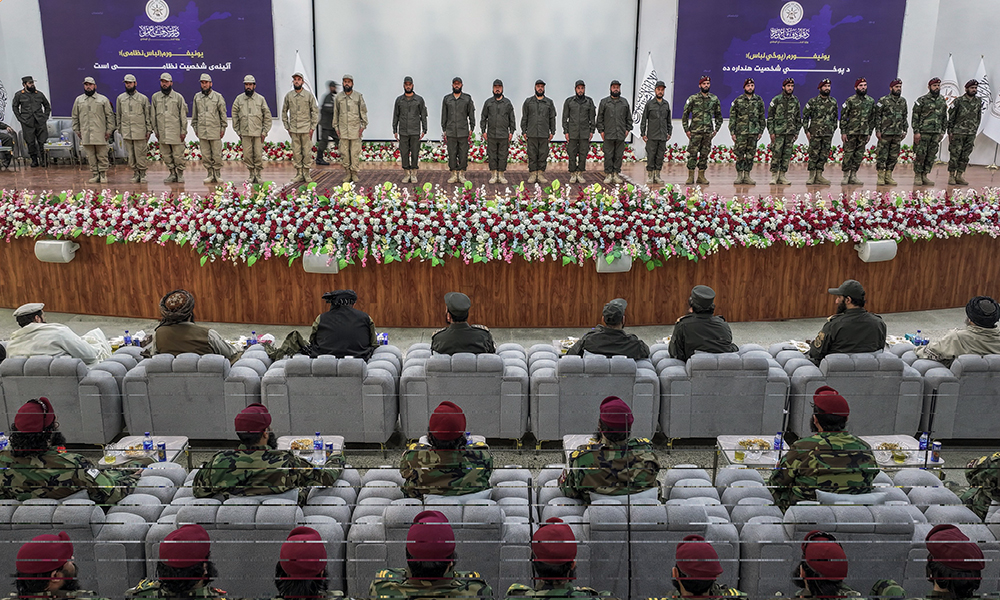
The Ministry of National Defense of the Islamic Emirate of Afghanistan officially unveiled a new uniform for the country’s armed forces on Monday.
The new attire, selected for commandos, border police, and the Afghan National Army, was introduced during a special ceremony held at the Ministry’s headquarters.
The event was attended by the Chief of Staff of the Armed Forces, Qari Mohammad Fasihuddin Fitrat, senior ministry officials, and commanders of central units. Officials emphasized that the new uniform represents discipline, cohesion, and a unified identity among all personnel.
Speaking at the ceremony, Qari Fasihuddin said the uniform is designed to reinforce order, discipline, and a shared sense of purpose within the ranks.
“This new uniform symbolizes unity and solidarity of our armed forces,” he said. “All those joining the ranks must see defending the country as their primary responsibility and commitment.”
Meanwhile, Enayatullah “Khowarzmi,” Head of Strategic Information and Publications at the Ministry, highlighted the importance of professionalism and ethical conduct.
He said; “Every soldier must have strong willpower, high moral standards, and strict adherence to military principles. Forces must remain resolute against enemies while serving the people with integrity and responsibility.”
According to ministry officials, the introduction of the new uniform is part of ongoing efforts to strengthen cohesion, discipline, and a unified identity among Afghanistan’s defense forces.
Latest News
Tashkent and Kabul discuss strengthening strategic partnership
The discussions come amid continued efforts by neighboring countries to maintain pragmatic engagement with Kabul despite ongoing political and economic challenges.
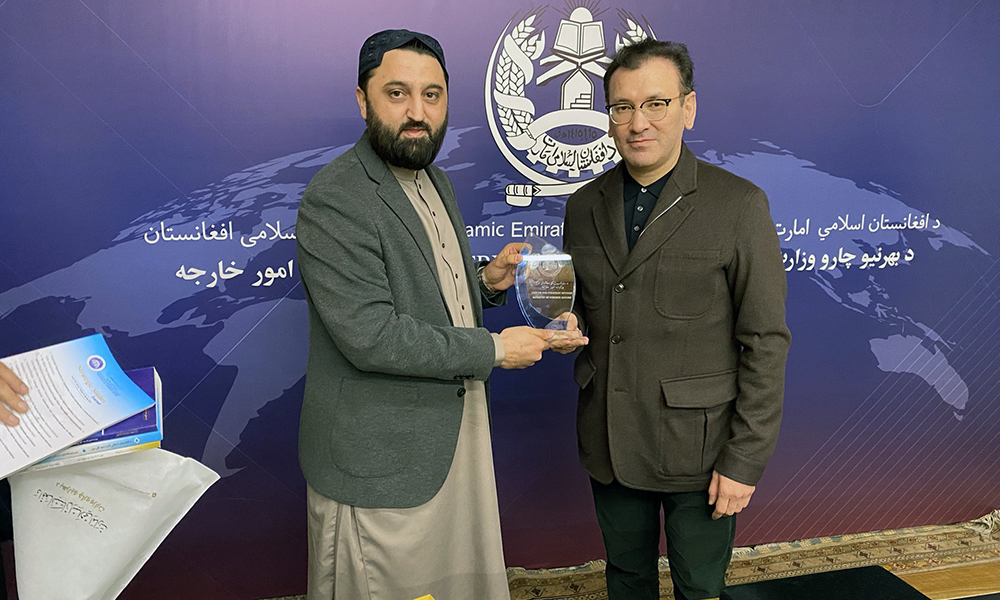
A senior Uzbek official has held talks in Kabul aimed at deepening political, economic and regional cooperation between Uzbekistan and Afghanistan, as both sides seek to translate long-term strategic goals into practical outcomes.
Javlon Vakhabov, Deputy Adviser to the President of Uzbekistan, met with Abdulhai Qanet, Head of the Strategic Studies Center at Afghanistan’s Ministry of Foreign Affairs, to discuss ways to enhance cooperation and advance joint agendas under the Uzbekistan–Afghanistan partnership.
In a post on X, Vakhabov said the two sides also explored initiatives to raise public awareness of developments in both countries and across the wider region, highlighting the importance of communication and public engagement alongside diplomatic efforts.
Uzbekistan has in recent years positioned itself as an active regional partner on Afghanistan, advocating dialogue, economic cooperation, and connectivity as key tools for promoting stability. Tashkent has supported regional infrastructure and trade initiatives aimed at linking Central and South Asia, while stressing that economic engagement can contribute to long-term security.
Vakhabov added that both sides are keen to turn long-term strategic objectives into concrete initiatives, with a focus on strengthening regional stability, collaboration, and shared interests.
The discussions come amid continued efforts by neighboring countries to maintain pragmatic engagement with Kabul despite ongoing political and economic challenges.


Central Asian envoys meet in Astana for talks on Afghanistan

Rashid says South Africa heartbreak echoes 2023 Australia loss: ‘It never leaves your mind’

Afghanistan’s defense ministry unveils new military uniforms for armed forces

Afghanistan stay alive in T20 World Cup with crucial win over UAE

With Torkham closed, trade losses mount

Afghan traders sign deal to import pharmaceuticals from Bangladesh

AFC Futsal Asian Cup 2026: Day One Review

AFC Futsal Asian Cup: Afghanistan to face Iran in crucial Group D clash

Afghanistan shine on Day Two of AFC Futsal Asian Cup Indonesia 2026

Russia signals interest in expanding investment and trade ties with Afghanistan

Tahawol: 37th anniversary of Soviet exit from Afghanistan

Saar: 37th anniversary of Soviet withdrawal from Afghanistan

Tahawol: Impact of continued sanctions on Afghanistan reviewed

Exclusive interview with Kenichi Masamoto, Japanese Ambassador to Kabul

Saar: Discussion on Iran and US negotiations
-
 Sport5 days ago
Afghanistan’s semi-final hopes hang in the balance after two T20 World Cup defeats
-

 Sport4 days ago
AFC U17 Men’s Asian Cup Saudi Arabia 2026 Draw sets stage for continental showdown
-
 World4 days ago
Pressure rises on Dubai port giant DP World over chief’s alleged Epstein ties
-
 Sport4 days ago
Winter Olympics 2026: Wednesday brings records, first-ever golds and thrilling action
-
 Latest News4 days ago
Afghanistan moving toward development and industrialization every day: Azizi
-
 Latest News2 days ago
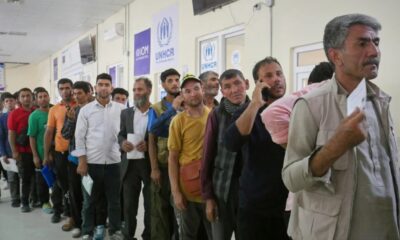
UN warns mass return of Afghans from Pakistan and Iran is pushing Afghanistan to the brink
-
 Latest News2 days ago
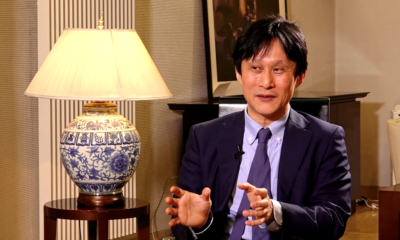
Japan maintains direct contacts with IEA officials through Kabul Embassy
-
 Latest News1 day ago
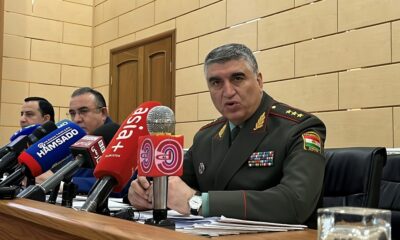
Tajikistan: Recent attacks from Afghanistan aimed at damaging our relations with China