
Regional
Majority consensus reached on Iran’s next supreme leader

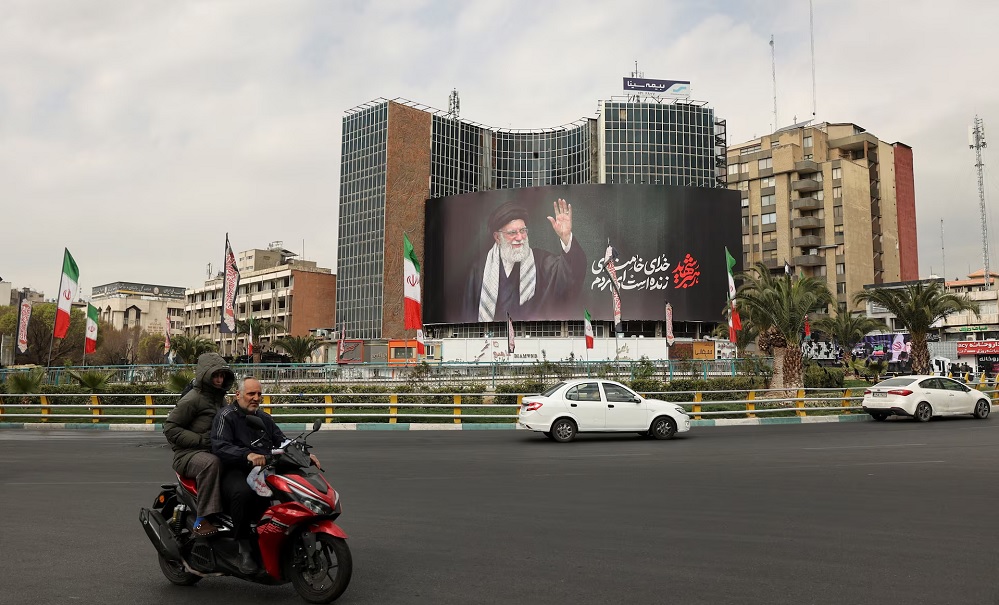
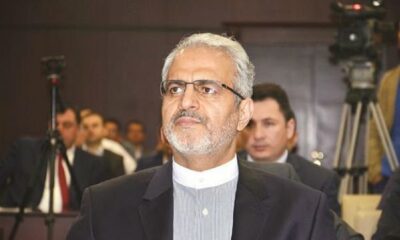
The clerical body that will choose Iran’s next supreme leader, succeeding the slain Ayatollah Ali Khamenei, has more or less reached a majority consensus, Assembly of Experts member Ayatollah Mohammadmehdi Mirbaqeri said on Sunday.
The Mehr news agency quoted him as saying “some obstacles” still needed to be resolved regarding the process, according to Reuters.
On Saturday, a senior cleric in the Assembly of Experts said its members would meet “within one day” to choose the leader.
Iranian media said the group had a minor disagreement over whether their final decision must follow an in-person meeting or instead be issued without adhering to this formality.
Ayatollah Mohsen Heidari Alekasir, another member of the Assembly of Experts, said in a video released by Nournews on Sunday that an in-person meeting by the assembly for a final vote was not possible under current conditions.
He said a candidate had been picked, based on the late supreme leader’s advice that Iran’s top leader should “be hated by the enemy” instead of praised by it.
“Even the Great Satan (U.S.) has mentioned his name,” Heidari Alekasir said of the chosen successor, days after U.S. President Donald Trump said that Khamenei’s son, Mojtaba, was an “unacceptable” choice for him.



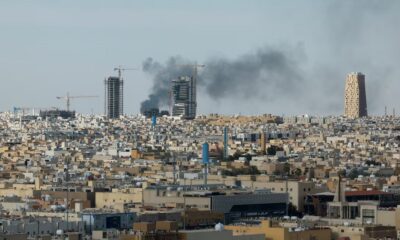


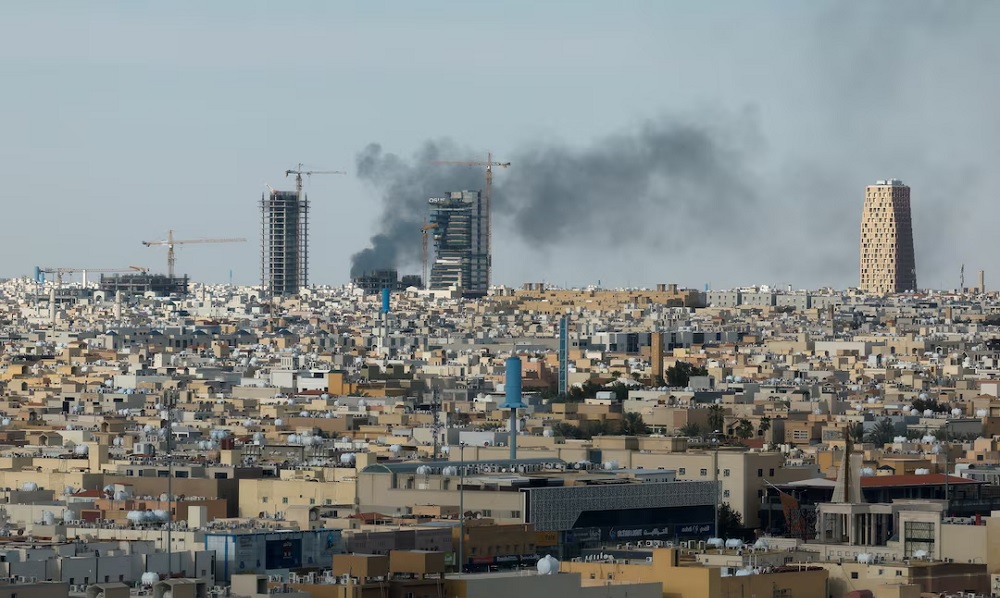
Saudi Arabia has told Tehran that while it favours a diplomatic settlement to Iran’s conflict with the United States, continued attacks on the kingdom and its energy sector could push Riyadh to respond in kind, Reuters reported citing four sources familiar with the matter.
The message was conveyed before a speech on Saturday in which Iranian President Masoud Pezeshkian apologised to neighbouring Gulf states for Tehran’s actions — an apparent attempt to defuse regional anger over Iranian strikes that hit civilian targets.
Two days earlier, Saudi Foreign Minister Prince Faisal bin Farhan spoke to Iranian Foreign Minister Abbas Araqchi and set out Riyadh’s position with clarity, the sources said.
Saudi Arabia is open to any form of mediation aimed at de‑escalation and a negotiated settlement, the sources quoted the minister as saying, underlining that neither Riyadh nor other Gulf states had let the U.S. use their airspace or territory to launch airstrikes on Iran.
But Prince Faisal was also quoted by the sources as saying that if Iranian attacks persisted against Saudi territory or energy infrastructure, Saudi Arabia would be forced to permit U.S. forces to use their bases there for military operations. Riyadh would retaliate if attacks on the kingdom’s critical energy facilities continued, he said.
The sources said the kingdom had remained in regular contact with Tehran through its ambassador since the U.S. and Israeli military campaign against Iran began on February 28 following the collapse of talks on Iran’s nuclear programme.
The Saudi and Iranian foreign ministries did not respond to requests for comment.
DRONE AND MISSILE ATTACKS ON GULF STATES
The United Arab Emirates, Kuwait, Qatar, Bahrain and Saudi Arabia have all come under heavy drone and missile fire from Iran over the past week.
Iran’s Supreme Leader, Ayatollah Ali Khamenei, was killed on the first day of the war. Tehran responded by hitting Israel and Gulf Arab states hosting U.S. military installations, and Israel has attacked Lebanon’s Iran-backed Hezbollah armed group.
Araqchi said in an interview on Saturday that he remained in constant contact with his Saudi counterpart and other Saudi officials, adding that Riyadh had assured Tehran it was fully committed to not allowing its territory, waters or airspace to be used for attacks against Iran.
Pezeshkian said Iran’s temporary leadership council had approved suspending attacks on nearby countries – unless an attack on Iran came from those nations.
“I personally apologise to neighbouring countries that were affected by Iran’s actions,” he said.
To what extent Pezeshkian’s remarks signal a change is unclear. There were further reports of strikes directed at Gulf states on Saturday.
Also, in a sign of possible divisions within Iran’s leadership, Khatam al-Anbiya Central Headquarters – the unified combatant command of the Iranian armed forces – said in a statement afterwards that U.S. and Israeli bases and interests across the region would remain targets.
The command said Iran’s armed forces respected the sovereignty and interests of neighbouring states and had not taken action against them so far. But it said U.S. and Israeli military bases and assets on land, at sea and in the air across the region would be treated as primary targets and face “powerful and heavy” strikes by Iran’s forces.
U.S. President Donald Trump said in a social media post that Iran had “apologized and surrendered to its Middle East neighbours, and promised that it will not shoot at them anymore. This promise was only made because of the relentless U.S. and Israeli attack.”
Two Iranian sources confirmed that a call had taken place in which Riyadh warned Tehran to halt attacks on Saudi Arabia and neighbouring Gulf states. Iran, they said, reiterated its position that the strikes were not aimed at Gulf countries themselves but at U.S. interests and military bases hosted on their territory.
One Iranian source said that Tehran had in response demanded that U.S. bases in the region be closed and some Gulf states stop sharing intelligence with Washington that Iran believes is being used to carry out attacks against it.
Another Iranian source said some military commanders were pressing to continue the strikes, accusing the U.S. of using bases in Gulf states and these countries’ airspace to conduct operations against Iran.
Iran had in recent years mended fences with its Gulf neighbours, including former regional arch-rival Saudi Arabia. The diplomatic campaign imploded in the blitz of drones and missiles launched by Iran’s Revolutionary Guards in the past week.
The expanding war in Iran entered its second week on Saturday amid renewed uncertainty about how or when hostilities will end, as U.S. President Donald Trump declared he would only accept Tehran’s “unconditional surrender” and Israel traded fresh attacks with Iran and Lebanon.
Trump’s comments on social media on Friday came hours after Iran’s president announced that unnamed countries had begun mediation efforts, briefly raising the possibility, however faint, of a diplomatic resolution a week after the U.S. and Israel launched strikes on Iran, Reuters reported.
“There will be no deal with Iran except UNCONDITIONAL SURRENDER!” Trump wrote. “After that, and the selection of a GREAT & ACCEPTABLE Leader(s), we, and many of our wonderful and very brave allies and partners, will work tirelessly to bring Iran back from the brink of destruction, making it economically bigger, better, and stronger than ever before.”
Trump has offered shifting explanations of his war aims, raising the possibility of an extended regional conflict that has already spilled well beyond Iran’s borders, shaken global financial markets and sent oil prices soaring.
In response to the attack, Iran has targeted Israel as well as multiple Gulf states that host U.S. military installations.
Inside Israel on Friday, explosions could be heard as Israeli defenses activated to shoot down incoming Iranian fire. The UAE, Kuwait, Qatar, Bahrain and Saudi Arabia all reported fresh drone and missile attacks.
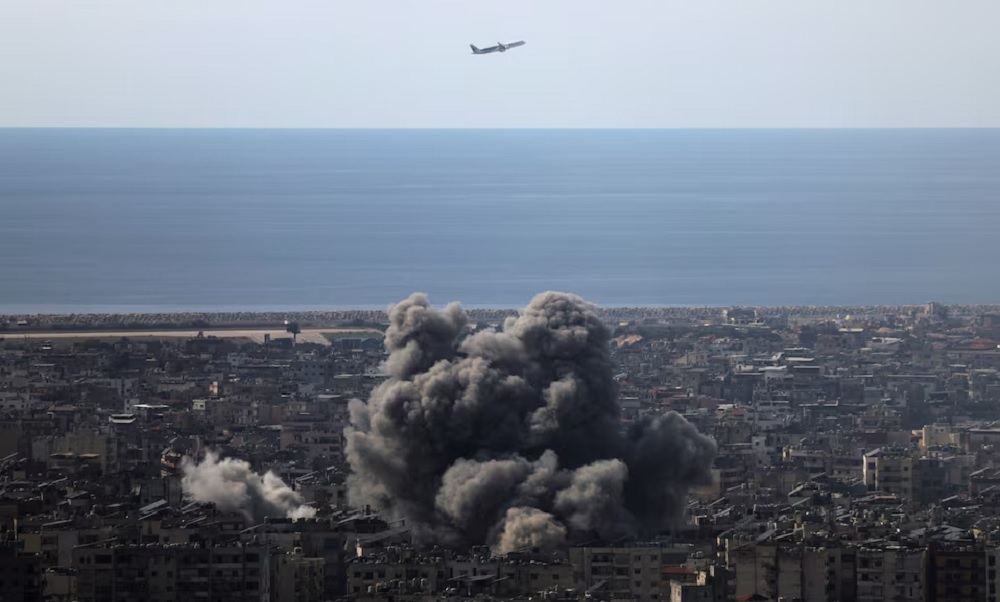
Meanwhile, Israel pursued a major expansion of the war in Lebanon, pounding the capital Beirut on Friday after ordering an unprecedented evacuation of the city’s entire southern suburbs.
Israel also launched a new wave of attacks on Iran, saying 50 of its warplanes had hit a bunker still being used by Iran’s leadership beneath slain Supreme Leader Ayatollah Ali Khamenei’s destroyed Tehran compound.
Early on Saturday, Iran’s semi-official Tasnim news agency reported that Mehrabad Airport in Tehran had been struck.
There was no immediate comment from Iran’s Revolutionary Guard or Hezbollah.
Israel has extended its bombing to Lebanon to root out Hezbollah, the Shi’ite militia allied to Iran that has been a dominant faction in Lebanese politics since the 1980s. Hezbollah fired on Israel this week to avenge the death of Khamenei.
“We’re sleeping here in the streets – some in cars, some on the street, some on the beach,” said Jamal Seifeddin, 43, who fled Beirut’s southern suburbs and spent the night on the streets in the downtown district.
About 300,000 people have been displaced in Lebanon in the past four days, according to the Norwegian Refugee Council.
The Israeli military says it has destroyed 80% of Iran’s air-defense systems in the first week of the campaign and disabled more than 60% of its missile launchers.
MARKETS SWOON
Trump’s demand for Iran’s surrender, and the likelihood that it would complicate any quick path to ending the conflict, sent European and U.S. stock indexes tumbling on Friday. Oil prices hit their highest prices in years with the critical shipping lane of the Strait of Hormuz effectively closed down.
Trump told Reuters in a telephone interview on Thursday that he must have a say in selecting Iran’s new supreme leader to replace Khamenei, killed on the war’s first day, a demand he repeated on Friday in a remarkable assertion of power over the country of more than 90 million people.
Iran’s U.N. ambassador, Amir Saeid Iravani, told reporters that new leadership would be chosen “in accordance with our constitutional procedures and solely by the will of the Iranian people – without any foreign interference.”
Israel has said openly that it aims to overthrow Iran’s ruling system. It has been bombing parts of western Iran to support Iranian Kurdish militias who hope to exploit the war to seize towns near the frontier, according to three sources familiar with Israel’s talks with the factions.
Iran has cast the war as an unprovoked attack and describes the killing of Khamenei as an assassination.
HUNDREDS KILLED SO FAR
Earlier on Friday, Iran President Masoud Pezeshkian posted on social media: “Some countries have begun mediation efforts.” He did not identify the countries or provide further details.
Russia is providing Iran with locations of U.S. warships and aircraft in the Middle East after Iran’s ability to locate U.S. forces was degraded, the Washington Post reported, citing three officials familiar with the intelligence.
Russian missions in the U.S. did not immediately respond to requests for comment on the report.
Trump met with executives from seven defense contractors on Friday, who he later said had agreed to accelerate weapons production. The administration has been pressuring contractors as Iran and other recent operations have drawn down supplies.
Karoline Leavitt, a White House spokeswoman, said the U.S. has enough weapons stockpiles to meet the needs of its Iran operations, which she said would take about four to six weeks to complete.
At least 1,332 people have been killed in Iran since the U.S. and Israel launched strikes on February 28, Iravani said, citing the Iranian Red Crescent Society.
The Lebanese health ministry has reported 123 people killed and 683 wounded as a result of Israeli attacks. Iranian attacks have killed 11 people in Israel since the war started, and at least six U.S. service members have been killed.
Two U.S. officials told Reuters that military investigators believed it was likely that U.S. forces were responsible for an apparent strike on an Iranian girls’ school that killed scores of children on the first day of the war. The investigators have not yet reached a final conclusion.
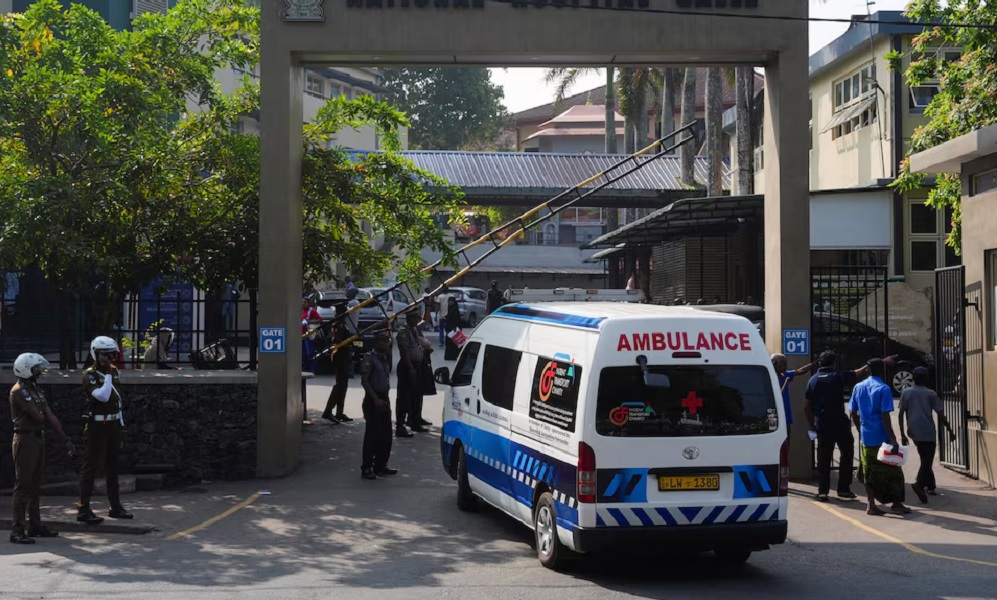
Iranian sailors rescued from a torpedo attack on an Iranian warship in the Indian Ocean are recovering in a hospital in southern Sri Lanka, officials said on Thursday, a day after the strike killed dozens of crew members and left many others missing.
Sri Lankan authorities said 32 sailors who survived the attack were taken to Karapitiya Teaching Hospital in the port city of Galle for treatment of injuries and exhaustion following the explosion and sinking of the vessel.
Hospital officials indicated that most of the survivors suffered relatively minor wounds and were expected to recover, Reuters reported.
The Iranian warship, identified by Sri Lankan officials as the frigate IRIS Dena, was sunk on Wednesday after being struck by a torpedo fired from a U.S. submarine in the Indian Ocean, roughly 40 nautical miles off Sri Lanka’s southern coast.
The incident occurred far from the main theatres of fighting between Iran, Israel and the United States, marking a dramatic widening of the conflict at sea.
Rescue teams responding to a distress call recovered at least 87 bodies from the water, while around 60 crew members remain missing from the roughly 180 people believed to have been aboard the ship.
Sri Lankan navy personnel reported finding survivors floating in the sea amid debris and oil slicks after the vessel sank.
U.S. Defense Secretary Pete Hegseth confirmed that an American submarine carried out the strike, saying the Iranian warship had been targeted with a torpedo while operating in international waters.
A video released by the Pentagon appeared to show a large explosion ripping through the rear of the vessel before it began to sink.
The IRIS Dena, commissioned in 2021, had recently participated in multinational naval exercises in India before beginning its return voyage to Iran when it was attacked.
Sri Lankan authorities said search operations for missing crew members are continuing in the waters south of the island.
The strike is one of the most significant naval incidents of the escalating confrontation involving Iran, the United States and Israel, extending hostilities into the wider Indian Ocean region.


Afghanistan’s Virtue Ministry: Over 3,400 women’s rights complaints addressed in 10 months

Majority consensus reached on Iran’s next supreme leader

Turkey stresses importance of peace and stability in Afghanistan

Mastermind of 2025 bank attack in Afghanistan killed in Peshawar

International Women’s Day: Khalilzad urges IEA to allow girls’ education

Pakistani military jet downed in Afghanistan’s Jalalabad, pilot captured alive

Afghan Air Force conducts airstrikes in Islamabad, other cities

IEA releases three Pakistani soldiers to mark Ramadan

Afghanistan’s Chief of Armed Forces underscores readiness and equipment for national defense

Afghanistan welcomes investment and technology partnerships with India

Tahawol: Upcoming UNSC meeting on Afghanistan discussed

Saar: Ongoing retaliatory attacks against Pakistan discussed

Tawsia: Impact of regional crisis on Afghan projects discussed

Saar: Sixth day of US–Israel war with Iran reviewed

Tahawol: Discussion on ongoing US–Israel war with Iran
-
 Latest News4 days ago
Amir Khan Muttaqi, Zhao Xing discuss regional security and violations of Afghan territory
-

 Latest News1 day ago
Prominent Muslim scholar issues fatwa calling for Afghanistan-Pakistan ceasefire
-

 International Sports5 days ago
Ronaldo’s private jet flies out of Saudi Arabia following US Embassy drone strike in Riyadh
-

 Latest News5 days ago
Asian Football Confederation postpones 2nd-leg knockout ties in West Region
-

 Latest News4 days ago
United Kingdom halts visa routes from four countries, including Afghanistan
-

 Sport5 days ago
FIFA unveils official tournament poster to mark 100 days until World Cup kicks off
-
 Latest News4 days ago
Turkey’s Erdoğan urges diplomacy in call with Shehbaz Sharif amid Middle East crisis
-

 Latest News4 days ago
Russia ready to mediate Afghanistan-Pakistan conflict: Kabulov