
Latest News
Mushroom harvest begins in Kandahar


In Kandahar, farmers who established mushroom farms with the support of international organizations have now begun harvesting their crops.
The Directorate of Agriculture, Irrigation, and Livestock of Kandahar stated that, as a result of its efforts and with financial support from the United Nations Office on Drugs and Crime (UNODC) and technical assistance from the Dutch Committee for Afghanistan, essential supplies worth $20,000 were distributed to 30 needy families in Khakrez district to establish mushroom farms. The harvesting process has now started.
Officials say the program aims to promote alternative crops to opium poppy, improve farmers’ livelihoods, introduce high-yield plants, and expand modern and standardized farming practices. According to them, each farmer can produce up to 10 kilograms of mushrooms in one month from just one kilogram of seeds at home—a process that is simple, low-cost, and highly profitable.
Mohammad Hanif Haqmal, spokesperson for the Kandahar Directorate of Agriculture, said: “For around 30 families, 23 types of tools necessary for mushroom farming were distributed. Seeds were also provided so they could establish farms and harvest crops. This is the first time mushroom is being cultivated in Kandahar. The Directorate of Agriculture will continue its efforts to promote this crop in other areas of the country so people can establish farms at home and increase their income. In Kandahar, the price of one kilogram of mushroom ranges between 350 and 400 Afghanis.”
Officials from the Dutch Committee for Afghanistan also confirmed that 23 types of tools and necessary materials for mushroom cultivation were previously distributed to the families, and the harvest is now underway. They consider the plant a suitable alternative to opium poppy and said they will continue supporting the farmers.
Abdulhadi Dawoodzi, representative of the Dutch Committee for Afghanistan in Kandahar, added: “We distributed 20 types of materials and tools necessary for planting and harvesting mushroom to 30 families, worth $20,000. This support serves as an alternative to opium cultivation.”
Farmers view mushroom as a viable substitute for opium poppy. They say the crop requires less effort and yields higher profits, making it a suitable option, especially during drought conditions.
Sibghatullah, a Kandahar farmer, said: “Mushroom can serve as a complete alternative to opium and hashish. Drought is intensifying every year, and this crop is a good substitute. We ask the organization to establish more farms and help market our products.”
Another farmer, Mohammad Naseem, added: “We can sell mushroom in local markets and to neighbors. Compared to opium and other narcotic crops, it is a better cultivation option.”
Officials from the Kandahar Directorate of Agriculture said that in recent months, they have increased efforts to identify and promote alternative crops and have implemented several programs to introduce high-yield plants suitable for Kandahar’s climatic conditions.





Latest News
Failed Afghan asylum seekers need to return home, Sweden’s migration minister says
He also proposed that Afghan nationals facing deportation in different EU countries could be grouped together and returned on chartered flights.
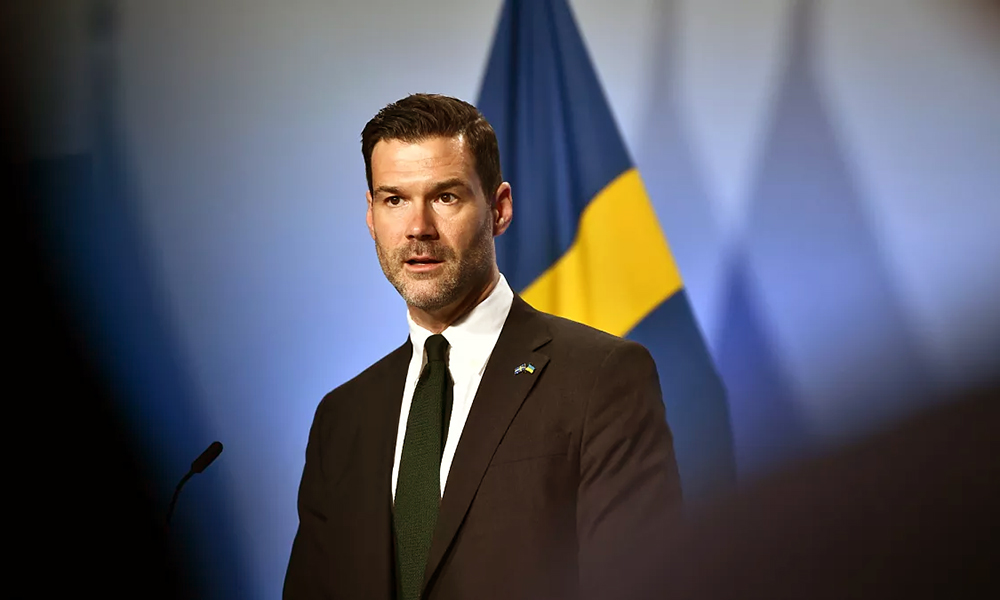
Sweden’s migration minister on Thursday called on the European Union to establish a common procedure for issuing identification and travel documents to Afghan nationals whose asylum applications have been rejected or who have committed crimes in their host countries.
Minister Johan Forssell said it is currently “more or less impossible” to deport Afghan nationals who do not meet asylum criteria because many lack valid ID or travel documents.
Although the EU has no interest in making “any political arrangements” that could lend legitimacy to Afghanistan’s rulers, Forssell said the bloc’s 27 member states could still reach a technical agreement to issue documentation that would speed up deportations.
“It is a major concern for us that we are seeing quite a few cases of people that have committed crimes, Afghan people that committed crimes in Sweden, and it is more or less impossible to expel them today,” Forssell told The Associated Press on the sidelines of an informal meeting of EU justice and home affairs ministers in the Cypriot capital.
“If you come to Europe and you commit crimes, you have chosen yourself not to be part of our society. And we need to do everything we can to make sure that you are expelled,” he said.
Forssell added that similar challenges exist with failed Syrian asylum seekers, but said Afghan nationals remain the priority.
He said Afghan nationals are largely unable to obtain IDs or passports from their home country because most Afghan embassies in Europe are not recognized by the Islamic Emirate authorities. Forssell noted that the EU’s executive arm has recently had contacts in Kabul on the issue, describing it as a “very positive first step.”
According to him, there is “broad consensus” among many EU countries facing similar challenges to take further steps to accelerate the deportation of failed Afghan asylum seekers or those who have committed crimes.
Forssell said more than half of Afghan asylum applications are expected to be rejected and that “they need to go back home,” warning that public support for accepting refugees who do meet asylum criteria could erode otherwise.
He also proposed that Afghan nationals facing deportation in different EU countries could be grouped together and returned on chartered flights.
European Commissioner for Internal Affairs and Migration Magnus Brunner said EU member states are engaging at a technical level with Afghanistan’s “effective authorities” to better facilitate repatriations.
Sweden’s traditionally generous asylum policy has tightened over the past decade, amid what Forssell described as growing public concern over the “problems” associated with mass migration. He said these concerns played a key role in the formation of the current government three years ago, which relies on support from the hard-right Sweden Democrats.
Forssell noted that asylum applications in Sweden are at their lowest level since 1985. “So I think we are doing very well and we are really delivering what the Swedish population wants to see from us,” he said.
Latest News
West Indies win third T20I as Afghanistan clinch series 2–1
Despite the final-match setback, the series concluded in Afghanistan’s favour, marking a successful campaign as the team now turns its focus to preparations for the ICC Men’s T20 World Cup 2026.
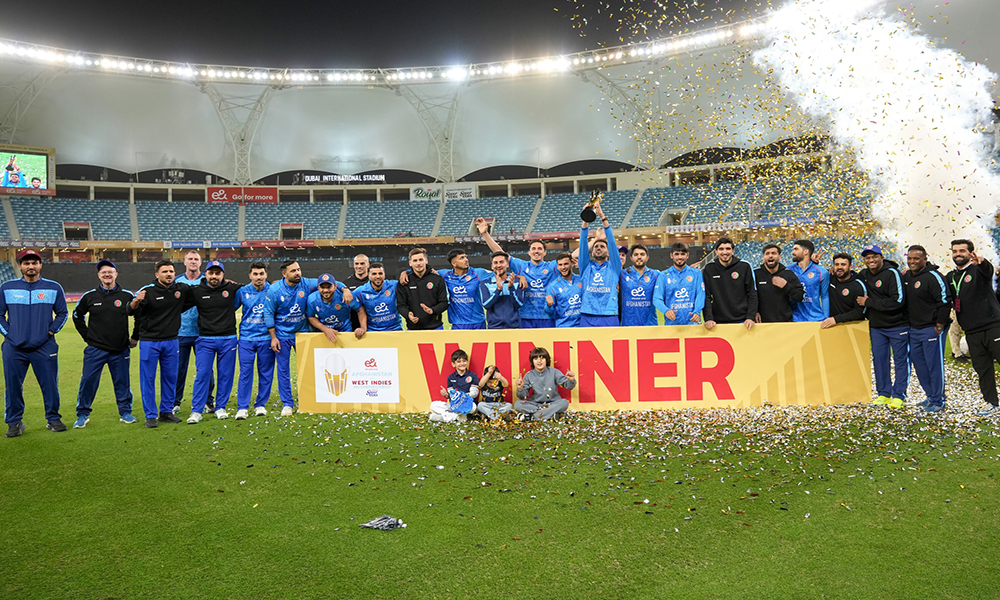
Afghanistan’s national cricket team suffered a narrow 15-run defeat in the third and final T20 International, but victories in the opening two matches ensured a 2–1 series win over West Indies in the e& Cup T20I series.
Afghanistan won the toss and chose to bowl in the series decider, using the match to assess their chasing capabilities ahead of the ICC Men’s T20 World Cup, which begins early next month.
West Indies posted 151 for seven in their 20 overs, with Afghanistan’s bowlers delivering a disciplined performance. Rashid Khan led the attack with figures of 2 for 13, while Abdullah Ahmadzai (2/30) and Zia Ur Rahman Sharifi (2/43) also claimed two wickets each.
Chasing a target of 152, Afghanistan were anchored by Rahmanullah Gurbaz, who struck a fluent 70 runs, but the hosts were unable to maintain momentum and finished 15 runs short, handing West Indies their first victory of the series — and their first-ever T20I win in Dubai.
West Indies fast bowler Shamar Springer was named Player of the Match after claiming a decisive hat-trick that turned the contest in his team’s favour.
Afghanistan’s Darwish Rasooli was awarded Player of the Series for an outstanding batting display, amassing 156 runs, including two half-centuries across the three matches.
Despite the final-match setback, the series concluded in Afghanistan’s favour, marking a successful campaign as the team now turns its focus to preparations for the ICC Men’s T20 World Cup 2026.
Latest News
Trump criticised over claim NATO allies avoided Afghanistan frontlines
Sky News US correspondent David Blevins said the remarks would be viewed as “grossly offensive” by allied nations whose troops fought and died alongside American forces.
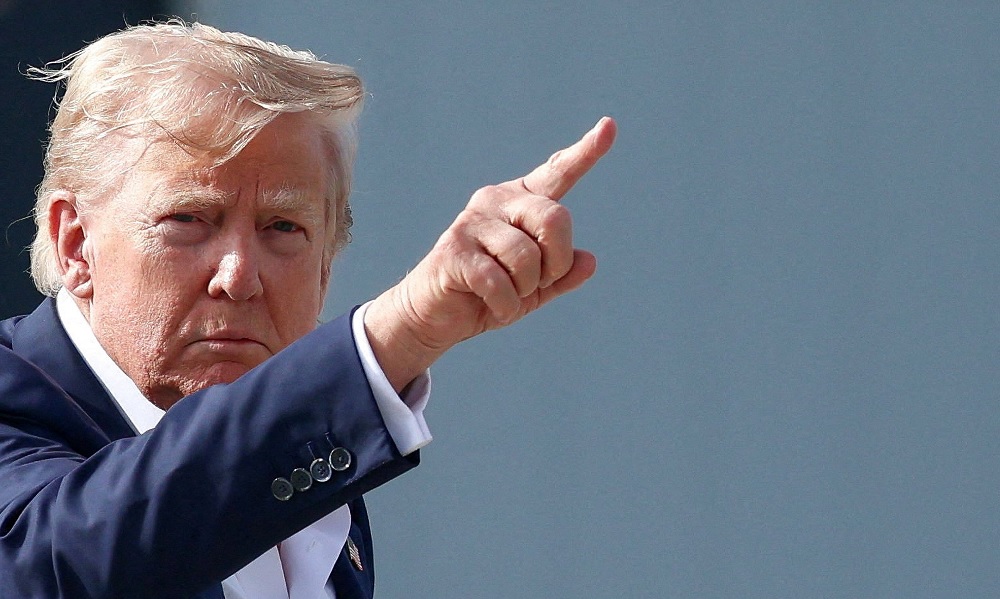
US President Donald Trump has drawn sharp criticism from allies after claiming NATO forces remained “off the frontlines” during the war in Afghanistan, remarks widely described as inaccurate and offensive by politicians and military veterans.
Speaking in an interview with Fox News on the sidelines of the World Economic Forum in Davos, Trump repeated long-standing criticisms of the NATO alliance, saying he was not “sure” it would support the United States in a future conflict.
“We’ve never needed them,” Trump said. “They’ll say they sent some troops to Afghanistan — and they did — they stayed a little back, a little off the frontlines.”
The comments prompted swift backlash from NATO partners who fought alongside US forces following the September 11, 2001 attacks — the only time NATO has invoked Article 5, its collective defence clause.
Following 9/11, NATO allies joined the US-led invasion of Afghanistan, a conflict that lasted two decades and resulted in heavy casualties among coalition forces. The United States lost 2,461 service members, while allied nations suffered 1,160 fatalities. The United Kingdom recorded the second-highest death toll, with 457 military personnel killed.
Sky News US correspondent David Blevins said the remarks would be viewed as “grossly offensive” by allied nations whose troops fought and died alongside American forces.
UK Social Care Minister Stephen Kinnock said Trump’s comments were “deeply disappointing” and lacked any factual basis.
“There is a long history of the British armed forces standing shoulder to shoulder with the United States,” Kinnock told Sky News. “The only time NATO’s Article 5 has ever been activated was to come to America’s aid after 9/11.”
He added that British and allied soldiers “gave their lives in support of American-led missions” and said any criticism of their sacrifice was “plainly wrong.”
Dame Emily Thornberry, chair of the UK Parliament’s Foreign Affairs Select Committee, also condemned the remarks, calling them “an insult” to the families of fallen soldiers.
“How dare he say we weren’t on the frontline,” she said during a BBC broadcast. “We have always been there whenever the Americans have asked.”
Liberal Democrat leader Sir Ed Davey echoed the criticism, accusing Trump of questioning the sacrifices of allied troops while having avoided military service himself during the Vietnam War.
Former British Army officer and Conservative MP Ben Obese-Jecty, who served in Afghanistan, said Trump’s comments diminished the sacrifices made by NATO soldiers.
“I saw first-hand the horrific casualties suffered by British troops in Sangin, alongside US Marines,” he said. “These remarks do a disservice to our closest military allies.”
The controversy has reignited debate over Trump’s scepticism toward NATO, an alliance the United States helped found and has long described as central to Western collective security.


Tawsia: Reducing Afghanistan’s Reliance on Pakistan Trade

Failed Afghan asylum seekers need to return home, Sweden’s migration minister says

West Indies win third T20I as Afghanistan clinch series 2–1

Trump criticised over claim NATO allies avoided Afghanistan frontlines

Afghanistan’s Chief of General Staff visits IEA embassy in Qatar

Turkey withdraws from Afghanistan-Pakistan mediation amid rising tensions

Sharp drop in exports to Afghanistan drives Pakistan’s trade deficit surge

ICG report says Pakistan most impacted by IEA’s return in Afghanistan

Pakistan approves re-export of stranded Afghan transit trade cargo

Afghanistan–China joint market opens in Kabul
Tawsia: Reducing Afghanistan’s Reliance on Pakistan Trade

Tahawol: Pakistan’s membership in the Gaza peace board

Saar: Trump’s ‘move’ on Greenland discussed

Saar: Trump’s criticism of Afghanistan withdrawal

Tahawol: Pakistan PM’s complaint about Afghanistan
-

 Sport5 days ago
Tune in tomorrow to Ariana Television for AFC U23 Asian Cup semi-finals
-
 Latest News4 days ago
Ariana cargo aircraft arrives in Kabul, boosting trade and exports
-
 Regional4 days ago
Death toll in Karachi’s Gul Plaza fire rises to 27, dozens still missing
-
 Latest News5 days ago
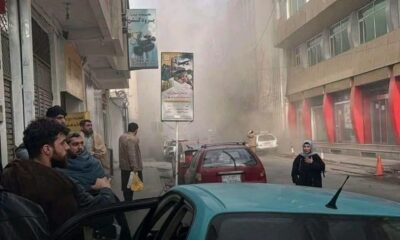
One Chinese national and six Afghans killed in Kabul blast
-

 International Sports4 days ago
FIFA announces hosts and groups for expanded FIFA Series 2026
-

 Sport4 days ago
Afghanistan defeats West Indies by 38 runs, take early lead in T20I series
-

 Sport18 hours ago
China and Japan set for AFC U23 Asian Cup final showdown
-
 Business2 days ago
Afghan traders sign deal to import pharmaceuticals from Bangladesh