
World
Netanyahu, Trump appear to abandon Gaza ceasefire negotiations with Hamas

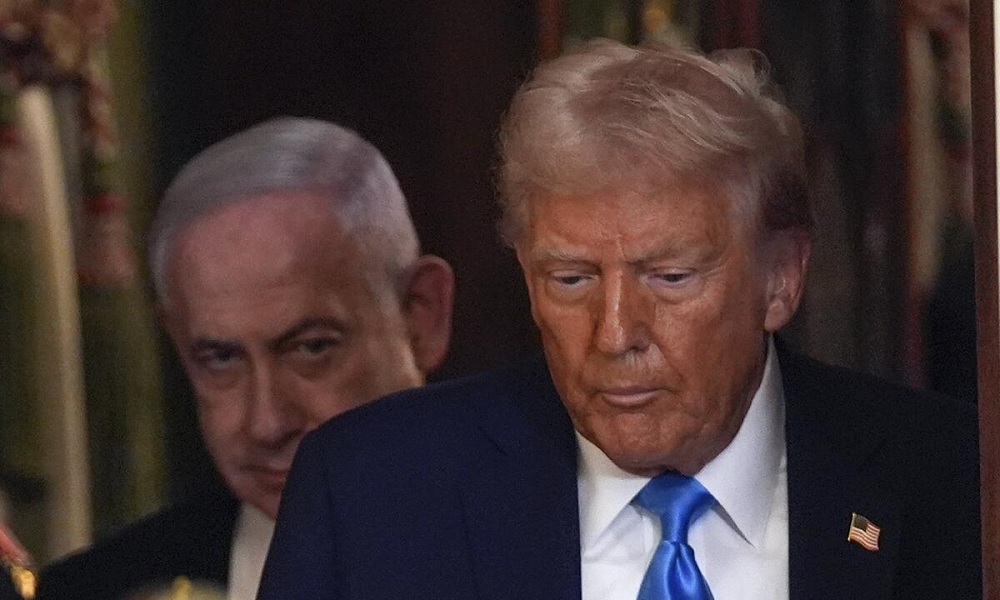
Israeli Prime Minister Benjamin Netanyahu and U.S. President Donald Trump appeared on Friday to abandon Gaza ceasefire negotiations with Hamas, both saying it had become clear that the Palestinian militants did not want a deal.
Netanyahu said Israel was now mulling “alternative” options to achieve its goals of bringing its hostages home from Gaza and ending Hamas rule in the enclave, where starvation is spreading and most of the population is homeless amid widespread ruin, Reuters reported.
Trump said he believed Hamas leaders would now be “hunted down”, telling reporters: “Hamas really didn’t want to make a deal. I think they want to die. And it’s very bad. And it got to be to a point where you’re going to have to finish the job.”
The remarks appeared to leave little to no room, at least in the short term, to resume negotiations for a break in the fighting, at a time when international concern is mounting over worsening hunger in war-shattered Gaza.
French President Emmanuel Macron, responding to the deteriorating humanitarian situation, announced that Paris would become the first major Western power to recognise an independent Palestinian state.
Britain and Germany said they were not yet ready to do so but later joined France in calling for an immediate ceasefire. British Prime Minister Keith Starmer said his government would recognize a Palestinian state only as part of a negotiated peace deal.
Trump dismissed Macron’s move. “What he says doesn’t matter,” he said. “He’s a very good guy. I like him, but that statement doesn’t carry weight.”
Israel and the United States withdrew their delegations on Thursday from the ceasefire talks in Qatar, hours after Hamas submitted its response to a truce proposal.
Sources initially said on Thursday that the Israeli withdrawal was only for consultations and did not necessarily mean the talks had reached a crisis. But Netanyahu’s remarks suggested Israel’s position had hardened overnight.
U.S. envoy Steve Witkoff said Hamas was to blame for the impasse, and Netanyahu said Witkoff had got it right.
Senior Hamas official Basem Naim said on Facebook that the talks had been constructive, and criticised Witkoff’s remarks as aimed at exerting pressure on Israel’s behalf.
“What we have presented – with full awareness and understanding of the complexity of the situation – we believe could lead to a deal if the enemy had the will to reach one,” he said.
Mediators Qatar and Egypt said there had been some progress in the latest round of talks. They said suspensions were a normal part of the process and they were committed to continuing to try to reach a ceasefire in partnership with the U.S.
The proposed ceasefire would suspend fighting for 60 days, allow more aid into Gaza, and free some of the 50 remaining hostages held by militants in return for Palestinian prisoners jailed in Israel.
It has been held up by disagreement over how far Israel should withdraw its troops and the future beyond the 60 days if no permanent agreement is reached.
Itamar Ben-Gvir, the far-right national security minister in Netanyahu’s coalition, welcomed Netanyahu’s step, calling for a total halt of aid to Gaza and complete conquest of the enclave, adding in a post on X: “Total annihilation of Hamas, encourage emigration, (Jewish) settlement.”
MASS HUNGER
International aid organisations say mass hunger has now arrived among Gaza’s 2.2 million people, with stocks running out after Israel cut off all supplies to the territory in March, then reopened it in May but with new restrictions.
The Israeli military said on Friday it had agreed to let countries airdrop aid into Gaza. Hamas dismissed this as a stunt.
“The Gaza Strip does not need flying aerobatics, it needs an open humanitarian corridor and a steady daily flow of aid trucks to save what remains of the lives of besieged, starving civilians,” Ismail Al-Thawabta, director of the Hamas-run Gaza government media office, told Reuters.
Gaza medical authorities said nine more Palestinians had died over the past 24 hours from malnutrition or starvation. Dozens have died in the past few weeks as hunger worsens.
Israel says it has let enough food into Gaza and accuses the United Nations of failing to distribute it, in what the Israeli foreign ministry called on Friday “a deliberate ploy to defame Israel”. The United Nations says it is operating as effectively as possible under Israeli restrictions.
United Nations agencies said on Friday that supplies were running out in Gaza of specialised therapeutic food to save the lives of children suffering from severe acute malnutrition.
United Nations aid chief Tom Fletcher also has demanded that Israel provide evidence for its accusations that staff with the U.N. Office for the Coordination of Humanitarian Affairs were affiliated with Hamas, according to a letter seen by Reuters.
The ceasefire talks have been accompanied by continuing Israeli offensives. Palestinian health officials said Israeli airstrikes and gunfire had killed at least 21 people across the enclave on Friday, including five killed in a strike on a school sheltering displaced families in Gaza City.
In the city, residents carried the body of journalist Adam Abu Harbid through the streets wrapped in a white shroud, his blue flak jacket marked PRESS draped across his body. He was killed overnight in a strike on tents housing displaced people.
Mahmoud Awadia, another journalist attending the funeral, said the Israelis were deliberately trying to kill reporters. Israel denies intentionally targeting journalists.
Israel launched its assault on Gaza after Hamas-led fighters stormed Israeli towns near the border, killing some 1,200 people and capturing 251 hostages on October 7, 2023. Since then, Israeli forces have killed nearly 60,000 people in Gaza, health officials there say, and reduced much of the enclave to ruins.




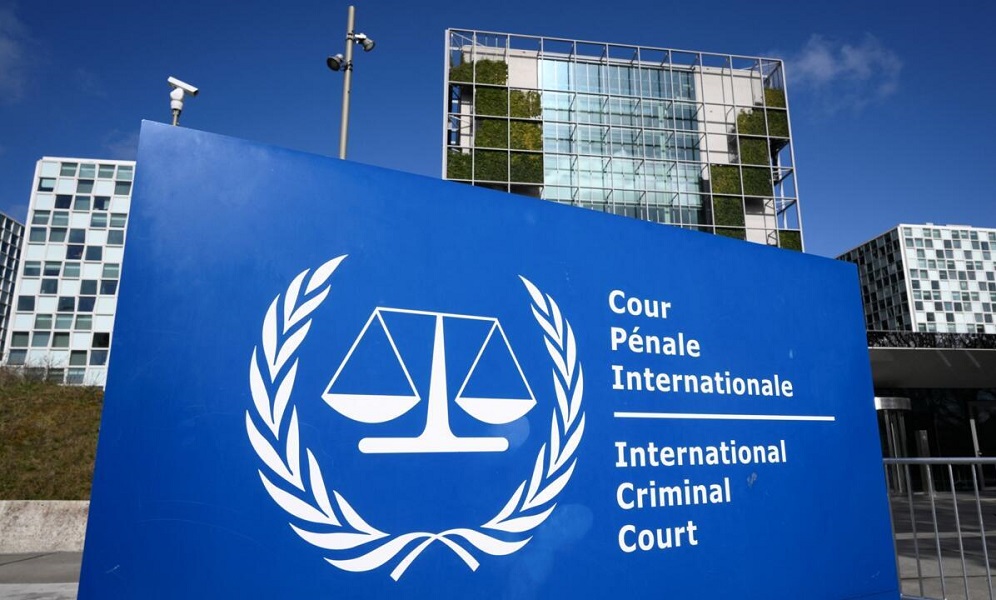
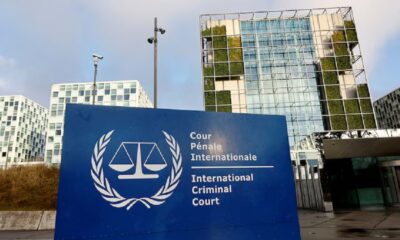
The administration of US President Donald Trump imposed sanctions on the International Criminal Court (ICC) on Friday, escalating tensions with the international judicial body and potentially straining relations with European allies.
US Secretary of State Marco Rubio said the measures aim to prevent the ICC from prosecuting American citizens and restrict the court’s resources and operations.
Washington has criticised the ICC over arrest warrants issued for Israeli Prime Minister Benjamin Netanyahu and other Israeli officials, as well as its past investigation into alleged crimes by US personnel in Afghanistan.
The ICC condemned the sanctions as an “assault on the rule of law” and vowed to continue its investigations and prosecutions. It also urged its 125 member states to defend the court’s independence.
The announcement came hours after former ICC judge Navi Pillay was awarded the Nobel Peace Prize, with the Nobel committee highlighting the importance of international justice amid political pressure on legal institutions.
The sanctions threaten to deepen the dispute between Washington and the ICC, raising concerns about international judicial cooperation and the court’s ability to carry out its work.
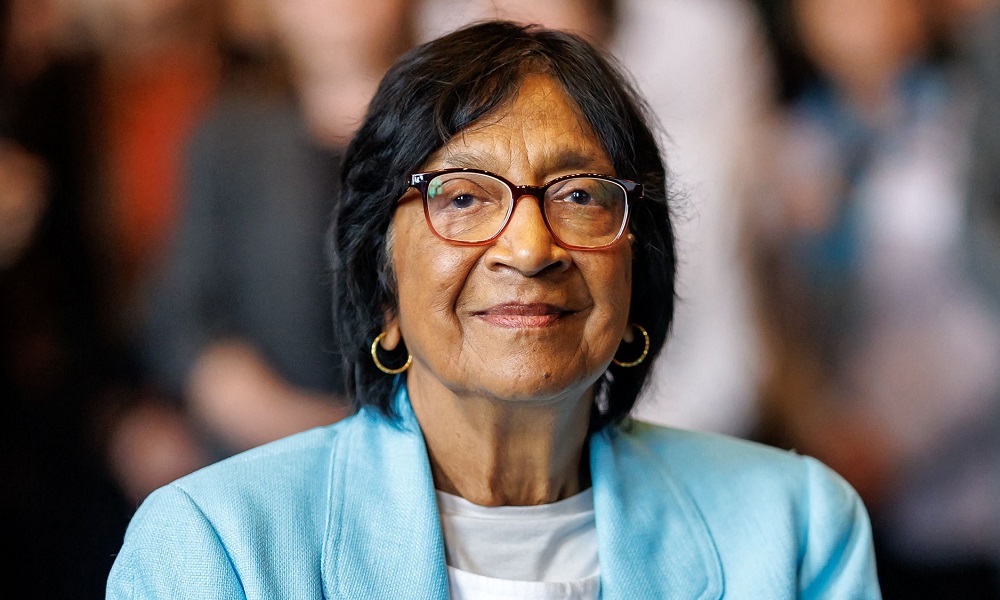
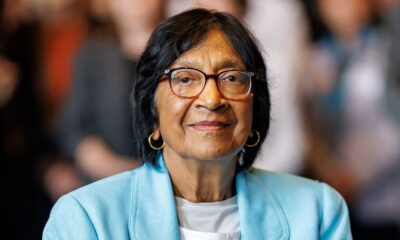
South African jurist Navi Pillay, a former judge at the International Criminal Court (ICC), won the 2026 Nobel Peace Prize on Friday for her efforts to promote peace and international law, as international justice institutions face growing political pressure.
The Nobel Committee announced the award hours before the United States imposed sanctions on the ICC, saying the recognition highlighted the importance of preserving an international order based on law and justice.
Pillay, 85, has served as a judge on several international courts, including the ICC and the International Criminal Tribunal for Rwanda. She also chaired a United Nations Commission of Inquiry on the Occupied Palestinian Territory, which concluded last year that Israel had committed genocide in Gaza. Israel rejected the report as “scandalous.”
The Nobel Committee warned that international law and its institutions were under significant pressure, cautioning that a shift towards power politics at the expense of legal frameworks threatened stability and peaceful coexistence.
The award comes amid escalating tensions between Washington and the ICC. US President Donald Trump has repeatedly criticised the court, particularly over its arrest warrants for Israeli Prime Minister Benjamin Netanyahu and his former defence minister.
Netanyahu’s office condemned the Nobel decision, accusing the committee of awarding its highest honour to someone it said had promoted allegations against Israel.
The award and the US sanctions have renewed international debate over the role of legal institutions in addressing alleged war crimes and protecting accountability under international law.
World
Witkoff, Kushner to meet Ukrainians for talks on the war, says US source
President Donald Trump this week said he planned to talk to Russian President Vladimir Putin by phone soon.
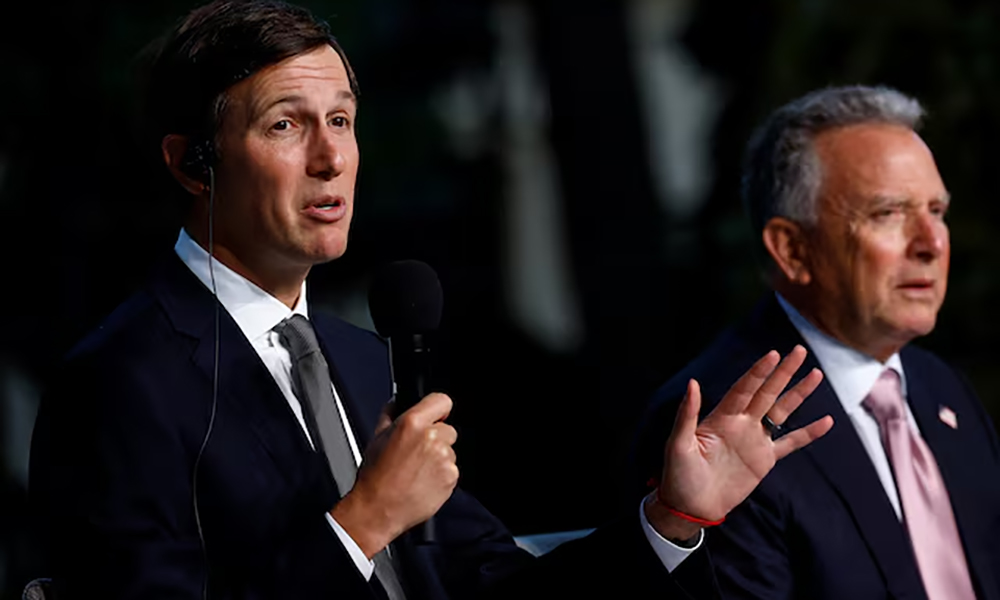
US envoys Steve Witkoff and Jared Kushner will meet Ukrainian representatives on Friday in Miami to discuss new ideas and try to produce a unified proposal for resolving the war in Ukraine, an American source familiar with the plan said on Thursday.
Earlier on Thursday, US Secretary of State Marco Rubio said the conflict was at a dangerous stalemate. President Donald Trump this week said he planned to talk to Russian President Vladimir Putin by phone soon, Reuters reported.
Trump, whose efforts to resolve the conflict have so far not succeeded, has been trying to arrange trilateral talks between Russia, the US and Ukraine.
The source said Witkoff and Kushner would hold a working session with the Ukrainians to discuss “new ideas and proposals that American negotiators began developing with the Russians and Ukrainians during their recent visit to the region”.
The meeting will include representatives from the White House National Security Council and US Treasury Department, the source said. Ukraine’s chief of staff Kyrylo Budanov, intelligence chief Rustem Umerov, and top negotiator David Arakhamia will represent Kyiv.
The American negotiators also invited national security advisors from the United Kingdom, France, and Germany, as well as officials from NATO and the European Union, read the report.
They are expected to discuss proposals for security guarantees for Ukraine, a post-war prosperity plan, and other aspects of the conflict, the source said.
The source said the Europeans had told the United States of their frustration with high energy costs and other major financial impacts of the conflict.
“It will be a tough winter if the war does not stop. So, the United States is trying to mediate with the sides with the goal of creating a unified proposal,” the source said.


US imposes sanctions on ICC amid dispute over international prosecutions

Former ICC judge Navi Pillay wins 2026 Nobel Peace Prize

Bangladesh reach 317/8 on Day One against Afghanistan in Test match

Kyrgyz President calls for continued regional support for Afghanistan

Afghanistan, Iran seek to expand trade and transit through western border crossings

EU and FAO launch €5m programme to strengthen Afghanistan’s agrifood sector

Omar Zawak, Toofan Herat secure victories in Afghanistan Champions League

Houthi advance in Yemen puts U.S. in a new bind

Cricket Bonanza: Afghanistan set for packed international schedule

Afghanistan Champions League Season 6 kicks off today: Abu Muslim Farah face Sarsabz Yashlar

Tahawol: CSTO meeting on Afghanistan reviewed

Saar: Guterres’s talks with Pakistani officials on Afghanistan discussed

Tahawol: Consequences of US war in Afghanistan reviewed

Saar: Expulsion of Afghan refugees from Pakistan discussed

Tahawol: Discussion on outcome of Moscow Format meeting
-
 Sport5 days ago
Cricket Bonanza: Afghanistan set for packed international schedule
-

 Sport5 days ago
Afghanistan U19 to face Bangladesh, Oman in Youth ODIs
-

 Regional5 days ago
Yemeni government launches offensive to seize all areas from Iran-backed Houthis
-

 Latest News4 days ago
Ariana Afghan Airlines ends 15-year control of ticketing and operational systems by Pakistani firm
-
 World4 days ago
▶️Saudi Arabia, Turkey, Pakistan activate Mecca defense pact
-

 Sport4 days ago
ACL: Abu Muslim Farah maintain momentum with 2-0 win over Arman FC
-
 World5 days ago
Trump picks John Coale as special presidential envoy for hostage affairs
-
 Latest News4 days ago
IEA rejects ICC arrest warrants, says Afghanistan does not recognize court