
Regional
Pakistan army orders evacuation of Tirah Valley, fears of mass displacement grow

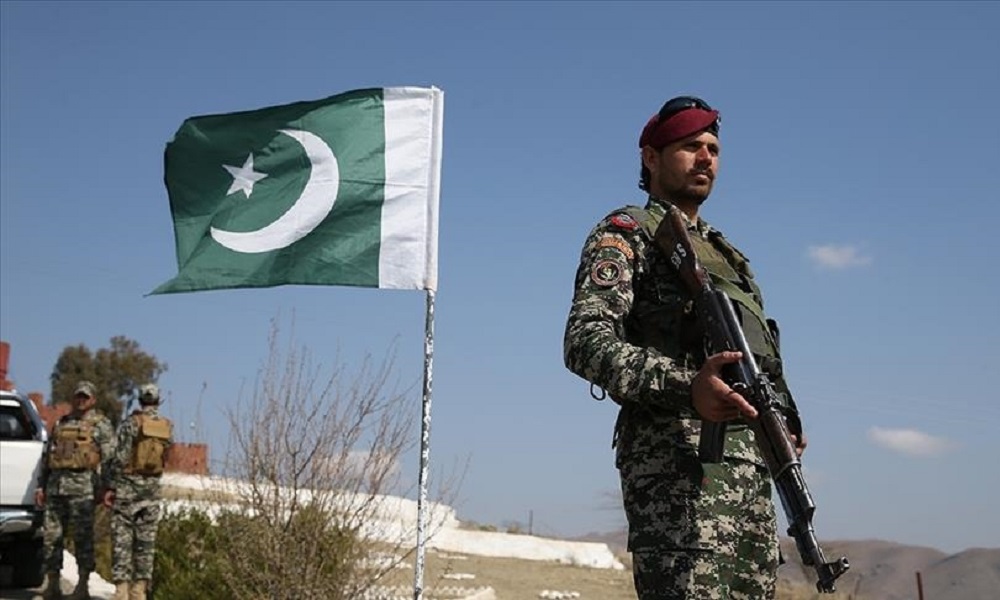
The Pakistan Army has issued a warning to residents of the Tirah Valley in Khyber Pakhtunkhwa province to vacate their homes by January 25, as security forces prepare to launch a new military operation in the area, Pakistani media have reported. The announcement has triggered growing concerns over large-scale displacement and humanitarian challenges, particularly amid the harsh winter season.
According to the reports, residents have been given one week to leave the region ahead of the planned operation. Pakistan’s federal government has pledged financial assistance to affected families, stating that each household will receive 250,000 Pakistani rupees after biometric registration at centers set up by the provincial disaster management authority. Families will also be allowed to relocate to Peshawar or other tribal districts.
Officials said displaced families will receive a monthly allowance of 50,000 rupees until April. In addition, compensation of one million rupees has been promised for partially damaged homes, while families whose houses are completely destroyed during the operation would be paid three million rupees.
However, the Khyber Pakhtunkhwa provincial government, led by the opposition Pakistan Tehreek-e-Insaf (PTI) party, has openly opposed the military operation. Chief Minister Sohail Afridi, who visited Tirah on Thursday, reiterated that military action is not a solution to the province’s security challenges.
“This forced displacement is the result of the so-called ‘closed-door policy,’ which is driven by political interests rather than genuine security concerns,” Afridi said. “After 22 major operations and nearly 14,000 smaller ones, peace has still not been achieved. What guarantee is there that this operation will bring security? Tirah is my home, and its people are my people.”
Meanwhile, thousands of families who have already fled or are preparing to leave their ancestral homes have expressed deep concern over their uncertain future. Residents say spending freezing winter nights without adequate shelter, healthcare, or access to education will create serious immediate and long-term hardships. Some have also complained of deliberate obstacles in the registration and aid distribution process.
Pakistan’s central government estimates that the operation could displace around 100,000 people.
Analysts note that a similar military operation in 2013 displaced nearly 11,000 families from Tirah, who were allowed to return about a year later. During that period, the army established extensive military installations in the area, yet lasting security was not achieved.
Some security experts are also examining the “closed-door” policy from another perspective, arguing that Tirah’s strategic location—bordering Afghanistan and rich in forests and mineral resources—makes it a sensitive area. They warn that instability could create conditions conducive to the movement or relocation of militant groups, including the Daesh.
The situation continues to draw attention as residents, political leaders, and humanitarian observers call for alternatives to military action and greater protection for civilians facing displacement.







Regional
US Embassy, Consulates in Pakistan suspend visa services over security concerns
As a precaution, U.S. government personnel were instructed to restrict their movements until further notice.
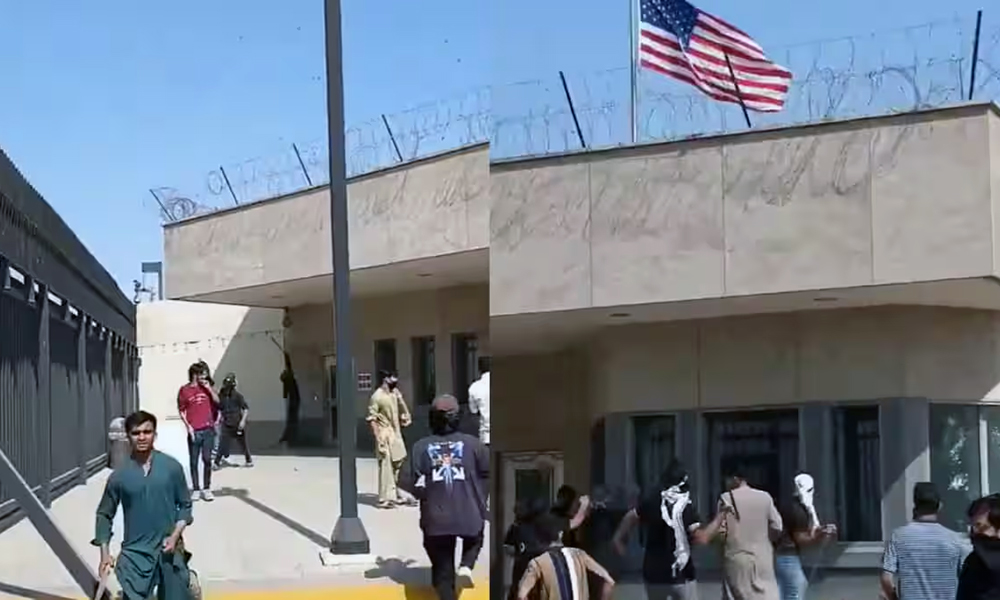
The U.S. Mission to Pakistan has suspended all visa appointments at its embassy in Islamabad and consulates in Lahore and Karachi through Friday, March 6, citing the current security situation.
In a notice to applicants, the mission said routine visa services would remain paused during this period. Officials did not elaborate on the specific security concerns but confirmed that affected applicants would receive instructions on how to reschedule once operations resume.
“Due to the current security situation, the U.S. Embassy in Islamabad and the Consulates General in Lahore and Karachi have cancelled all visa appointments through Friday, March 6,” the embassy said in a post on X, advising applicants to monitor official channels for further updates.
The extended suspension follows an earlier decision to cancel all visa and American Citizen Services (ACS) appointments scheduled for March 2.
In a security alert issued March 1, the mission said it was tracking reports of demonstrations outside the U.S. Consulate General in Lahore and protests near the consulate in Karachi, as well as calls for further gatherings near the embassy in Islamabad and the consulate in Peshawar.
As a precaution, U.S. government personnel were instructed to restrict their movements until further notice.
The mission also urged American citizens in Pakistan to follow local media coverage, remain vigilant, avoid large crowds and ensure their Smart Traveler Enrollment Program (STEP) registration is up to date.
The suspension comes amid nationwide protests triggered by U.S. and Israeli strikes that killed Iran’s Supreme Leader, Ali Khamenei. Violent clashes erupted outside the U.S. Consulate in Karachi on Sunday, leaving multiple people dead and dozens injured, according to local authorities.
Demonstrations were also reported in major cities including Islamabad, Lahore, Peshawar and Quetta, where protesters confronted law enforcement.
In Islamabad, authorities imposed Section 144 and sealed routes leading to the capital’s diplomatic enclave.
In Karachi, demonstrators attempted to advance toward the consulate compound, prompting police to use tear gas and other crowd-control measures to disperse them. Officials reported at least 10 fatalities and 36 injuries in the unrest.
Regional
US Marines fired during storming of Karachi consulate, officials confirm
Shi’ite community leaders have called for further demonstrations in Lahore and Karachi despite the government’s ban.
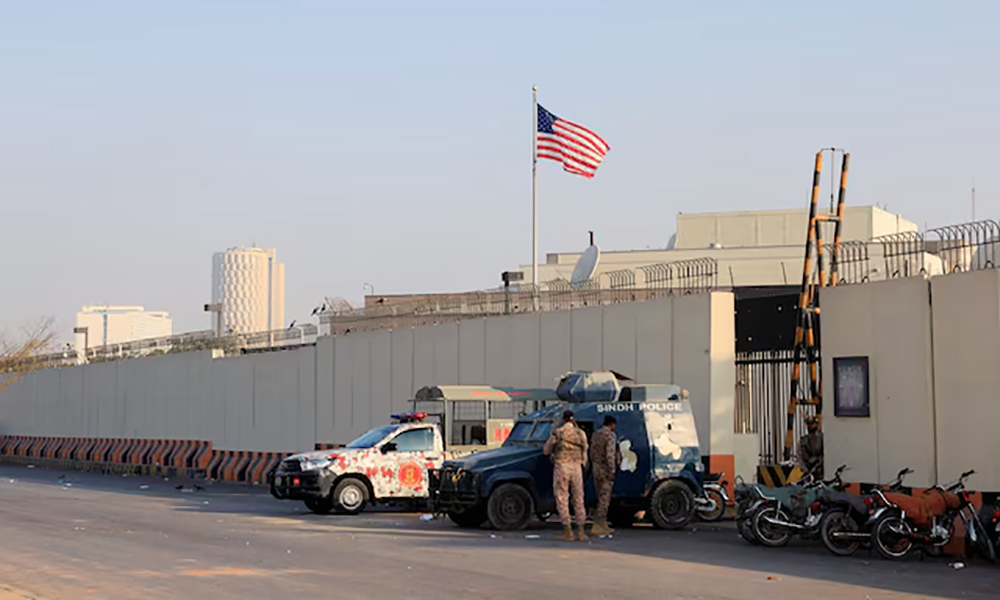
U.S. Marines opened fire as demonstrators stormed the American consulate in Karachi over the weekend, two U.S. officials confirmed Monday.
This was a rare use of force at a diplomatic facility that risks further inflaming tensions in Pakistan amid widespread unrest following the killing of Iran’s Supreme Leader, Ayatollah Ali Khamenei.
At least 10 people were killed on Sunday after protesters breached the outer wall of the U.S. consulate compound in Karachi, according to local authorities. The unrest erupted after Khamenei was killed in strikes on Iran, triggering demonstrations across several Pakistani cities.
Citing preliminary information, the two U.S. officials said it remains unclear whether rounds fired by the Marines struck or killed any of the demonstrators. They added that it was not yet known whether other personnel guarding the mission — including private security contractors or local police — also discharged their weapons.
If confirmed, the incident would mark the first official acknowledgment that U.S. Marines fired on protesters at the consulate during the unrest. A provincial government spokesperson, Sukhdev Assardas Hemnani, said “security personnel” had opened fire but did not specify which force was responsible.
Security at U.S. diplomatic facilities is typically handled by a combination of private contractors and host-nation forces, with Marines assigned primarily to protect classified materials and secure compounds during emergencies. Their reported involvement underscores the severity of the threat perceived at the mission.
Nationwide unrest
Pakistan, home to the world’s second-largest Shi’ite population after Iran, has seen escalating protests since the strikes on Iran. Authorities imposed a nationwide ban on large public gatherings on Monday after demonstrations spread, with at least 26 deaths reported across the country.
Outside the consulate in Karachi, protesters chanted anti-U.S. and anti-Israel slogans as clashes intensified. Journalists on the scene reported hearing gunfire and seeing tear gas deployed in surrounding streets.
Videos circulating on social media appeared to show at least one protester firing a weapon toward the compound, while injured demonstrators fled as shots rang out. A Karachi police official told reporters that gunfire originated from inside the consulate grounds.
The Marines referred inquiries to the U.S. military, which in turn directed questions to the U.S. Department of State. The State Department did not immediately respond to requests for comment.
Shi’ite community leaders have called for further demonstrations in Lahore and Karachi despite the government’s ban.
Roads leading to the Karachi consulate were sealed off under heavy police guard, with similar security measures reported around U.S. diplomatic missions in Islamabad and Lahore.
The United States maintains its embassy in Islamabad and additional consulates in Karachi, Lahore and Peshawar.
Regional
Ayatollah’s wife dies from injuries sustained in airstrike on Tehran residence
Bagherzadeh, believed to have been in her late seventies, largely remained out of public view throughout her husband’s decades in power.
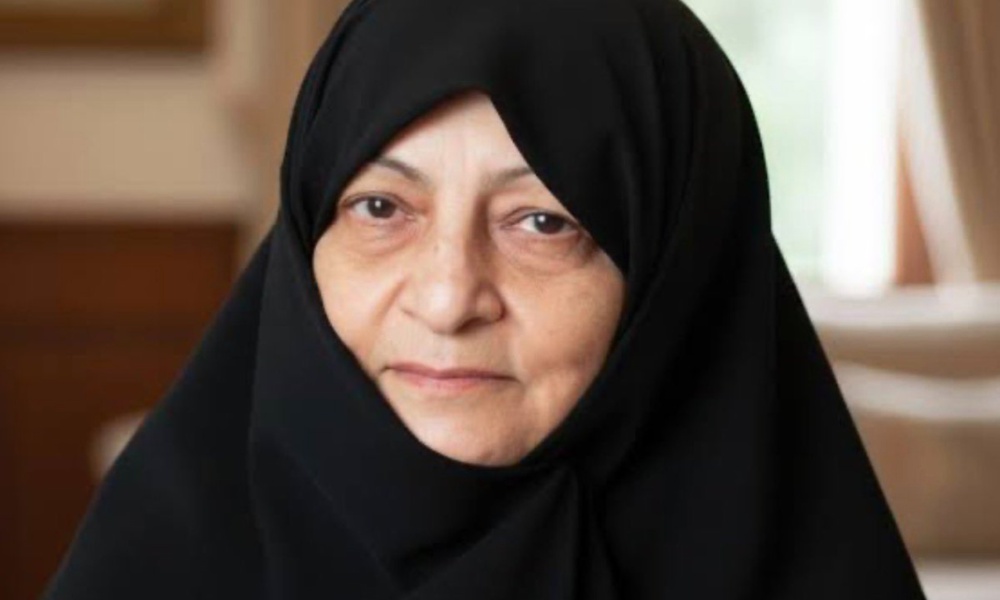
Mansoureh Khojasteh Bagherzadeh, the wife of Iran’s late supreme leader Ali Khamenei, has died after succumbing to injuries sustained in a recent airstrike on their residence in central Tehran, Iranian state media reported on Monday.
According to Iranian news outlets, including the semi-official Tasnim News Agency, Bagherzadeh had been in a coma since the strike, which took place two days ago. The attack, described by US officials as part of “Operation Epic Fury,” was reportedly carried out by the United States and Israel amid escalating hostilities with Iran.
Iranian authorities confirmed over the weekend that Khamenei was killed in the same strike, along with several members of his family and senior leaders who were present at the compound. State media characterized the attack as a major escalation and a severe blow to the country’s leadership structure.
Khamenei, 86, had served as Iran’s Supreme Leader since 1989, holding ultimate authority over the state, armed forces, and key institutions including the Islamic Revolutionary Guard Corps (IRGC).
His death marks one of the most consequential developments in the ongoing conflict and raises significant questions about Iran’s political succession and regional posture.
Bagherzadeh, believed to have been in her late seventies, largely remained out of public view throughout her husband’s decades in power. Married in the mid-1960s, the couple had six children. Despite her proximity to one of the region’s most powerful figures, she maintained a private life and held no official political role.
In a rare interview with Iranian state media in 2011, she described her role as creating a calm home environment to support her husband’s political responsibilities. She also recounted visiting him during his imprisonment under the Shah’s rule and assisting with revolutionary activities prior to 1979.
The killing of Khamenei and members of his family represents a dramatic turning point in the crisis, with regional and international observers warning of heightened instability in an already volatile security landscape.


FIFA unveils official tournament poster to mark 100 days until World Cup kicks off

Tahawol: Discussion on ongoing conflicts between Afghanistan and Pakistan

Asian Football Confederation postpones 2nd-leg knockout ties in West Region

Saar: Ongoing retaliatory operations against Pakistan discussed

Bayat Foundation expands Ramadan aid to Maidan Wardak families

Pakistani military jet downed in Afghanistan’s Jalalabad, pilot captured alive

Afghan Air Force conducts airstrikes in Islamabad, other cities

IEA releases three Pakistani soldiers to mark Ramadan

Afghanistan’s Chief of Armed Forces underscores readiness and equipment for national defense

Afghanistan welcomes investment and technology partnerships with India
Tahawol: Discussion on ongoing conflicts between Afghanistan and Pakistan
Saar: Ongoing retaliatory operations against Pakistan discussed

Saar: Afghan forces’ operation against Pakistani military

Tahawol: Afghanistan and the Region Under the Shadow of Rising Tensions

Tahawol: Joint Israeli-US attacks on Iran discussed
-
 Latest News4 days ago
Pakistani military jet downed in Afghanistan’s Jalalabad, pilot captured alive
-
 Latest News5 days ago
Afghan Air Force conducts airstrikes in Islamabad, other cities
-
 Latest News2 days ago
Afghan air force strikes key Pakistani military installations in retaliatory operation
-
 Latest News5 days ago
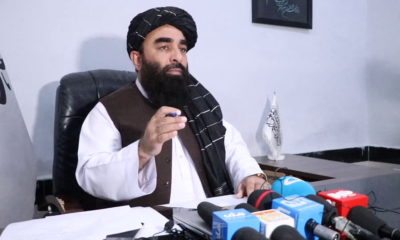
IEA: Special circle in Pakistan has launched mission to destabilize region
-
 Latest News5 days ago
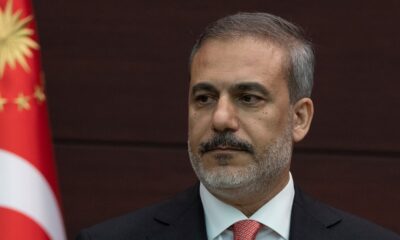
Turkey launches initiative to diffuse Afghanistan-Pakistan tension
-

 Latest News5 days ago
Afghans say they are united against Pakistan aggression
-
 Latest News4 days ago
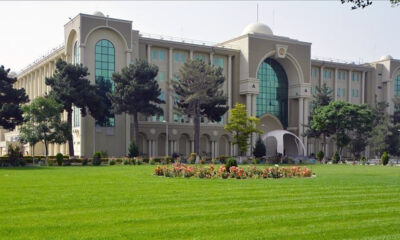
Afghan forces conduct fresh airstrikes on Pakistani military targets
-
 World3 days ago
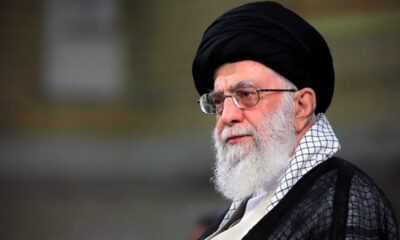
US lawmakers, world leaders react to death of Ayatollah Ali Khamenei after Iran strikes