
Latest News
People Are Less Interested to Participate in Upcoming Election

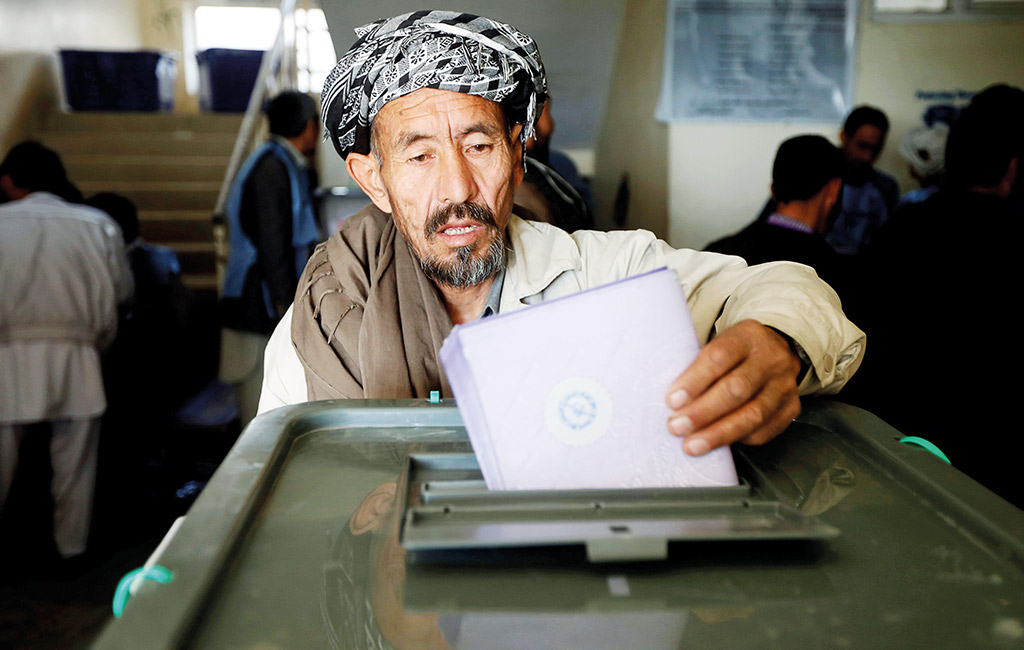
 A survey conducted by the Transparent Election Foundation of Afghanistan (TEFA) in 34 provinces of the country shows that 57.13 percent of the survey takers do not want to participate in the upcoming presidential election.
According to the officials, 5,000 people have taken this survey.
“57.14 percent of the survey takers in 34 provinces of the country have said that they will not participate in the election. It means they neither vote to any candidate nor participate in the election. This is very shocking to us, to the election commission, and the legitimacy of the upcoming election,” said Naiem Ayuobzada, Chief of TEFA.
Lack of trust to the electoral commissions, insecurity, and prioritization of the peace process are described as the people’s reason for not participating in the election.
“All the election process circles around the campaigns. However, it has not been observed in the past,” said Ayuobzada.
“Three key questions existed in the survey. Do you participate in the election; if yes whom would you vote and why; and if not what are your reasons,” said Sughra Sadaat.
This comes as the electoral commissions and the government have promised of holding a transparent and fair election in the country on September 28th.

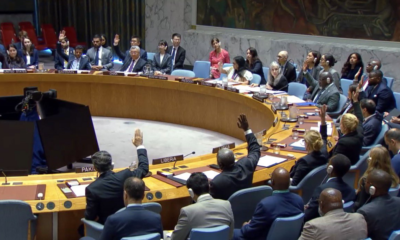






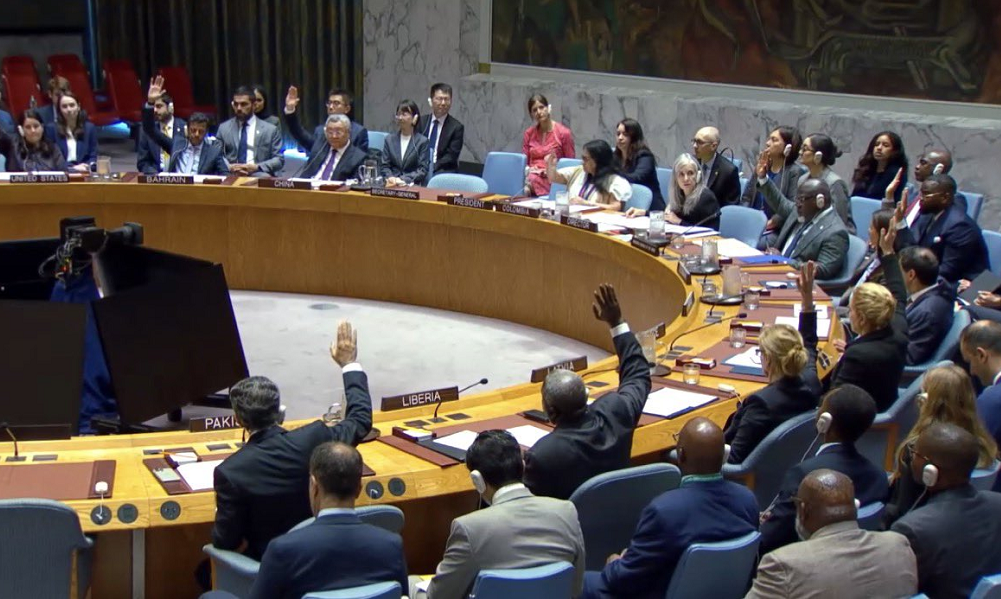
The United Nations Security Council on Monday unanimously adopted a resolution extending the mandate of the United Nations Assistance Mission in Afghanistan (UNAMA) for one year.
All 15 members of the Security Council voted in favor of the resolution, reflecting broad international support for the mission’s ongoing role in Afghanistan.
UNAMA serves as the United Nations’ principal political mission in Afghanistan and is tasked with supporting peace and stability, coordinating humanitarian assistance, promoting human rights, and engaging with Afghan authorities and international stakeholders on key political and development issues.
The extension comes as Afghanistan continues to face significant humanitarian and economic challenges.
UNAMA, established in 2002 after the fall of first IEA government, has usually been extended annually, although there was a six-month extension in 2021 to look at what changes might be needed after the IEA returned to power. In March this year, the mandate was extended for three months, after Washington called for a review of assistance and engagement in the country.
Latest News
Afghanistan to host regional meeting of strategic research centers in Kabul
The meeting will be officially inaugurated by Foreign Minister Mawlawi Amir Khan Muttaqi.
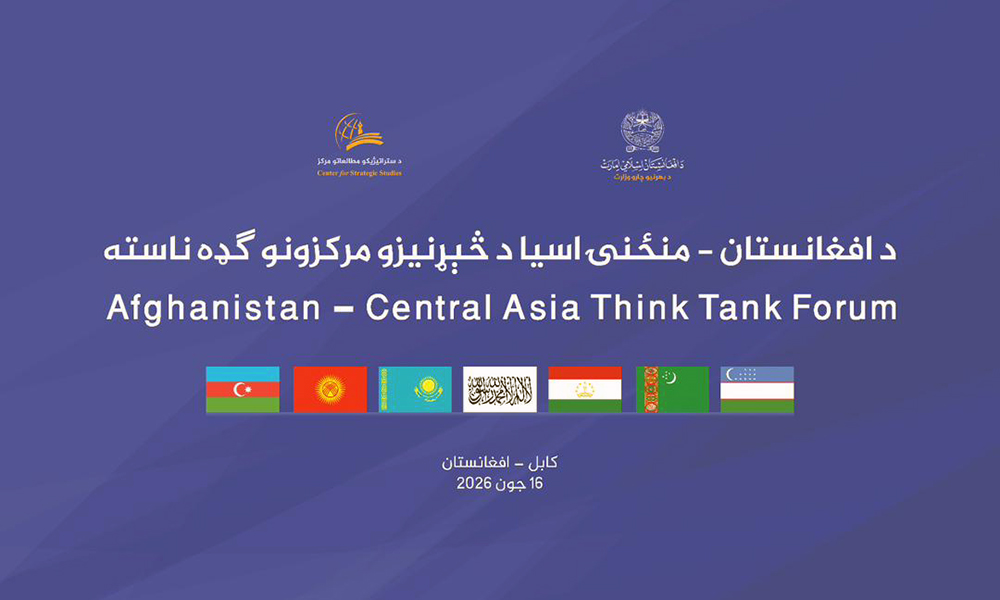
The Strategic Studies Center of the Ministry of Foreign Affairs of the Islamic Emirate of Afghanistan is set to host a high-level regional meeting of leading research and policy institutions from Afghanistan, Central Asia, and Azerbaijan in Kabul on 16 June 2026.
The gathering will bring together heads of strategic studies centres, researchers, and policy experts from Uzbekistan, Turkmenistan, Kazakhstan, Kyrgyzstan, Tajikistan, and Azerbaijan. The participating institutions operate under the respective presidential administrations of their countries.
Officials say the meeting comes amid growing engagement between Afghanistan and regional states, with discussions expected to focus on regional connectivity, stability, trade, energy cooperation, transit, and investment. Participants will also review current cooperation frameworks and develop practical recommendations for future collaboration.
A key aspect of the forum is the direct exchange of views between research institutions on shared regional challenges and opportunities, aimed at strengthening coordination and mutual understanding.
The meeting will be officially inaugurated by Foreign Minister Mawlawi Amir Khan Muttaqi.
Organisers say the forum reflects Afghanistan’s balanced, economy-oriented foreign policy and is expected to contribute to greater trust-building, expanded economic and transit cooperation, and long-term stability and shared prosperity across the region.
The initiative underscores Afghanistan’s continued role as an active participant in advancing regional connectivity and economic integration.
Latest News
TAPI project advances in Afghanistan as 84kms of pipeline laid
Technical and engineering teams, along with skilled workers, remain actively engaged in construction.
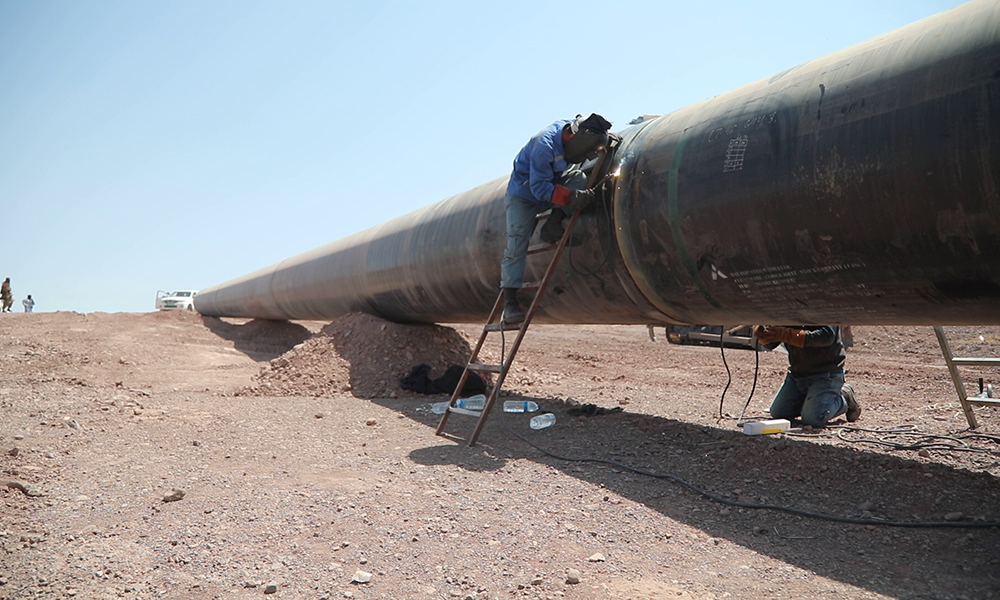
Construction work on the Afghanistan section of the Turkmenistan–Afghanistan–Pakistan–India (TAPI) gas pipeline is progressing steadily, with officials confirming that around 84 kilometres of pipeline have now been installed.
Mohammad Yousuf Saeedi, spokesman for the governor of Herat, said the major regional infrastructure project has reached approximately 60 percent completion, with efforts underway to finalise the remaining work by the end of the current year.
He added that groundwork has been completed along roughly 130 kilometres of the route, while 108 kilometres are now fully prepared for pipeline installation.
Technical and engineering teams, along with skilled workers, remain actively engaged in construction. The pipeline route extends from Rabat-e-Sangi district near the Turkmenistan border and has now reached parts of Zinda Jan district in Herat province.
Saeedi said sufficient equipment, machinery, and logistical support have been deployed to the site, noting that there are currently no major obstacles affecting implementation.
The TAPI pipeline is regarded as one of the region’s most significant energy and economic initiatives, aimed at enhancing regional connectivity and strengthening energy cooperation among the participating countries.


Tahawol: US and Iran’s preliminary agreement to end war

Saar: UNSC meeting on Afghanistan

UN Security Council extends UNAMA mandate in Afghanistan for one year

Afghanistan to host regional meeting of strategic research centers in Kabul

TAPI project advances in Afghanistan as 84kms of pipeline laid

Norway’s Viking-inspired World Cup team photo goes viral

Large blast near Beit Shemesh part of pre-planned test: Israeli defense firm

Trump returns from China with stability but little progress

Afghanistan announce squad for India series

Afghanistan, Russia sign military cooperation agreement
Tahawol: US and Iran’s preliminary agreement to end war
Saar: UNSC meeting on Afghanistan

Tahawol: Pakistan PM defending Durand Line fencing

Saar: Afghanistan-Pakistan tensions discussed

Saar: Possible agreement between Iran and US discussed
-

 Sport4 days ago
Afghanistan A edge India A by four runs in rain-hit Tri-Nation opener
-

 International Sports4 days ago
Mexico and South Africa set to open historic 2026 World Cup
-
 Regional1 day ago
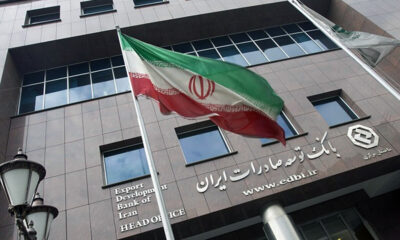
Iran banks hit by major cyber attack
-
 Latest News3 days ago
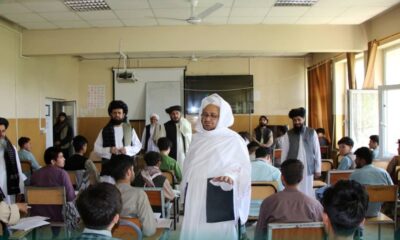
Final round of 1405 Kankor exam concludes in Afghanistan
-
 Latest News2 days ago
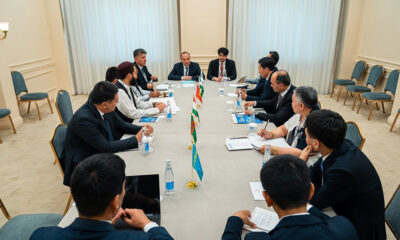
Central Asia–Afghanistan dialogue underscores regional connectivity and stability
-
 World5 days ago
US, Iran exchange attacks as Trump threatens further escalation
-

 Business4 days ago
Etihad Airways to launch twice-daily Kabul flights from July
-

 Regional4 days ago
At least 15 killed, dozens injured as protests rock Pakistan-administered Kashmir