
Latest News
President has no right to decide about Parliament: Executive Office

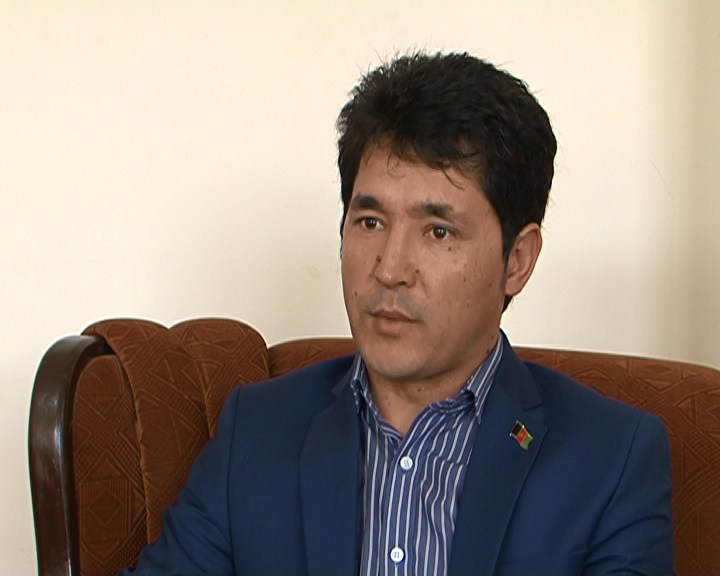
![PARLIMANT_19_6_2015_DARI_SOT.avi_snapshot_00.42_[2015.06.19_18.12.46]](https://ariananews.af/wp-content/uploads/2015/06/PARLIMANT_19_6_2015_DARI_SOT.avi_snapshot_00.42_2015.06.19_18.12.46.jpg)
The Executive office stressed that President Ghani has no right to decide about the continuation of Parliament’s working period.
The office noted that the failure of President Ghani in his commitments for brining electoral reforms caused the parliamentary election not held before the end of Parliament’s working period.
Up to the next three days the legal working period of Wolesi Jirga will end and President Ghani now begin to campaign on the continuation of Parliament’s work.
“Without the need for consensus and surveys until holding the Parliamentary election and brining reforms, Parliament can keep working.
The government and President has no authority to thing and decide about the Parliament,” Asef Ashna, deputy spokesman of executive office said.
The prolonged crisis over Afghanistan’s parliamentary elections has further undermined President’s credibility.
President Ghani and Chief Executive Officer Abdullah, in the September 2014 agreement, agreed to electoral reforms “to ensure that future elections are credible.”
The details of these reforms, when they should take place and who should design them are, however, proving contentious.
Meanwhile, parliament has been working on relevant laws, while commissioners of the Independent Election Commission (IEC) are fighting off calls for them to be replaced while insisting that, at this point, they are the only ones who should be making changes to improve future elections.
Although everyone is talking about ‘reform’, the wrangling really boils down to a struggle for control of the electoral bodies and, ultimately, the outcome of upcoming elections.
In the meantime, a number of Parliament representatives emphasized that they are opposed to the political agreement for the continuation of Parliament’s work and they will keep working without any halts.
According to the National Unity Government document, the president should issue a decree “immediately after the establishment of the government of national unity” to establish a “special commission for the reform of the electoral system.”
The text of the agreement gives no further details, other than that the commission would report to the CEO on its progress and presents its recommendations to the cabinet for review and implementation. The president has so far, however, shown very little urgency in carrying out this pledge.
The upcoming parliamentary elections are important for both camps – as well as for several groups currently ‘outside’ the government, such as former president Hamed Karzai and his circle, the self-proclaimed disgruntled mujahedin and the growing group of irate Abdullah supporters (who feel he has not been enough of a champion). All sides will try to secure a large presence in the new parliament, so they can use its potential for pressure politics (and prevent the parliament’s power from being used against them).
According to the Constitution, the upcoming parliamentary elections should be held between 22 April and 22 May 2015 (article 83).
But to state the obvious: practically, this is no longer possible. Preparations have not been made, funding has not been secured, and there is no longer enough time for candidates to be registered or for campaigns to be held.
It would also violate the electoral timeline, which stipulates that an election date needs to be announced 180 days in advance (Electoral Law, article 43).
Reported by Fawad Naseri

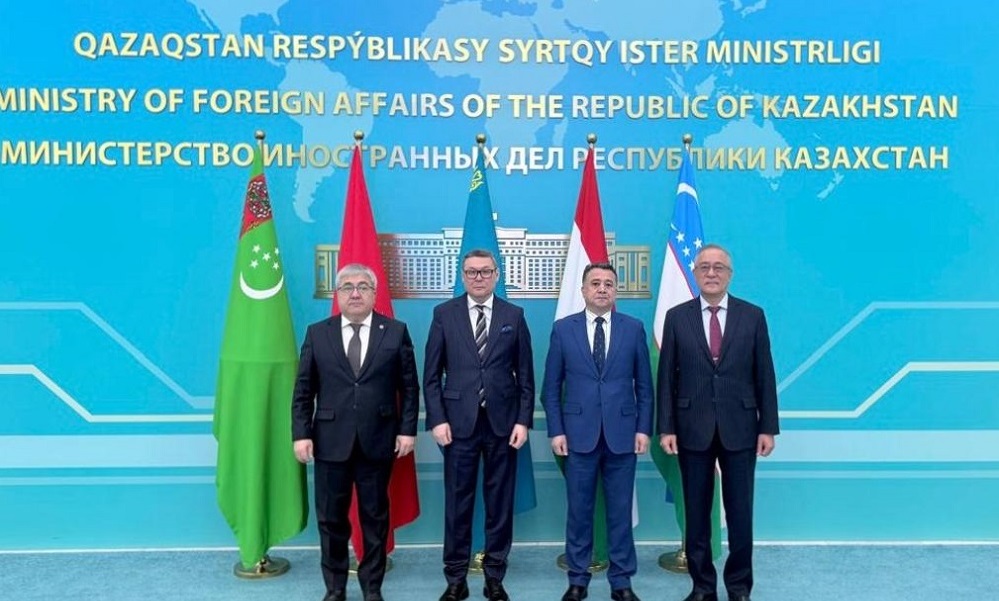
An extraordinary meeting of the Regional Contact Group of Special Representatives of Central Asian countries on Afghanistan was held at Kazakhstan’s Ministry of Foreign Affairs.
The gathering brought together representatives from Kazakhstan, Kyrgyzstan, Tajikistan, and Uzbekistan to discuss the situation in Afghanistan and explore avenues for practical cooperation, Kazakh foreign ministry said in a statement.
Yerkin Tukumov, Special Representative of the President of Kazakhstan for Afghanistan, emphasized the country’s commitment to constructive dialogue and identifying practical solutions to address pressing issues related to engagement with Kabul.
Discussions focused on enhancing trade and economic ties, expanding transit and transport corridors through Afghanistan, and addressing regional security concerns. Participants stressed the need for coordinated efforts among Central Asian states to ensure stability and promote sustainable development in Afghanistan.
The meeting concluded with a reaffirmation of the participants’ readiness to continue regular consultations and maintain working-level contacts under the framework of the Regional Contact Group.
Latest News
Afghanistan’s defense ministry unveils new military uniforms for armed forces
Speaking at the ceremony, Qari Fasihuddin said the uniform is designed to reinforce order, discipline, and a shared sense of purpose within the ranks.
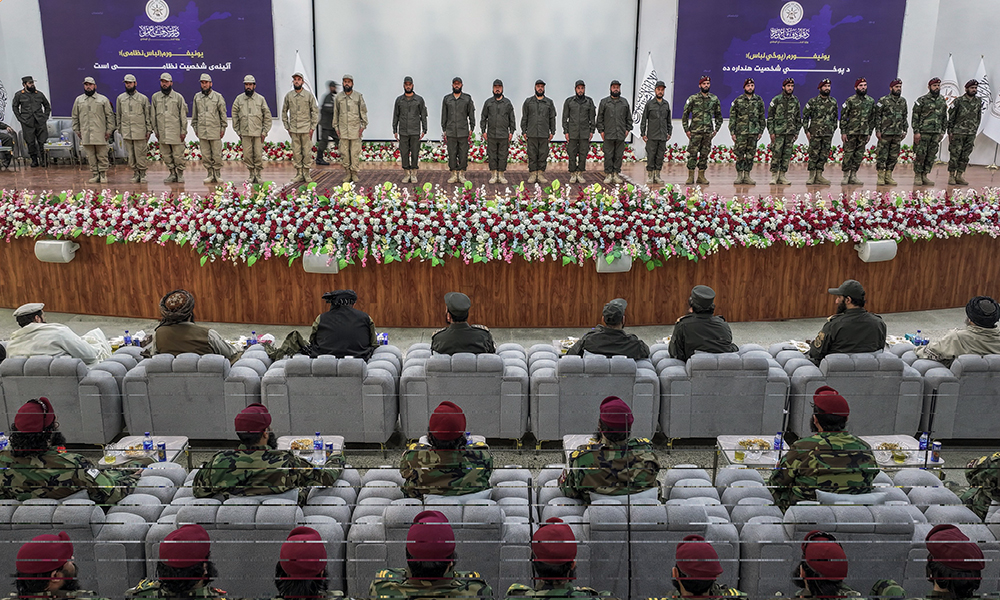
The Ministry of National Defense of the Islamic Emirate of Afghanistan officially unveiled a new uniform for the country’s armed forces on Monday.
The new attire, selected for commandos, border police, and the Afghan National Army, was introduced during a special ceremony held at the Ministry’s headquarters.
The event was attended by the Chief of Staff of the Armed Forces, Qari Mohammad Fasihuddin Fitrat, senior ministry officials, and commanders of central units. Officials emphasized that the new uniform represents discipline, cohesion, and a unified identity among all personnel.
Speaking at the ceremony, Qari Fasihuddin said the uniform is designed to reinforce order, discipline, and a shared sense of purpose within the ranks.
“This new uniform symbolizes unity and solidarity of our armed forces,” he said. “All those joining the ranks must see defending the country as their primary responsibility and commitment.”
Meanwhile, Enayatullah “Khowarzmi,” Head of Strategic Information and Publications at the Ministry, highlighted the importance of professionalism and ethical conduct.
He said; “Every soldier must have strong willpower, high moral standards, and strict adherence to military principles. Forces must remain resolute against enemies while serving the people with integrity and responsibility.”
According to ministry officials, the introduction of the new uniform is part of ongoing efforts to strengthen cohesion, discipline, and a unified identity among Afghanistan’s defense forces.
Latest News
Tashkent and Kabul discuss strengthening strategic partnership
The discussions come amid continued efforts by neighboring countries to maintain pragmatic engagement with Kabul despite ongoing political and economic challenges.
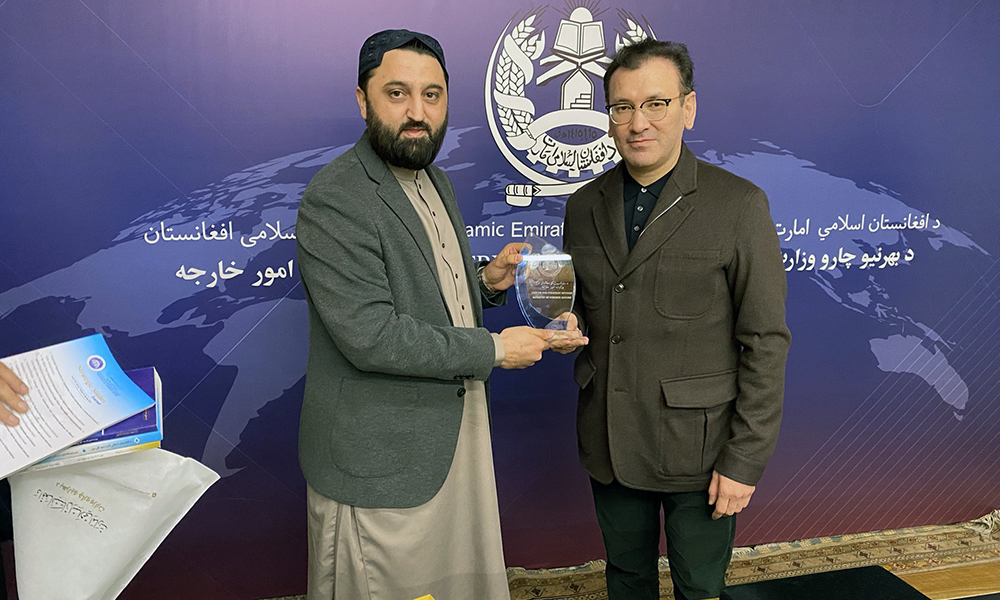
A senior Uzbek official has held talks in Kabul aimed at deepening political, economic and regional cooperation between Uzbekistan and Afghanistan, as both sides seek to translate long-term strategic goals into practical outcomes.
Javlon Vakhabov, Deputy Adviser to the President of Uzbekistan, met with Abdulhai Qanet, Head of the Strategic Studies Center at Afghanistan’s Ministry of Foreign Affairs, to discuss ways to enhance cooperation and advance joint agendas under the Uzbekistan–Afghanistan partnership.
In a post on X, Vakhabov said the two sides also explored initiatives to raise public awareness of developments in both countries and across the wider region, highlighting the importance of communication and public engagement alongside diplomatic efforts.
Uzbekistan has in recent years positioned itself as an active regional partner on Afghanistan, advocating dialogue, economic cooperation, and connectivity as key tools for promoting stability. Tashkent has supported regional infrastructure and trade initiatives aimed at linking Central and South Asia, while stressing that economic engagement can contribute to long-term security.
Vakhabov added that both sides are keen to turn long-term strategic objectives into concrete initiatives, with a focus on strengthening regional stability, collaboration, and shared interests.
The discussions come amid continued efforts by neighboring countries to maintain pragmatic engagement with Kabul despite ongoing political and economic challenges.


Central Asian envoys meet in Astana for talks on Afghanistan

Rashid says South Africa heartbreak echoes 2023 Australia loss: ‘It never leaves your mind’

Afghanistan’s defense ministry unveils new military uniforms for armed forces

Afghanistan stay alive in T20 World Cup with crucial win over UAE

With Torkham closed, trade losses mount

Afghan traders sign deal to import pharmaceuticals from Bangladesh

AFC Futsal Asian Cup 2026: Day One Review

AFC Futsal Asian Cup: Afghanistan to face Iran in crucial Group D clash

Afghanistan shine on Day Two of AFC Futsal Asian Cup Indonesia 2026

Russia signals interest in expanding investment and trade ties with Afghanistan

Tahawol: 37th anniversary of Soviet exit from Afghanistan

Saar: 37th anniversary of Soviet withdrawal from Afghanistan

Tahawol: Impact of continued sanctions on Afghanistan reviewed

Exclusive interview with Kenichi Masamoto, Japanese Ambassador to Kabul

Saar: Discussion on Iran and US negotiations
-
 Sport4 days ago
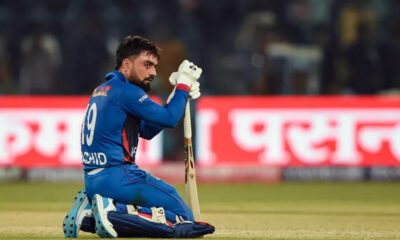
Afghanistan’s semi-final hopes hang in the balance after two T20 World Cup defeats
-
 Sport4 days ago
AFC U17 Men’s Asian Cup Saudi Arabia 2026 Draw sets stage for continental showdown
-
 World4 days ago
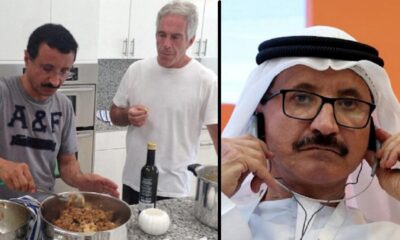
Pressure rises on Dubai port giant DP World over chief’s alleged Epstein ties
-
 Sport4 days ago
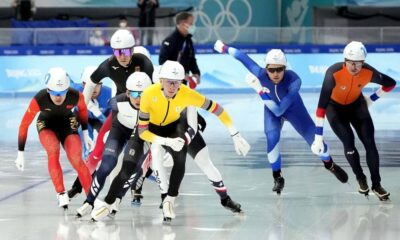
Winter Olympics 2026: Wednesday brings records, first-ever golds and thrilling action
-
 Latest News5 days ago
Pakistan appoints two consuls general in Kandahar and Mazar-e-Sharif
-
 Latest News4 days ago
Afghanistan moving toward development and industrialization every day: Azizi
-
 Latest News2 days ago
Japan maintains direct contacts with IEA officials through Kabul Embassy
-
 Latest News2 days ago
UN warns mass return of Afghans from Pakistan and Iran is pushing Afghanistan to the brink