
Latest News
SIGAR blasts Washington for withholding key information on Afghanistan


The Special Inspector General for Afghanistan Reconstruction (SIGAR), John Sopko, said on Friday he has faced recent pressure from the U.S. State Department to redact some of the organization’s reports while noting the Pentagon classified much of its work detailing the failings of Afghanistan’s military forces.
He also referenced numerous attempts to “impede” his work, adding that “U.S. agencies have not made honest reporting easy for SIGAR.”
Sopko’s comments, published on SIGAR’s website, came at the Military Reporters & Editors Association’s annual conference, where the inspector general detailed multiple efforts by the State Department to get SIGAR to redact information from its reports, and remove all mentions of former Afghan president Ashraf Ghani.
“Those of you who have followed SIGAR’s work know that many of the reasons for the unexpectedly quick collapse of the Afghan government are problems that SIGAR has reported on for years – corruption; ghost soldiers; the dependence of the Afghan military on U.S. airpower, contractors, and other enablers; and incompetent Afghan leadership, to name but a few,” he said.
He also said SIGAR may be the only U.S. government agency that told “inconvenient truths” about the situation for the last 10 years.
“But we all know that U.S. agencies have not made honest reporting easy for SIGAR,” he stated.
Sopko’s address coincided with the release of its 53rd quarterly report, which includes information that shortly after the fall of Kabul, the State Department wrote to him and other oversight agencies requesting to “temporarily suspend access” to all “audit, inspection, and financial audit…reports” on SIGAR’s website because the state department “was
afraid that information included in those reports could put Afghan allies at risk”.
He said while he felt strongly that Afghans at genuine risk of reprisal should be protected, the state department was never able to give specific details on threats to individuals as a result of SIGAR’s reports.
He also said the state department did not explain how removing SIGAR reports could protect anyone since many were years old and already extensively disseminated worldwide.
“Nevertheless, with great reservation, I acceded to State’s initial request because it was made at the height of the emergency evacuation from Afghanistan,” he said.
After Sopko complied, the state department returned with another request, this time passing along a spreadsheet listing some 2,400 items it wanted redacted — something SIGAR reviewed and “found all but four to be without merit.”
“Given how hard the Department reportedly was working to evacuate Americans from Afghanistan and resettle Afghan refugees, I was surprised they found the time to go through every one of our reports and compile such an exhaustive list,” he said.
“Upon reviewing their request, it quickly became clear to us that State had little, if any, criteria for determining whether the information actually endangered anyone,” he added.
Among the requests was a plea to remove the name of a USAID official who publicly testified before Congress in 2017 and whose testimony is still posted on the committee’s site. It also asked SIGAR to remove Ghani’s name from all of its reports.
“While I’m sure the former president (Ghani) may wish to be excised from the annals of history, I don’t believe he faces any threats simply from being referenced by SIGAR,” Sopko said.
Addressing conference delegates he said: “No audience better understands the dangers of limiting public access to information in the name of ‘security’. And simply because the war in Afghanistan has
concluded does not mean the American people – or its elected representatives – do not have a right to know the truth about what happened in Afghanistan over the last 20 years.”
Sopko said that Congress has now tasked SIGAR with a number of assignments that include reports on why the Afghan government collapsed in spite of the $146 billion reconstruction effort; why the Afghan security forces collapsed; and whether Afghan government officials fled the country with U.S. taxpayer dollars; among others.
“In my opinion, the full picture of what happened in August – and all the warning signs that could have predicted the outcome – will only be revealed if the information that the Departments of Defense and State have already restricted from public release is made available,” he said.
He pointed out that the Department of Defense restricted from public release a range of information going back to 2015 on the performance of the Afghan security forces, purportedly at the request of the Afghan government.
This included information such as casualty data, unit strength, training and operational deficiencies, tactical and operational readiness of Afghan military leadership, comprehensive assessments of Afghan security force
headquarters leadership; and operational readiness rates down to the corps level.
“In essence, nearly all the information you needed to know to determine whether the Afghan security forces were a real fighting force or a house of cards waiting to fall.
“In light of recent events, it is not surprising that the Afghan government, and likely some in DOD, wanted to keep that information under lock and key,” he said.
“This information almost certainly would have benefited Congress and the public in assessing whether progress was being made in Afghanistan and, more importantly, whether we should have ended our efforts there earlier,” he added.
In recognition that this information will be essential for SIGAR to effectively respond to its Congressional directives, he said the bipartisan leadership of the House Oversight and Reform Committee and its National Security Subcommittee have formally requested that all information in SIGAR’s classified appendices be declassified by the originating agencies.
“At a bare minimum, DOD should immediately make available to SIGAR and the public the information restricted at the request of the Ghani government, for the simple reason that there no longer is a Ghani government and the Afghan security forces have already completely collapsed,” he said.
Sopko also called on Washington to declassify and make available to SIGAR and Congress all internal Department of Defense and State Department cables, reports and other material reflecting the security situation on the ground over the last few years – especially reports that differed from the public statements of the agencies in Washington.
“It is also important for SIGAR and Congress to have access to any reporting related to the reaction of the Ghani government and Afghan people to the withdrawal agreement signed between the Trump administration and the Taliban (IEA) in February 2020,” he said.
“What possible reason could remain for keeping all of this historical information out of public view?”
“Rather than attempt to impede SIGAR’s work, I believe the current administration should have every incentive to help us deliver the answers Congress has demanded,” Sopko said.
He also stated: “To answer these questions, we must find out what our government knew, when it knew it, and what it did, if anything,
with that information.
“SIGAR’s investigators are already interviewing Afghans who were evacuated to the United States to see what information they may be able to provide about corruption and other nefarious activities by former Afghan officials; SIGAR’s auditors and subject matter experts have already interviewed U.S. and Afghan government and military officials to start to put together the full picture of everything that happened that ultimately led to the Taliban (IEA) takeover just over two months ago.
“We already know a lot,” adding that while SIGAR has identified key lessons, “there is without question much more to be learned as we dig into what happened in Washington and Kabul during the months, weeks, days, and hours before Ghani fled and the Taliban (IEA) marched into his presidential palace without resistance.”







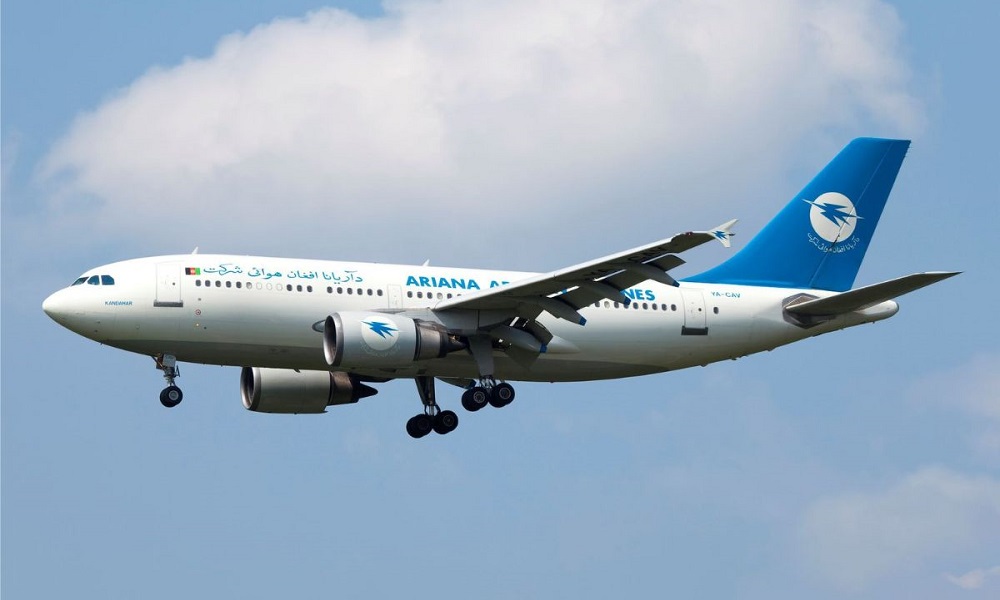
Ariana Afghan Airlines has ranked seventh among 45 airlines in Central Asia in Skytrax’s 2026 rankings.
Company officials say Ariana Afghan ranked eighth on the list in 2025, but moved up one place this year following improvements in service quality and the expansion of its operations.
According to the officials, in 2026 the airline met criteria including service quality, flight safety, professional cabin crew, and experience in the aviation sector, placing it among the top 10 airlines in Central Asia.
Skytrax is an international organization that evaluates and ranks the quality of services in the aviation industry and airlines, assessing and ranking carriers annually based on specific criteria.
Latest News
Silk Road highway in Wakhan corridor now reaches the China border
The road is expected to be officially opened for use in the near future, potentially improving connectivity through the remote Wakhan Corridor.
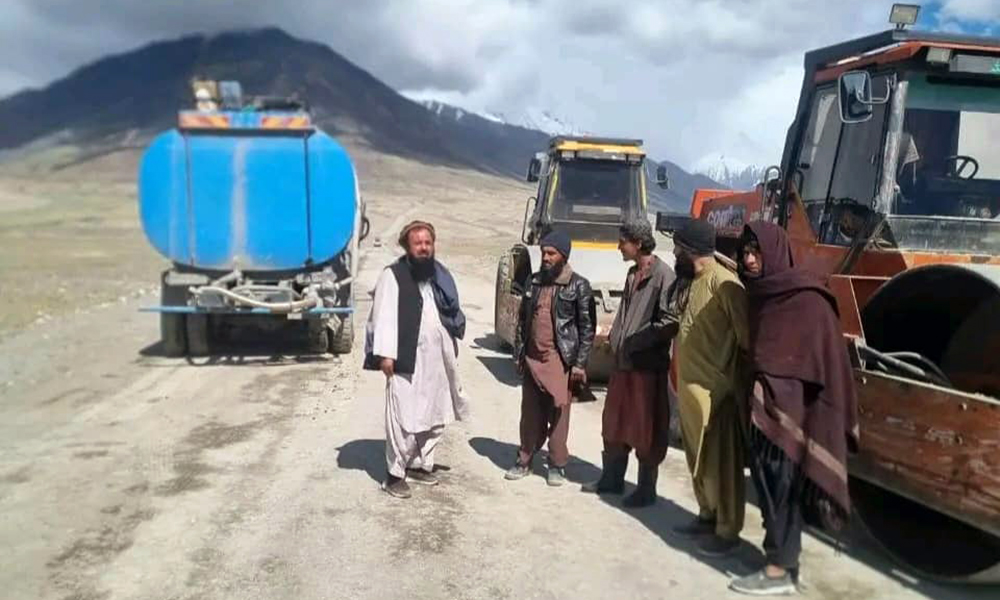
The construction of the Silk Road Highway in Afghanistan’s Wakhan Corridor has been fully completed after five years of work, officials in Badakhshan province said.
Amanullah Chehra, head of Rural Rehabilitation and Development in Badakhshan, said the 121.13-kilometre road begins in the Barghil area and stretches to Bzai Gonbad near the Chinese border.
According to officials, the road is between 7 and 10 metres wide and includes three major bridges, each measuring approximately 20 to 22 metres in length. Numerous smaller drainage structures have also been built along the route to facilitate the flow of water.
The road is expected to be officially opened for use in the near future, potentially improving connectivity through the remote Wakhan Corridor.
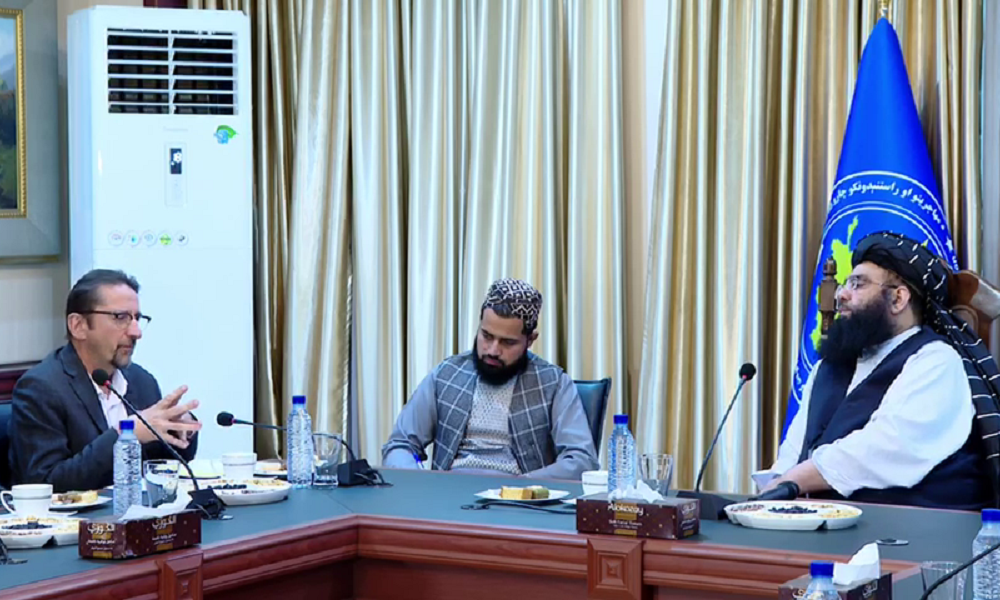
Afghanistan’s Minister of Refugees and Repatriation, Mawlawi Abdul Kabir, met on Wednesday with Bruno Lemarquis, UNAMA’s Deputy Head for Humanitarian Affairs, to discuss the situation of Afghan returnees and humanitarian assistance.
The Ministry of Refugees and Repatriation said Lemarquis briefed the minister on assessments conducted by UN agencies during visits to several provinces to identify the needs of returnee families.
Lemarquis said joint cooperation between UN agencies and the Islamic Emirate is needed to support and resettle returnees. He added that UN agencies are currently assisting thousands of families and called for the expansion of humanitarian assistance.
He also said the international community should pay greater attention to the needs of Afghans, adding that UNAMA is ready to cooperate in addressing challenges facing returnees.
Abdul Kabir welcomed UNAMA’s support and thanked the United Nations for its assistance to Afghans. He said various government institutions have been tasked with addressing returnees’ needs.
The minister also called on aid organizations to continue supporting returnee families, saying a program to resettle thousands of internally displaced families is also underway.
Kabir further said the necessary facilities have been provided for UN agencies to operate and that the Islamic Emirate welcomes UNAMA’s humanitarian cooperation.


Tahawol: Opening of the 81st UN General Assembly Session

Saar: OIC Assessment of Afghanistan’s humanitarian and development situation discussed

Ariana Afghan Airlines ranks seventh among 45 Central Asian airlines

Silk Road highway in Wakhan corridor now reaches the China border

Refugees minister, UNAMA deputy discuss challenges facing returnees

Saudi energy group signs major Afghanistan deals covering gas exploration and pipeline plans

ATN secures exclusive rights to broadcast T20I series in India across Afghanistan

China evacuates thousands as Typhoon Narra brings torrential rain

Trump floats idea of renaming Atlantic or Pacific Ocean

US hits Egyptian bank branches with Iran sanctions as war marks six months
Tahawol: Opening of the 81st UN General Assembly Session
Saar: OIC Assessment of Afghanistan’s humanitarian and development situation discussed

Tahawol: Reactions to Pakistan’s attacks on Afghanistan discussed

Saar: Uncertain fate of Afghanistan’s seat at UN discussed

Tahawol: Uncertain future of Afghanistan’s permanent UN seat
-

 Sport3 days ago
Afghanistan to face Japan and Nepal in Asian Games cricket group stage
-
 World5 days ago
US and Denmark reach deal on Greenland, Trump says
-
 Latest News3 days ago
Pakistan says Kohat attackers had roots in Afghanistan
-
 Latest News5 days ago
Afghanistan condemns mosque attack in Khyber Pakhtunkhwa
-
 Latest News4 days ago
OIC to hold Afghanistan Contact Group meeting on sidelines of UN General Assembly
-
 Latest News5 days ago
Afghan official meets Iranian oil minister to discuss energy cooperation
-
 Regional4 days ago
Flames, smoke seen near Riyadh airport; Houthis claim attacks on Saudi capital
-
 Regional3 days ago
Iran and US trade threats after Houthi attacks escalate regional conflict