
Latest News
Taliban strongholds in Pakistan give group platform to wage war: NDS

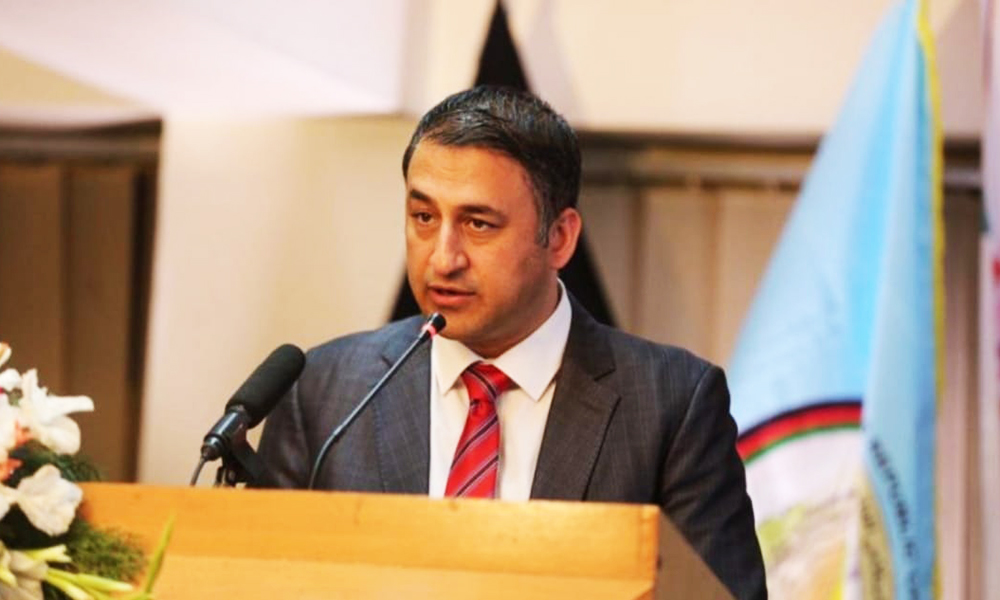
Ahmad Zia Saraj, the acting head of the national directorate of security (NDS), said Monday that because the Taliban has active and secure strongholds in Pakistani cities, the group has been able to intensify the conflict in Afghanistan.
Saraj said this was enabling the Taliban to continue a proxy war.
Saraj stressed that the region’s intelligence policy towards Afghanistan has not changed and that regional countries are trying to achieve a system that the Taliban want.
“Taliban safe havens in Quetta, Karachi and Peshawar are safely plotting every day to challenge us, and in their plans our people are killed, and if the Taliban leadership did not have safe places in these cities they [Taliban] would be facing a bad fate,” Saraj said.
Meanwhile, the acting NDS chief stressed that the Taliban had not cut contact with al-Qaeda and that many terrorist groups were colluding with the group to pursue one goal – which is to destabilize Afghanistan and kill people.
“The Taliban’s relationship with foreign terrorists continues on a regular basis, and terrorist groups are using each other’s capabilities, which has led to an increase in the conflict, and these groups are buying and selling suicide bombers, and all groups are pursuing the same goal, killing people, destroying values and establishing a system,” Saraj added.
Saraj also said that the Taliban does not believe in the peace process.
“If the Taliban was committed to peace, we should have seen results from the talks, and it can be seen that they are not interested in peace and they only want a regime according to their wishes, and if they were committed, they would not increase the violence,” Saraj said.
However, the NDS emphasizes that the only way to reduce the level of violence in Afghanistan is to create and cooperate on a “real” regional consensus basis.
He said conflict of interest among regional countries has resulted in a more widespread war in Afghanistan.









Kazakhstan’s Foreign Minister Mukhtar Tileuberdi has called for pragmatic and coordinated international engagement with Afghanistan, saying the country’s long-term stability is closely linked to the security and sustainable development of Central Asia.
Speaking during the general debate of the 81st session of the United Nations General Assembly in New York on Friday, Tileuberdi said humanitarian assistance to Afghanistan remains essential but alone cannot break the cycle of poverty, displacement and dependency.
He said Kazakhstan supports a “pragmatic, coordinated and step-by-step” approach to international engagement with Afghanistan, with the United Nations playing a central role.
Tileuberdi also said Kazakhstan is working with the UN to operationalize the United Nations Regional Centre for the Sustainable Development Goals for Central Asia and Afghanistan in Almaty.
He said the success of the centre should be measured by the results and assistance it delivers to the region.


Ariana Afghan Airlines increases Kabul-Delhi cargo flights

Khalilzad questions Pakistan’s commitment to Afghan welfare

India, UN envoy discuss Afghanistan’s humanitarian needs

Kazakhstan calls for coordinated international engagement with Afghanistan

Pakistan PM, UN chief discuss Afghanistan amid rising Kabul-Islamabad tensions

Saudi energy group signs major Afghanistan deals covering gas exploration and pipeline plans

Trump floats idea of renaming Atlantic or Pacific Ocean

US hits Egyptian bank branches with Iran sanctions as war marks six months

Nepal flood rescue mission enters critical phase as thousands remain missing

Iranian clubs to face Gulf opponents at neutral venues in Asian Champions League Elite

Exclusive interview with Abdul Latif Mansoor, Minister of MRRD

Tawsia: Overview of Afghanistan’s iron mines

Tahawol: Discussion on fresh Pakistani airstrikes on Afghanistan

Saar: Calls for international support for Afghanistan discussed

Tahawol: Opening of the 81st UN General Assembly Session
-

 Sport5 days ago
Afghanistan to face Japan and Nepal in Asian Games cricket group stage
-

 World4 days ago
CNN, MS NOW and Politico sue Trump, challenging White House ban
-
 Health5 days ago
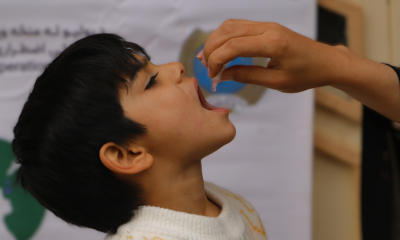
Four-day polio vaccination campaign begins across Afghanistan
-

 Latest News3 days ago
Ariana Afghan Airlines ranks seventh among 45 Central Asian airlines
-

 Latest News4 days ago
UN reiterates call for respect for international law after Kunar airstrikes
-
 Latest News5 days ago
Khalilzad condemns Pakistan airstrikes, says current strategy is not working
-

 Regional3 days ago
US and Iran hold first talks since June after Trump’s ‘annihilation’ threat
-

 Latest News3 days ago
Silk Road highway in Wakhan corridor now reaches the China border