
Regional
Trump says US attacking Iran capabilities related to Strait of Hormuz
Trump also said that it could be that there are Iranian drones in Cuba.

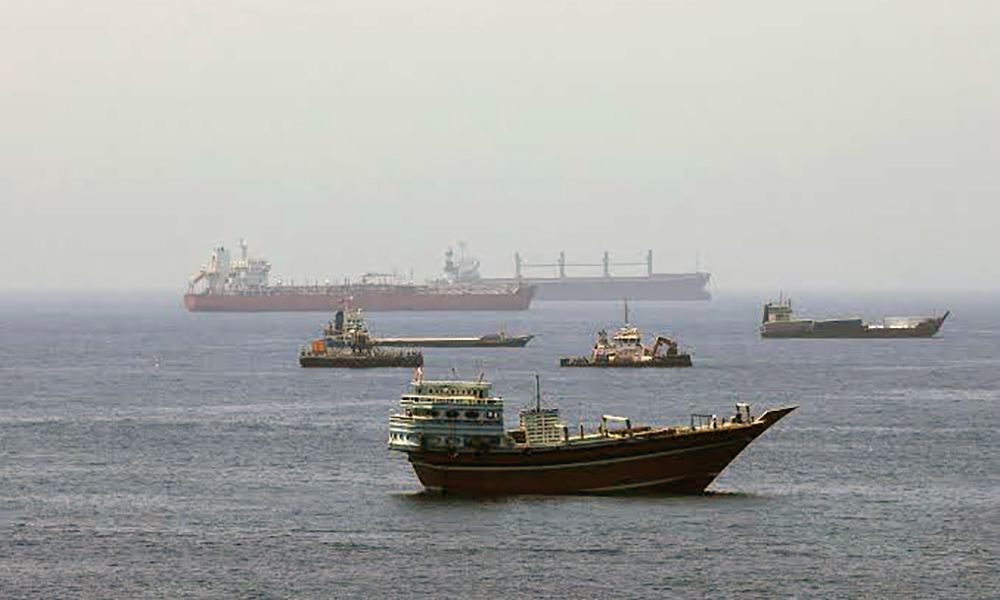
President Donald Trump told reporters on Monday that the United States was attacking Iran’s capabilities related to the Strait of Hormuz, amid renewed military action between the two countries, Reuters reported.
The US military said on Monday it was launching fresh strikes against Iran but Trump told reporters at the Oval Office on Monday that he had not decided that a negotiated settlement could not be reached with Tehran.
Trump also said that it could be that there are Iranian drones in Cuba.
“If they do have that, and they might very well have that, we’ll take care of it,” he said.
“We’re not going to have a problem. We’re not going to allow that to happen so it could be that they are storing some. We’re looking into it now.




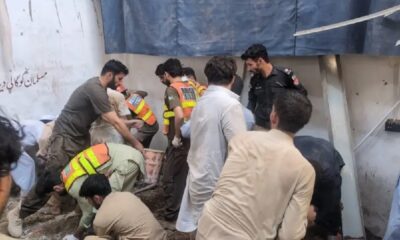

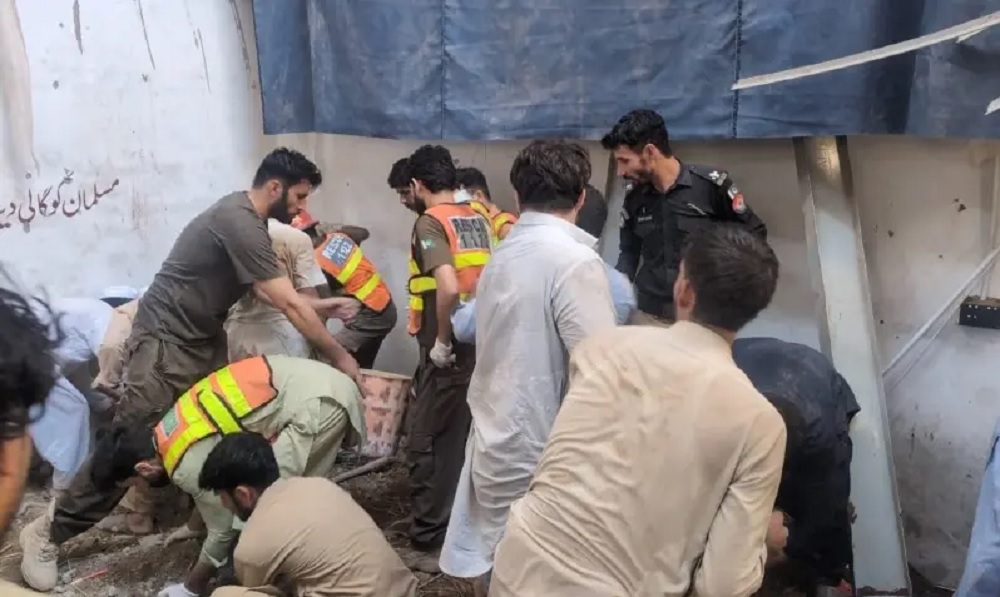
Twenty-one pupils and a teacher were killed on Thursday after a roof collapsed at a school in the northwest Pakistani city of Peshawar, a hospital official said.
Asim Khan from Peshawar’s Lady Reading Hospital confirmed the toll to AFP, adding that over 30 people were injured, with six believed to be in a critical condition.
Pakistan’s Prime Minister Shehbaz Sharif in a statement expressed “deep sorrow and grief over the loss of precious lives”.
“The Prime Minister extends his condolences to the bereaved families and prays for them to have the strength and patience to bear this irreparable loss,” the statement said.
Roof and building collapses are common across Pakistan, mainly because of poor safety standards and shoddy construction materials in the South Asian country of more than 240 million people.
In June this year more than a dozen children were killed in a roof collapse at a tutoring centre in the eastern city of Lahore.
In 2025, 27 people were killed and 10 injured when a five-storey building collapsed in the impoverished area of Lyari in the southern city of Karachi. – AFP
Regional
Saudi Aramco administrative building attacked, limited fire reported
The complex hosts a major operations centre for Aramco, which oversees a vast network of onshore and offshore oil rigs, pipelines, refineries and export terminals.
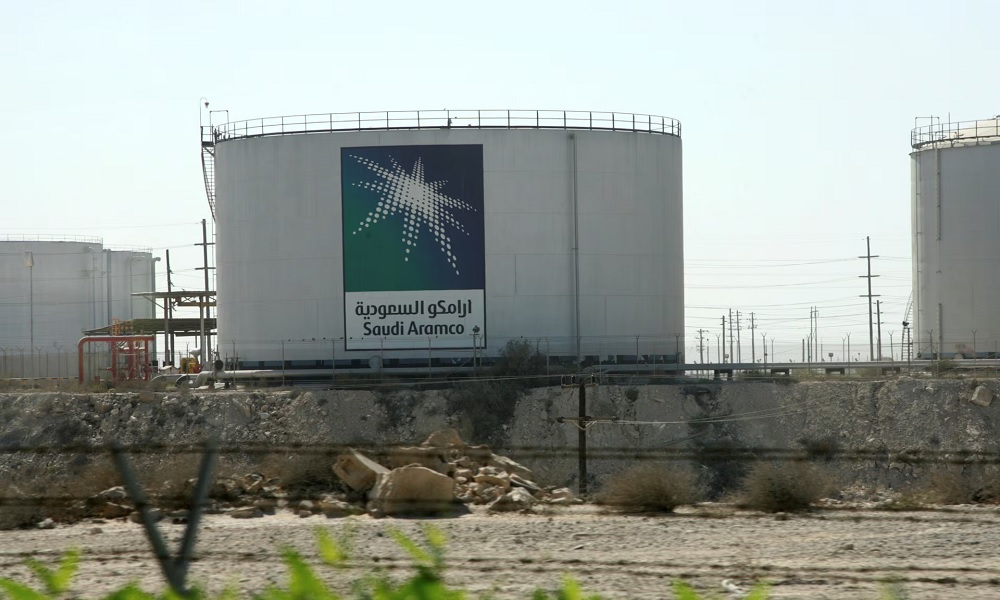
An administrative building belonging to Saudi Arabia’s state-owned oil company Saudi Aramco in the eastern city of Dhahran was attacked, causing a limited fire, the Energy Ministry said in a statement on Wednesday as fighting between Yemen’s Iran-allied Houthis and the kingdom intensified.
Authorities responded to the incident late on Tuesday and took necessary measures, the ministry said, adding that there were no injuries or deaths.
A company source told Reuters earlier that a ballistic missile hit the Aramco headquarters complex in Dhahran. The source said an office tower in the complex was struck and that its top three floors were damaged. The source and two other people with knowledge of the matter said the building was on fire.
The complex hosts a major operations centre for Aramco, which oversees a vast network of onshore and offshore oil rigs, pipelines, refineries and export terminals.
The Houthis have for a week been firing ballistic missiles and drones at key Saudi sites in retaliation for the kingdom’s backing of government forces in Yemen’s reignited civil war. Riyadh’s international airport has received four strikes, including one on Saturday that killed 13 people.
Saturday’s ballistic missile strike on Riyadh airport was the deadliest in Saudi Arabia in a decade, with further attacks grounding flights across the country.
Earlier, six sources told Reuters they heard loud booms near the Aramco complex.
The Saudi-led coalition said fragments of a missile that it had intercepted and destroyed in Dhahran had fallen on a residential area, without providing further details.
Authorities also reported that drones and missiles were intercepted and destroyed in the capital, Riyadh, and the country’s southern region.
Four people were injured in Riyadh after fragments from two Houthi missiles fell following their interception and destruction, Saudi Civil Defense said on Wednesday. The debris caused limited damage to 15 homes in the capital, the Civil Defense spokesperson said, adding that the injured were two women, a man and a child.
The Houthis had threatened a “harsh and painful” response to Saudi-led strikes on the Yemeni capital Sanaa, with spokesperson Yahya Saree saying targets could include the Saudi Aramco headquarters in Dhahran and an oil refinery in Riyadh.
The group has warned oil workers in Saudi Arabia to stay away from sites that could be targets.
The Houthis earlier on Tuesday said Saudi Arabia was attacking Sanaa, and the Saudi-led coalition warned civilians to stay away from an oil depot on the city’s outskirts.
Houthi-run Al-Masirah television reported that the Saudi-led coalition had targeted the Yemen Petroleum Company’s Sabah central station, a fuel depot on the outskirts of Sanaa.
The coalition said in a statement on Tuesday evening that it attacked the station and other sites in an operation aimed at “neutralizing the capabilities of Houthis” to threaten Saudi Arabia, Yemen and international waterways.
The Saudi cabinet, chaired by de facto ruler Crown Prince Mohammed bin Salman, issued a statement on Tuesday before the strike on Saudi Aramco saying the Houthis would face consequences for their repeated attacks on the kingdom.
REIGNITED YEMEN WAR
Saudi Arabia resumed its military campaign in Yemen in support of the internationally recognised government in a bid to reverse the Houthis’ sudden gains last month, when they swept down the Red Sea coast to the critical Bab el-Mandeb Strait.
The strait, the southern gateway to the Red Sea, has become a more vital route for Saudi and other global energy supplies since the start of the Iran war in February, when Tehran closed the Strait of Hormuz leading from the Gulf to the Indian Ocean.
While a government offensive that began a week ago pushed the Houthis from the area closest to the strait, the group remains embedded nearby and has made gains around the city of Taiz this month.
Saudi Arabia has been seeking wider support from allies for its campaign against the Houthis and to help it ward off their missile and drone attacks.
Washington, Saudi Arabia’s strongest ally and longtime security guarantor, has so far rebuffed Saudi efforts to bring it directly into the war against the Houthis.
The Yemen conflict has resumed as a spillover from the wider US-Iran war that began with the US-Israeli attack on the Islamic Republic on February 28.
Iran, Saudi Arabia’s longtime regional rival, has offered to mediate between Saudi Arabia and the Houthis, its foreign minister Abbas Araqchi said on Sunday in statements reiterated by the ministry on Monday.
Regional
Pakistan deploys military to Peshawar after emergency rule declared
Thousands of supporters of Khan have been marching across Khyber Pakhtunkhwa, demanding his release and criticising the government over worsening economic conditions.
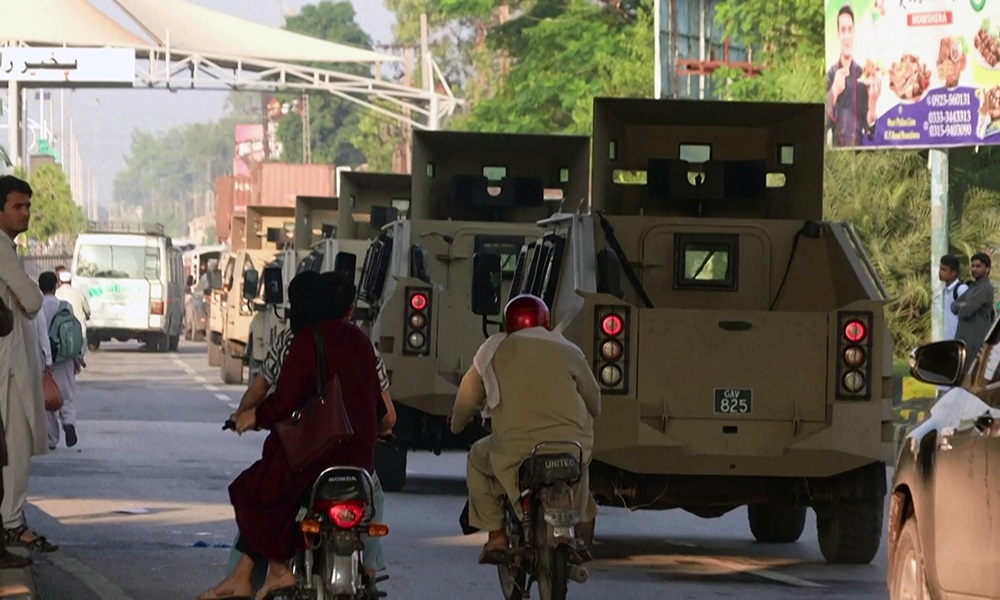
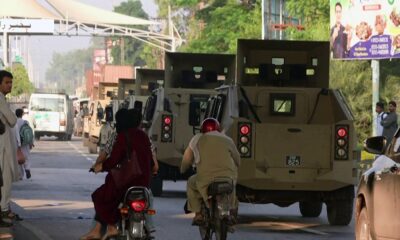
Pakistan deployed security personnel and military vehicles to Peshawar on Monday, a day after the government imposed emergency rule in the northwestern province of Khyber Pakhtunkhwa, a stronghold of jailed former prime minister Imran Khan.
The deployment follows Sunday’s emergency declaration, which came amid anti-government demonstrations by Khan’s supporters and increased militant violence in the region.
Thousands of supporters of Khan have been marching across Khyber Pakhtunkhwa, demanding his release and criticising the government over worsening economic conditions.
The emergency measures effectively sideline the provincial government led by Khan’s Pakistan Tehreek-e-Insaf (PTI) party. Authorities have cited deteriorating security and the failure of negotiations with the opposition.
The move has drawn condemnation from PTI leaders, who have described the emergency declaration as undemocratic and an infringement on the rights of the province’s residents.
Khan has been in prison since August 2023, facing numerous charges that he denies, describing them as politically motivated.
The deployment comes amid heightened political tensions and security concerns in northwestern Pakistan, where authorities have also reported increased militant activity.


IEA calls on UNAMA to base its reports on facts

Saar: Review of state officials’ visits to Kabul over past month discussed

EU envoy says restrictions on women and girls an obstacle to normalizing ties with IEA

Qatar calls for more international aid for Afghan refugees and returnees

Iran says nearly 60,000 Afghan students attend its universities, urges more refugee aid

Cricket Bonanza: Afghanistan set for packed international schedule

UN warns of mounting humanitarian and human rights pressures in Afghanistan

Afghanistan says 28 killed, 32 captured in Nuristan operation

CNN, MS NOW and Politico sue Trump, challenging White House ban

Silk Road highway in Wakhan corridor now reaches the China border
Saar: Review of state officials’ visits to Kabul over past month discussed

Tahawol: Kyrgyzstan’s rejection of Afghan refugees discussed

Saar: Central Asia’s trade alternative to Pakistan discussed

Tahawol: Warnings over worsening insecurity in Pakistan discussed

Saar: Concerns over potential return of US military bases to Afghanistan discussed
-
 Regional4 days ago
Houthis warn airlines to avoid Saudi airports after deadly Riyadh attack
-

 World4 days ago
One dead in new attack on Saudi airport, a day after Houthi strike kills 13
-

 Sport4 days ago
Afghanistan Champions League second half to kick off on October 16
-

 World5 days ago
14 killed in two separate mass shootings across the United States
-
 Regional4 days ago
Pakistan deploys military to Peshawar after emergency rule declared
-

 Business4 days ago
Afghanistan signs nearly $400 million in regional trade and investment deals
-

 Sport4 days ago
Bangladesh take 329-run lead against Afghanistan in one-off Test
-

 Latest News5 days ago
Afghan education advocate establishes $2.5 million Oxford scholarship fund for women