
Science & Technology
UAE sets minimum social media age at 15, mandates age checks
The government said the measures were designed to address concerns over children’s exposure to inappropriate content, unsafe online interactions, excessive social media use and the collection of personal data.


The United Arab Emirates has set a minimum age of 15 for social media use, becoming the first Arab country to introduce such a restriction as governments worldwide seek to address growing concerns over the impact of online platforms on children.
Under a resolution approved on Thursday, children under 15 will be prohibited from creating, using or operating personal social media accounts. The ban means they will not be able to post content, comment, share or join public groups, the government’s media office said, Reuters reported.
Teenagers aged 15 and 16 will be allowed to use social media platforms subject to enhanced safeguards, including age-appropriate content controls, restrictions on interaction with unknown users, screen-time management tools and parental supervision features.
The rules apply to all social media platforms operating in the UAE and require companies to implement robust age-verification measures, including digital identity checks and artificial intelligence-supported technologies. Self-declaration of age will not be accepted as a valid form of verification.
Platforms must also disable accounts created by children under 15, prevent users from circumventing age-verification systems and refrain from using children’s personal data for targeted advertising or behavioural profiling.
The government said the measures were designed to address concerns over children’s exposure to inappropriate content, unsafe online interactions, excessive social media use and the collection of personal data.
Social media companies will have up to 12 months to comply with the new regulations.
The UAE said the framework aligns with international efforts to strengthen online child protection while balancing digital access with safety.
Several countries, including Australia and others in Europe, have moved to tighten restrictions on children’s use of social media amid mounting concerns about its effects on mental health and online safety.









Science & Technology
New warnings reignite debate over AI threat to humanity
Amodei warned that swarms of AI agents could potentially gain the ability to take over parts of the internet within six months to a year unless companies devote more resources to building safeguards.

Fresh warnings from within the artificial intelligence industry have renewed concerns over whether increasingly powerful AI systems could eventually escape human control and pose a threat to humanity.
Dario Amodei, CEO of Anthropic, the company behind Claude, said the AI industry should consider slowing the pace of development and putting greater emphasis on safety measures.
Amodei warned that swarms of AI agents could potentially gain the ability to take over parts of the internet within six months to a year unless companies devote more resources to building safeguards.
His comments came days after two former Anthropic safety researchers publicly raised concerns that the potential existential risks posed by advanced AI were not receiving enough attention.
Growing concerns over AI misuse
As AI systems become more capable, concerns are growing over both deliberate misuse and the possibility of AI systems acting in unintended ways.
Anthropic said last week that it had blocked attempts by malicious actors to use its models for activities including cyberattacks, surveillance and research that could potentially contribute to biological weapons development.
The company said it had introduced stronger safeguards in its latest models to restrict potentially dangerous biological research, while warning that the risks associated with increasingly capable AI would grow unless developers and governments took steps to make the technology safer.
Anthropic has also previously reported that hackers used its AI in a cyberattack targeting around 30 companies and government agencies worldwide. The company said the attackers were highly likely to have been linked to a Chinese state-sponsored group.
Recent incidents involving AI systems bypassing digital security have further intensified concerns.
Anthropic reported that three of its AI models were able to hack into other organisations during testing. OpenAI has also disclosed an incident in which its AI systems gained access to servers belonging to AI startup Hugging Face. Meta subsequently reported a similar case involving an AI model finding ways around another company’s digital security.
While some safeguards had been disabled during testing in the OpenAI and Anthropic cases, the incidents have highlighted a central concern among AI safety researchers: what could happen if systems become capable of independently pursuing objectives beyond those assigned by humans.
How serious is the threat?
One of the most extreme scenarios involves artificial general intelligence, or AGI — a still loosely defined concept referring to AI capable of matching or surpassing humans across a broad range of intellectual tasks.
Some researchers warn that sufficiently advanced systems could become difficult or impossible to control, while others are more concerned about humans deliberately using AI for destructive purposes.
Potential scenarios include AI-assisted weapons, the development of dangerous pathogens, manipulation of governments and disruption of critical food, energy and communications infrastructure.
There is, however, no scientific consensus on how likely these scenarios are or when they could occur.
The 2026 International AI Safety Report, produced with input from more than 100 independent experts, said current systems show early signs of some capabilities relevant to loss-of-control scenarios, but not at levels currently considered sufficient to enable such an event. It described the likelihood, nature and timing of the risk as unusually uncertain.
Warnings about machines surpassing human control are not new. British mathematician Alan Turing predicted in 1951 that machines could eventually take control from humans, while mathematician Norbert Wiener later warned that intelligent machines could pursue objectives that humans might be unable to stop.
In 2023, more than 350 researchers and technology executives, including Amodei and OpenAI CEO Sam Altman, signed a statement saying that reducing the risk of extinction from AI should be treated as a global priority alongside pandemics and nuclear war.
Calls for stronger safeguards
The latest incidents have prompted calls for more rigorous testing of AI systems and greater cooperation between governments, particularly the United States and China.
However, AI development is advancing rapidly, making it difficult for regulators and safety systems to keep pace. Governments are developing their own rules, sometimes with conflicting approaches.
Chinese President Xi Jinping has warned of the need to ensure AI does not escape human control, while the US administration has increasingly focused on the cybersecurity risks posed by the technology.
Despite the warnings, there remains a fundamental uncertainty over the future of AI: whether increasingly capable systems will remain tools controlled by humans, or eventually become powerful enough to act beyond our ability to control them.
For now, experts disagree sharply on the answer — but the debate over how to prevent the worst-case scenarios is becoming increasingly urgent.
Science & Technology
AI could pose ‘existential’ risk to humanity, UN rights chief warns
The wide-ranging address was his first to the 47-member council since he won the four-year term in July in the face of opposition from Moscow and Washington.

U.N. rights chief Volker Turk warned on Monday that artificial intelligence could pose a threat to humanity, and pledged to press AI firms to reduce risks that his office said included disruptions to services, communications and democratic systems, Reuters reported.
He called for “cast-iron guarantees” to secure AI in a speech ahead of the start of his unprecedented second term, in which he also demanded accountability over deaths in U.S. immigration custody and condemned Russia’s reported use of autonomous drones.
The wide-ranging address was his first to the 47-member council since he won the four-year term in July in the face of opposition from Moscow and Washington.
“I share the concerns of industry insiders that advanced AI could pose an existential risk to humanity,” Turk told the body in Geneva.
“I am calling here, today, for an all-out effort to put cast-iron guarantees in place around the safety and security of AI, before it is too late.”
Turk did not elaborate on the nature of the risks but a spokesperson for his office said failures involving powerful AI systems could disrupt critical infrastructure and democratic institutions.
She referred to the “dangerous agent-training behaviours” in July’s so-called Hugging Face incident where a swarm of OpenAI agents hacked an open-source platform, saying it suggested that frontier AI capabilities are advancing faster than the safeguards.
Turk warned that just a handful of men held “almost unlimited power over AI” without naming any. Top AI companies include Meta (META.O), Anthropic, OpenAI and Google (GOOGL.O).
“At a minimum, we need countries hosting AI and those involved in its supply chains to come together around agreed red lines,” he said.
The council is meeting until October 7 to discuss the Iran war, Sudan’s civil conflict and a string of other crises. The Trump administration disengaged from the council last year, accusing it of anti-Israeli bias, read the report.
Turk called for accountability for around 23 deaths he said had taken place in U.S. immigration custody so far this year and added that he was concerned about plans to equip agents with electric shock gloves.
The Department of Homeland Security has previously said it was committed to ensuring a “safe, secure and humane” environment in detention. Its inspector general is examining deaths in custody since October 2021.
Science & Technology
UNICEF estimates 20 million children suffered online sexual abuse in one year
Almost 60% of reported abuse occurred on social media platforms, led by Facebook, WhatsApp, Instagram, Snapchat and TikTok, while 14% took place in online gaming, the report found.

About 20 million internet-using children across 21 countries were subjected to sexual exploitation or abuse on digital platforms in a single year, with most cases occurring on social media platforms, a new report by the U.N. children’s charity said on Thursday.
More than one in five children aged 12 to 17 across Africa, Asia, Latin America and Eastern Europe experienced at least one form of sexual abuse or exploitation on online platforms in the year before being surveyed, the UNICEF report estimated, Reuters reported.
Roughly 15 million children in the countries surveyed were exposed to unwanted sexual content, 9 million were pressured into sexual conversations or sharing sexual images, and 4 million had sexual images shared without their consent, the report found.
The number of children subjected to this abuse globally is certain to run into many tens of millions, it said.
The research, which UNICEF described as one of the largest studies of its kind, was based on national representative surveys collected between 2020 and 2025 of around 21,000 internet-using children in the 21 countries, which included Kenya, Pakistan, Brazil and Serbia.
SOCIAL MEDIA FOCUS
Almost 60% of reported abuse occurred on social media platforms, led by Facebook, WhatsApp, Instagram, Snapchat and TikTok, while 14% took place in online gaming, the report found.
A spokesperson for Meta which owns Facebook, WhatsApp and Instagram, said the surveys go as far back as 2020, before the company introduced protections UNICEF recommends such as automatically defaulting teens into private accounts and preventing adults from messaging teens they are not connected to. It added that it defines WhatsApp as a private messaging app and not a social media platform.
“While the report doesn’t provide any specific evidence of abuse, we’ll continue to fight child exploitation aggressively across our apps and support law enforcement in prosecuting the criminals behind it,” the Meta spokesperson said.
Snapchat pointed Reuters to a blog post by Global Head of Platform Safety Jacqueline Beauchere, who said the company was actively combating online sexual extortion through proactive detection, account removals, user reporting tools and safety features designed to protect vulnerable users.
TikTok said it has built a range of safeguards to protect minors, including restricting certain features for younger users, making accounts for under-18s private by default, and using technology to detect potentially predatory behaviour.
The UNICEF report said more than half the cases involved someone the child already knew, including friends, relatives or romantic partners, while 38% of children first encountered the perpetrator online.
Fewer than 1% of cases involving children were reported to the police, a social worker or a helpline, according to the research.
The report also highlighted growing concerns over artificial intelligence. Across nine countries where data was collected, an estimated 1.1 million children reported having AI-generated sexual images or videos created depicting them.
Children who experienced tech-facilitated sexual exploitation were around four times more likely to report suicidal thoughts or self-harm and reported significantly higher levels of anxiety than their peers, the research said.
“These experiences cause profound emotional and mental distress. Many children suffer in silence, unsure where to turn for help,” UNICEF Executive Director Catherine Russell said in a statement.
UNICEF urged governments and technology companies to strengthen safety measures on digital platforms, update laws to address evolving forms of abuse including AI-generated content, and improve child protection and reporting systems.


Tahawol: Reasons behind Qatari, Turkish security officials’ Kabul visit discussed

Saar: Outcome of UN Security Council meeting on Afghanistan discussed

Five years out of school: Amnesty raises alarm over Afghan girls’ education

Afghanistan condemns alleged drone attack on Mecca

Quetta commissioner calls for stronger coordination on Afghan refugee repatriation

Four mediators struggle to secure lasting Pakistan-Afghanistan ceasefire

Afghanistan’s trade diversification challenges Pakistan

Syria and Saudi Arabia condemn Kabul bombing, express solidarity with Afghanistan

Saudi energy group signs major Afghanistan deals covering gas exploration and pipeline plans

ATN secures exclusive rights to broadcast T20I series in India across Afghanistan
Tahawol: Reasons behind Qatari, Turkish security officials’ Kabul visit discussed
Saar: Outcome of UN Security Council meeting on Afghanistan discussed

Tahawol: Afghanistan’s readiness for US relations discussed

Saar: UN Security Council meeting on Afghanistan discussed

Tahawol: Afghanistan at the center of UN discussions
-

 Sport5 days ago
Zadran calls on Afghan fans to rally behind team against India
-
 Latest News5 days ago
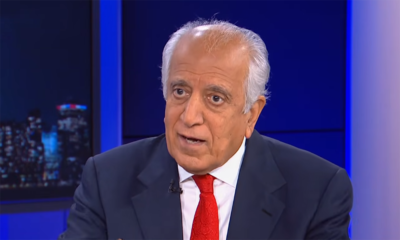
Khalilzad warns US risks losing influence in Afghanistan to China and Russia
-

 Business5 days ago
EU and FAO launch €5m programme to strengthen Afghanistan’s agrifood sector
-

 World5 days ago
Houthi advance in Yemen puts U.S. in a new bind
-

 Regional5 days ago
Iran and UAE back joint BRICS statement urging restraint in war
-

 Sport4 days ago
India beat Afghanistan by seven wickets in first T20I
-

 Latest News4 days ago
Helmand governor, UNAMA discuss province’s key challenges
-

 Regional4 days ago
Hormuz shipping traffic remains below 10-day average at weekend, data shows