
Latest News
UN Counts High Record Number of Civilian Casualties in Afghanistan in 2018

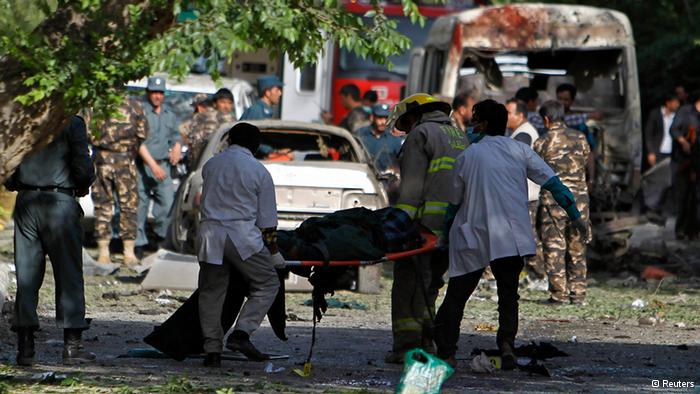
The United Nations new report reveals that more civilians were killed in the Afghan conflict last year than at any time since records have been kept, the UNAMA and UN Human Rights Office said.
According to the report which was released by the UN Assistance Mission in Afghanistan (UNAMA) and the UN Human Rights Office on Sunday 3,804 civilians have lost their lives. Among the dead were 927 children, the highest recorded number of boys and girls killed in the conflict during a single year.
In total, UNAMA documented 10,993 civilian casualties (3,804 deaths and 7,189 injured), representing a five percent increase in overall civilian casualties and an 11 percent increase in civilian deaths compared to 2017.
UNAMA attributed the majority of civilian casualties 63% to anti-Government Elements (AGEs), 37% to Taliban, 20% to Daesh, and 6% to undetermined AGEs. Pro-Government Forces caused 24% of civilian casualties –14% by Afghan National Security Forces, 6% by the international military forces, as well as 4% by other pro-government armed groups and forces.
Key factors contributing to the significant increase in civilian casualties were a spike in suicide attacks by AGEs, mainly Daesh, as well as increased harm to civilians from aerial and search operations by pro-government forces. 2018 witnessed the highest number of civilian casualties ever recorded from suicide attacks and aerial operations.
“The report’s rigorously researched findings show that the level of harm and suffering inflicted on civilians in Afghanistan is deeply disturbing and wholly unacceptable,” UNAMA Chief Tadamichi Yamamoto said.
He added, “All parties need to take immediate and additional concrete steps to stop a further escalation in the number of civilians harmed and lives destroyed.”
Yamamoto said, “This is the UN’s tenth annual report documenting the plight of civilians in the Afghan conflict –more than 32,000 civilians killed and around 60,000 injured in a decade. It is time to put an end to this human misery and tragedy. The best way to halt the killings and maiming of civilians is to stop the fighting. That is why there is all the more need now to use all our efforts to bring about peace. I urge all parties to seize every opportunity to do so.”
“The conflict in Afghanistan continues to kill far too many civilians and has caused long-lasting suffering, both physical and psychological, to countless others,” the UN High Commissioner for Human Rights Michelle Bachelet said.
“The fact that the number of children killed this year is the highest on record, is particularly shocking. In addition to the lives lost, the dire security situation is preventing many Afghans from enjoying their economic, social and cultural rights, with thousands of children already handicapped for life because of attacks on schools and medical facilities,” Bachelet added.
“So I call on all parties to the conflict to fully respect international humanitarian and international human rights law to protect the lives of all civilians,” Bachelet underlined.
Anti-Government Elements were responsible for 6,980 civilian casualties (2,243 deaths and 4,737 injured), a 3% increase on 2017, which mainly resulted from the indiscriminate use of suicide improvised explosive devices (IEDs) and the deliberate targeting of civilians with these devices. Taliban caused 4,072 civilian casualties (1,348 deaths and 2,724 injured), 7% down on 2017, while Daesh caused 2,181 civilian casualties (681 deaths and 1,500 injured), an increase of 118%.
UNAMA attributed a further 678 civilian casualties (196 deaths and 482 injured) to undetermined AGEs.
Anti-government elements’ use of IEDs in both suicide and non-suicide attacks reached extreme levels and remained the leading cause of civilian casualties in 2018, accounting for 42 percent of the total. Suicide IED attacks caused 2,809 civilian casualties (886 deaths and 1,923 injured), almost 26% of all civilian casualties, while non-suicide IEDs caused more than 16%, resulting in a combined total of 4,627 civilian casualties (1,361 deaths and 3,266 injured).
UNAMA notes continued concern with the Taliban’s use of indirect weapons systems and IEDs, particularly targeting civilians and civilian objects during election-related attacks, as well as using the weapons against pro-government forces in civilian areas, which has indiscriminate effects. The increase in deliberate targeting of civilians by the Taliban, which nearly doubled from 865 civilian casualties in 2017 to 1,688 in 2018, resulted largely from the 27 January suicide ambulance attack in Kabul (the deadliest single incident ever recorded by UNAMA) and from election-related attacks on the 20 October polling day, when UNAMA recorded the highest number of civilian casualties in any single day in 2018. Civilian casualties resulting from deliberate targeting of civilians by Daesh, which included attacks against the Shi’a Muslim population, more than doubled.
Anti-government elements carried out 65 suicide and complex attacks in 2018. UNAMA attributed 21 of the attacks to the Taliban, which caused 642 civilian casualties. Taliban claimed responsibility for 15 of these attacks, from which UNAMA verified 542 civilian casualties. UNAMA attributed 36 suicide and complex attacks to Daesh, causing 1,892 civilian casualties. The group claimed responsibility for 33 of these incidents, which caused 1,631 civilian casualties. Seven incidents claimed by Daesh caused more than 100 civilian casualties as compared to three in 2017.
UNAMA documented disproportionate and extreme harm to Kabul residents from suicide and complex attacks. Almost half of the AGE suicide and complex attacks in 2018 occurred in Kabul, with 28 such incidents causing 1,686 civilian casualties (481 deaths and 1,150 injuries), a 5% increase in the number of casualties from 2017.
UNAMA documented a 24% increase in civilian casualties attributed to Pro-Government Forces in 2018 as compared to 2017, which mainly resulted from aerial operations by international military forces, as well as from search operations conducted by Afghan national security forces and pro-government armed groups. Between 1 January and 31 December 2018, UNAMA documented 2,612 civilian casualties (1,185 deaths and 1,427 injured) from operations conducted by Pro-Government Forces. Civilian casualties attributed to Pro-Government Forces accounted for 24% of all civilian casualties in Afghanistan in 2018.
For the first time since 2009 when it began systematically documenting civilian casualty figures, UNAMA recorded more than 1,000 civilian casualties from aerial operations. 2018 also witnessed more than 500 civilians killed by aerial operations for the first time on record. UNAMA documented 1,015 civilian casualties (536 deaths and 479 injured) from aerial operations. Of these, UNAMA attributed responsibility to international military forces for 632 civilian casualties (393 deaths and 239 injured), to the Afghan Air Force for 304 civilian casualties (118 deaths and 186 injured) and the remaining casualties to unidentified pro-Government forces.
Search operations caused 353 civilian casualties (284 deaths and 69 injured) with the majority caused by National Directorate of Security Special Forces and the Khost Protection Force, both of whom are supported by international military forces.
In 2018, approximately the same number of civilians were killed from airstrikes as in 2014, 2015 and 2016 combined. Women and children continued to comprise almost two-thirds of all civilian casualties from aerial operations, amounting to 648 civilian causalities (320 deaths and 328 injured).
In 2018, international military forces were responsible for 674 civilian casualties (406 deaths and 268 injured), 94% of which resulted from aerial operations.
Aerial operations and ground engagements caused the same number of civilian casualties, tied as the two leading causes of civilian casualties attributed to Pro-Government Forces in 2018.
The armed conflict continues to have a severe impact on children and women, who made up 38% of all civilian casualties. Child casualties represented 28 percent of all killed and injured. UNAMA recorded 3,062 child casualties (927 deaths and 2,135 injured). While this was a slight decrease compared to 2017, child deaths reached record high levels in 2018, mainly due to the more than doubling of child deaths from aerial operations, as well as an increase in child deaths from suicide attacks.
Anti-Government Elements caused 1,343 child casualties (324 deaths and 1,019 injured), comprising 44% of all child casualties in 2018. Pro-Government Forces caused 1,051 child casualties (414 deaths and 637 injured), comprising 34% of overall child casualties.
Overall child casualty figures showed AGEs continued to cause most child casualties in 2018, although it decreased by 3% compared to 2017, while there was a 15% increase in child casualties attributed to Pro-Government Forces. UNAMA documented that Pro-Government Forces were responsible for the deaths of 414 children in 2018, while Anti-Government Elements were responsible for the deaths of 324 children in 2018.
Women casualties reduced by six percent to 1,152 (350 deaths and 802 injured), resulting mainly from the eight percent decrease in women casualties from ground engagements. Women comprised 10 percent of conflict-related civilian casualties in 2018.
In the report, UNAMA acknowledges the efforts taken by the Afghan national security forces, international military forces, and the Taliban to protect civilians from harm caused. However, given the scale and scope of civilian casualties that have continued at very high levels for years, it emphasizes that more needs to be done.
Among its recommendations, the report urges Anti-Government Elements to cease the deliberate targeting of civilians and civilian objects, as well as the indiscriminate and disproportionate use of all IEDs. It calls on the Government of Afghanistan and international military forces to strengthen their review of incidents involving allegations of civilian casualties and ensure that effective reparations are provided for harm suffered. Beyond this, a halt in the fighting by all parties is the only effective way to protect civilians.
At the meantime, the Taliban in a statement have rejected the UNAMA’s report as allegedly 37% of civilian casualties are caused by the Taliban militants.






The FIFA World Cup has long been a stage where elite forwards become household names, producing the goals and moments that define football’s biggest spectacle.
With the 2026 tournament in the United States, Canada and Mexico expected to showcase some of the game’s brightest talents, these are 10 attacking players who could leave a lasting mark on the competition.
Kylian Mbappé (France)
Already a World Cup winner and Golden Boot recipient, Mbappé arrives in North America at the peak of his career. The French captain remains one of football’s most feared attackers and will once again be central to his country’s title ambitions.
Erling Haaland (Norway)
Norway’s return to the World Cup spotlight owes much to Haaland’s remarkable goalscoring form. The powerful striker combines physical strength with clinical finishing and will be among the favourites to challenge for the Golden Boot.
Lamine Yamal (Spain)
Still a teenager, Yamal has already established himself as one of football’s most exciting talents. The Barcelona star’s creativity, flair and maturity make him a potential breakout star of the tournament.
Vinícius Júnior (Brazil)
Brazil’s hopes of lifting a sixth World Cup could rest heavily on Vinícius. The Real Madrid winger continues to terrorise defenders with his pace, skill and growing goalscoring threat.
Harry Kane (England)
England’s all-time leading scorer heads into the tournament after another prolific campaign. Kane remains one of the world’s most complete forwards and a leading contender for both individual and team honours.
Mohamed Salah (Egypt)
After helping Egypt qualify, Salah finally gets another chance to shine on football’s biggest stage. Despite entering his thirties, the Liverpool legend remains one of the game’s most productive and influential attackers.
Ousmane Dembélé (France)
Having overcome years of injury setbacks, Dembélé arrives in top form following a hugely successful spell with Paris Saint-Germain. His pace, creativity and improved finishing add another dimension to France’s formidable attack.
Julián Álvarez (Argentina)
Already a World Cup winner, Álvarez continues to thrive on the biggest occasions. His work rate, intelligent movement and eye for goal make him a vital figure for the defending champions.
Raphinha (Brazil)
Raphinha has become a key component of Brazil’s attack, combining creativity with a consistent goal threat. If fully fit, he could play a major role in Brazil’s quest for glory.
Rafael Leão (Portugal)
Few players can change a game as quickly as Leão. The AC Milan winger’s explosive pace and dribbling ability make him one of Portugal’s most dangerous attacking weapons heading into the tournament.
As the countdown to World Cup 2026 continues, these forwards are expected to be among the headline acts, with their goals and creativity potentially shaping the destiny of football’s most coveted prize.
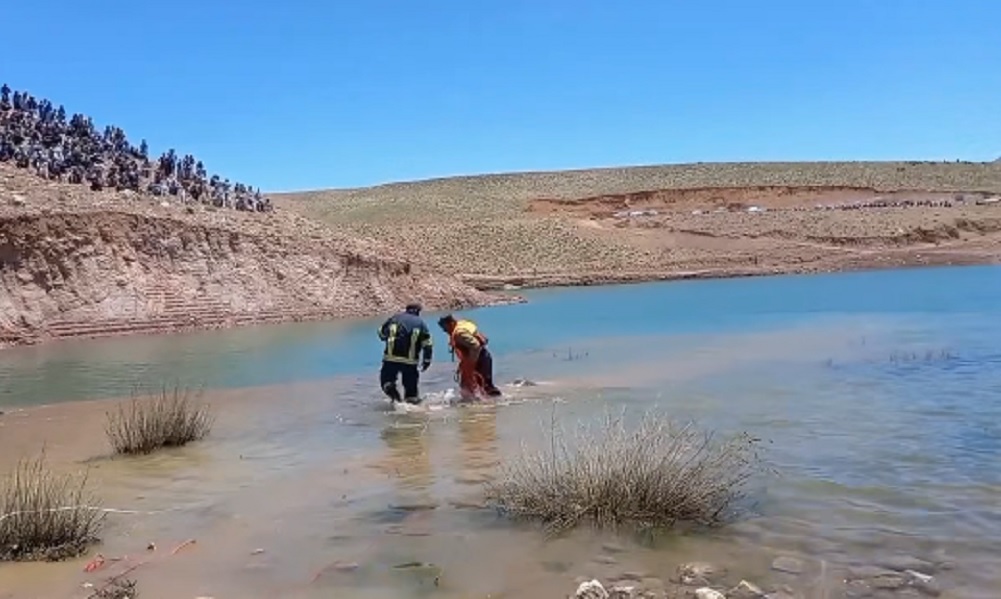
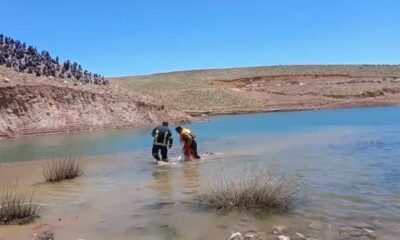
At least 75 people have died in drowning incidents across Afghanistan since the beginning of the current solar year, according to the National Disaster Management Authority.
Mohammad Yousuf Hamad, spokesperson for the authority, said three other people were injured in water-related incidents during the same period.
Among those who lost their lives were 27 men, seven women and 41 children, highlighting the high number of child fatalities in drowning accidents.
The authority did not provide details on the locations of the incidents but urged the public to take precautionary measures near rivers, canals, dams and other bodies of water, particularly during the summer season when swimming and recreational activities increase.
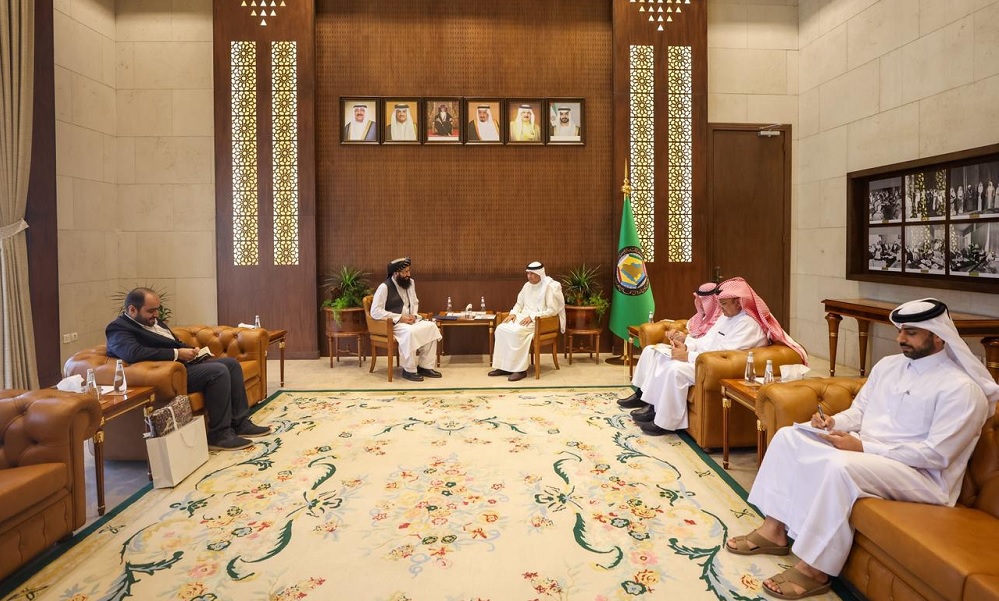
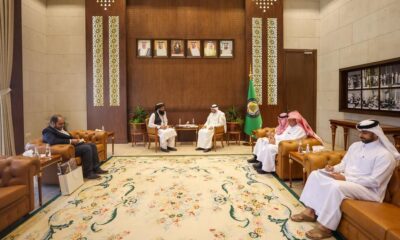
Afghanistan’s Chargé d’Affaires to Saudi Arabia, Abdul Fattah Mawlawi Sakhi, met with Jasem Mohamed Albudaiwi, Secretary General of the Gulf Cooperation Council, in Riyadh to discuss bilateral relations and regional developments.
The meeting was held on Sunday at the headquarters of the GCC General Secretariat in the Saudi capital.
According to a statement from the GCC, the two sides reviewed relations between Afghanistan and the Gulf bloc and discussed a number of topics.
They also exchanged views on the latest regional and international developments, although no further details were provided on the topics discussed.


Earthquake of magnitude 7.8 strikes off southern Philippines, 15 feared killed

World Cup 2026: Ten attacking stars set to steal the show in North America

Afghan banks to finance Herat–Mazar railway project

75 people drown in Afghanistan in past two and a half months

Afghan diplomat, Gulf Cooperation Council discuss relations in Riyadh talks

Afghanistan signs $46 million deal to develop standard laboratory complexes

Large blast near Beit Shemesh part of pre-planned test: Israeli defense firm

Trump returns from China with stability but little progress

Afghanistan announce squad for India series

Afghanistan, Russia sign military cooperation agreement

SAAR: UN Security Council Holds Quarterly Meeting on Afghanistan

Tahawol: Impact of Middle East crisis on aid transfers to Afghanistan

Saar: Calls to strengthen economic and trade cooperation discussed

Tawsia: Signing of $20 million Herat salt mining deal discussed

Tahawol: Discussion on fear of internal disputes in Iran
-
 Business5 days ago
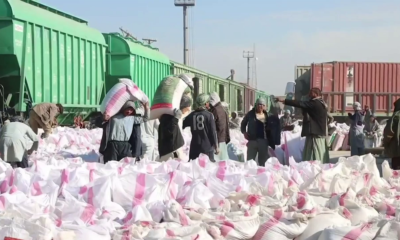
Afghanistan’s trade with Central Asia records sharp growth
-

 Sport3 days ago
Gaikwad set to replace injured Kohli for Afghanistan ODI Series
-

 Sport4 days ago
Afghanistan name squad for A-team tri-series in Sri Lanka
-
 Business4 days ago
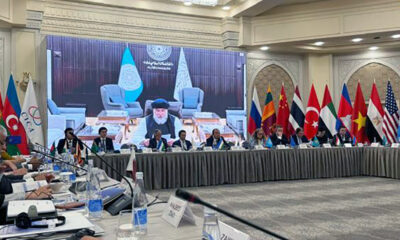
Afghanistan highlights strategic connectivity role at Termez Dialogue
-
 Latest News4 days ago
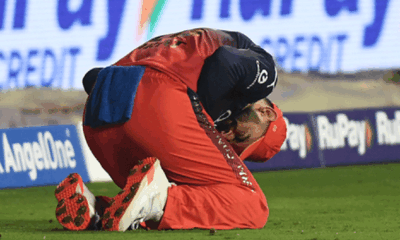
Kohli ruled out of Afghanistan ODI series with hamstring injury
-

 International Sports3 days ago
Eight Goalkeepers Set to Shine at the 2026 FIFA World Cup
-
 Latest News4 days ago
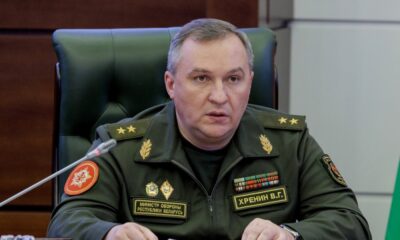
Belarusian defense minister warns Afghanistan-Pakistan tensions could fuel extremism in CSTO states
-
 Latest News4 days ago
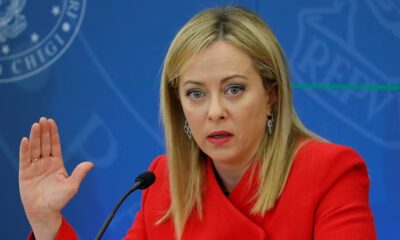
Italian PM condemns ‘horrific’ killing of four migrant workers in Calabria, vows justice