
Latest News
UN warns Afghanistan economy in ‘freefall’

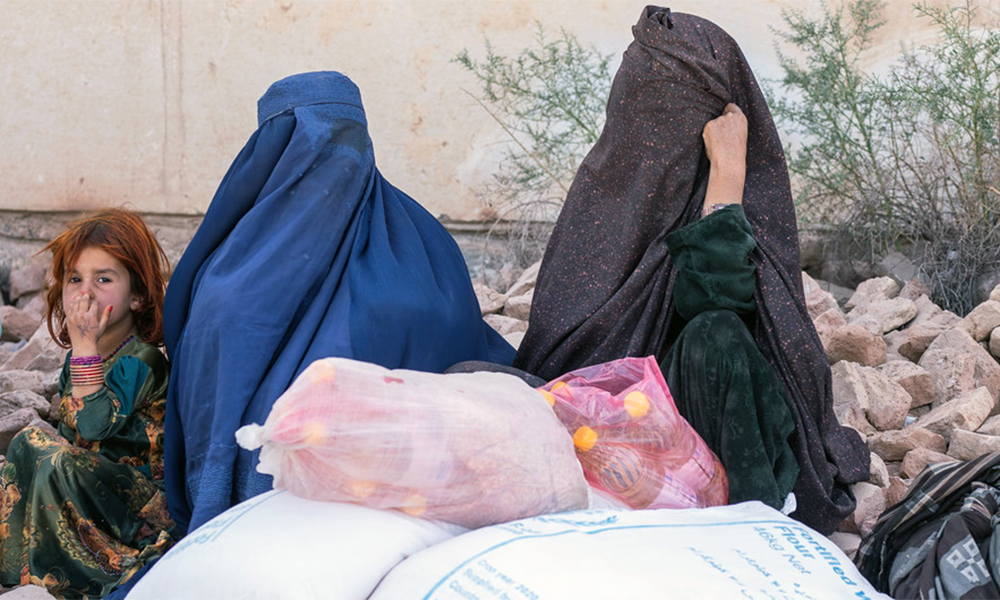
Under-Secretary-General for the UN’s Humanitarian Affairs Martin Griffiths painted a grim picture on Sunday of 23 million people facing hunger; malnourished children overflowing in health facilities; 70 percent of teachers working without salaries; and millions of students – Afghanistan’s future – out of school.
Speaking virtually to the 17th Extraordinary Session of the Organization of Islamic Cooperation (OIC) Council of Foreign Ministers in Islamabad, Pakistan, Griffiths said the crisis is unfolding as the value of the Afghani currency plummets, a lack of confidence in the financial sector destroys trade and the space for borrowing and investment dramatically constricts.
“The need for liquidity and stabilization of the banking system is now urgent – not only to save the lives of the Afghan people but also to enable humanitarian organizations to respond”, he said.
Griffiths also welcomed the decision by the World Bank’s Afghanistan Reconstruction Trust Fund to transfer $280 million by the end of December to the UN Children’s Fund (UNICEF) and the World Food Programme (WFP).
“This step should be followed by reprogramming of the whole fund to support the Afghan people this winter”, he said.
“Families simply do not have the cash for everyday transactions, while prices for key commodities continue to rise”.
The cost of wheat and fuel are up by around 40 percent and food now accounts for more than 80 percent of the average household expenditure.
And as international development support has frozen up, basic social services that all Afghans depend on are collapsing.
Griffiths cautioned that by the middle of next year, universal poverty – reaching 97 percent of the population – could be “the next grim milestone”.
“Within a year, 30 percent of Afghanistan’s gross domestic product could be lost altogether, while male unemployment may double to 29 percent”, he spelled out.
The OIC met on Sunday to express their willingness to help avert disaster and contribute to the humanitarian endeavor.
Griffiths meanwhile also said that next year, the UN would seek its largest-ever funding appeal of $4.5 billion “to help the most vulnerable in Afghanistan”.
The plan is a stopgap measure for over 21 million people who need lifesaving assistance and must be funded as “a matter of priority”, he said.
“The crisis is huge. Our humanitarian response is effective and continues to scale up, thanks to generous donor support and your sustained engagement”, he stated.
Griffiths also said that Afghanistan will not get through the winter on emergency aid alone and stressed the need for “flexible donor funding” that can be used to ensure salaries for public sector workers and support to basic services, such as health, education, electricity and livelihood.
He said going forward, continued constructive engagement with the Islamic Emirate of Afghanistan (IEA) authorities was imperative to “clarify what we expect of each other”.
“The consequences of inaction on these three fronts are clear: Afghanistan will collapse, people will run out of hope, and the region – and indeed the world – will see destabilization increase”, he underscored.
Noting that the OIC meeting was being held at “a moment of exceptional gravity for the people of Afghanistan”, Griffiths pointed out that “we have the advantage of being forewarned of the fate that awaits them if we do not act”.
Acknowledging that the meeting has provided both a chance and an opportunity to do so, he warned that “if we do not act with urgency and with a collective will, then there will be a terrible reckoning”.
“We cannot fail to do what we know is right, and what we know is possible”, concluded the Emergency Coordinator.




Latest News
Muttaqi defends Afghanistan’s policies, calls for stronger international ties
Muttaqi argued that the situation in Afghanistan is now better than during the decades of conflict, including the 20 years of the US and NATO-led war.
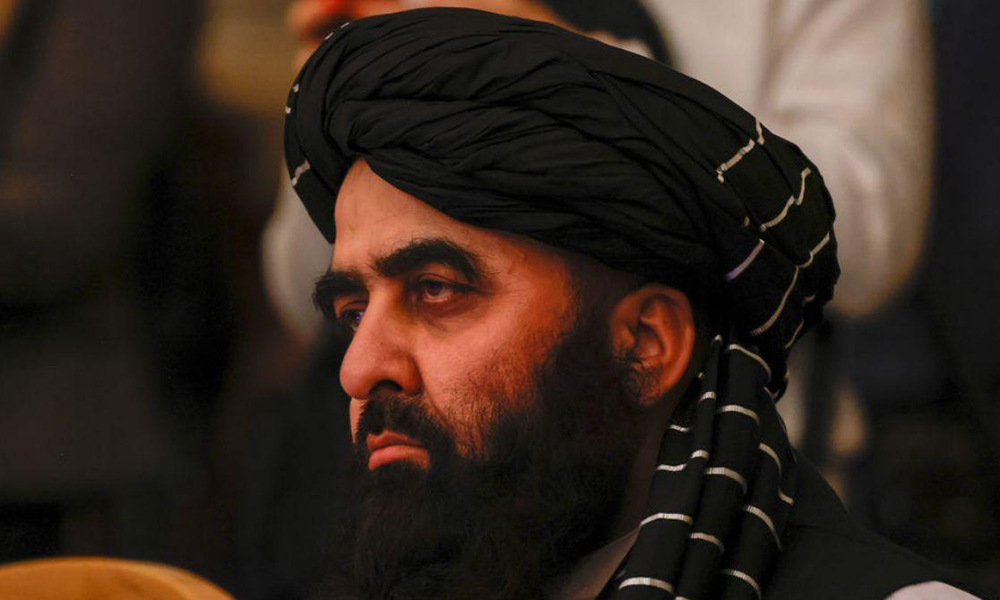
Afghanistan’s Foreign Minister Amir Khan Muttaqi has defended the Islamic Emirate’s policies on women and girls, sanctions and security, while calling for stronger relations with the United States and other countries.
In a BBC interview this week, Muttaqi was asked why Afghan women and girls face restrictions on education, work and public life. He rejected criticism of Afghanistan’s human rights situation and said sanctions against the country were politically motivated.
“This is an injustice to Afghans. It’s an excuse. There are no sensible reasons for sanctions being imposed on Afghanistan,” he said.
Muttaqi argued that the situation in Afghanistan is now better than during the decades of conflict, including the 20 years of the US and NATO-led war.
He said Afghanistan had endured around 40 years of war and that the Islamic Emirate was now seeking to strengthen relations with countries in both the East and West.
“Our relationships have developed a lot with regional and eastern countries, in terms of economy, politics, relationships and investments,” he said, adding that there had also been developments with European countries.
On recent “technical talks” in Belgium on the issue of Afghan migrants, he described the development as positive and said the Islamic Emirate hoped for a good future.
Muttaqi acknowledged that formal international recognition is important, but described Russia’s recognition of the Islamic Emirate as a positive development.
Asked about restrictions on women, he said Afghanistan’s policies should be viewed through Afghan cultural and social values rather than Western standards.
“The conduct with women shouldn’t be looked at through the glasses of Western culture and tradition. Afghan values should be considered,” he said.
Muttaqi claimed that more than three million girls are currently studying in schools and madrassas, and said female students at religious schools also study modern subjects.
He said more than three million girls below Grade 6 are attending school, with female teachers involved in their education.
However, he acknowledged concerns raised by foreign diplomats and organisations that the continued exclusion of girls from secondary education could eventually create shortages of female teachers and doctors.
“This really is a problem. And it will be considered,” he said, while adding that Afghanistan does not currently face such shortages and that the authorities would seek to prevent them in the future.
Muttaqi also rejected claims that al-Qaeda or other foreign militant groups are operating in Afghanistan.
He said the Islamic Emirate would not allow groups to use Afghan territory to plan attacks against other countries, arguing that allegations about the presence of foreign militants were part of propaganda.
“So far no one has presented any proof,” he said.
Muttaqi also pointed to the elimination of poppy cultivation and improvements in security as developments he said should be recognised.
Seeking normal ties with Washington
On relations with the United States, Muttaqi said the Islamic Emirate wants positive and normal relations with Washington but would not accept the presence of foreign military forces in Afghanistan.
He said Afghanistan is a developing country with investment opportunities in many sectors, although the Islamic Emirate does not know how much interest US investors currently have in the country.
He said the return of around six million Afghans had placed pressure on the country, but claimed that returnees had been taken back to their home areas. He added that many were skilled workers who were already contributing to Afghanistan’s development.
Despite continuing international concerns over women’s rights, humanitarian needs and Afghanistan’s economic situation, Muttaqi said the Islamic Emirate wants to deepen diplomatic and economic engagement with the international community.
Latest News
Helmand governor, UNAMA discuss province’s key challenges
The UNAMA deputy also highlighted the importance of providing farmers with legal and sustainable alternatives to poppy cultivation, alongside efforts to prevent poppy production.
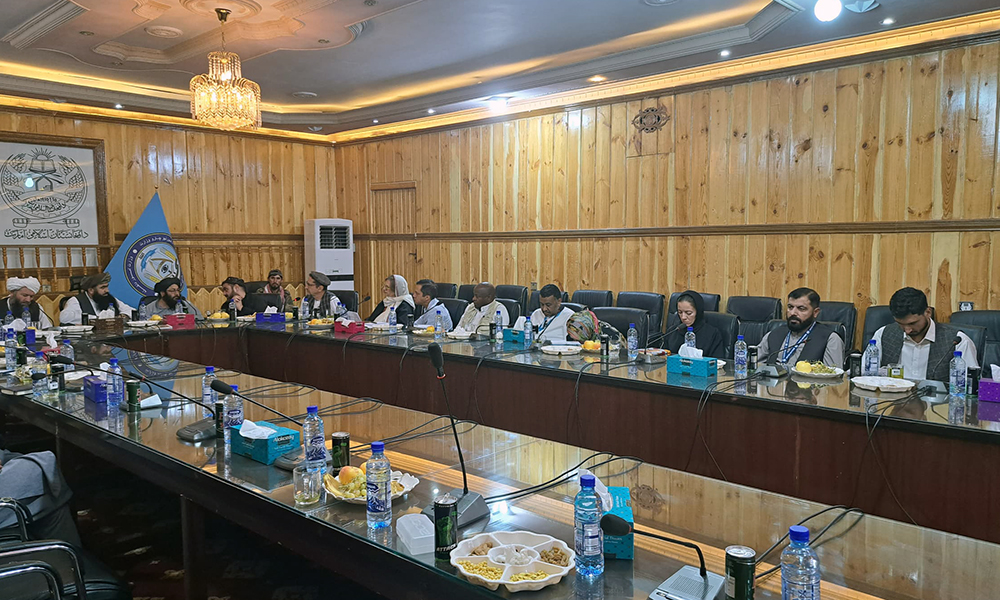
Helmand Governor Amanuddin Mansour met with UNAMA Deputy Special Representative Bruno Lemarquis and his delegation on Sunday to discuss security, economic development and humanitarian needs in the province.
The meeting at the Helmand Provincial Governor’s Office covered a range of issues, including security and stability, development projects, healthcare, agriculture, alternative livelihoods to poppy cultivation, project funding and markets for agricultural and industrial products.
Mansour briefed the UNAMA delegation on the situation in Helmand and called for greater cooperation to address the needs of local communities and expand development opportunities.
Lemarquis thanked provincial officials for their cooperation and praised what he described as efforts to improve administration, maintain security and stability and prevent corruption.
He said the security situation had created a favourable environment for economic and development activities, while stressing that further work and joint efforts were needed to improve people’s economic conditions.
The UNAMA deputy also highlighted the importance of providing farmers with legal and sustainable alternatives to poppy cultivation, alongside efforts to prevent poppy production.
The two sides discussed mobilising funding for development projects and expanding healthcare services, with Lemarquis calling for stronger coordination between relevant institutions.
The meeting also focused on marketing Helmand’s agricultural and industrial products, including cotton. According to the Helmand Governor’s Office, Uzbekistan has expressed strong interest in purchasing Afghan cotton, making access to foreign markets an important opportunity for farmers and producers in the province.
Members of the UN delegation raised issues and questions concerning different sectors of Helmand and discussed possible solutions with provincial officials.
Mansour responded to the issues raised and outlined the province’s major challenges, needs and proposed solutions. He also called for increased cooperation to expand economic and development projects, improve livelihoods, strengthen healthcare and find markets for agricultural products.
Both sides agreed on the need to continue and strengthen cooperation in support of Helmand’s population and its economic and development priorities.
Lemarquis was accompanied by Susan Ferguson, UN Women’s country representative in Afghanistan; Mihyung Park, head of the International Organization for Migration office in Afghanistan; Polleak Ok Serei, head of the UN Office on Drugs and Crime in Afghanistan, as well as representatives from UNICEF, the UN Refugee Agency and other officials.
Latest News
Trump dismisses report China entities helped Iran before attack that killed US troops
Trump on Sunday reiterated his view that he has a good relationship with Xi.
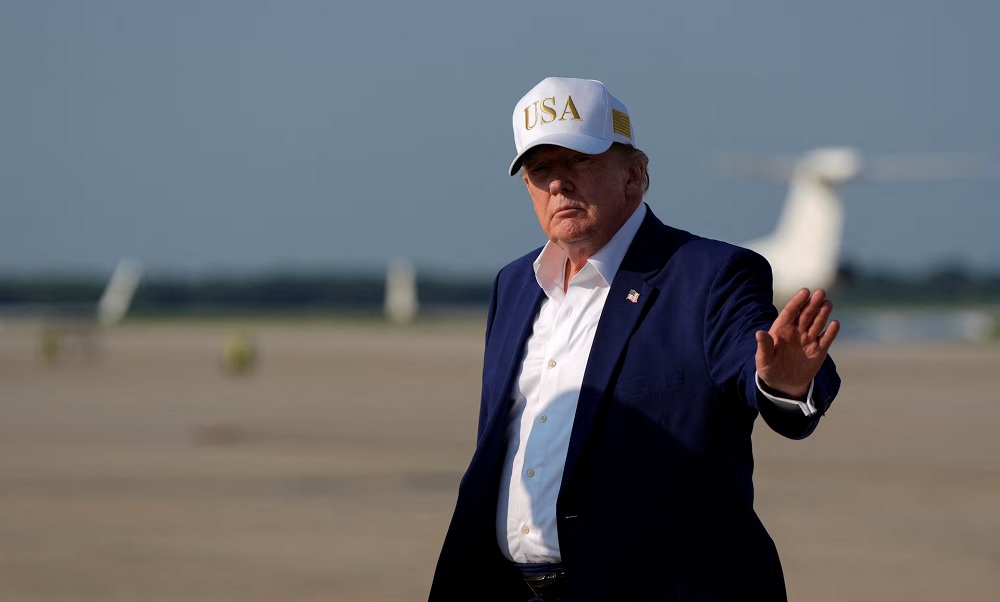
U.S. President Donald Trump on Sunday brushed aside a report that Iran acquired satellite images of a base in Jordan from Chinese entities before an attack that killed three U.S. troops there in July, Reuters reported.
A recent report in the Wall Street Journal cited unnamed U.S. officials about the attack in Jordan. Asked whether he would mention the issue at an upcoming meeting with Chinese President Xi Jinping, Trump did not directly answer, and instead equated the surveillance activities of China and the United States.
“They basically do what we do,” he told reporters aboard Air Force One. “When they say China spies on us, I say you’re right and we spy on them too.”
The Chinese and U.S. presidents are expected to meet in the United States on September 24, although China has yet to officially confirm that the meeting will take place.
Trump on Sunday reiterated his view that he has a good relationship with Xi.
“I think he’s behaved reasonably well, and we behave reasonably well,” Trump said as he flew back to the United States after a weekend trip to Ireland.
The Wall Street Journal report, which Reuters could not immediately verify, said the U.S. officials declined to identify the Chinese entities that supplied the imagery to Iran and did not allege direct involvement by Beijing.
Trump’s comments appeared consistent with the administration’s recent efforts to play down wide-ranging tensions between Washington and Beijing, despite U.S. frustration over Beijing’s close ties to Tehran.


Muttaqi defends Afghanistan’s policies, calls for stronger international ties

Helmand governor, UNAMA discuss province’s key challenges

Hormuz shipping traffic remains below 10-day average at weekend, data shows

Trump dismisses report China entities helped Iran before attack that killed US troops

India beat Afghanistan by seven wickets in first T20I

Four mediators struggle to secure lasting Pakistan-Afghanistan ceasefire

Juma Khan Fateh surrenders to IEA forces in Badakhshan

Afghanistan’s trade diversification challenges Pakistan

Syria and Saudi Arabia condemn Kabul bombing, express solidarity with Afghanistan

Afghanistan crowned champions of five-match ODI series against Ireland

Tahawol: Calls for U.S. engagement with Afghanistan

Saar: End of Chinese ambassador’s mission in Kabul

Tahawol: Norwegian delegation’s call for engagement with Afghanistan discussed

Saar: Pakistan’s dual policy towards Afghanistan reviewed

Exclusive interview with ACB CEO Naseeb Khan
-
 Latest News5 days ago
Muttaqi and Bangladeshi delegation discuss expansion of bilateral ties
-
 Sport4 days ago
Afghanistan Champions League Season 6 kicks off today: Abu Muslim Farah face Sarsabz Yashlar
-
 Business5 days ago
UAE firm eyes investment in Salang’s second tunnel and pharmaceutical factories
-
 Latest News5 days ago
Afghanistan, Bangladesh discuss expanding economic ties
-
 Latest News5 days ago
Mujahid calls Pakistan’s order to expel Afghan medical students ‘inhumane’
-

 Sport3 days ago
Omar Zawak, Toofan Herat secure victories in Afghanistan Champions League
-
 Regional4 days ago
Pakistan warns Iran to rein in Houthis as Riyadh strikes back
-
 Latest News5 days ago
Russia says strengthening Tajik-Afghan border is security priority