
Latest News
UNAMA urges greater human rights protections in Afghanistan on Human Rights Day
UNAMA stressed that Afghanistan’s authorities must take steps to align with international human rights obligations, calling this not only a legal duty but a practical path toward peace and development.

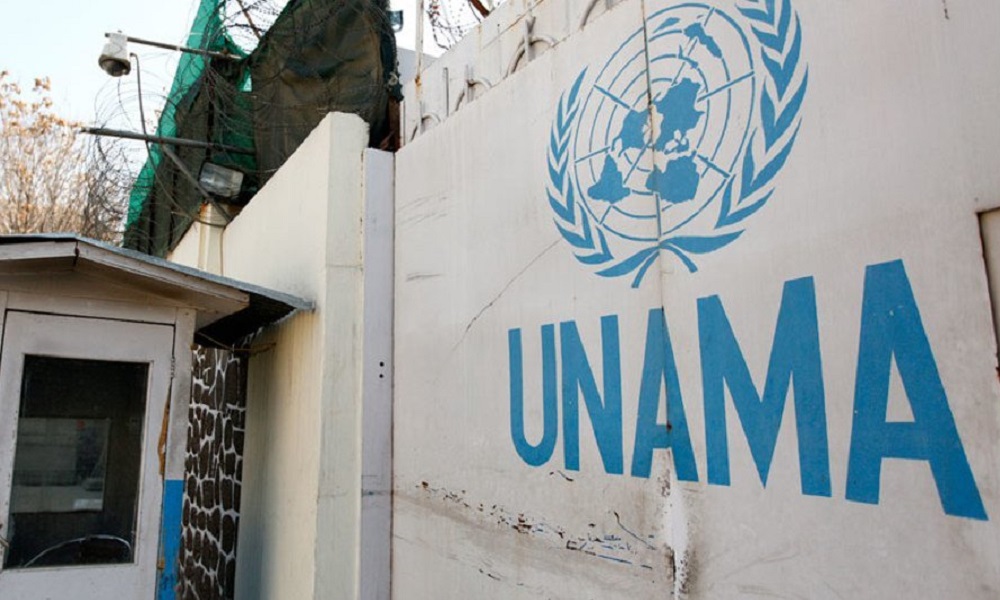
The United Nations Assistance Mission in Afghanistan (UNAMA) marked Human Rights Day with a renewed call for the protection of fundamental freedoms, stressing that human rights are “everyday essentials” necessary for dignity, opportunity, and security.
Highlighting this year’s global theme, UNAMA underscored that human rights are not abstract ideals but the conditions that allow people to live meaningful lives — including the rights to education, health, work, expression, and participation in society. The Mission warned that these basic rights remain inaccessible for many Afghans.
Women and girls, UNAMA noted, continue to face severe restrictions on schooling, employment, and public life, undermining both their rights and the country’s long-term prospects. Uneven access to healthcare has further weakened families and communities.
The Mission also raised concern over the growing number of Afghans being involuntarily returned from abroad. It said certain groups — including women, former government and security officials, civil society members, and journalists — remain at heightened risk of reprisals and other rights violations.
UNAMA stressed that Afghanistan’s authorities must take steps to align with international human rights obligations, calling this not only a legal duty but a practical path toward peace and development.
Protecting rights, the Mission said, builds public trust, promotes inclusion, and enables Afghans to contribute to national recovery.
“Human rights are not optional. They are the everyday essentials that sustain life,” said Georgette Gagnon, Officer in Charge of UNAMA and Deputy Special Representative of the UN Secretary-General. “Ensuring women and girls can learn, work, and participate fully is indispensable to recovery.”
Fiona Frazer, Representative of the UN High Commissioner for Human Rights in Afghanistan, reiterated that the principles of the Universal Declaration of Human Rights — adopted 77 years ago — remain vital. “Everyday essentials—education, health, livelihoods, and freedom—are rights that must be afforded to all Afghans. Yet too many are denied them.”
On Human Rights Day, UNAMA called on Afghanistan’s authorities, communities, and international partners to uphold human rights as the foundation for the country’s path toward stability and hope.

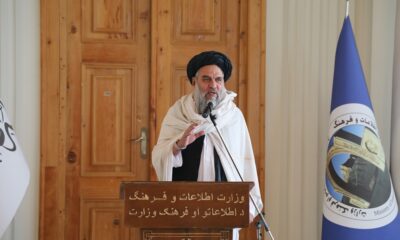
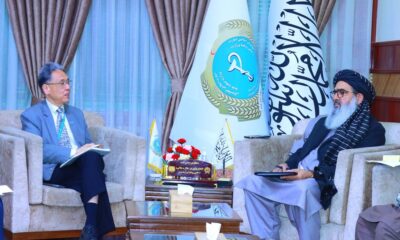

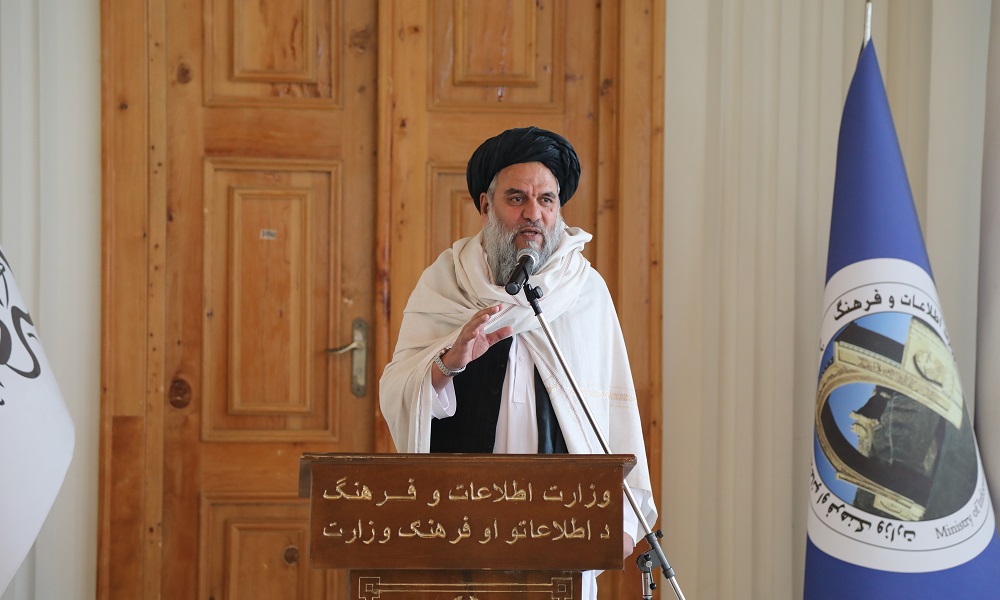
The Ministry of Information and Culture on Tuesday honored political analysts, journalists, and media officials for their effective work in carrying out their responsibilities during a gathering in Kabul.
The event was attended by Shir Ahmad Haqqani, Minister of Information and Culture, along with several other officials, political analysts, media representatives, and journalists.
Speaking at the gathering, the minister said that safeguarding the current system and maintaining security is the responsibility of every member of society.
“The stance of political analysts and the activities of the media during times of conflict play an important role in raising public awareness and fostering political understanding among the people,” he said.
He added that the interests of the Afghan people are shared and that protecting those interests is a collective responsibility.
According to the minister, the media have a duty to reflect facts clearly and convey a real and accurate image of the country to the world.
He also stated that there is no linguistic, regional, or ethnic superiority among the people of Afghanistan and that unity and brotherhood prevail in the country.
Latest News
Islamic Emirate calls recent U.S. designation on Afghanistan ‘regrettable,’ stresses dialogue
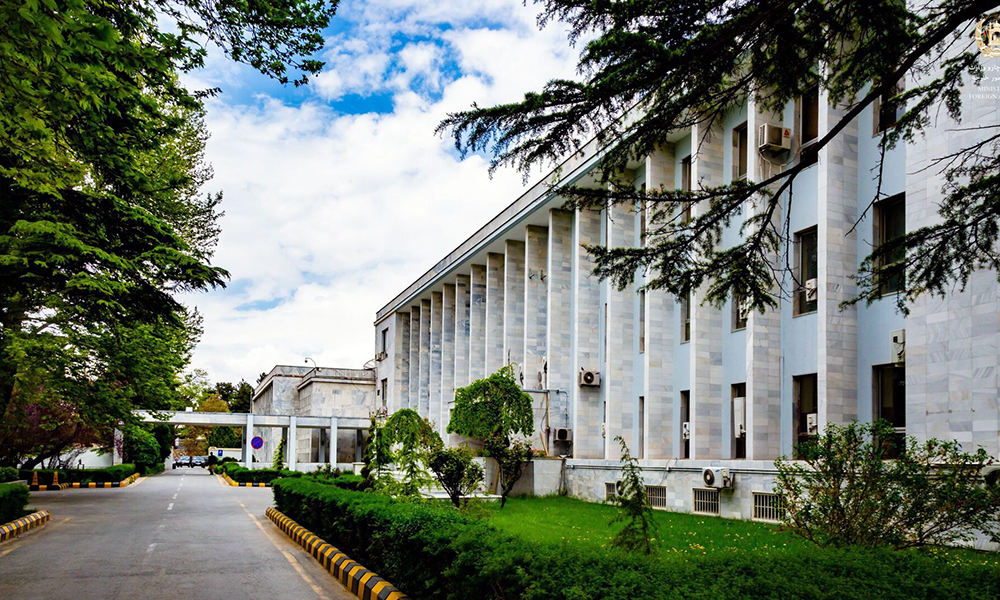
The Ministry of Foreign Affairs of the Islamic Emirate of Afghanistan has described the recent U.S. decision to designate Afghanistan as a “state sponsor of wrongful detention” as regrettable, emphasizing that disputes should be addressed through dialogue.
In a statement released on Tuesday, Abdul Qahar Balkhi, spokesperson for the ministry, said that citizens of no country are detained in Afghanistan for bargaining purposes. Instead, some individuals have been arrested on charges of violating the law, many of whom have later been released after completing legal procedures.
The ministry also noted that over the past year the Islamic Emirate has taken several positive steps regarding certain American citizens as a gesture of goodwill.
The statement further highlighted Qatar’s role in facilitating dialogue between Afghanistan and the United States, stressing the importance of continued engagement and resolving issues through diplomatic channels.
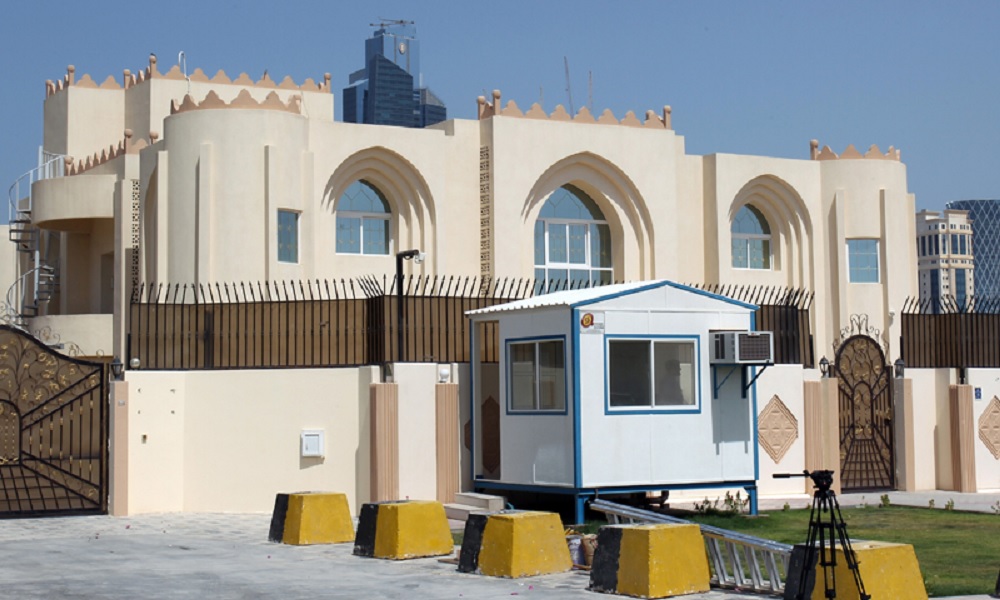
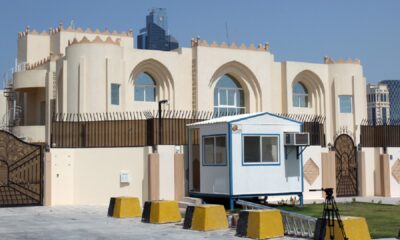
Reports claiming that Qatar has asked the Islamic Emirate of Afghanistan (IEA) to close its political office in Doha have been denied.
According to Doha News, sources at the Afghan embassy in Qatar said the claims are false and that no such request has been made by the Qatari government.
The sources emphasized that no decision regarding the closure of the office has been communicated to the Afghan side.
The IEA’s political office in Doha was established in 2013 to facilitate negotiations related to the conflict in Afghanistan.
The office later became a key venue for talks between the IEA and the United States, which ultimately resulted in the signing of the Doha Agreement in 2020.
The office has since remained an important diplomatic channel for discussions involving Afghanistan and the international community.


Saar: Resolving Afghanistan-Pakistan tensions discussed

Trump tells Fox News it’s possible he would talk with Iran

Ministry of Information and Culture honors journalists and media officials

Afghan health minister, WHO hold talks on health services expansion

Islamic Emirate calls recent U.S. designation on Afghanistan ‘regrettable,’ stresses dialogue

Pakistani military jet downed in Afghanistan’s Jalalabad, pilot captured alive

Afghan Air Force conducts airstrikes in Islamabad, other cities

IEA releases three Pakistani soldiers to mark Ramadan

Afghanistan’s Chief of Armed Forces underscores readiness and equipment for national defense

Afghanistan welcomes investment and technology partnerships with India
Saar: Resolving Afghanistan-Pakistan tensions discussed

Tahawol: International Reactions to Iran’s Newly Appointed Leader

Saar: UN Security Council Meeting on Afghanistan discussed

Tahawol: Iran’s war with America and Israel discussed

Saar: Key Daesh member killed in Pakistan
-
 Latest News4 days ago
Prominent Muslim scholar issues fatwa calling for Afghanistan-Pakistan ceasefire
-

 Business3 days ago
Afghanistan steps in to replace Iran in supplying fruits and vegetables to Russia
-
 Latest News2 days ago
Afghanistan’s Virtue Ministry: Over 3,400 women’s rights complaints addressed in 10 months
-
 Latest News3 days ago
International Women’s Day: Khalilzad urges IEA to allow girls’ education
-
 Latest News4 days ago
Afghanistan says 327 Pakistani soldiers killed in ‘Radd-ul-Zulm’ operation
-
 Latest News4 days ago
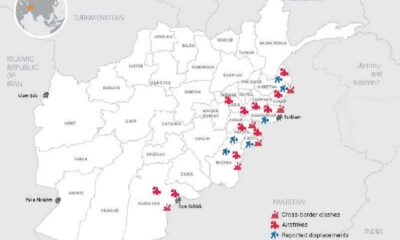
Airstrikes and clashes displace thousands as Afghanistan–Pakistan tensions escalate: UN
-
 Latest News3 days ago
Afghans among those injured in Iranian attacks on UAE
-
 World5 days ago
Trump wants say on Iran’s next leader as war intensifies