
Latest News
US sets 2027 deadline for Europe-led NATO defense, officials say
Some officials on Capitol Hill are aware of and concerned about the Pentagon’s message to the Europeans, one U.S. official said.

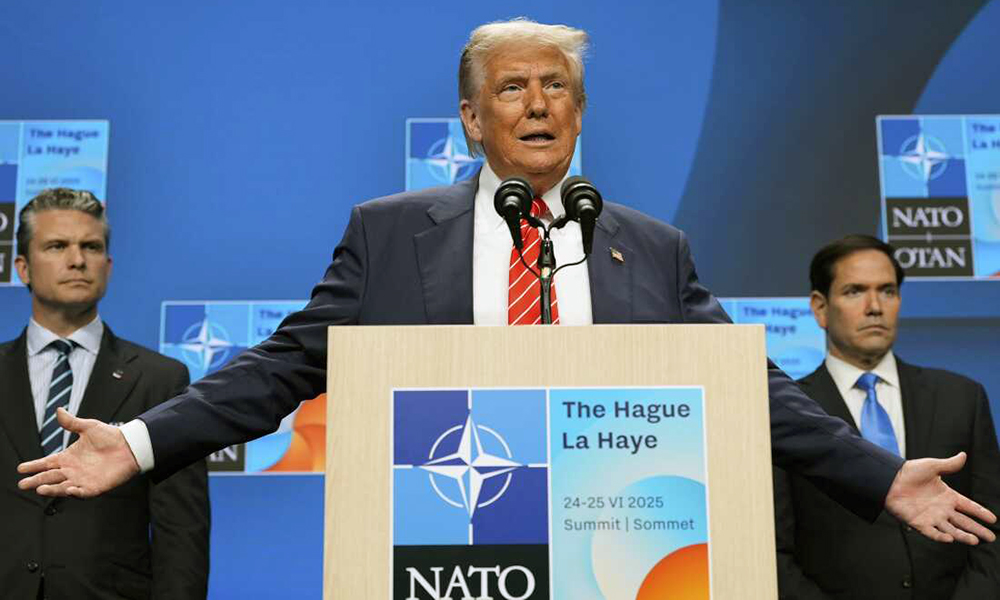
The United States wants Europe to take over the majority of NATO’s conventional defense capabilities, from intelligence to missiles, by 2027, Pentagon officials told diplomats in Washington this week, a tight deadline that struck some European officials as unrealistic, Reuters reported.
The message, recounted by five sources familiar with the discussion, including a U.S. official, was conveyed at a meeting in Washington this week of Pentagon staff overseeing NATO policy and several European delegations.
The shifting of this burden from the U.S. to European members of the North Atlantic Treaty Organization would dramatically change how the United States, a founding member of the post-war alliance, works with its most important military partners.
In the meeting, Pentagon officials indicated that Washington was not yet satisfied with the strides Europe has made to boost its defense capabilities since Russia’s expanded invasion of Ukraine in 2022.
The U.S. officials told their counterparts that if Europe does not meet the 2027 deadline, the U.S. may stop participating in some NATO defense coordination mechanisms, said the sources, who requested anonymity to discuss private conversations.
Some officials on Capitol Hill are aware of and concerned about the Pentagon’s message to the Europeans, one U.S. official said.
Conventional defense capabilities include non-nuclear assets from troops to weapons and the officials did not explain how the U.S. would measure Europe’s progress toward shouldering most of the burden, read the report.
It was also not clear if the 2027 deadline represented the Trump administration position or only the views of some Pentagon officials. There are significant disagreements in Washington over the military role the U.S. should play in Europe.
Several European officials said that a 2027 deadline was not realistic no matter how Washington measures progress, since Europe needs more than money and political will to replace certain U.S. capabilities in the short term.
Among other challenges, NATO allies face production backlogs for military equipment they are trying to purchase. While U.S. officials have encouraged Europe to buy more U.S.-made materiel, some of the most prized U.S.-made weapons and defense systems would take years to be delivered if ordered today.
The U.S. also contributes capabilities that cannot simply be purchased, like unique intelligence, surveillance and reconnaissance that have proven key to the Ukrainian war effort.
Asked for comment, a NATO official speaking for the alliance said European allies had begun taking more responsibility for the continent’s security, but did not comment on the 2027 deadline.
“Allies have recognized the need to invest more in defense and shift the burden on conventional defense” from the U.S. to Europe, the official said.
The White House did not immediately respond to requests for comment.
Pentagon press secretary Kingsley Wilson said: “We’ve been very clear in the need for Europeans to lead in the conventional defense of Europe. We are committed to working through NATO coordination mechanisms to strengthen the alliance and ensure its long-term viability as European allies increasingly take on responsibility for conventional deterrence and defense in Europe.”
European nations have broadly accepted U.S. President Donald Trump’s demand they take more responsibility for their own security and have pledged big increases in defense spending, Reuters reported.
The European Union has set a target of making the continent ready to defend itself by 2030 and says it must fill gaps in its air defenses, drones, cyber warfare capabilities, munitions and other areas. Officials and analysts said even that deadline is highly ambitious.
The Trump administration has consistently argued that European allies need to contribute more to the NATO alliance, but it’s not always clear where the president stands on NATO.
On the campaign trail in 2024, Trump frequently bashed European allies, and he said he would encourage Russian President Vladimir Putin to invade NATO countries that did not spend their fair share on defense.
But at the annual NATO leaders’ summit in June, Trump effusively praised European leaders for agreeing to a U.S. plan to boost the annual defense spending target for member states to 5% of gross domestic product.
In the months since, Trump has vacillated between a harder line on Russia – the bloc’s main opponent – and, more recently, a willingness to negotiate with Moscow over the Ukraine conflict. European officials have complained that they were largely cut out of those negotiations, read the report.
At a meeting of NATO foreign ministers this week, U.S. Deputy Secretary of State Christopher Landau said it was “obvious” NATO allies should take responsibility for Europe’s defense.
“Successive US Administrations have been saying this in one form or another pretty much my whole life…but our Administration means what it says,” Landau wrote on X.

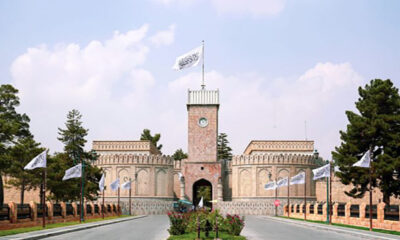



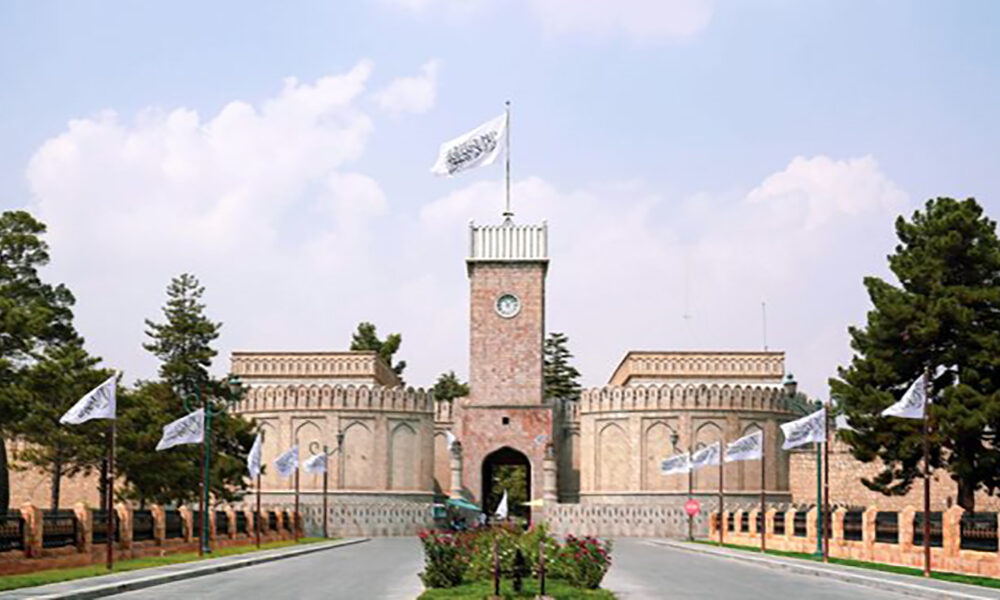
The Islamic Emirate of Afghanistan (IEA) has issued a statement marking the anniversaries of the 7th and 8th of Saur, reflecting on key historical events and reaffirming its current political stance.
In the statement, the Islamic Emirate said that on the 7th of Saur 1357 (April 1978), a military coup carried out by communist elements against the then-government led to conditions that paved the way for a subsequent foreign intervention in Afghanistan.
It stated that the Afghan people, through what it described as a 14-year armed struggle, resisted former Soviet Union presence and eventually achieved what it called victory and independence on the 8th of Saur 1371 (April 1992).
The statement described the 8th of Saur as a historic day of success and a significant national milestone, adding that it should be remembered with gratitude.
However, it also noted that despite the end of that conflict, Afghanistan later faced internal divisions and factional fighting, which it said undermined hopes for the establishment of a pure Islamic system.
Reiterating its current position, the Islamic Emirate said it was established with the aim of ending chaos, promoting unity, and implementing an Islamic governance system. It stated that it considers these objectives achieved at present.
The statement further stressed the importance of safeguarding the current system and called on Afghans to remain united and committed to maintaining stability and strengthening governance structures in the country.
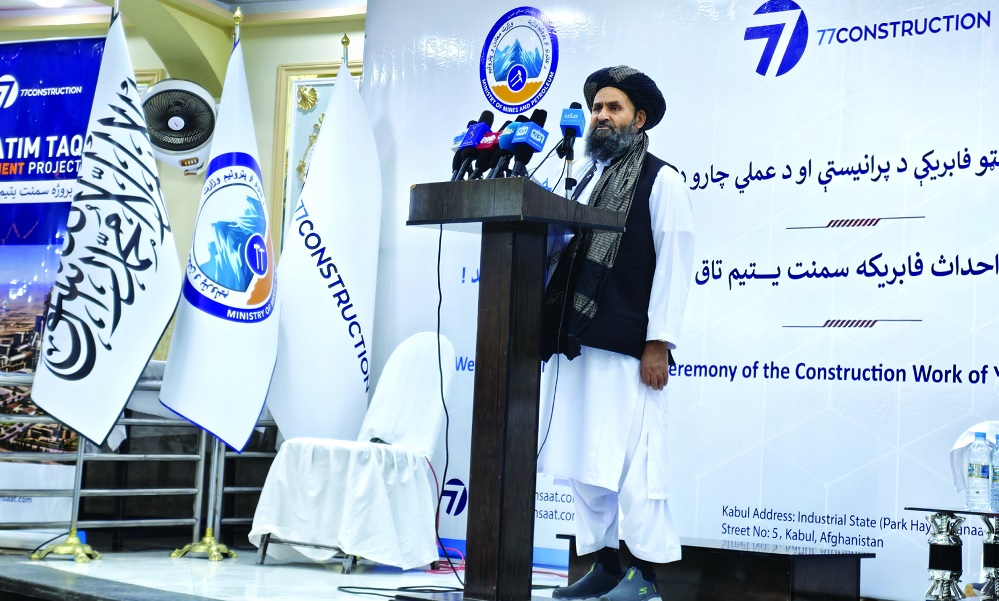
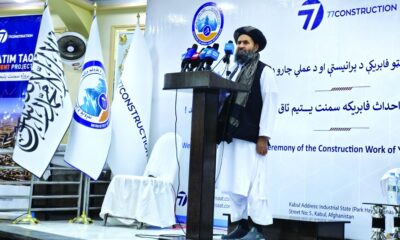
The Deputy Prime Minister for Economic Affairs, Mullah Abdul Ghani Baradar Akhund, on Monday officially inaugurated construction work of the Yatim Taq cement factory in northern Jawzjan province.
Baradar emphasized that strengthening domestic industry and supporting local production are essential pillars for Afghanistan’s economic growth and its gradual transition toward a production-based economy.
He stated that the launch of this major industrial project reflects ongoing efforts to expand domestic manufacturing capacity, reduce reliance on imports, and promote sustainable economic development.
According to him, the Islamic Emirate’s economic policy is focused on developing local industries and ensuring that raw materials are processed inside the country rather than exported in unprocessed form.
Baradar also called on the international community to strengthen economic engagement with Afghanistan through formal channels, highlighting what he described as the country’s improved security environment, political stability, and untapped economic potential.
He warned that restricting global economic cooperation, pursuing exclusionary policies, and prolonging sanctions would not resolve international economic challenges, but instead create new risks and weaken regional and global collaboration.
At the end of the ceremony, he congratulated citizens on the launch of the project and urged relevant authorities and the contracting company to ensure high-quality construction and timely completion.
The Yatim Taq cement factory is being developed with a $160 million investment by a Turkish company. Once completed, it is expected to produce 3,000 tons of cement per day and generate around 5,000 direct and indirect employment opportunities.
The project is planned for completion within two years.
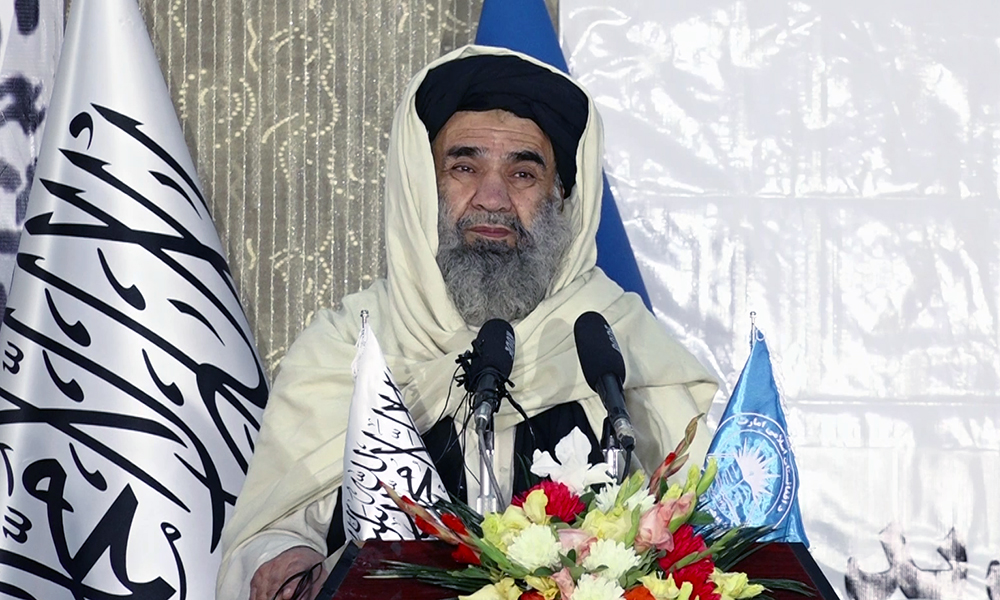
Habibullah Agha, Minister of Education of the Islamic Emirate of Afghanistan (IEA), says that in the current era it is not possible to defend a country using only Kalashnikov rifles and so-called “yellow barrels,” which the Islamic Emirate widely used in bombings in its fight against foreign occupation.
He made the remarks on Sunday during a ceremony held in Bamyan province.
According to him, such weapons or systems would only be effective if an enemy were physically present inside national territory. “If the enemy is in the sea or in another location and launches rockets from there, or uses aircraft to bomb us, we will have to develop and produce our own defensive equipment,” he said.
The minister further stated that Iran has developed a defense system that, in his view, even the United States has been unable to overcome.
He also criticized divisions among Muslims, claiming that disagreements have escalated to the point where some are cooperating with the United States in actions against Iran.


IEA statement on Saur anniversaries emphasizes unity and system protection

Construction of Yatim Taq cement factory launched in Jawzjan

Minister of Education: Kalashnikovs and ‘yellow barrels’ not enough for modern defense

Haqqani, Chinese ambassador discuss bilateral ties and regional stability

IPL double-header delivers drama: GT seal dominant win, KKR win Super Over

IEA supreme leader orders replacement of foreign terminology in official documents

Afghanistan hosts inaugural Afghanistan–Central Asia Consultative Dialogue to strengthen regional cooperation

TAPI gas pipeline advances 25 km in Afghanistan

Russia backs Uzbekistan–Afghanistan trade hub, praises regional economic cooperation

Injury concerns mount ahead of FIFA World Cup 2026 as stars sidelined

Saar: Anti-immigration wave gains ground worldwide

Saar: Talks between Iran and US discussed

Tawsia: Activities of Ministry of Rural Rehabilitation and Development discussed

Tahawol: EU envoy’s concern over Afghanistan discussed

Saar: Afghanistan’s focus on developing regional cooperation discussed
-

 Sport4 days ago
Kabul hosts international wrestling tournament, highlighting regional ties and unity
-

 Sport5 days ago
IPL 2026: Sunrisers dominate Delhi Capital with record-breaking batsmen show
-
 Latest News5 days ago
IEA ambassador, Khyber Pakhtunkhwa chief minister discuss Afghan refugee situation
-
 Latest News3 days ago
Albanian PM criticizes NATO’s Afghanistan withdrawal
-
 Tahawol5 days ago
Tahawol: Ceasefire extension between US and Iran discussed
-

 Latest News2 days ago
UK considers talks with IEA over deporting Afghan asylum seekers
-
 World4 days ago
US seizes tanker, Trump orders navy to use force as Hormuz tensions escalate
-

 Latest News3 days ago
Poland deports three Afghan asylum seekers despite European court order