
Regional
3 jailed for rape, murder charges in Faryab


An appellant court in northwestern Faryab province has sentenced three men to jail for rape and murder charges.
Two men have been sentenced each for 16 years in jail, one for rape of a girl and the other one because of killing his father-in-law, chief of appellant court Muhammad Sharif Fani announced.
He added the third one was sentenced to 14 years of confinement in jail for helping to plan a murder.
However, Fani declared the court decision was not final and the defendants could appeal against their imprisonment.
In the meantime, the lawyer of the man accused of raping the girl condemned the court decree and asked for a review of the case.
During the last year, the appellant court of Faryab reviewed nearly six hundred cases. The cases were mostly related to armed robberies, murders and violence against women.

Regional
Global leaders react to announcement of US-Iran peace agreement
British Prime Minister Keir Starmer: “We are clear that toll-free freedom of navigation must now be restored in the Strait of Hormuz… Iran must never have a nuclear weapon.”
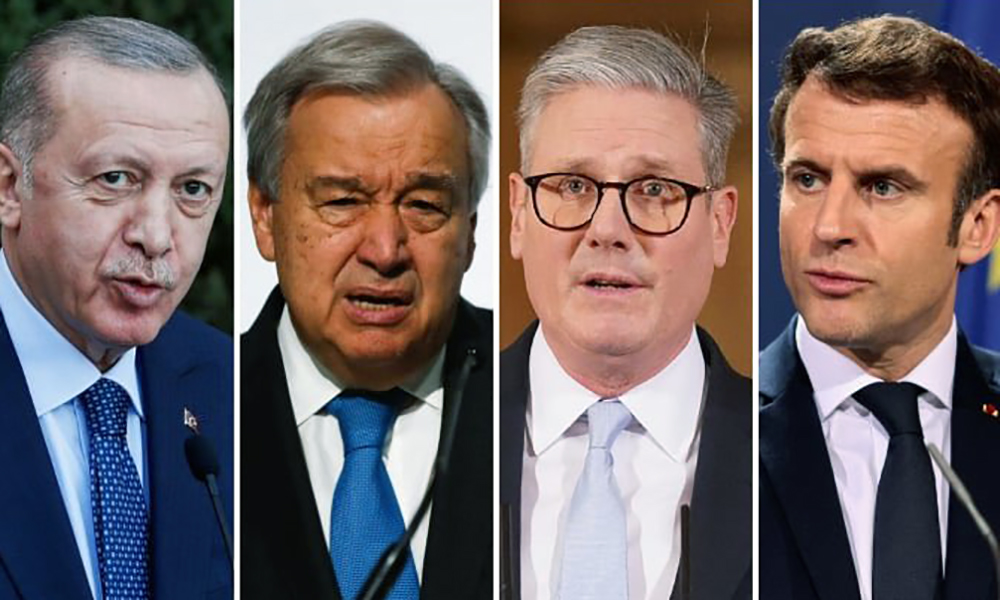
U.S. and Iranian officials said on Sunday they have agreed on a deal to end their war, halt the U.S. blockade of Iran and reopen the Strait of Hormuz, possibly leading to lower energy prices once oil shipments resume through the critical waterway, Reuters reported.
Below is international reaction to the agreement:
A spokesperson for U.N. Secretary-General Antonio Guterres:
“The Secretary-General welcomes the announcement that the United States and Iran have agreed on a peace deal that provides for an immediate and permanent ceasefire, the reopening of the Strait of Hormuz, as well as a framework for further negotiations. This represents a critical step towards the peaceful settlement of the conflict.”
Joint statement from E4 leaders Britain, France, Germany and Italy:
“Iran must never acquire a nuclear weapon. We stand ready to work with the U.S., Iran and the IAEA to this end.”
Australian Prime Minister Anthony Albanese:
“The Australian Government welcomes the agreement by the United States and Iran. Australia has long called for de-escalation and an end to the conflict, including in Lebanon. As we have said, the longer this war goes on, the greater the impact will be. Continued restraint and constructive engagement will be essential to prevent further escalation and secure a lasting agreement.”
British Prime Minister Keir Starmer:
“We are clear that toll-free freedom of navigation must now be restored in the Strait of Hormuz… Iran must never have a nuclear weapon.”
French President Emmanuel Macron:
“I welcome the agreement reached between the United States and Iran, the result of a diplomatic effort to which several partners contributed. I call for its swift and full implementation by all belligerents. This agreement must allow for the urgent and unconditional reopening of the Strait of Hormuz, which the international mission established with the United Kingdom is ready to support.”
German Chancellor Friedrich Merz:
“I welcome the agreement between the U.S. and Iran and congratulate President Trump and the Iranian side on this diplomatic breakthrough. This can pave the way towards a reinvigorated global economy and a more secure Middle East. It is crucial to implement it with determination.”
Japanese Prime Minister Sanae Takaichi:
Japan “strongly hopes” that “free and safe navigation through the Strait of Hormuz will be ensured in practice, and that a final agreement on Iran’s nuclear issue and other matters will be reached as soon as possible.”
New Zealand Foreign Minister Winston Peters:
“This pivotal, constructive deal is a step towards reducing tensions and promoting stability in a region that is critical to global economic security… Dialogue and diplomacy remain the most effective means of resolving longstanding issues.”
Regional
Iran banks hit by major cyber attack
Officials said a technical investigation confirmed that the disruptions were the result of a cyberattack.
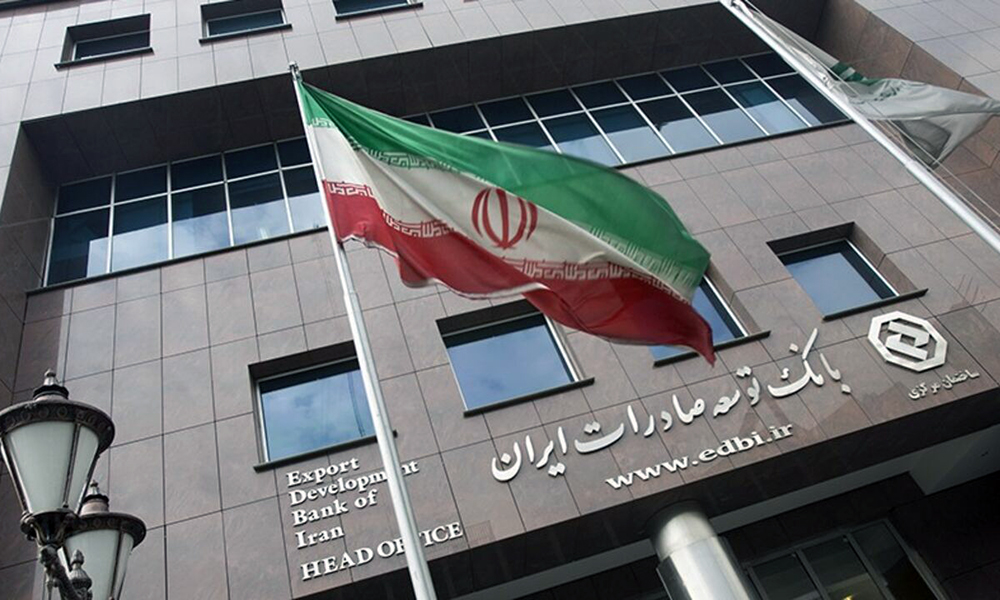
Several major Iranian banks experienced service disruptions on Saturday following a cyberattack, according to the Coordinating Committee of Iran’s state-owned banks.
The outage affected four major financial institutions, including Bank Melli Iran, Bank Saderat Iran, and Bank Tejarat, causing interruptions to mobile and online banking services, automated teller machines (ATMs), point-of-sale (POS) terminals, and some card transactions.
Officials said a technical investigation confirmed that the disruptions were the result of a cyberattack.
The affected banks stated that their technical teams immediately implemented precautionary measures after detecting the incident in an effort to safeguard customer information and protect banking infrastructure.
Qatasi, secretary of the Coordinating Committee of Iran’s state-owned banks, said necessary recovery and repair measures had been carried out.
Authorities said there is currently no evidence that customer data was accessed without authorization, and no data breach has been reported.
Regional
US, Iran inch closer to deal, timing remains unclear
Trump wrote on Truth Social that after a framework deal is signed, the Strait of Hormuz, a vital artery for global oil supplies that Iran has blocked, would immediately be “open to all.”
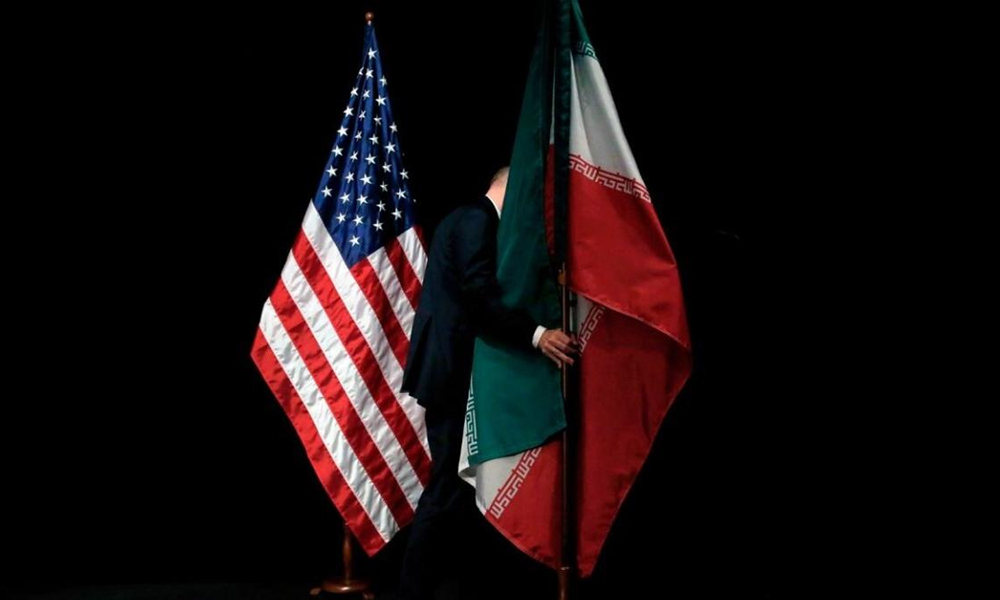
U.S. and Pakistani leaders forecast a Sunday signing of a long-elusive framework agreement to end fighting between the United States and Iran, but Tehran cast doubt over the timing and hardline protesters in Iran voiced opposition, Reuters reported.
President Donald Trump posted on social media on Saturday that the deal with Iran was scheduled to be signed the next day, his 80th birthday. Pakistani Prime Minister Shehbaz Sharif said the two sides had agreed on a framework for a peace deal and that Islamabad was preparing for an electronic signing on Sunday, to be followed by technical-level talks in the coming week.
But Iran did not confirm a Sunday signing. Iranian Foreign Ministry spokesperson Esmaeil Baghaei, speaking before Trump’s post, had cautioned against commenting on the timing of the signing but was quoted by state media saying, “It will not be tomorrow,” but could happen “in the coming days.”
Trump wrote on Truth Social that after a framework deal is signed, the Strait of Hormuz, a vital artery for global oil supplies that Iran has blocked, would immediately be “open to all.”
While U.S. bombings have heavily degraded Iran’s military-industrial base and damaged its military, experts say the war has left hardline Revolutionary Guard dominance more firmly entrenched than before.
Videos on social media and Iranian news websites showed opponents of an agreement gathering in squares and in front of the Foreign Ministry in Tehran, appearing to blame Iranian Foreign Minister Abbas Araqchi as they chanted, “Araqchi have some shame, let go of America!”
Reuters could not immediately verify the videos.
When the U.S. and Israel launched the war against Iran on February 28, Trump called on Iranians to rise up and take over state institutions.
Even as the U.S. and Iran appeared to be moving toward an agreement over the past two days, clashes have continued, as the U.S. military imposes a blockade on Iran and seeks to loosen Iran’s chokehold on the Strait of Hormuz, which was the conduit for 20% of the world’s oil shipments before the war.
Early on Saturday, U.S. forces shot down multiple Iranian one-way attack drones heading toward the strait, the U.S. military said. Israel, which says it is not a party to the U.S.-Iran deal, said on Saturday that it had struck more than 70 sites over a 24-hour period in Lebanon against Iranian ally Hezbollah, Reuters reported.
Israeli Prime Minister Benjamin Netanyahu has clashed with Trump over U.S. demands that Israel curb military action in Lebanon to allow Washington to reach a deal with Tehran.
On Friday, Araqchi said that while changes in the deal were still possible, the tentative agreement showed his country had emerged stronger from the conflict.
At pro-government rallies held across Iran on Saturday night, residents and news agencies reported that hardliners opposed to the framework agreement loudly voiced their dissatisfaction.
A resident in the northeastern city of Mashhad told Reuters that some protesters chanted: “Death to the compromiser,” in an apparent reference to Araqchi. “Compromiser, resign, resign.”
The proposed memorandum of understanding calls for reopening the strait and lifting the U.S. naval blockade, sources on all sides of the talks said. Negotiations over Iran’s nuclear program — a key rationale Trump has given for the war — would take place afterwards.
“Iran is going to open up the Strait of Hormuz, that’s a requirement. It could be open with no tolls. As they do that, we will lift our blockade,” a U.S. official told reporters.
“It’s going to happen in conjunction, and part of the next step, the phase after that, is going to be the demining of the straits,” the official said, indicating countries in the Group of Seven major powers could have a role in this.
Trump discussed the efforts to end the Iran conflict in a call with British Prime Minister Keir Starmer, Downing Street said on Saturday.
Draft terms described to Reuters by multiple sources indicate the U.S. would begin releasing billions of dollars in frozen Iranian assets and waive sanctions on its oil exports, in return for Iran opening the strait.
Iran’s Fars news agency quoted Baghaei as saying the release of Iran’s frozen assets was an integral part of the agreement and also that Iran would have to charge for services in the Strait of Hormuz, read the report.
He said foreign military bases in the region must end, the agency reported, without providing details.
Iran’s nuclear program would be addressed during a 60-day period of talks. A U.S. official said the agreement would ultimately lead to the dismantling of Iran’s nuclear program, with its stockpile of highly enriched uranium to be destroyed and removed.


Afghanistan to host regional meeting of strategic research centers in Kabul

TAPI project advances in Afghanistan as 84kms of pipeline laid

Afghanistan Champions League Season 6 set for August kickoff

World Cup 2026: Havertz, Ayari and Balogun lead Golden Boot standings

Peshawar economy under pressure amid ongoing crossing closures

Norway’s Viking-inspired World Cup team photo goes viral

Large blast near Beit Shemesh part of pre-planned test: Israeli defense firm

Trump returns from China with stability but little progress

Afghanistan announce squad for India series

Afghanistan, Russia sign military cooperation agreement

Tahawol: Pakistan PM defending Durand Line fencing

Saar: Afghanistan-Pakistan tensions discussed

Saar: Possible agreement between Iran and US discussed

Tawsia: Increase in Afghanistan’s saffron exports discsused

Tahawol: Middle East crisis and future of Islamic world discussed
-

 Sport4 days ago
Afghanistan A edge India A by four runs in rain-hit Tri-Nation opener
-

 International Sports4 days ago
Mexico and South Africa set to open historic 2026 World Cup
-

 Latest News3 days ago
Final round of 1405 Kankor exam concludes in Afghanistan
-
 Regional1 day ago
Iran banks hit by major cyber attack
-
 Latest News2 days ago
Central Asia–Afghanistan dialogue underscores regional connectivity and stability
-
 World4 days ago
US, Iran exchange attacks as Trump threatens further escalation
-

 Business4 days ago
Etihad Airways to launch twice-daily Kabul flights from July
-
 Regional4 days ago
At least 15 killed, dozens injured as protests rock Pakistan-administered Kashmir