
Regional
4 top Taliban commanders killed in Kapisa

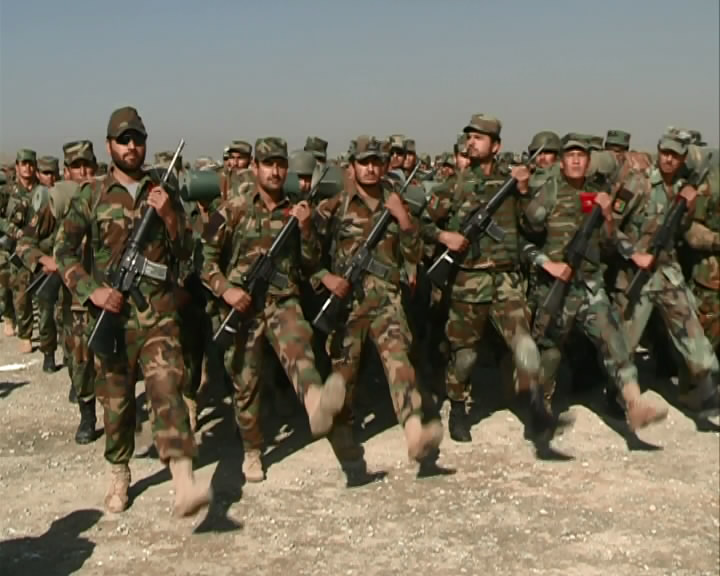
In an airstrike by the Afghan Special Force the Taliban governor for Kapisa killed along with his top four men.
Spokesman of Kapisa Police commander, Hamayoon Rashidi said, “The Taliban governor for Kapisa killed late Wednesday in Pashkalai district of Tagab.”.
According to him, now security situation is under the control of government.
The armed Taliban group yet claimed nothing regarding the incident.

Regional
US military strikes Iranian boats, missile launch sites: CENTCOM
U.S. Central Command said in a statement the strikes were designed “to protect our troops from threats posed by Iranian forces.”
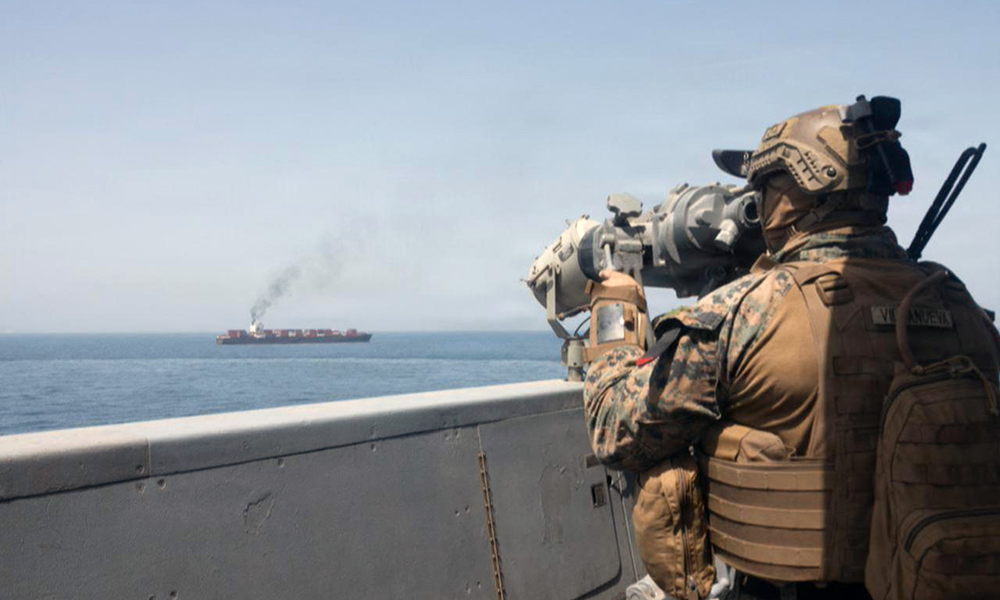
The U.S. military carried out strikes on Monday in southern Iran against targets including boats attempting to lay mines and missile launch sites, in what it described as defensive actions, Reuters reported.
U.S. Central Command said in a statement the strikes were designed “to protect our troops from threats posed by Iranian forces.”
“U.S. Central Command continues to defend our forces while using restraint during the ongoing ceasefire,” said Navy Captain Tim Hawkins, a Central Command spokesperson.
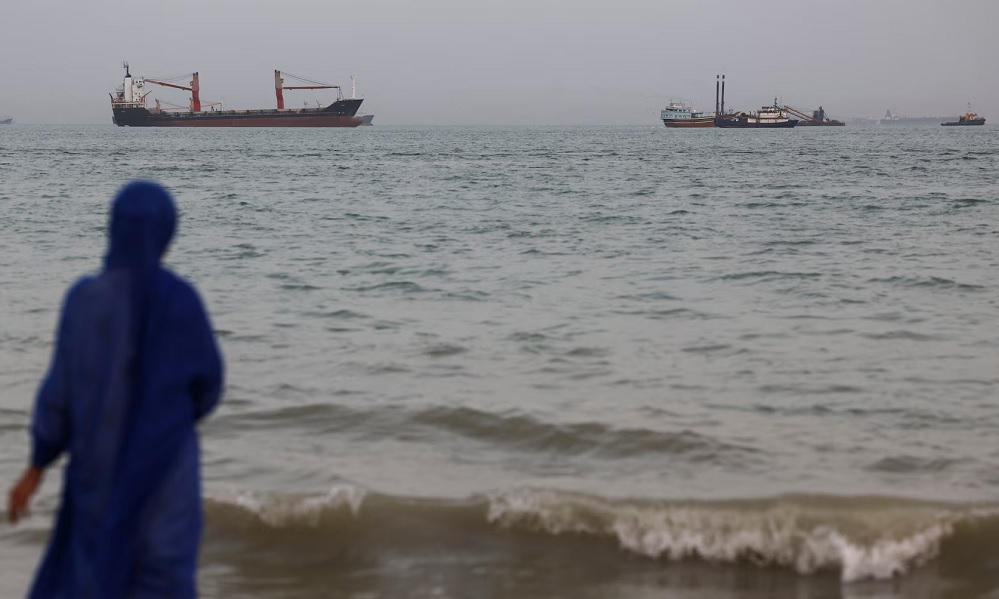
U.S. President Donald Trump said on Sunday he had told his representatives not to rush into any deal with Iran, as his administration played down hopes of an imminent breakthrough in the three-month-old war that had been raised a day earlier.
The U.S. blockade on Iranian ships in the Strait of Hormuz would “remain in full force and effect until an agreement is reached, certified, and signed,” Trump wrote on Truth Social. “Both sides must take their time and get it right,” he added, Reuters reported.
There was no immediate response from Iran’s government. But Tasnim news agency, which is linked to Iran’s Revolutionary Guards, said the U.S. was still obstructing parts of a potential deal, including Tehran’s demand for the release of frozen funds.
A day earlier, Trump said Washington and Iran had “largely negotiated” a memorandum of understanding on a peace deal that would reopen the Strait of Hormuz, which before the conflict carried one-fifth of global oil and liquefied natural gas shipments.
The two sides remain at odds on several difficult issues, such as Iran’s nuclear ambitions, Israel’s war in Lebanon with the Iranian-backed Hezbollah militia and Tehran’s demands for the lifting of sanctions and the release of tens of billions of dollars of Iranian oil revenues frozen in foreign banks.
WORKING OUT DEAL’S DETAILS
A senior Trump administration official told reporters an agreement would not be signed on Sunday, saying that the Iranian system did not move fast enough. But he outlined what he said were the latest contours of what was being negotiated.
The official, speaking on the condition of anonymity, said Iran had agreed “in principle” to open the Strait of Hormuz, in exchange for the United States lifting its naval blockade, and to dispose of Tehran’s highly enriched uranium.
He said the U.S. understood Iran’s Supreme Leader Ayatollah Mojtaba Khamenei had endorsed the broad template of the deal.
There was no immediate confirmation from Iran or elaboration on what an “in principle” agreement meant.
The U.S. official said Washington envisioned first re-opening the strait and lifting the U.S. naval blockade. Negotiating the details of the nuclear measures would take more time, he said.
He pushed back on suggestions that Iran has not accepted disposing of its stockpiled enriched uranium. “It’s a question about how,” the official said.
A second senior administration official said on Sunday that the proposed framework would give negotiators 60 days to reach a final deal.
Iranian sources had told Reuters that in future stages, “feasible formulas” could be found to resolve the dispute over its highly enriched uranium stockpile, including diluting the material under the supervision of the U.N. nuclear watchdog.
Iran has long denied U.S. and Israeli accusations that it is pursuing nuclear weapons and says it has a right to enrich uranium for civilian purposes, although the purity it has achieved far exceeds that needed for power generation.
DEAL DRAWS OUT U.S. CRITICS
Trump, whose approval ratings have been hit by the war’s impact on U.S. energy prices and who has faced congressional efforts to curb his war powers, has repeatedly played up the prospect of an agreement to end the conflict that the U.S. and Israel started on February 28. A tenuous ceasefire has been in place since early April.
Oil prices hit two-week lows to kickstart the week with Brent crude futures down over 4% to $98.83 a barrel — the first time it has dipped below $100 in intraday trading since early May — while U.S. West Texas Intermediate was at $92.03 a barrel, also down over 4%.
As details of the possible agreement emerged over the weekend, critics including former Secretary of State Mike Pompeo and Democratic lawmakers argued that it offered little beyond the 2015 Iran nuclear deal negotiated by former President Barack Obama, from which Trump withdrew during his first term.
Chris Van Hollen, a Democratic member of the Senate Foreign Relations Committee, said the deal’s reported outlines would amount to little more than “the pre-war status quo” with Iran.
“I think this was a blunder,” Van Hollen said on the “Fox News Sunday” program. “When you’re digging a hole, you should stop digging, and that sounds like maybe what we’re doing finally.”
Trump, who has also faced criticism from hawkish conservatives over his willingness to compromise with Iran, pushed back.
“If I make a deal with Iran, it will be a good and proper one … So don’t listen to the losers, who are critical about something they know nothing about,” Trump said in a Truth Social post on Sunday.
In another potential stumbling block, an Iranian military adviser to Khamenei said Tehran had the legal right to manage the Strait of Hormuz, though it was not clear if that meant continuing to decide which ships can go through.
Iran’s Revolutionary Guards said 33 vessels had passed through the strait over the past 24 hours after getting permission from Tehran, still far short of the 140 on a typical day before the war.
Any deal reinforcing the current fragile ceasefire would bring relief to markets but not immediately quell a global energy crisis, which has driven up costs of fuel, fertilizer and food.
Even if the war ends now, full flows through the strait will not return before the first or second quarter of 2027, the head of the Abu Dhabi National Oil Company said last week.
The U.S.-Israeli bombing of Iran killed thousands of people in Iran before it was suspended in early April.
Israel has also killed thousands more and driven hundreds of thousands from their homes in Lebanon, which it invaded in pursuit of Hezbollah. Iranian strikes on Israel and neighbouring Gulf states have killed dozens.
Regional
At least 24 killed in deadly train bombing in Pakistan’s Balochistan
The blast occurred shortly after 8am near the Chaman Phatak area of Quetta as the train was travelling from a military zone toward the city’s main railway station.
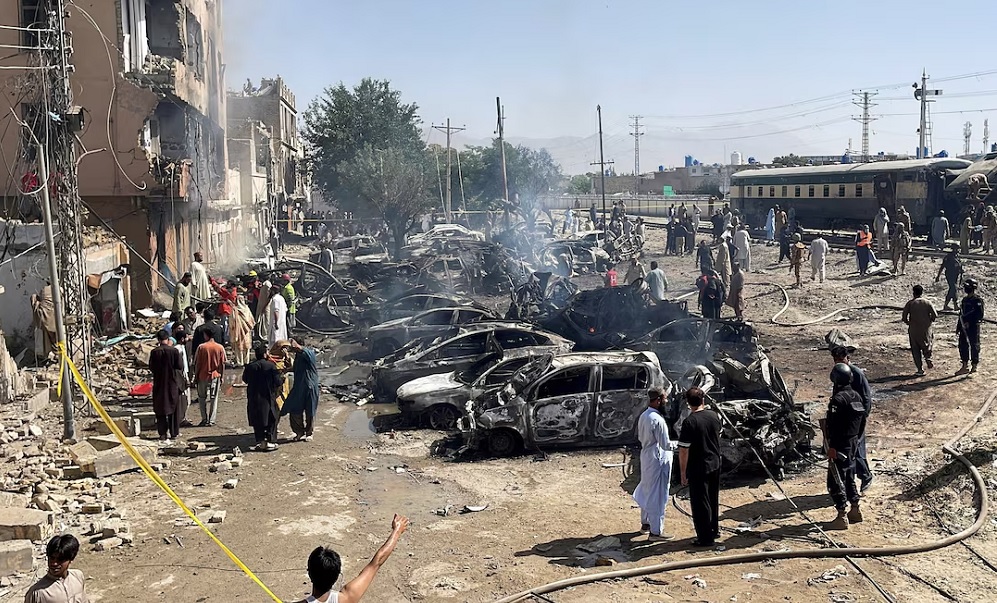
At least 24 people were killed and nearly 70 injured after a powerful explosion targeted a train carrying military personnel in Balochistan province on Sunday morning, according to officials and local media reports.
The blast occurred shortly after 8am near the Chaman Phatak area of Quetta as the train was travelling from a military zone toward the city’s main railway station.
Authorities said the explosion caused severe damage to the railway track and partially damaged the train. Three coaches, including the locomotive, were derailed while two overturned following the blast.
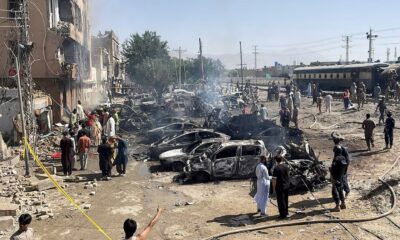
The impact of the explosion was reportedly heard across Quetta and shattered windows and glass panels in nearby buildings. Several vehicles parked near the scene caught fire, with at least 10 vehicles damaged in the blast. Material damage was also reported in surrounding homes and buildings.
Emergency rescue teams, firefighters and security forces rushed to the scene soon after the attack, cordoning off the area and launching rescue and recovery operations. Firefighters worked to contain flames that spread to nearby vehicles after the explosion.
Authorities later declared an emergency in government hospitals across Quetta, with doctors and medical staff placed on high alert to treat the large number of injured victims.
The separatist militant group Baloch Liberation Army (BLA) claimed responsibility for the attack. In a statement, the group said its Majeed Brigade, described as its suicide attack wing, had targeted security personnel travelling from Quetta Cantonment in what it called a “well-planned fidayee attack”.
The group said further details regarding casualties and damage would be released later.
Following the attack, the Peshawar-bound Jaffar Express was halted at Quetta Railway Station as a precautionary measure.
Pakistan Railways Minister Hanif Abbasi condemned the bombing, describing it as a cowardly act of terrorism aimed at spreading fear and chaos in the country.
Abbasi alleged that anti-Pakistan elements based in India and Afghanistan were involved in attempts to destabilize Pakistan through such attacks. He said railway operations would continue despite the incident and vowed that those responsible would face justice.
Babar Yousafzai, spokesperson for Pakistan’s interior ministry, said all relevant institutions had been placed on high alert following the explosion. He urged residents to avoid gathering near the blast site to allow emergency teams to carry out rescue operations safely.
Counter-terrorism teams and explosives experts later arrived at the scene to begin technical investigations into the nature of the explosive device and identify those responsible.
The bombing is one of the deadliest incidents reported in Balochistan in recent months. The province has long faced insurgent violence, with separatist groups frequently targeting security forces, transport infrastructure and government installations.


Tahawol: Islamic Emirate defense minister’s visit to Russia

Saar: Calls to expand Afghanistan-Qatar ties discussed

More than 220 riders launch Hellas Rally Raid 2026 in Greece

Afghanistan expands drug imports as Russian pharma company enters market

Russia claims Asia-based drug network expanding toward Russia and the West

New Afghanistan-China transport corridor launched via Turkmenistan

Afghanistan signs $46 million deal to develop standard laboratory complexes

Germany to launch online visa system for Afghan study and work applicants in Pakistan

Afghanistan launches first 5G trial in Kabul to boost telecom services

Large blast near Beit Shemesh part of pre-planned test: Israeli defense firm
Tahawol: Islamic Emirate defense minister’s visit to Russia
Saar: Calls to expand Afghanistan-Qatar ties discussed

Tahawol: Afghanistan-Japan relations reviewed

Saar: Afghanistan’s relations with regional countries, incl Russia and China discussed

Saar: Shahbaz Sharif’s trip to China
-
 Latest News3 days ago
China restricts export of chemical substances to Afghanistan
-
 Business2 days ago
Major pharma firms eye investment in Afghanistan
-
 World4 days ago
One dead, 36 injured in explosion at New York dry dock
-

 Sport4 days ago
Mohammadi crowned champion of 2nd season of Ariana Snooker Championship
-
 Latest News4 days ago
Britain says recognition of IEA conditional on women’s rights, counterterrorism
-

 Sport5 days ago
Chennai Super Kings eliminated as Gujarat Titans register record IPL victory
-
 Latest News2 days ago
Deadly shooting near Kabul’s Sarai Shahzada leaves four dead
-
 Regional2 days ago
At least 24 killed in deadly train bombing in Pakistan’s Balochistan