
Regional
Afghanistan self-sufficient in 40 domestic product categories: ACCI


Afghanistan Chamber of Commerce and Industries (ACCI) officials say Afghanistan has achieved self- sufficiency in 40 small and medium domestic product categories.
ACCI officials said despite many problems, now Afghanistan can compete with the exporting countries of the world in production of food materials, plastics, non-alcohol drinks, safe drinking water and many other product categories.
They said Afghan manufacturing industries are able to increase the level of production according to the demand of its citizens.
Afghanistan Industry Union officials say that the country recently reached self-sufficiency in the production of ice cream and there is no need to import low-quality ice cream from the foreign countries, because the quality of Afghan Ice Cream is excellent.
ACCI deputy chairman Khan Jan Alkozai urged the government to increase import taxes and impose tougher laws on the import of goods that are now produced in Afghanistan in order to support the domestic industries.
Afghanistan Industry Union head Jabbar Safi said they are now ready and able to export products that are made in Afghanistan to foreign countries, especially to Central Asian countries. The Afghan companies want the government to provide facilities to help the export sector and boost employment in Afghanistan.
In his recent decree, President Karzai ordered the ministry of trade to evaluate options of actions to be taken to resolve the problems faced by domestic industries, and to submit ministry recommendations and suggestions to the council of ministers to develop increased domestic production.
The strengthening of domestic production and industrial output capacities will able the country to stand on its feet, and it can also boost the economy and provide employment for the citizens according to ministry officials.

Regional
Trump says Iran war deal close as Strait of Hormuz tensions linger
Trump said on social media the agreement had been approved by countries including Israel, Saudi Arabia, Qatar and the United Arab Emirates.
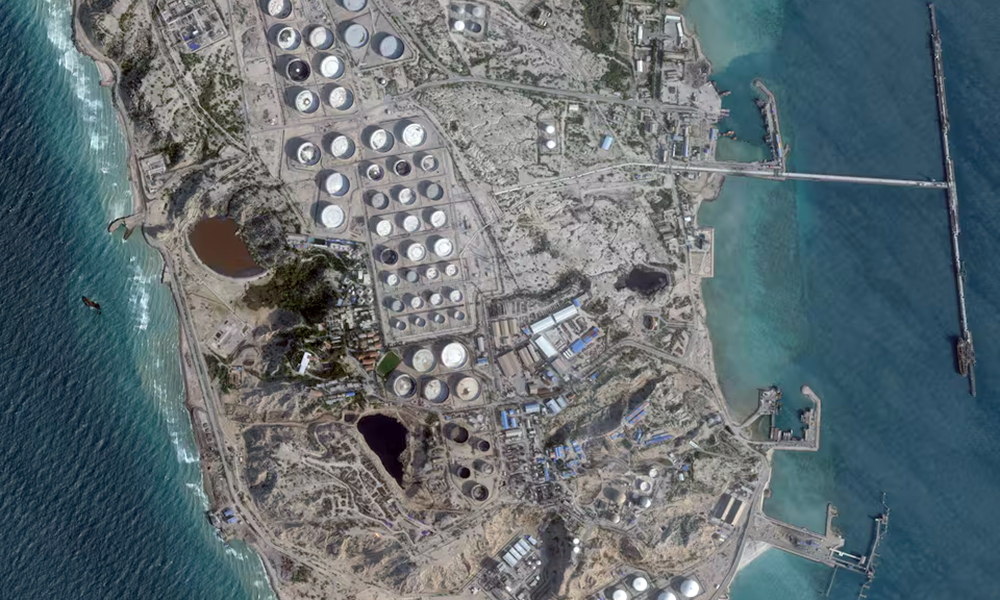
Hopes grew on Friday for peace between Iran and the United States after President Donald Trump said a deal could be signed as soon as this weekend, even as Tehran said it had not made a final decision on a pact, Reuters reported.
The deal, if confirmed, would be the most significant diplomatic breakthrough yet to end the three-month-old war, which has killed thousands and sent global energy prices sharply higher after Iran all but closed the Strait of Hormuz to shipping.
“We just made a great settlement of the war with Iran,” Trump told reporters at the White House on Thursday.
“The strait will officially open as soon as we sign, which could be soon, very soon, maybe over the weekend in Europe,” he said, adding that Vice President JD Vance would attend the deal signing.
Asked if Iran’s Supreme Leader Ayatollah Mojtaba Khamenei had approved the deal, Trump said, “I understand the answer is yes.”
Since mid-March, Trump has repeatedly claimed a deal with Iran to end the war was close. The two sides have traded strikes this week, straining a ceasefire announced in April.
Iranian media reported Foreign Ministry spokesperson Esmaeil Baghaei as saying large parts of the agreement have been finalized, but Iran would not compromise on its red lines.
“We have not reached a final conclusion on this matter,” he said. “This is a very important issue that is currently being reviewed by the relevant decision-making bodies.”
Asian stocks joined a strong global rally on Friday on hopes that a peace deal may finally materialise, while oil prices fell to two-month lows.
Still, tension remained high around the Strait of Hormuz, with U.S. forces shooting down two Iranian one-way attack drones after Tehran attempted to strike commercial ships transiting the vital waterway, a U.S. official said.
Iran’s military stopped a tanker from transiting the strait, state media said, reporting the sound of explosions early on Friday.
Trump’s announcement came after he called off planned military strikes on Iran, citing progress in talks.
“It’s a very strong memorandum of understanding that is a little conceptual,” Trump told reporters.
Trump has repeatedly said any peace deal must ensure Iran cannot develop a nuclear weapon. Iran denies it is seeking such a weapon, read the report.
Iran’s demands include the lifting of international sanctions, the release of billions of dollars in frozen assets and recognition of its control of the Strait of Hormuz.
“The big thing is there will be no nuclear weapons in Iran. That means not developed and not purchased,” Trump later said during a campaign event held by telephone.
Earlier on Thursday, Trump said the United States would hit Iran “very hard tonight” and wanted eventually to take its oil infrastructure hub, Kharg Island.
The conflict has become a political headache for the White House, with polls showing Trump’s approval ratings sinking amid voter anger over high gasoline prices.
Some Republicans have openly worried that the war’s unpopularity could cost them control of Congress in November’s midterm elections.
But Trump’s political considerations also include satisfying Iran hawks within his Republican Party, who scuttled a prior effort, that any agreement closes Tehran’s path to developing a nuclear weapon.
The reaction of other Middle East powers will also be crucial.
Trump said on social media the agreement had been approved by countries including Israel, Saudi Arabia, Qatar and the United Arab Emirates.
Prime Minister Benjamin Netanyahu’s office said in a statement after the Israeli leader and Trump spoke that Israel was not a party to the memorandum of understanding with Iran.
Netanyahu expressed his appreciation for Trump’s commitment to securing a deal that includes removing enriched material, dismantling enrichment infrastructure, limiting missile output and ending support for regional proxies, the summary showed.
Tehran has been demanding an end to Israeli attacks in Lebanon, where fighting has continued in a parallel war between Israel and Iran-backed Hezbollah militants.
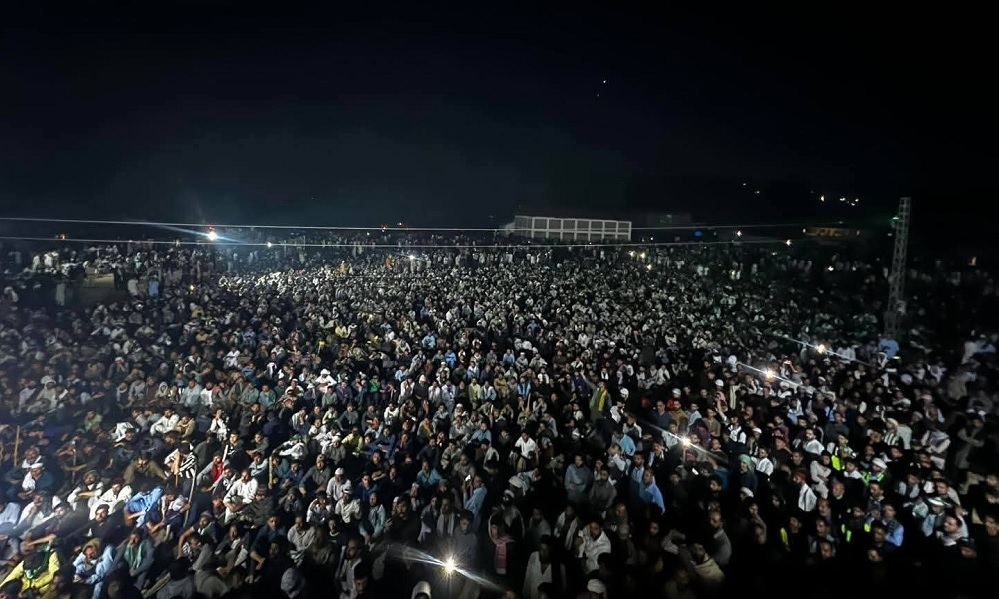
At least 15 people, including 11 civilians and four security personnel, have been killed in clashes between protesters and security forces in Pakistan-administered Kashmir, according to local authorities.
The unrest was triggered by opposition to the reservation of 12 seats in the regional legislative assembly for Kashmiri refugees. The Joint Awami Action Committee (JAAC) called for a march to Muzaffarabad, but authorities banned the group, accused it of sedition, and ordered action against its leaders.
Despite the restrictions, thousands of protesters joined the march, leading to violent confrontations in several areas.
Dozens of people have also been injured, and concerns remain over further violence. Amnesty International has criticized the authorities’ response, citing mass arrests, internet shutdowns, and the use of excessive force against protesters.
The demonstrators are demanding the abolition of the reserved seats, arguing that all legislative seats should be contested by residents of the region. However, the region’s Supreme Court has ruled that the seats are constitutionally protected and cannot be removed through political or administrative measures.
Regional
US hits China- and Hong Kong-based entities with sanctions over Iran weapons
The U.S. State Department also designated two companies and individuals based in Iran and Belarus in connection with Iran’s conventional arms-related activities, Treasury said.
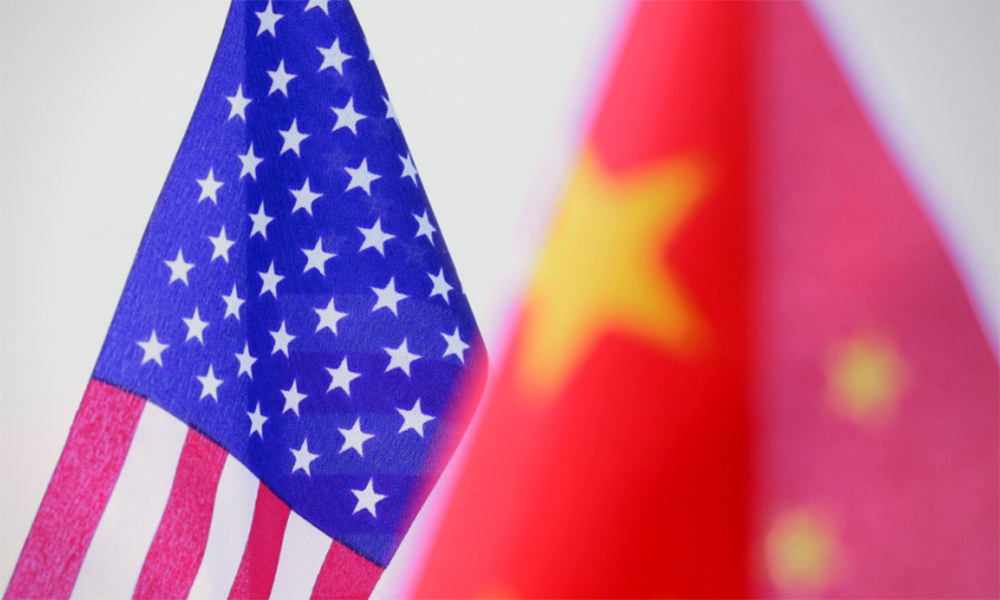
The U.S. government on Wednesday said it was imposing sanctions against 11 people and entities, including several based in China and Hong Kong, for supporting weapons procurement by Iran’s Islamic Revolutionary Guard Corps and the Iranian military, Reuters reported.
Nine of those designated were China- and Hong Kong-based individuals and companies that facilitated the procurement of weapons for Iran’s military, and a Hong Kong-based company operating within Iran’s clandestine banking network, the U.S. Treasury’s Office of Foreign Assets Control said in a statement.
The U.S. State Department also designated two companies and individuals based in Iran and Belarus in connection with Iran’s conventional arms-related activities, Treasury said.


Saar: Possible agreement between Iran and US discussed

India beat Afghanistan by 7 wickets despite Gurbaz century in ODI opener

ACCI chairman embarks on regional tour to boost trade and investment

Iranian private sector delegation arrives in Kabul to boost trade and investment cooperation

Central Asia–Afghanistan dialogue underscores regional connectivity and stability

Norway’s Viking-inspired World Cup team photo goes viral

Large blast near Beit Shemesh part of pre-planned test: Israeli defense firm

Trump returns from China with stability but little progress

Afghanistan announce squad for India series

Afghanistan, Russia sign military cooperation agreement
Saar: Possible agreement between Iran and US discussed

Tawsia: Increase in Afghanistan’s saffron exports discsused

Tahawol: Middle East crisis and future of Islamic world discussed

Saar: Kabul-Islamabad informal talks in Istanbul discussed

Tahawol: Fresh Pakistani military attacks on Afghanistan discussed
-
 International Sports4 days ago
Norway’s Viking-inspired World Cup team photo goes viral
-

 International Sports3 days ago
One Day to Go: Everything you need to know about FIFA World Cup 2026
-

 International Sports5 days ago
Upsets and historic milestones highlight men’s action at Rome Taekwondo Grand Prix
-
 Latest News4 days ago
Karzai, UK envoy react after protest dispersed in Herat
-
 Latest News4 days ago
Uzbek company keen to establish mineral processing plant in Afghanistan
-
 Latest News4 days ago
Pakistani airstrikes on civilian areas in three Afghan provinces kill 13
-

 Sport2 days ago
Afghanistan A edge India A by four runs in rain-hit Tri-Nation opener
-
 Latest News4 days ago
Afghan central bank, AACC discuss expanding banking, trade and investment ties