
Latest News
TAPI project advances in Afghanistan as 84kms of pipeline laid
Technical and engineering teams, along with skilled workers, remain actively engaged in construction.

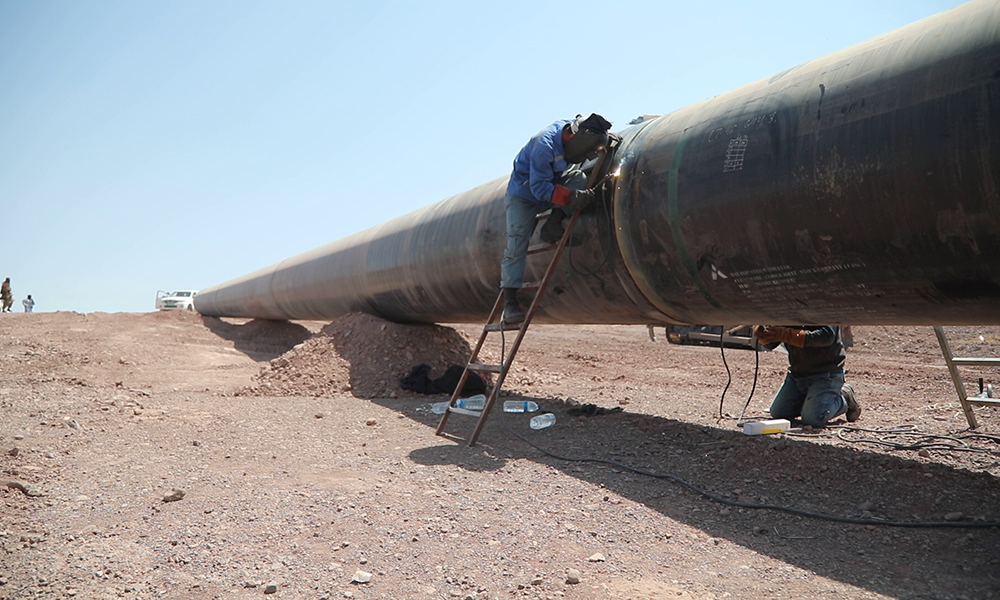
Construction work on the Afghanistan section of the Turkmenistan–Afghanistan–Pakistan–India (TAPI) gas pipeline is progressing steadily, with officials confirming that around 84 kilometres of pipeline have now been installed.
Mohammad Yousuf Saeedi, spokesman for the governor of Herat, said the major regional infrastructure project has reached approximately 60 percent completion, with efforts underway to finalise the remaining work by the end of the current year.
He added that groundwork has been completed along roughly 130 kilometres of the route, while 108 kilometres are now fully prepared for pipeline installation.
Technical and engineering teams, along with skilled workers, remain actively engaged in construction. The pipeline route extends from Rabat-e-Sangi district near the Turkmenistan border and has now reached parts of Zinda Jan district in Herat province.
Saeedi said sufficient equipment, machinery, and logistical support have been deployed to the site, noting that there are currently no major obstacles affecting implementation.
The TAPI pipeline is regarded as one of the region’s most significant energy and economic initiatives, aimed at enhancing regional connectivity and strengthening energy cooperation among the participating countries.






Latest News
Afghanistan to host regional meeting of strategic research centers in Kabul
The meeting will be officially inaugurated by Foreign Minister Mawlawi Amir Khan Muttaqi.
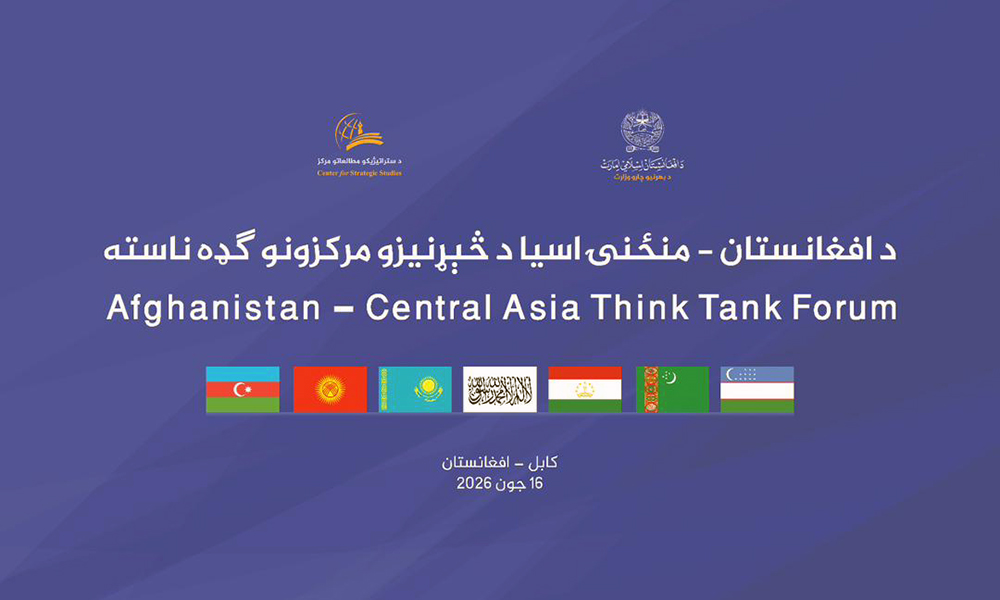
The Strategic Studies Center of the Ministry of Foreign Affairs of the Islamic Emirate of Afghanistan is set to host a high-level regional meeting of leading research and policy institutions from Afghanistan, Central Asia, and Azerbaijan in Kabul on 16 June 2026.
The gathering will bring together heads of strategic studies centres, researchers, and policy experts from Uzbekistan, Turkmenistan, Kazakhstan, Kyrgyzstan, Tajikistan, and Azerbaijan. The participating institutions operate under the respective presidential administrations of their countries.
Officials say the meeting comes amid growing engagement between Afghanistan and regional states, with discussions expected to focus on regional connectivity, stability, trade, energy cooperation, transit, and investment. Participants will also review current cooperation frameworks and develop practical recommendations for future collaboration.
A key aspect of the forum is the direct exchange of views between research institutions on shared regional challenges and opportunities, aimed at strengthening coordination and mutual understanding.
The meeting will be officially inaugurated by Foreign Minister Mawlawi Amir Khan Muttaqi.
Organisers say the forum reflects Afghanistan’s balanced, economy-oriented foreign policy and is expected to contribute to greater trust-building, expanded economic and transit cooperation, and long-term stability and shared prosperity across the region.
The initiative underscores Afghanistan’s continued role as an active participant in advancing regional connectivity and economic integration.
Latest News
Peshawar economy under pressure amid ongoing crossing closures
Qaiser also urged Islamabad and Kabul to pursue diplomatic solutions to resolve ongoing tensions, suggesting that traditional jirga mechanisms could be used alongside formal negotiations if required.
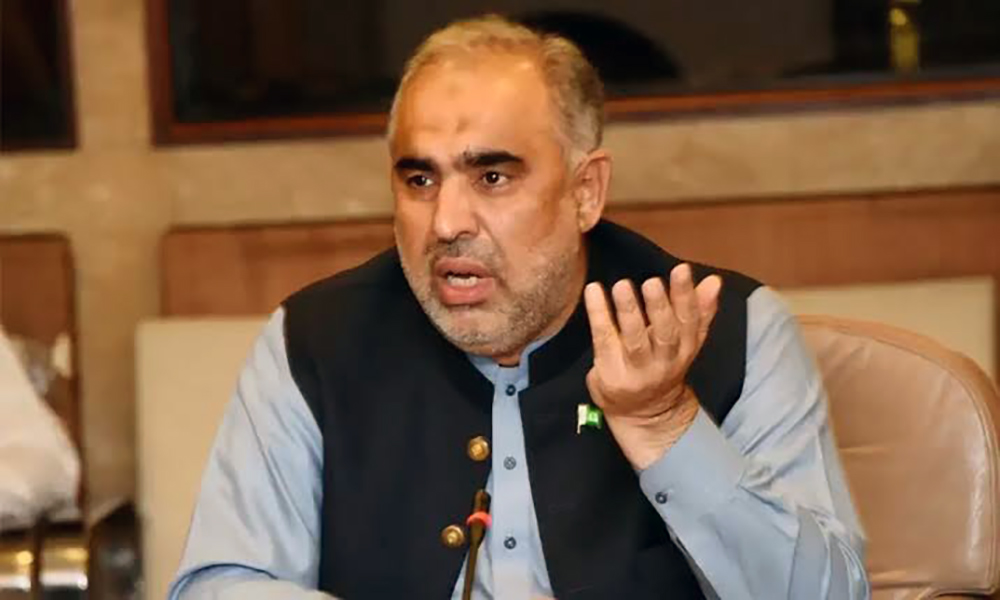
Senior Pakistani lawmaker and Member of the National Assembly, Asad Qaiser, has warned that the continued closure of crossings with Afghanistan is placing severe strain on Peshawar’s economy and industrial sector.
Addressing the National Assembly, Qaiser said the city’s economic prosperity is closely linked to trade with Afghanistan and Central Asia. He argued that restrictions on cross-Durand Line commerce have deprived local businesses of their competitive advantage, leaving traders in Peshawar struggling to compete with larger commercial centres such as Karachi and Lahore.
“How can a trader from Peshawar compete with markets in Karachi and Lahore?” Qaiser asked. “Our natural advantage lies in our access to Afghanistan and Central Asia. With border crossings closed and trade disrupted, industry in Peshawar is suffering.”
He called on the government to separate political disputes from economic interests and ensure that trade between Pakistan and Afghanistan continues uninterrupted.
“Trade should not become a casualty of political disagreements,” he said, noting that Pakistan continues to maintain trade relations with other neighbouring countries despite broader political challenges.
Qaiser also urged Islamabad and Kabul to pursue diplomatic solutions to resolve ongoing tensions, suggesting that traditional jirga mechanisms could be used alongside formal negotiations if required.
“If major international rivals can engage in dialogue to address their differences, then Pakistan and Afghanistan should also seek peaceful and practical solutions,” he said. “If necessary, we are prepared to support jirga-based discussions, but trade must continue so that people can earn a livelihood.”
His comments come amid growing concern from traders and business groups, who say prolonged closures are reducing commercial activity, threatening jobs, and slowing economic growth on both sides of the frontier.
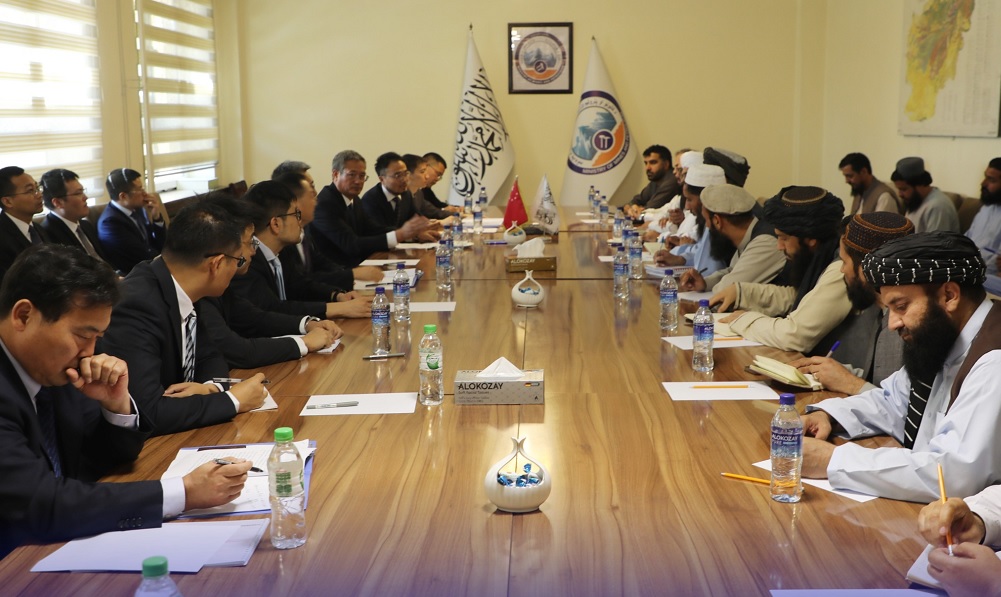
Afghanistan’s Ministry of Mines and Petroleum called for the accelerated implementation of the Mes Aynak copper mining project during a high-level meeting with a Chinese delegation in Kabul.
According to a ministry statement, Abdul Rahman Qanit, Deputy Minister for Policy and Programs, met on Sunday with a delegation led by Wei Huaxiang, General Consul of the Asian Affairs Department of China’s Ministry of Foreign Affairs, along with China’s ambassador to Afghanistan, to discuss progress on the long-delayed project.
The meeting focused on the current status of the Mes Aynak copper mine, one of Afghanistan’s largest mining projects, as well as the challenges, technical requirements, and practical steps needed to move the project forward.
Both sides reviewed recent developments and explored ways to accelerate implementation. The Chinese delegation highlighted the longstanding friendly relations between Afghanistan and China and shared its assessment of the project’s progress, operational conditions, and existing challenges.
The delegation also presented a number of proposals aimed at facilitating further advancement of the project.
Qanit emphasized the strategic significance of Mes Aynak for both countries, describing it as a major economic project with the potential to strengthen bilateral cooperation and contribute to Afghanistan’s economic development.
He stated that there are currently no major obstacles preventing the start of practical work and urged the contracting company to fulfill its commitments without further delay so that implementation can begin as soon as possible.
The discussions come as Afghan authorities seek to accelerate the development of the country’s vast mineral resources and attract greater foreign investment into the mining sector.
Mes Aynak meanwhile is one of the world’s largest undeveloped copper deposits. A mining contract was awarded to a Chinese consortium in 2008, but the project has remained stalled for years due to security, archaeological, contractual, and political challenges.


Afghanistan to host regional meeting of strategic research centers in Kabul

TAPI project advances in Afghanistan as 84kms of pipeline laid

Afghanistan Champions League Season 6 set for August kickoff

World Cup 2026: Havertz, Ayari and Balogun lead Golden Boot standings

Peshawar economy under pressure amid ongoing crossing closures

Norway’s Viking-inspired World Cup team photo goes viral

Large blast near Beit Shemesh part of pre-planned test: Israeli defense firm

Trump returns from China with stability but little progress

Afghanistan announce squad for India series

Afghanistan, Russia sign military cooperation agreement

Tahawol: Pakistan PM defending Durand Line fencing

Saar: Afghanistan-Pakistan tensions discussed

Saar: Possible agreement between Iran and US discussed

Tawsia: Increase in Afghanistan’s saffron exports discsused

Tahawol: Middle East crisis and future of Islamic world discussed
-

 Sport4 days ago
Afghanistan A edge India A by four runs in rain-hit Tri-Nation opener
-

 International Sports4 days ago
Mexico and South Africa set to open historic 2026 World Cup
-
 Regional1 day ago
Iran banks hit by major cyber attack
-
 Latest News3 days ago
Final round of 1405 Kankor exam concludes in Afghanistan
-
 Latest News2 days ago
Central Asia–Afghanistan dialogue underscores regional connectivity and stability
-
 World4 days ago
US, Iran exchange attacks as Trump threatens further escalation
-

 Business4 days ago
Etihad Airways to launch twice-daily Kabul flights from July
-

 Regional4 days ago
At least 15 killed, dozens injured as protests rock Pakistan-administered Kashmir