
Latest News
Delays in National Electronic ID Card distribution violates Afghan laws: ALA

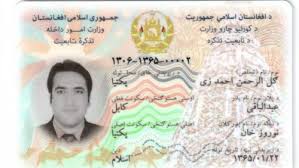

Lawyers Union of Afghanistan stated that Ministry of Interior Affairs has violated the law by procrastinating in electronic national ID cards distribution and the President has also failed to observe the constitution implementation in this regard.
Abdul Ghafoor Ghayoor, Head of Afghanistan Lawyers Association said,” Anyone who violates the law has committed a national treason, because it faces Afghanistan to new challenges, Afghan constitution has obliged the President to supervise implementation of the constitution; therefore, the President has failed to act accordingly and he is supposed to issue a decree inquiring implementation of the law”.
In addition a number of parliament members emphasize that the government is compromising for the goodness of some people by procrastinations.
Saleh Mohammad Saleh, a member of internal security commission of the lower house said,” Unfortunately, President Ghani is compromising same us his predecessor, he does not want to enforce the law, there are a lot of jobs being delayed because of this law enforcement, this is a national process and we are asking the president to issue a decree to start issuing the National Electronic ID Cards”.
On the other hand Sediq Sediqy, MoI Spokesman vows to inaugurate issuing new ID cards soon.
Distribution of ID Cards delayed after ethnicity tensions raised between Afghans under the word “Afghan” to be used as nationality of all ethnic tribal’s living in Afghanistan while a number of others believes that beside the nationality the ID Card must mention either a citizen is basically a Tajik, Pashtun, Hazara or other ethnic groups which resulted to delay this process for a long time.
Reported By: Hameed Sediqy

Latest News
Russia claims Asia-based drug network expanding toward Russia and the West
Islamic Emirate of Afghanistan have said that they have reduced the cultivation, production, and trafficking of narcotics in Afghanistan to close to zero.
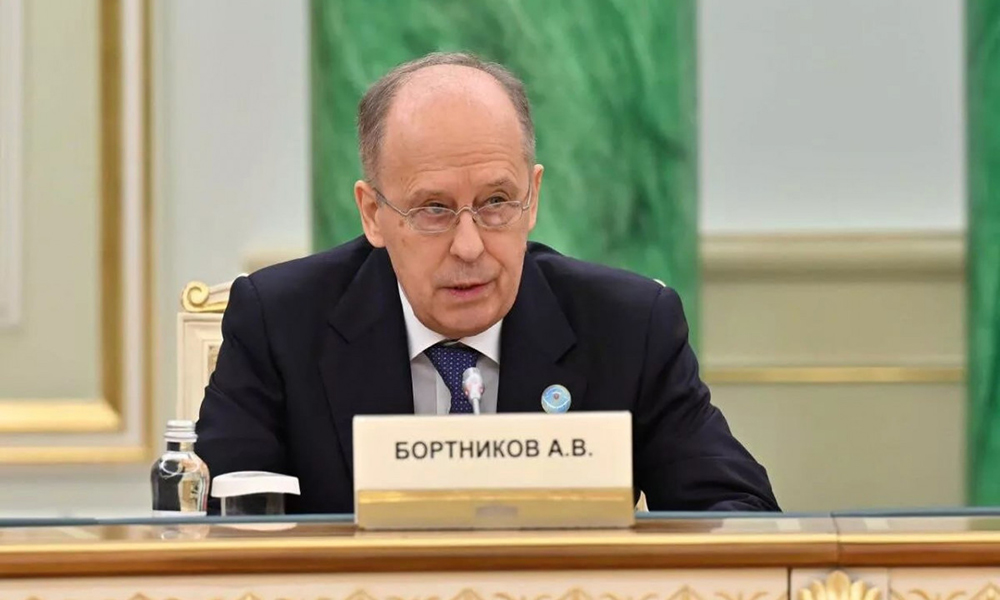
Russia’s security chief has warned that a growing synthetic drug production network is emerging across parts of Asia, with potential trafficking routes extending toward Russia and Western countries.
Alexander Bortnikov, Director of the Federal Security Service, said a “drug production belt” is taking shape across Southeast Asia, Afghanistan, and Iran, as criminal groups increasingly shift toward synthetic narcotics manufacturing.
Speaking at a meeting of the Council of Heads of Security Agencies of the Commonwealth of Independent States, Bortnikov argued that cooperation with the Islamic Emirate on counter-narcotics efforts could be “reasonable,” citing changes in the regional drug trade.
He said Afghan traffickers are moving away from traditional narcotics toward synthetic drug production, contributing to what he described as an expanding transnational supply chain linking Southeast Asia, Afghanistan, and Iran.
According to him, this network is increasingly extending into Central Asian states, where more illicit laboratories are reportedly being established to produce new synthetic substances.
Bortnikov also claimed that organized crime groups linked to Ukraine have recently become involved in both production and transit operations, allegedly remotely managing drug laboratories in CIS countries. He added that proceeds from these activities are being used, in part, to fund recruitment for attacks in Russia and to acquire weapons.
The FSB chief said Russian security services, working with partner agencies, had dismantled nearly 170 drug laboratories across the CIS in 2025 and seized around nine tons of synthetic drugs.
Latest News
China and Pakistan deepen Afghanistan cooperation after Beijing talks
In the joint declaration, China and Pakistan stressed that Afghan territory should not be used by militant organisations to threaten neighbouring countries or regional interests.
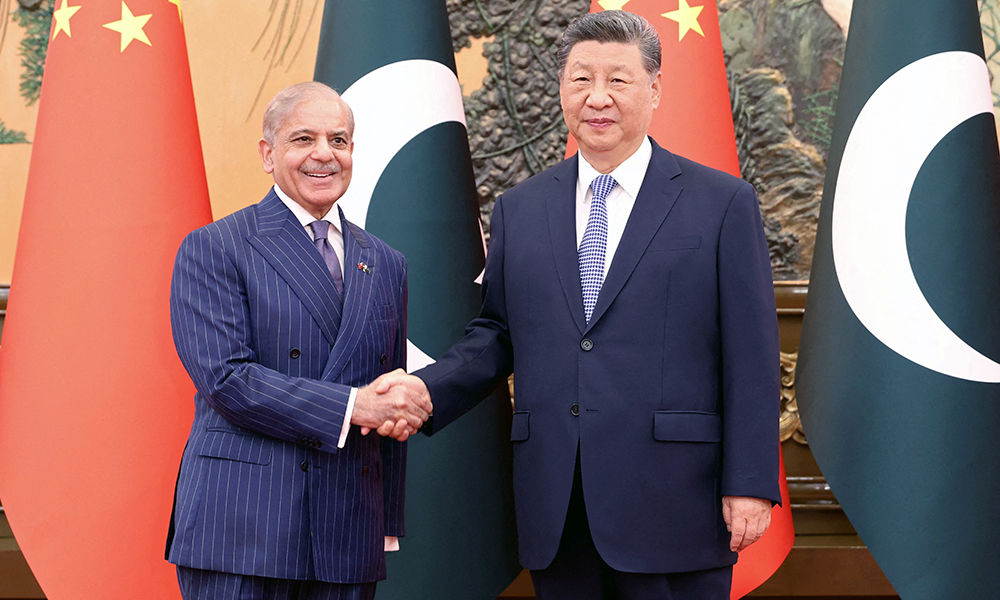
Following high-level talks in Beijing between China and Pakistan, the two allies have pledged closer coordination on Afghanistan and warned against militant groups using Afghan territory to threaten regional security.
The commitment came in a joint statement issued after Pakistani Prime Minister Shehbaz Sharif concluded a four-day official visit to China, where he met Chinese President Xi Jinping and Premier Li Qiang.
A significant section of the statement focused on Afghanistan and regional security, underlining growing concern from both Beijing and Islamabad about instability spilling across borders.
The two countries welcomed recent trilateral discussions involving Afghanistan, Pakistan and China held in Urumqi, Xinjiang, in April 2026. Pakistan praised China for facilitating dialogue between Islamabad and Kabul, while both sides agreed to maintain close coordination on Afghan-related issues.
In the joint declaration, China and Pakistan stressed that Afghan territory should not be used by militant organisations to threaten neighbouring countries or regional interests.
The statement specifically named the Tehreek-e-Taliban Pakistan (TTP) and the Eastern Turkistan Islamic Movement (ETIM), saying no individual or group should be allowed to carry out attacks or destabilising activities from within the region.
Security concerns linked to Afghanistan have become increasingly important for both countries. Pakistan has repeatedly accused militants of launching cross-frontier attacks from Afghan territory, while China has voiced concern about extremist networks operating near its western Xinjiang region.
Beyond Afghanistan, the joint statement reaffirmed the deepening strategic partnership between China and Pakistan, including cooperation on infrastructure, counter-terrorism, trade, artificial intelligence and regional connectivity under the China-Pakistan Economic Corridor (CPEC).
The two sides also agreed to strengthen military and counter-terrorism cooperation through what they described as a new China-Pakistan Security Partnership.
The visit coincided with celebrations marking 75 years of diplomatic relations between China and Pakistan.
Latest News
IEA defense minister arrives in Moscow for international security conference
The ministry added that participants are expected to exchange views on key international and regional security issues during the gathering.
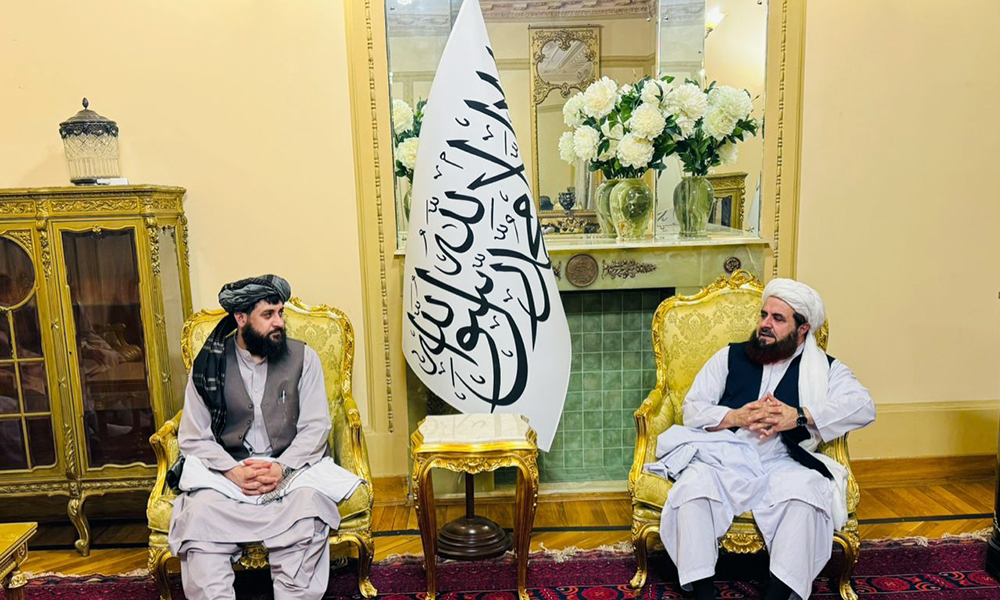
Afghanistan’s Ministry of Defense says Mawlawi Mohammad Yaqoob Mujahid, Defense Minister of the Islamic Emirate of Afghanistan, has arrived in Moscow to participate in the International Security Conference hosted by the Russian Federation.
According to the ministry, the conference will bring together defense and security officials from various countries to discuss regional security, shared challenges, and ways to strengthen cooperation.
The ministry added that participants are expected to exchange views on key international and regional security issues during the gathering.


Tahawol: Islamic Emirate defense minister’s visit to Russia

Saar: Calls to expand Afghanistan-Qatar ties discussed

More than 220 riders launch Hellas Rally Raid 2026 in Greece

Afghanistan expands drug imports as Russian pharma company enters market

Russia claims Asia-based drug network expanding toward Russia and the West

New Afghanistan-China transport corridor launched via Turkmenistan

Afghanistan signs $46 million deal to develop standard laboratory complexes

Germany to launch online visa system for Afghan study and work applicants in Pakistan

Afghanistan launches first 5G trial in Kabul to boost telecom services

Large blast near Beit Shemesh part of pre-planned test: Israeli defense firm
Tahawol: Islamic Emirate defense minister’s visit to Russia
Saar: Calls to expand Afghanistan-Qatar ties discussed

Tahawol: Afghanistan-Japan relations reviewed

Saar: Afghanistan’s relations with regional countries, incl Russia and China discussed

Saar: Shahbaz Sharif’s trip to China
-
 Latest News3 days ago
China restricts export of chemical substances to Afghanistan
-
 Business2 days ago
Major pharma firms eye investment in Afghanistan
-

 World4 days ago
One dead, 36 injured in explosion at New York dry dock
-

 Sport4 days ago
Mohammadi crowned champion of 2nd season of Ariana Snooker Championship
-
 Latest News2 days ago
Deadly shooting near Kabul’s Sarai Shahzada leaves four dead
-
 Latest News4 days ago
Britain says recognition of IEA conditional on women’s rights, counterterrorism
-

 Sport5 days ago
Chennai Super Kings eliminated as Gujarat Titans register record IPL victory
-
 Regional3 days ago
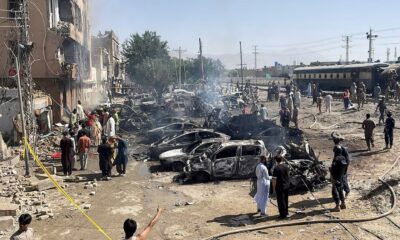
At least 24 killed in deadly train bombing in Pakistan’s Balochistan