
Latest News
American Model Accuses Ex-Afghan Defense Minister’s Son of Raping Her


An American fashion model, Sarah Goolden, claims that son of a former Afghan defense minister stalked and raped her after she rejected him, the New York Post reported.
According to the report, Sarah Goolden, a stunning blonde who’s modeled everything from lacy underwear to designer duds, accuses Hamed Wardak, son of Abdul Rahim Wardak, of attacking her twice during a trip the two took to Miami on July 4th weekend 2018.
“He bought me gifts,” Goolden has told the New York Post. “He uses his money as a tool to influence almost everybody in his life.”
Meanwhile, Wardak’s lawyer, Alexis Fields said that Goolden’s claims are “entirely false,” accusing the model of “attempting to manipulate the current political and anti-immigrant climate to her tactical advantage.”
The blue-eyed beauty says she agreed to date Wardak, 43, after years of him courting her, but a month into the romance, Wardak allegedly became violent during the Independence holiday jaunt, according to the lawsuit, the report said.
Wardak falsely accused her of cheating, at one point “screaming and pulling her by her hair” and yanking her out of bed, according to the lawsuit quoted by the Post.
The next day she tried to leave but was thwarted when the building’s elevators stopped working, Goolden alleged.
He eventually apologized, and the pair went out later that day with friends. As the group boozed it up, Wardak publicly proposed, she alleged.
Fearing another violent outburst if she said no in front of his entourage, Goolden accepted.
She tried to break things off privately, but says Wardak held her down and sexually assaulted her, according to the lawsuit.
She was able to leave two days later, but Wardak allegedly threatened to “ruin” her life, have her followed, “make her look like a con-artist,” and said he would file litigation to drown her in legal fees, according to court papers, read the report.
Since the alleged attack, Wardak filed two lawsuits against Goolden, one accusing her of faking their relationship in a bid to get money, and a second seeking the return of $20,000 he claims he paid for her sick dog, the report added.
She says he’s spent the year since then stalking her, and records show he’s been arrested twice in Manhattan for violating an order of protection Goolden obtained against him, the report noted.
Wardak “is a sick person … and he needs to be stopped,” said Gooldens’ attorney Walker Harman quoted by the New York Post.
“This has been the most traumatic thing I’ve ever gone through,” Goolden has told the New York Post. “It’s a nightmare that will not end.”

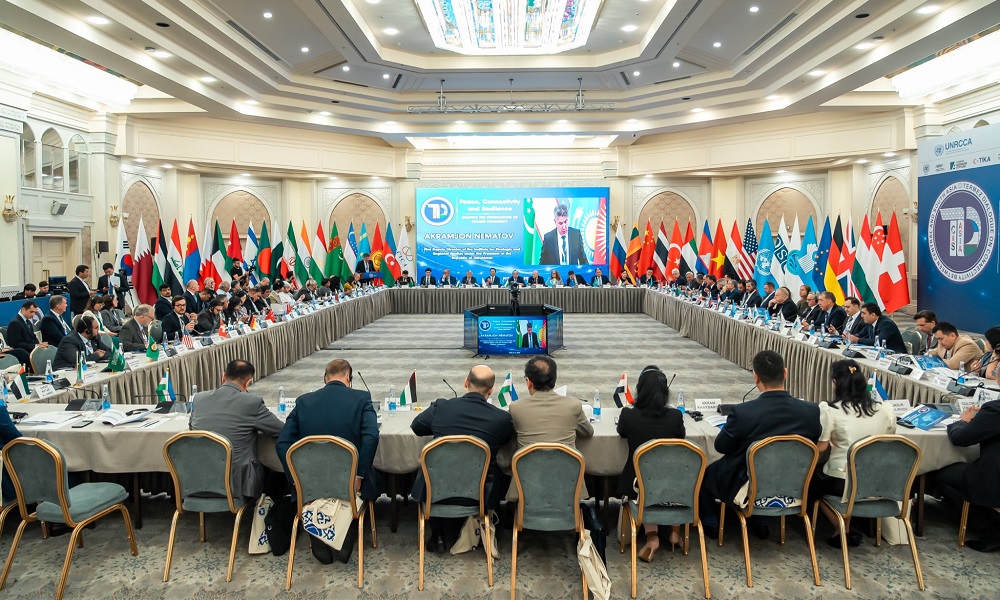
Afghanistan’s Center for Strategic Studies says discussions at the second Termez Dialogue primarily focused on economic cooperation between Central and South Asia through Afghanistan, particularly on strengthening regional economic connectivity.
In a post on X, the center said that around 200 representatives from more than 40 countries and 10 international and regional organizations attended the meeting, which was held on Thursday.
Nooruddin Azizi, Acting Minister of Industry and Commerce of the Islamic Emirate, participated in the event online. Zaker Jalaly and Ghuncha Gul Arman also attended on behalf of the Ministry of Foreign Affairs’ Center for Strategic Studies.
On the sidelines of the meeting, Afghanistan’s Ministry of Foreign Affairs and research institutions from Central Asian countries held detailed discussions on the Afghanistan–Central Asia Think Tanks Forum, which is scheduled to take place in Kabul on June 16.
Latest News
Regional leaders seek stronger trade links through Afghanistan at Termez Dialogue
Uzbekistan’s First Deputy Foreign Minister, Bakhromjon Aloev, said a more prosperous and economically integrated Afghanistan could help promote regional stability after decades of conflict.
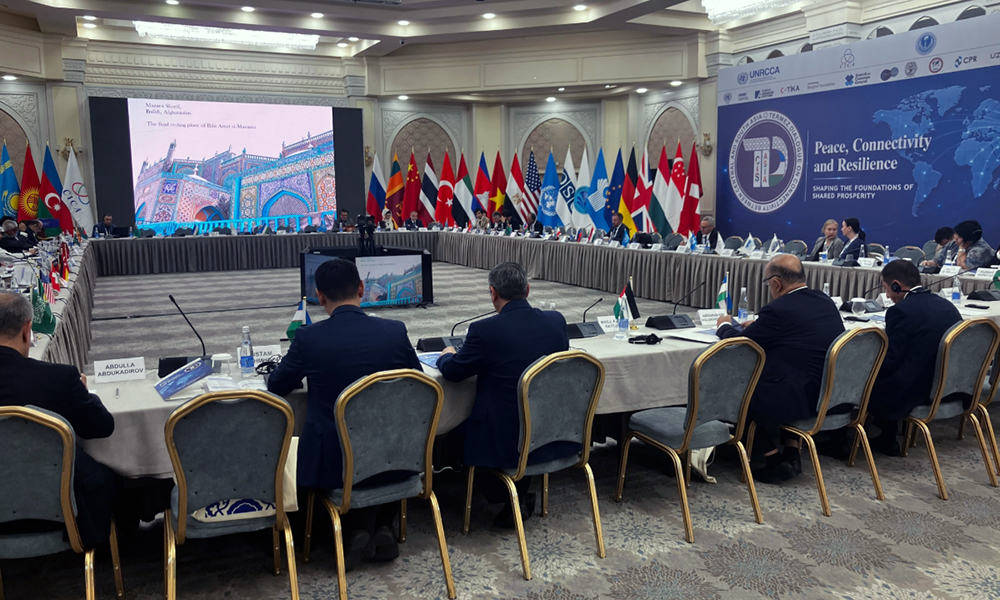
Senior officials from Central and South Asia gathered in Tashkent this week for the second Termez Dialogue, where regional connectivity, trade expansion and Afghanistan’s role as a transit hub featured prominently in discussions.
Participants at the forum broadly agreed that Afghanistan remains central to efforts to strengthen economic ties between Central and South Asia, given its strategic location linking the two regions.
Uzbekistan’s First Deputy Foreign Minister, Bakhromjon Aloev, said a more prosperous and economically integrated Afghanistan could help promote regional stability after decades of conflict. He noted that Central Asian countries are continuing to expand trade and economic engagement with Afghanistan despite ongoing challenges.
According to officials, Uzbek and Afghan entities have signed agreements worth approximately $5 billion since late 2025, underscoring growing commercial ties between the neighboring countries.
Afghanistan’s Minister of Industry and Commerce, Nooruddin Azizi, used the forum to reiterate Kabul’s commitment to expanding regional trade, improving logistics infrastructure and increasing the country’s transit capacity.
Afghan representatives also reportedly urged regional partners to advocate for the easing of international sanctions that continue to limit trade and investment opportunities.
Speaking on the sidelines of the event, the chairman of Afghanistan’s Chamber of Commerce and Investment, Syed Karim Hashemy, argued that existing sanctions disproportionately affect the private sector, which he said accounts for around 70 percent of the country’s economic activity.
He called for greater flexibility in banking and financial restrictions to facilitate cross-border trade and investment.
However, prospects for major international support remain uncertain. The European Union’s Special Representative for Central Asia, Eduards Stirpais, indicated that Brussels is unlikely to significantly alter its policy toward the Islamic Emirate in the near future, citing ongoing concerns over governance and human rights issues.
Despite these challenges, several participants stressed the importance of continued engagement with Afghanistan to advance regional connectivity projects, including the proposed Trans-Afghan Railway, which aims to link Central Asian markets with ports in South Asia.
Established under a 2022 United Nations resolution on strengthening connectivity between Central and South Asia, the Termez Dialogue serves as a platform for regional cooperation aimed at improving trade routes, transport networks and economic integration across the region.
Latest News
Aid shortages deepen as Afghanistan feels impact of Hormuz disruptions
According to WFP, an additional 2.3 million people in Afghanistan have been pushed into acute hunger since the crisis began nearly 100 days ago.
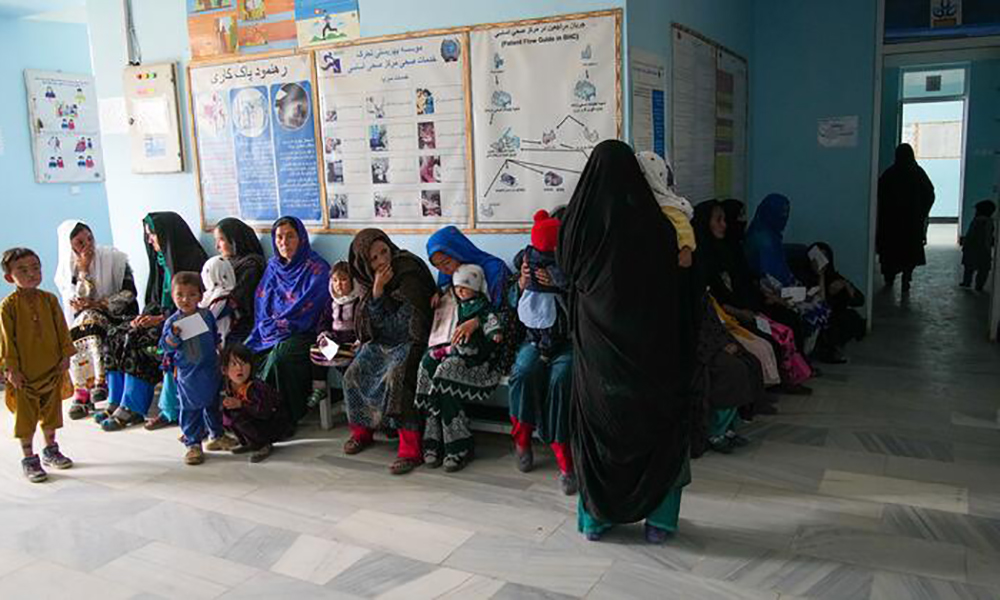
Afghanistan is facing worsening humanitarian challenges as disruptions linked to the ongoing Strait of Hormuz crisis drive up food, fuel and transport costs, placing additional pressure on aid operations across the country.
Speaking at UN Headquarters in New York on Thursday, World Food Programme (WFP) Acting Executive Director Carl Skau said warnings issued earlier in the crisis about the knock-on effects of higher energy prices were now materialising in some of the world’s most vulnerable countries.
Skau stated that few places illustrate the cascading consequences of the crisis more starkly than Afghanistan.
Fresh from a visit to the country, he described witnessing hundreds of mothers carrying visibly malnourished children away from a rural health clinic near Jalalabad because nutrition supplies had run out.
The shortages stem from a combination of funding cuts and supply-chain disruptions that have complicated deliveries previously routed through neighbouring countries.
“I’ve never seen anything like it,” Skau said. “The desperation in that clinic is hard to describe.”
Afghanistan is simultaneously coping with economic pressures linked to the regional crisis and the return of some 2.8 million people deported or repatriated from neighbouring countries over the past year.
According to WFP, an additional 2.3 million people in Afghanistan have been pushed into acute hunger since the crisis began nearly 100 days ago.
Rising food prices, higher transport costs and underfunded aid programmes are reducing the ability of humanitarian organizations to reach vulnerable communities.
The UN Children’s Fund (UNICEF) has also warned that shipping delays and rising transport costs are affecting the delivery of critical supplies, including vaccines, therapeutic food and medical assistance. Humanitarian cargo is now facing delays of up to six months in some cases.
UN officials say the impact of the Strait of Hormuz crisis extends far beyond the Middle East, with vulnerable countries such as Afghanistan bearing some of the heaviest consequences. They warn that prolonged disruptions could further increase hunger, deepen poverty and undermine fragile humanitarian gains.
The latest warnings come as aid agencies continue to appeal for greater international support to prevent a further deterioration of conditions for millions of Afghans who remain dependent on humanitarian assistance.


Tawsia: Signing of $20 million Herat salt mining deal discussed

Economic cooperation through Afghanistan in focus at second Termez Dialogue

Gaikwad set to replace injured Kohli for Afghanistan ODI Series

Regional leaders seek stronger trade links through Afghanistan at Termez Dialogue

Aid shortages deepen as Afghanistan feels impact of Hormuz disruptions

New Afghanistan-China transport corridor launched via Turkmenistan

Afghanistan signs $46 million deal to develop standard laboratory complexes

Large blast near Beit Shemesh part of pre-planned test: Israeli defense firm

Trump returns from China with stability but little progress

Afghanistan announce squad for India series
Tawsia: Signing of $20 million Herat salt mining deal discussed

Tahawol: Discussion on fear of internal disputes in Iran

Tahawol: Welcoming Qatar’s cooperation with Afghanistan discussed

Saar: Former President’s strong criticism of Pakistan’s policies discussed

Tahawol: China’s efforts to host next round of Urumqi talks
-
 Latest News4 days ago
Russian business official proposes visa-free travel between Russia and Afghanistan
-

 International Sports5 days ago
EMF EURO 2026 heads toward decisive group-stage finale in Bratislava
-
 Business3 days ago
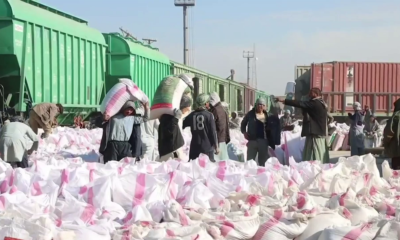
Afghanistan’s trade with Central Asia records sharp growth
-
 Latest News4 days ago
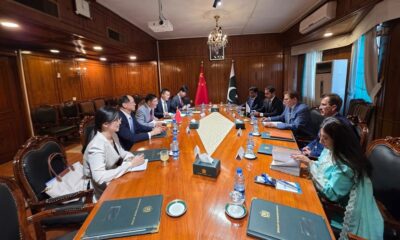
China and Pakistan’s special envoys for Afghanistan discuss Urumqi Process
-

 Sport4 days ago
Afghanistan edge Maldives 1-0 in four-nation tournament opener
-

 Sport4 days ago
Six Afghan cricketers selected for 2026 Lanka Premier League
-
 Latest News3 days ago
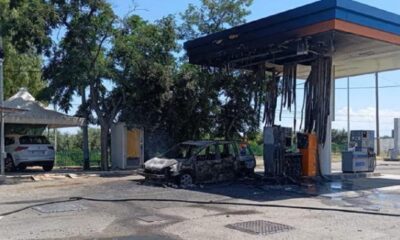
Three Afghans among four farmworkers burned alive in Italy; two Pakistanis arrested
-
 Latest News4 days ago
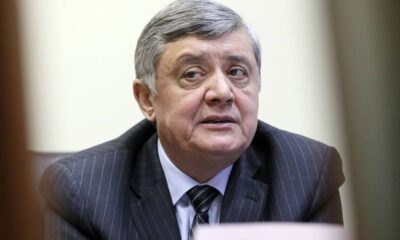
Russia-Afghanistan military deal focuses on repair of Soviet-made equipment, Kabulov says