
/var/www/vhosts/ariananews.af/httpdocs/wp-content/themes/ariana-news/parts/post-single.php on line 153
">
Warning: Undefined array key 0 in /var/www/vhosts/ariananews.af/httpdocs/wp-content/themes/ariana-news/parts/post-single.php on line 153
Warning: Attempt to read property "cat_name" on null in /var/www/vhosts/ariananews.af/httpdocs/wp-content/themes/ariana-news/parts/post-single.php on line 153
Baradar inaugurates construction of Palatuni Dam in Paktika
The dam will store 25 million cubic meters of water, irrigate 2,500 hectares of land, and generate 935 kilowatts of electricity. It will create direct and indirect employment opportunities for hundreds of citizens, the Office of Deputy Prime Minister for Economic Affairs said in a statement.


Deputy Prime Minister for Economic Affairs, Mullah Abdul Ghani Baradar, on Monday inaugurated the construction of Palatuni Dam in Paktika province.
The dam will store 25 million cubic meters of water, irrigate 2,500 hectares of land, and generate 935 kilowatts of electricity. It will create direct and indirect employment opportunities for hundreds of citizens, the Office of Deputy Prime Minister for Economic Affairs said in a statement.
Speaking at the inauguration ceremony, Baradar said that agriculture is crucial for a strong economy, and water is the most essential element for agricultural development. To achieve this goal, the Islamic Emirate has prioritized water management and called on investors to invest in this sector, he said.
He added that the Islamic Emirate is determined to manage natural resources, alongside other sectors, for the country’s self-sufficiency and socio-economic development.
Baradar mentioned that opportunities have been created for both domestic and foreign investors to invest in this area. He further stated that the Islamic Emirate has assessed large and medium-sized dams across the country that were either incomplete or had not yet begun.
Deputy PM stated that this project, supported financially by the Islamic Emirate and implemented by the National Development Corporation, is expected to be completed in two and a half years.






Warning: Undefined array key 0 in /var/www/vhosts/ariananews.af/httpdocs/wp-content/themes/ariana-news/parts/post-single.php on line 573
Warning: Attempt to read property "cat_ID" on null in /var/www/vhosts/ariananews.af/httpdocs/wp-content/themes/ariana-news/parts/post-single.php on line 573

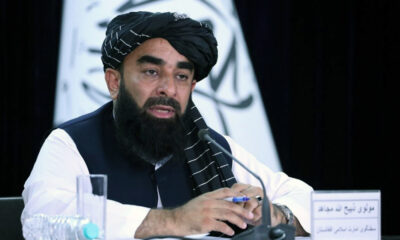
The spokesman for the Islamic Emirate Zabihullah Mujahid says no unauthorized individual or group is allowed to operate in Afghanistan or use the country’s territory against other nations. Responding to security concerns raised by the special representatives of China and Pakistan.
Mujahid said Afghanistan’s position on regional security is clear and that its territory will not be used for activities against any other country. He added that any propaganda or concerns raised by certain parties about Afghanistan are their own responsibility and that the internal security problems of other countries are unrelated to the Islamic Emirate.
“Afghanistan enjoys nationwide security. No unauthorized group is allowed to operate here, and Afghan territory is not used against any country. We have taken strict measures to prevent such activities. If some parties spread propaganda or express concerns about Afghanistan, that is their own matter. The reality is that no unauthorized group posing a threat to any country exists or is allowed to operate in Afghanistan,” said Mujahid.
His remarks came after Pakistan’s Special Representative for Afghanistan, Mohammad Sadiq, and China’s Special Representative for Afghanistan, Yu Xiaoyong, held talks on Monday on regional security and the latest developments concerning Afghanistan.
During the meeting, the two envoys discussed threats posed by Tehreek-e-Taliban Pakistan (TTP) and the East Turkestan Islamic Movement (ETIM), which Pakistan claims are operating from Afghan territory.
Latest News
WFP warns Afghanistan’s child malnutrition crisis deepens as aid cuts put millions at risk
WFP estimates that 3.7 million children and 1.2 million pregnant and breastfeeding women are expected to suffer from acute malnutrition this year unless urgent action is taken.
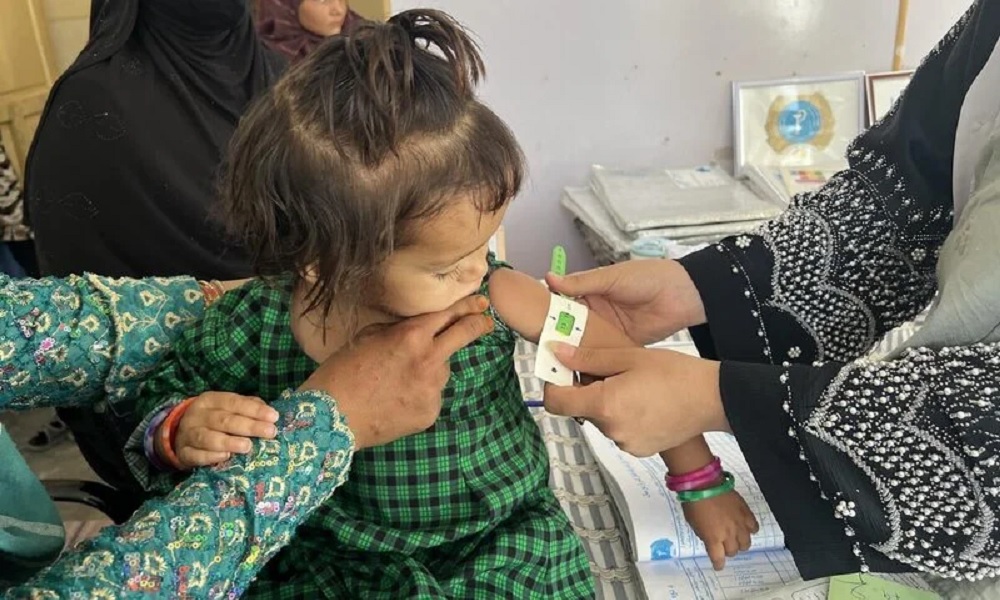
The United Nations World Food Programme (WFP) has warned that Afghanistan is facing a worsening child malnutrition crisis, with funding shortages forcing life-saving nutrition and food programmes to scale back at a time when they are needed most.
According to WFP, child acute malnutrition has reached critical levels in 12 provinces, including Helmand, Kandahar, Baghlan and Logar, with the situation expected to deteriorate through October. The agency said nearly one-third of Afghanistan’s provinces are now experiencing critical levels of child malnutrition—the highest number on record.
WFP estimates that 3.7 million children and 1.2 million pregnant and breastfeeding women are expected to suffer from acute malnutrition this year unless urgent action is taken.
“Feeble cries of malnourished babies haunt the health clinics of Afghanistan as worried mothers—many themselves weakened by hunger—bring their children, desperate for treatment,” said WFP Country Director in Afghanistan John Aylieff. “We are witnessing the next generation waste away in spite of this being harvest time – a time of plenty. This is not simply heartbreaking—it is unacceptable.”
The agency attributed the worsening situation to a combination of conflict, unemployment, high food prices, reduced humanitarian funding, supply disruptions caused by conflict in the Middle East, and the prolonged closure of the Pakistan border, which limited access to nutrition supplies.
WFP said 142 health centres closed in 2025 due to funding cuts, leaving more than 13,000 children without nutrition treatment, while nearly one million mothers and children missed essential nutrition services for five months this year.
“Afghanistan is already gripped by one of the world’s most severe and unrelenting malnutrition crises, and these staggering numbers could climb even higher. This crisis could eclipse all previous projections and condemn countless more children and mothers to preventable death,” added Aylieff.
The agency called for an urgent $540 million over the next six months to maintain and expand nutrition programmes, warning that without immediate support, the crisis could claim more lives and reach unprecedented levels.

Greek authorities have charged a 26-year-old Afghan man over the death of a British charity worker whose body was found inside a suitcase in an abandoned building in Athens.
The victim, 38-year-old Elisabeth-Jane Ross from Edinburgh, Scotland, had travelled to Greece in late June to carry out volunteer work supporting refugees and vulnerable communities.
She was reported missing after friends and family became concerned when they received unusual text messages from her phone that investigators now believe may have been sent after her death to delay the discovery of the crime.
The accused, Sharif Ahmadzai, is a professional boxer who arrived in Greece as an unaccompanied Afghan refugee, a minor, in 2016. He later married an American aid worker, and together they established a Christian ministry that provided assistance to refugees in Athens. Ross is believed to have known the couple through their humanitarian work.
Greek prosecutors have charged Ahmadzai with murder, robbery and weapons-related offences. According to investigators, CCTV footage allegedly shows him wheeling a large suitcase through Athens before abandoning it in a derelict building in the Kypseli district, where Ross’s body was discovered by a homeless man on July 18.
Authorities also allege he used the victim’s bank cards to withdraw about €10,000 after her death.
Ahmadzai has admitted disposing of Ross’s body and using her bank cards but denies killing her. He claims he found her already dead in the apartment where she had been staying.
Investigators, however, say forensic evidence and CCTV footage contradict key parts of his account. Initial forensic findings suggest Ross may have died from asphyxiation, although further toxicology tests are still pending.
Investigators say Ahmadzai’s wife played a key role in the investigation after becoming suspicious of his behaviour. She reportedly contacted police after tracking his location to Ross’s apartment on the night she disappeared and later handed officers cash and other items she believed may have been linked to the case.
Greek authorities continue to investigate the motive for the killing, with robbery and a possible confrontation among the lines of inquiry. The case has shocked both Greece and the United Kingdom, where Ross is being remembered for her humanitarian work and commitment to helping refugees.


No unauthorized group allowed to operate in Afghanistan: IEA spokesman

WFP warns Afghanistan’s child malnutrition crisis deepens as aid cuts put millions at risk

Afghan boxer charged over death of British woman found in suitcase in Greece

Final touches being made to Ayubi Cricket Stadium ahead of Kabul Premier League

Status of US-Iran talks uncertain as ship struck in Hormuz

Pakistan’s governance system has ‘collapsed’: Mohsin Naqvi

India offers 1,000 online scholarships for Afghan students for 2026-27 academic year

Cricket world pays tribute to Afghanistan fast bowler Shapoor Zadran

Turkey spent over $120 million to prepare airport for Qatar-donated U.S. presidential aircraft

Thousands pay final respects as Afghan cricketer Shapoor Zadran buried in Kabul

Tahawol: Worsening security crisis in Khyber Pakhtunkhwa

Saar: Trump’s claim over Iran talks

Tahawol: US cancelling strikes on Iran

Saar: Strained relations between Kabul and Islamabad

Saar: Trade shifts from Pakistan to Central Asia and Iran discussed
-
 Latest News4 days ago
Pakistan’s governance system has ‘collapsed’: Mohsin Naqvi
-

 Sport5 days ago
Qosh Tepa crowned champions of inaugural Afghanistan Wrestling Premier League
-

 Latest News4 days ago
World Bank: Afghanistan’s economic growth too weak to improve living standards
-
 Latest News3 days ago
Uzbek president calls for Central Asia-Afghanistan development space
-

 World3 days ago
US to make visa bond program permanent for people from dozens of countries
-
 World4 days ago
Spain says migrant surge into Ceuta has eased as thousands return to Morocco
-
 Sport1 day ago
Only two days to go before Afghanistan and Ireland begin ODI series
-

 Latest News4 days ago
Israel and US consider Iran land blockade