
Business
CoCI calls on government to have exact economic plan

![ACCI _27_01_2015_DARI_SOT.avi_snapshot_00.20_[2015.01.27_18.04.38]](https://ariananews.af/wp-content/uploads/2015/01/ACCI-_27_01_2015_DARI_SOT.avi_snapshot_00.20_2015.01.27_18.04.38.jpg)
Officials in Chamber of Commerce and Industry (CoCI) said that more than a thousand factories blocked in different parts of the country in the recent years.
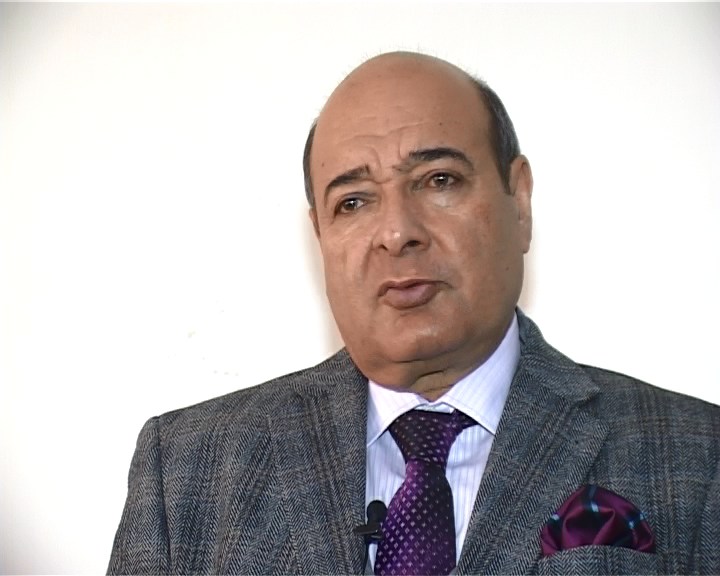
Chairman of the international relations of Chamber of Commerce and industry, Azrakhsh Hafezi is said to consider the reason for factories stopped activities the increase of insecurity, lack of electricity and lack of government’s support for the private sector.
Azrakhsh declared that more than three thousand factories are activating in several provinces of the country but nearly 1100 factories deactivated in the recent years.
“The government should have an exact economic plan to ascertain the underlying economic lines.” Hafize noted.
In the meantime, some of Afghan traders have different views regarding the issue.
They said the private sector of the country had a remarkable growth in the recent years but lack of government’s support caused the domestic products collapsed.
Chairman of the Board of entrepreneurs of Afghanistan, Rahmuddin Haji Aqa said, “I confirm the lack electricity in factories, existence of corruption, and lack of government’s support to factories. But I cannot say anything to the figure Azrakhsh Hafize presented.”
However, officials in ministry of commerce is said to consider chamber of commerce findings are Hafize’s personal views.
This comes as President Ghani in his national unity government promised to find solutions for wiping out economic challenges, but four months passed still investors have their problems.

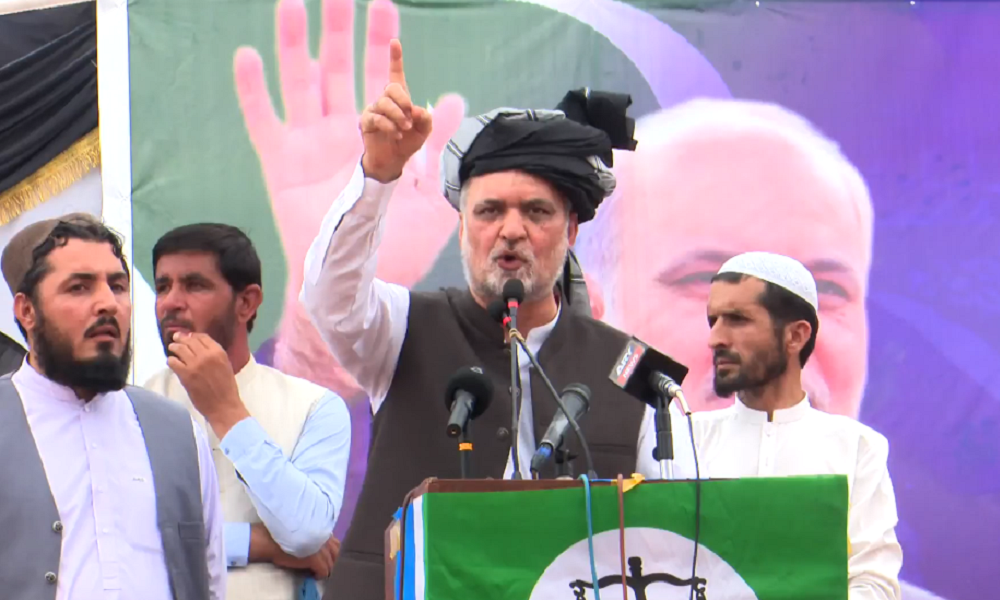
Hafiz Naeemur Rehman, chief of Pakistan’s Jamaat-e-Islami Pakistan political party, has called for the immediate reopening of crossings along the disputed Durand Line and the regularisation of trade with Iran, warning that prolonged border restrictions are worsening economic hardship for communities on both sides.
Speaking at a public gathering in Zhob, in Pakistan’s Balochistan province, Rehman said restoring cross-border trade was essential for reviving Pakistan’s struggling economy and reducing pressure on ordinary citizens already grappling with inflation and unemployment.
He proposed the formation of a joint committee made up of tribal elders, business leaders and local representatives to help restore trade, resolve disputes and maintain stability along the border region.
Rehman also called for the establishment of special trade zones along the Durand Line to facilitate legal commerce and create employment opportunities in areas heavily dependent on cross-frontier movement.
The Jamaat-e-Islami leader criticised current management policies, alleging that crossings were being opened selectively for the benefit of a small group of traders while thousands of transport workers, merchants and families continued to suffer financially from the closures.
Major crossings along the Durand Line have remained largely shut since October 11 following intense clashes between Afghan and Pakistani forces and Pakistani airstrikes inside Afghanistan that reportedly killed dozens of people on both sides.
The violence sharply escalated already strained relations between Islamabad and Kabul, with Pakistan accusing Afghanistan-based militants of carrying out cross-border attacks, claims the Afghan authorities have repeatedly denied.
The prolonged restrictions have severely disrupted trade and travel between the two countries, particularly affecting frontier provinces where local economies rely heavily on the movement of goods, fuel and agricultural products.
Traders and transport unions in both Afghanistan and Pakistan have repeatedly warned that continued closures are causing heavy financial losses and worsening shortages in some areas.
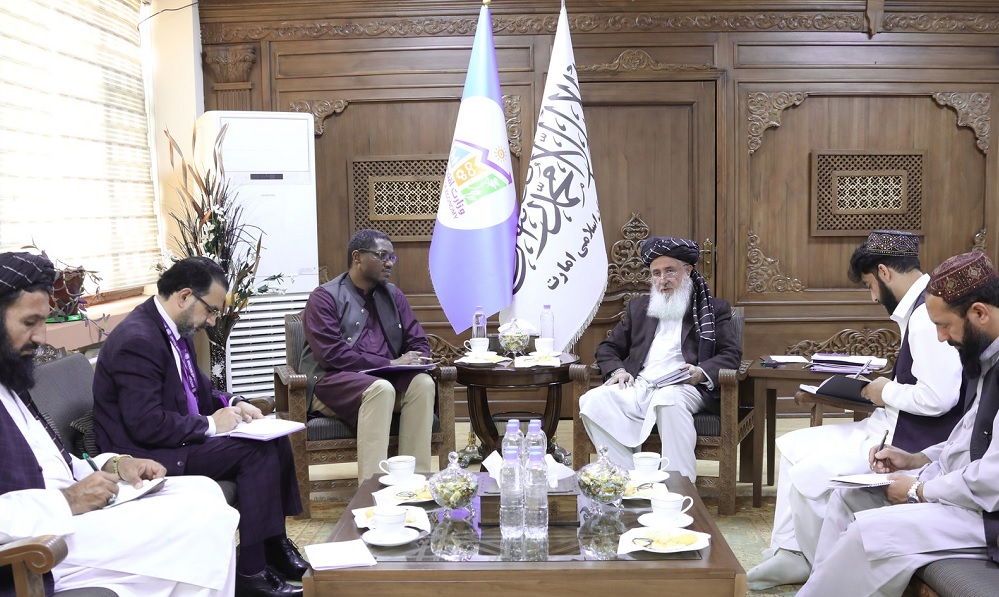
Several major international pharmaceutical companies could invest in medicine production in Afghanistan as part of growing cooperation between UN agencies and Afghan authorities, who hope to strengthen the country’s healthcare system.
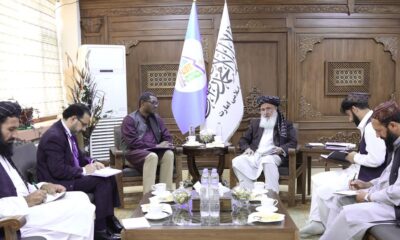
The development was highlighted during a meeting between Afghanistan’s Minister of Economy, Din Mohammad Hanif, and UNICEF Representative Tajudeen Oyewale, where discussions focused heavily on improving healthcare access and expanding pharmaceutical capacity.
UNICEF officials indicated that several global drug manufacturers are preparing to coordinate with Afghanistan’s Ministry of Public Health on establishing or supporting local medicine production.
The aim is to improve the availability of essential medicines for humanitarian operations while also strengthening supply in domestic markets.
The proposed investments are expected to reduce Afghanistan’s reliance on imported pharmaceuticals and improve access to essential treatments, particularly in areas affected by economic hardship and ongoing humanitarian needs.
Alongside the pharmaceutical plans, UNICEF reaffirmed its continued commitment to humanitarian assistance in Afghanistan, including programmes addressing food insecurity, climate-related pressures, and support for returning migrants.
According to figures discussed in the meeting, $520 million has been requested from international donors to support returnees. Of this, $100 million is allocated for emergency assistance, while $420 million is intended for longer-term resettlement and reintegration support.
Afghan authorities welcomed the prospect of expanded pharmaceutical investment, with Din Mohammad Hanif stressing the importance of development cooperation, job creation, and increased international engagement to support economic stability.
Officials said strengthening the pharmaceutical sector could become a key pillar in Afghanistan’s broader efforts to improve healthcare resilience and move toward greater self-sufficiency in essential medical supplies.


Tahawol: Islamic Emirate defense minister’s visit to Russia

Saar: Calls to expand Afghanistan-Qatar ties discussed

More than 220 riders launch Hellas Rally Raid 2026 in Greece

Afghanistan expands drug imports as Russian pharma company enters market

Russia claims Asia-based drug network expanding toward Russia and the West

New Afghanistan-China transport corridor launched via Turkmenistan

Afghanistan signs $46 million deal to develop standard laboratory complexes

Germany to launch online visa system for Afghan study and work applicants in Pakistan

Afghanistan launches first 5G trial in Kabul to boost telecom services

Large blast near Beit Shemesh part of pre-planned test: Israeli defense firm
Tahawol: Islamic Emirate defense minister’s visit to Russia
Saar: Calls to expand Afghanistan-Qatar ties discussed

Tahawol: Afghanistan-Japan relations reviewed

Saar: Afghanistan’s relations with regional countries, incl Russia and China discussed

Saar: Shahbaz Sharif’s trip to China
-
 Latest News3 days ago
China restricts export of chemical substances to Afghanistan
-
 Business3 days ago
Major pharma firms eye investment in Afghanistan
-

 World4 days ago
One dead, 36 injured in explosion at New York dry dock
-

 Sport4 days ago
Mohammadi crowned champion of 2nd season of Ariana Snooker Championship
-
 Latest News2 days ago
Deadly shooting near Kabul’s Sarai Shahzada leaves four dead
-
 Latest News4 days ago
Britain says recognition of IEA conditional on women’s rights, counterterrorism
-

 Sport5 days ago
Chennai Super Kings eliminated as Gujarat Titans register record IPL victory
-
 Regional3 days ago
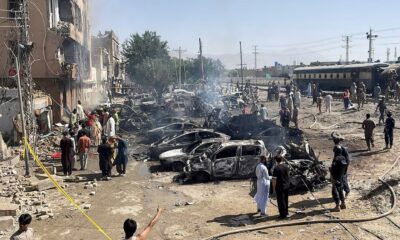
At least 24 killed in deadly train bombing in Pakistan’s Balochistan