
International Sports
From AI to Robot Dogs: What’s new at FIFA World Cup 2026
FIFA has also upgraded its semi-automated offside system to speed up decision-making.


The 2026 FIFA World Cup will not only be the largest tournament in football history, featuring 48 teams across the United States, Canada and Mexico, but also one of the most technologically advanced.
From smart match balls and artificial intelligence to robot security dogs and enhanced offside detection, FIFA is introducing a range of innovations designed to improve decision-making, security and the overall fan experience.
Smart Match Balls
The official World Cup match ball, Trionda, is equipped with a sensor chip that tracks its movement in real time. The technology collects data 500 times per second, providing officials with precise information about the ball’s position and movement.
FIFA says the system will support video assistant referees (VAR), particularly in offside situations and other key match decisions.
AI-Powered Player Tracking
Artificial intelligence will play a major role throughout the tournament. Players will be digitally scanned to create detailed 3D avatars that can help officials track movements more accurately during matches.
The technology is expected to improve semi-automated offside decisions while also allowing broadcasters to present offside reviews in a more realistic and engaging format for fans.
Referee Body Cameras
For the first time at a World Cup, referees will wear body cameras throughout all 104 matches. The footage will provide viewers with a unique pitch-level perspective, offering insights into the speed and intensity of the game from an official’s viewpoint.
Robot Dogs for Security
In Mexico, one of the tournament’s host nations, robotic “dog” units will be deployed as part of security operations around selected venues.
The four-legged robots are equipped with cameras and can enter potentially dangerous areas, transmitting live video to security personnel before officers move in. Officials say the technology is intended to improve safety and reduce risks for law enforcement personnel.
Enhanced Offside Technology
FIFA has also upgraded its semi-automated offside system to speed up decision-making.
The new technology will send real-time audio alerts directly to match officials when clear offside situations are detected, helping reduce delays and unnecessary passages of play.
FIFA hopes the system will improve accuracy while minimizing frustration for players and fans.
Mandatory Hydration Breaks
Player welfare is also receiving increased attention. Every World Cup match will include a three-minute hydration break in each half, regardless of weather conditions or stadium location.
Tournament organizers say the measure is designed to help players maintain peak performance during what is expected to be a demanding 39-day competition.
As football’s biggest event embraces new technology, World Cup 2026 promises to deliver a blend of tradition and innovation unlike any previous edition of the tournament.






International Sports
Lionel Messi bids tearful farewell to Argentina after 3-0 win over Benin
The Argentina captain was visibly emotional even before the match, wiping away tears as the team bus travelled through crowds of supporters on its way to the stadium.

Lionel Messi has brought his 21-year international career with Argentina to an emotional end, scoring in a 3-0 victory over Benin in front of a packed Monumental Stadium in Buenos Aires.
The 39-year-old, widely regarded as one of football’s greatest players, made his record-extending 208th appearance for Argentina and scored his 126th international goal from the penalty spot in the 71st minute.
Messi also provided the assist for Nicolás Otamendi to open the scoring, before Nico Paz added a third as Argentina secured a comfortable victory.
But the result was secondary to the emotional farewell for Messi, who received a huge ovation from around 85,000 supporters.
The Argentina captain was visibly emotional even before the match, wiping away tears as the team bus travelled through crowds of supporters on its way to the stadium.
Messi entered the pitch alongside his three children, while his wife, Antonela Roccuzzo, and mother, Celia Cuccittini, watched from the VIP area.
A giant Argentina shirt displaying the word “Gracias” above Messi’s famous No. 10 was placed on the pitch before kick-off.
The emotion continued during the national anthem, with Messi appearing tearful as Falklands War veteran Fabio Santana sang alongside a banner reading “The Malvinas are Argentine.”
The match was stopped in the 10th minute in honour of Messi’s iconic shirt number, with the entire stadium joining in a minute-long ovation.
Messi then produced the moment fans had hoped for, converting a penalty in the 71st minute to cap his final appearance on home soil.
‘I gave it my all’
After the final whistle, a spectacular drone show illuminated the sky above the Monumental, displaying Messi’s image and paying tribute to the eight-time Ballon d’Or winner.
Messi’s international farewell comes just over two months after Argentina lost the 2026 World Cup final to Spain in New Jersey.
Following that defeat, Messi said: “I gave it my all; I have nothing left to give, and besides, there are great young players coming up who deserve their chance.”
Earlier on Tuesday, Messi was awarded an honorary doctorate by the University of Buenos Aires during a ceremony at the Argentine Football Association headquarters.
Fans also gathered outside the AFA headquarters, unfurling a huge Argentine flag featuring Messi alongside the words “The joy of my life.”
Former Barcelona teammate Neymar paid tribute to Messi, saying the world should thank him for everything he had done for football.
Messi remains under contract with Inter Miami until 2028, although he has previously indicated that he could retire from football sooner than expected.
His Argentina career included the 2022 World Cup triumph, ending the country’s 36-year wait for a third world title, as well as Copa América victories in 2021 and 2024.
Argentina also finished runners-up at the 2014 and 2026 World Cups.
After more than two decades representing the national team, Messi’s final night in Buenos Aires provided an emotional farewell to one of the defining figures in Argentina’s football history.
International Sports
India clinch Asian Games cricket gold after beating Pakistan
The result marked India’s seventh consecutive T20 victory over Pakistan, extending their dominance in the format. India have now won 14 of the 18 T20 meetings between the two sides.
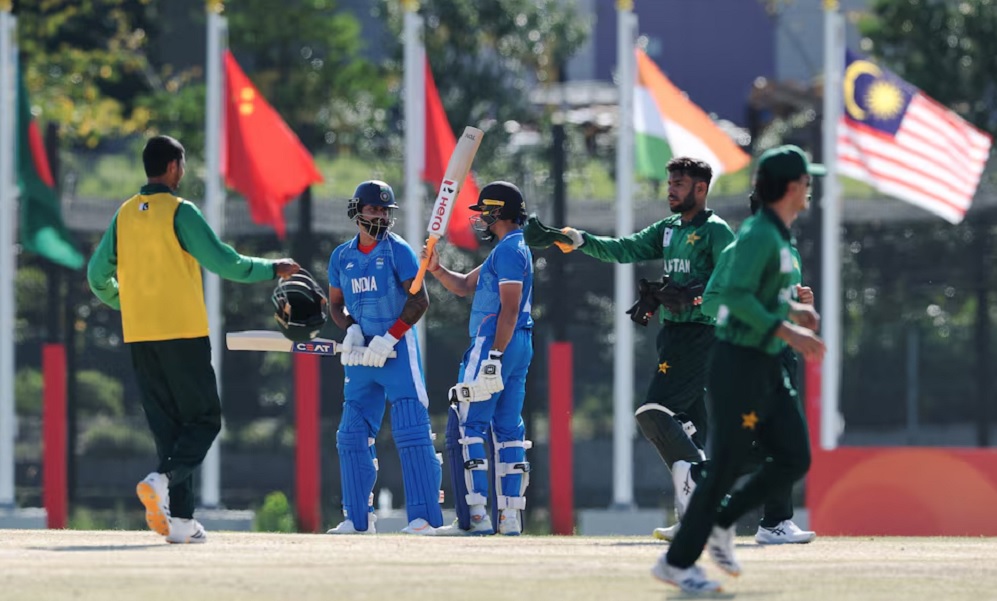
India have won the men’s T20 cricket gold medal at the Asian Games, beating Pakistan by 19 runs in the final in Japan.
India posted an imposing 211-6 from 20 overs, with Abhishek Sharma leading the charge with a blistering 61 off 28 balls.
Abhishek struck seven sixes and three fours, while Tilak Varma added an unbeaten 51 from just 22 deliveries. Shivam Dube also contributed 27 off 15 balls as India finished strongly.
Pakistan struggled early in their chase, falling to 39-3, before Hasan Nawaz launched a counterattack with 96 from 51 balls.
However, Pakistan could only reach 192-6, leaving India to secure a 19-run victory and another Asian Games gold medal.
The result marked India’s seventh consecutive T20 victory over Pakistan, extending their dominance in the format. India have now won 14 of the 18 T20 meetings between the two sides.
India had previously won gold when cricket returned to the Asian Games in China in 2022, making this their second consecutive men’s T20 gold medal.
The 2026 Asian Games in Aichi-Nagoya, Japan, conclude on Sunday, October 4, bringing 16 days of competition to a close.
The Games officially ran from September 19 to October 4, with the closing ceremony taking place in Nagoya on the final day.
The next edition of the Asian Games is scheduled to be held in Qatar in 2030.
International Sports
Afghanistan to face Pakistan, India and Australia at 2027 Cricket World Cup
The Afghan side will begin its World Cup campaign against Pakistan on October 8 in Tshwane of South Africa.
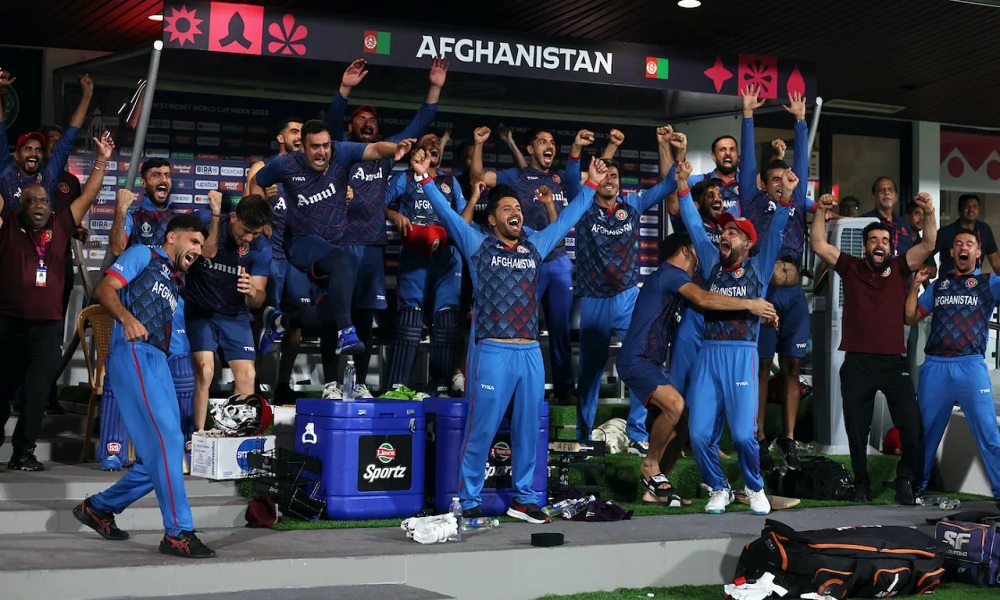
Afghanistan will face Pakistan, Zimbabwe, India and Australia in the group stage of the 2027 Men’s Cricket World Cup, after the International Cricket Council (ICC) announced the tournament schedule.
Afghanistan has been drawn in Group A alongside defending champions Australia, India, Pakistan, Zimbabwe and one qualifier.
The Afghan side will begin its World Cup campaign against Pakistan on October 8 in Tshwane of South Africa.
Afghanistan will then face Zimbabwe on October 11 in Bulawayo of Zimbabwe, followed by a highly anticipated clash with India on October 14 in Tshwane.
The team’s fourth group-stage match will be against Australia on October 18 in KuGompo City of South Africa, before Afghanistan concludes its group campaign against Qualifier A on October 21, also in KuGompo City.
The top three teams from each group will advance to the Super 7 phase, along with the fourth-placed team that has the better record between the two groups.
The Super 7 phase will be played from October 25 to November 14, with the seven teams starting the phase without carrying any points from the group stage. Each team will play six matches.
The top four teams in the Super 7 standings will advance to the semi-finals, scheduled for November 17 and 18 in Cape Town and Tshwane respectively. The final will be played in Johannesburg on November 21.
The 2027 World Cup will be jointly hosted by South Africa, Zimbabwe and Namibia, with the tournament beginning on October 2 with a three-team Super Series in Windhoek.
Afghanistan is among the 12 teams already placed in the group stage. The remaining four World Cup places will be decided through the Cricket World Cup Qualifier, with the qualifier winner advancing directly to the group stage and the other three teams competing in the Super Series for the final spot.
The group stage officially begins on October 7, with Australia facing India in Cape Town in a repeat of the 2023 World Cup final.


Saar: Review of SCO meeting in Tajikistan

Russian troops arrive in Uzbekistan for joint military exercises

Government assesses 115 private hospitals in Kabul, only two earn top grade

Arman FC begin second half of Afghanistan Champions League with 2-0 win

Pakistan FM urges IEA not to allow Afghan soil to be used against Pakistan

Cricket Bonanza: Afghanistan set for packed international schedule

Afghanistan says 28 killed, 32 captured in Nuristan operation

Silk Road highway in Wakhan corridor now reaches the China border

CNN, MS NOW and Politico sue Trump, challenging White House ban

Afghanistan on climate front line as Kabul faces groundwater warning
Saar: Review of SCO meeting in Tajikistan

Trump blames migrants for violence in France as US midterms loom

Tahawol: US–Iran tensions escalate with mutual threats

Saar: IEA–UNAMA relations: five years under review

Iran calls for extending Herat railway to Uzbekistan border
-

 Sport2 days ago
Afghanistan reach Brazil futsal tournament final after beating Cape Verde 4-2
-
 Latest News4 days ago
Nearly 19.2 million Afghans face winter hunger as child malnutrition set to surge, UN agencies warn
-

 Regional4 days ago
Trump says US may strike Iran’s ‘Pickaxe Mountain’ nuclear facility
-
 Business4 days ago
Regional partners seek progress on Trans-Afghan corridor and CASA railway
-

 World5 days ago
Trump says he is talking to Russia and China about denuclearization
-
 Latest News3 days ago
Afghanistan’s hunger crisis deepens as 16 million face food insecurity ahead of winter
-

 Sport4 days ago
Afghanistan Champions League: Abu Muslim Farah beat Sarsabz Yashlar 3-1
-
 Latest News4 days ago
Lavrov warns of western-backed ‘color revolutions,’ raises concerns over Afghanistan’s regional security