
Regional
Khaleda Zia, Bangladesh’s first female prime minister, dies at 80
She lost to Hasina in the 1996 general election but came back five years later with a surprise landslide win.

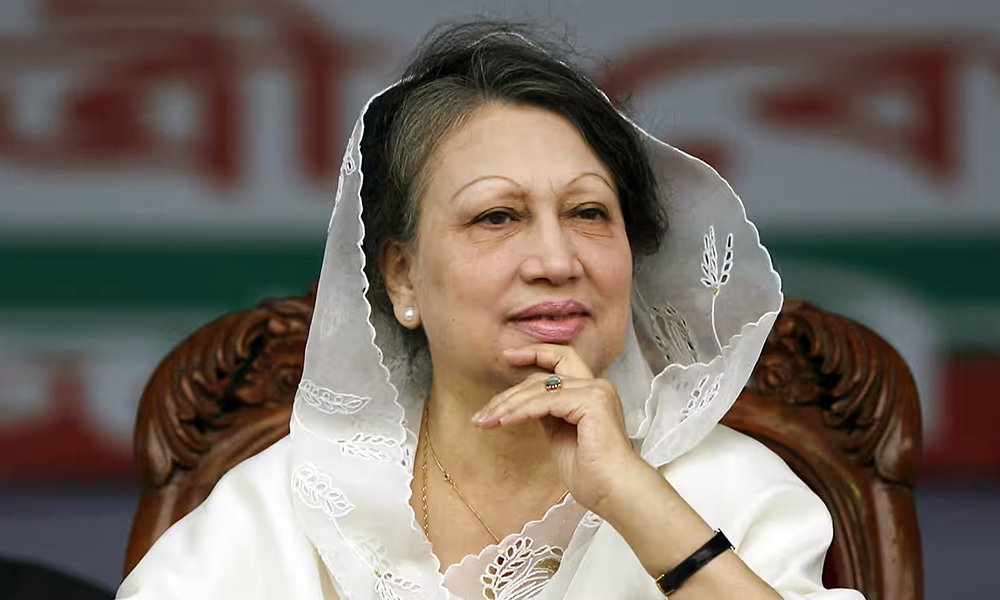
Khaleda Zia, who became Bangladesh’s first female prime minister in 1991 and went on to develop a bitter rivalry with Sheikh Hasina as they spent decades trading power, died on Tuesday after a long illness. She was 80, Reuters reported.
Her opposition Bangladesh Nationalist Party (BNP) said that she died after a prolonged illness. She had advanced cirrhosis of the liver, arthritis, diabetes, and chest and heart problems, her doctors said.
She went to London for medical treatment in early 2025, staying for four months before returning home.
Though Khaleda had been out of power since 2006 and had spent several years in jail or under house arrest, she and her centre-right BNP continued to command much support.
The BNP is seen as the frontrunner to win the parliamentary election slated to take place in February. Her son and acting chairman of the party, Tarique Rahman, 60, returned to the country last week from nearly 17 years in self-exile and is widely seen as a strong candidate to become prime minister.
Since August 2024, after a student-led uprising led to the ouster of Hasina, Bangladesh has been run by an interim government headed by Muhammad Yunus, the Nobel peace laureate and microfinance pioneer.
In November, Hasina was sentenced to death in absentia for her deadly crackdown on the student protests.
Known by her first name, Khaleda was described as shy and devoted to raising her two sons until her husband, military leader and then-President Ziaur Rahman, was assassinated in an attempted army coup in 1981.
Three years later she became the head of the BNP, which her husband had founded, and vowed to deliver on his aim of “liberating Bangladesh from poverty and economic backwardness”.
She joined hands with Hasina, daughter of Bangladesh’s founding father and head of the Awami League party, to lead a popular uprising for democracy that toppled military ruler Hossain Mohammad Ershad in 1990.
But their cooperation did not last long. Their bitter rivalry would lead to the two being dubbed “the battling Begums” – a phrase that uses an Urdu honorific for prominent women.
Supporters saw her as polite and traditional yet quietly stylish, someone who chose her words carefully. But they also viewed her as a bold, uncompromising leader when it came to defending her party and confronting her rivals, read the report.
Hasina, by contrast, was far more outspoken and assertive. Their opposite personalities helped fuel the rivalry that dominated Bangladesh’s politics for decades.
In 1991, Bangladesh held what was hailed as its first free election. Khaleda won a surprise victory over Hasina, having gained the support of the country’s largest Islamic party, Jamaat-e-Islami.
In doing so, Khaleda became Bangladesh’s first female prime minister and only the second woman to lead a democratic government of a mainly Muslim nation after Benazir Bhutto, elected to lead Pakistan three years earlier.
Khaleda replaced the presidential system with a parliamentary one, so that power rested with the prime minister. She also lifted restrictions on foreign investment and made primary education compulsory and free.
She lost to Hasina in the 1996 general election but came back five years later with a surprise landslide win.
Her second term was marred by the rise of Islamist militants and allegations of corruption.
In 2004, a rally that Hasina was addressing was hit by grenades. Hasina survived but over 20 people were killed and more than 500 wounded. Khaleda’s government and its Islamic allies were widely blamed.
In 2018, after Hasina had reclaimed Bangladesh’s highest office, Rahman was tried in absentia and sentenced to life for the attack. The BNP denounced the trial as politically motivated.
Although Khaleda later clamped down on Islamist radical groups, her second stint as prime minister ended in 2006 when an army-backed interim government took power amid political instability and street violence.
The interim government jailed both Khaleda and Hasina on charges of corruption and abuse of power for about a year before they were both released ahead of a general election in 2008, Reuters reported.
Khaleda never regained power. With the BNP boycotting the 2014 and 2024 elections, her vitriolic feud with Hasina continued to dominate Bangladeshi politics.
Tension between their two parties often led to strikes, violence and deaths, impeding the economic development of Bangladesh, a poverty-stricken country of about 175 million that is low-lying and prone to devastating floods.
In 2018, Khaleda, Rahman and aides were convicted of stealing some $250,000 in foreign donations received by an orphanage trust set up when she was last prime minister – charges that she said were part of a plot to keep her and her family out of politics.
She was jailed but moved to house arrest in March 2020 on humanitarian grounds as her health deteriorated.
Khaleda was freed from house arrest in August 2024 after Hasina’s ouster.
In early 2025, Khaleda and Rahman were acquitted by Bangladesh’s Supreme Court in the corruption case that resulted in the 2018 jail sentences. Rahman had been acquitted of the 2004 grenade attack on Hasina a month earlier.




Regional
US pauses strikes on Iran as diplomatic efforts gather pace amid regional tensions
Despite the diplomatic push, violence has spread beyond the Gulf.
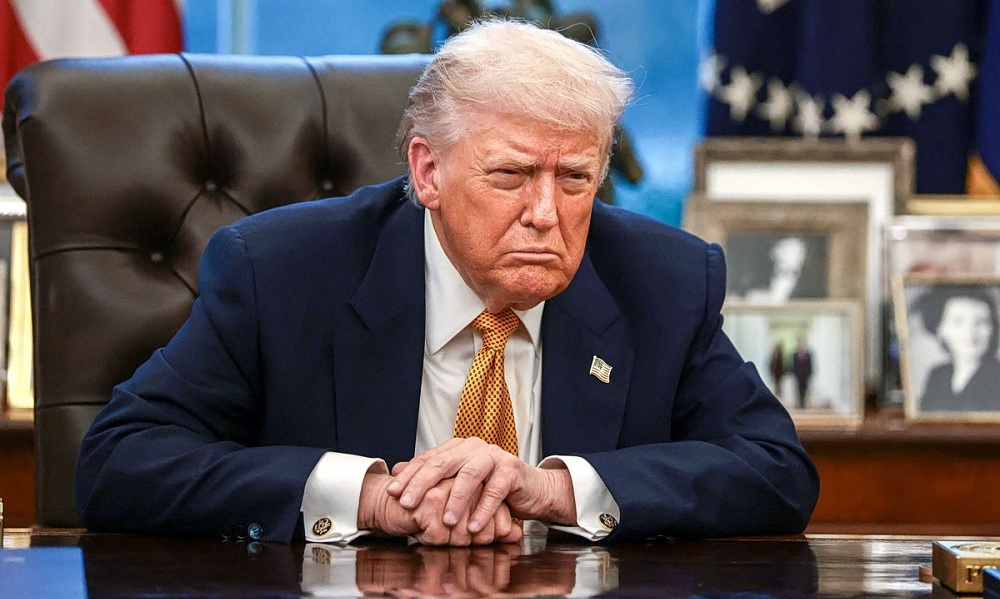
The United States has paused military strikes on Iran as diplomatic efforts to prevent a wider regional conflict gain momentum, although tensions remain high across the Middle East.
U.S. President Donald Trump said Washington is continuing talks with Tehran and expressed optimism that Iranian officials are becoming “more serious” about negotiations after weeks of escalating hostilities.
The pause in military action follows nearly two weeks of intensified fighting that raised fears of a broader regional war. According to reports, the White House opted to prioritize diplomacy while maintaining military pressure through a continued U.S. naval presence in the region.
Despite the diplomatic push, violence has spread beyond the Gulf.
Yemen’s Houthi movement has launched attacks on Saudi oil facilities along the Red Sea coast, threatening key energy infrastructure and increasing concerns over the security of international shipping routes. The renewed attacks have also raised fears of further disruption to global oil supplies.
Meanwhile, Iran has accused Ukraine of carrying out an attack on one of its commercial vessels in the Caspian Sea and has summoned Ukrainian diplomats to protest the incident, adding another layer of tension to the already volatile regional situation.
Diplomatic efforts are continuing through regional mediators as both Washington and Tehran seek to avoid a return to full-scale conflict. However, analysts warn that the situation remains fragile, with any new military incident capable of derailing negotiations.
The conflict has already affected global energy markets, with continued uncertainty surrounding shipping through the Strait of Hormuz—one of the world’s most important oil transit routes—keeping governments and investors on alert.
Regional
Modi’s education minister resigns in major win for Indian youth protesters
The minister announced his resignation on X just as police fired tear gas to scatter young protesters in New Delhi, hours before their leaders were set to hold another round of talks with ministers.
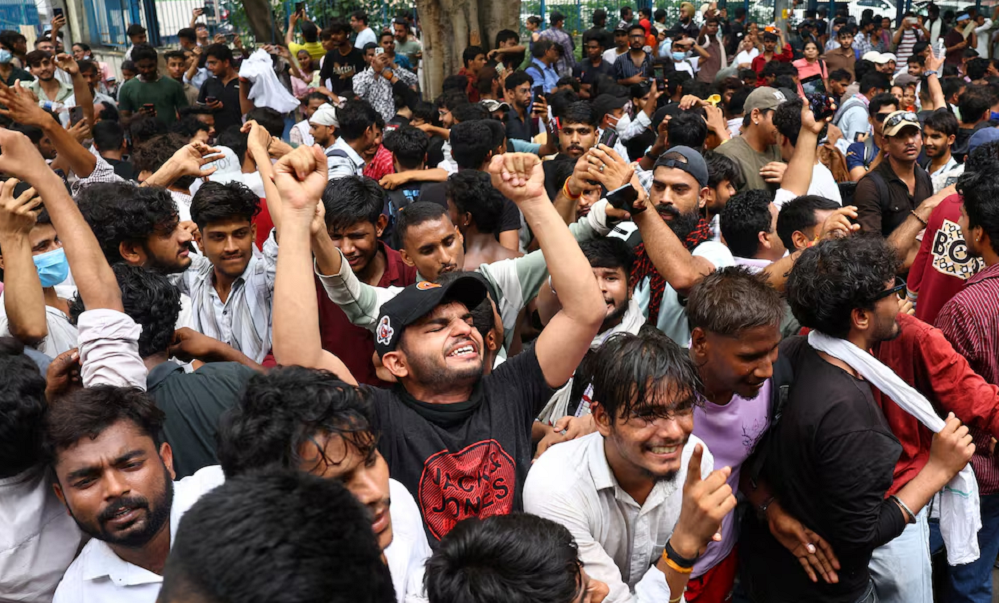
India’s education minister resigned on Saturday, handing a major victory to youth protesters who had demanded he quit to take responsibility for examination paper leaks, and who erupted in celebration on news of his departure.
“We have done it,” said Abhijeet Dipke, founder of the Cockroach Janta Party that led the protests, to loud cheers at the Jantar Mantar protest site in New Delhi, Reuters reported.
“Considering the situation that has arisen at Jantar Mantar and across the country, so that anti-national forces do not take advantage of this situation … I have sent my resignation letter to the Prime Minister,” Education Minister Dharmendra Pradhan wrote in his post.
“I deeply respect the aspirations, feelings, and legitimate expectations of the country’s youth.”
The minister announced his resignation on X just as police fired tear gas to scatter young protesters in New Delhi, hours before their leaders were set to hold another round of talks with ministers.
Pradhan, 57, is a senior leader of Modi’s Bharatiya Janata Party and has been regarded as a rising figure, and even mentioned in the past as a potential BJP leader.
A minister since Modi first took office in 2014, he has held the petroleum and natural gas, steel, skill development and education portfolios, becoming education minister in 2021. His father was a veteran BJP leader and served as a junior federal minister between 1998 and 2004.
Pradhan’s resignation is “a victory of peace, patience & perseverance,” activist Sonam Wangchuk, who was on a hunger strike for 26 days to support the youngster’s movement, wrote on X.
CELEBRATIONS AT PROTEST SITE
Youngsters at the Jantar Mantar site shouted “Jai Hind”, a patriotic slogan meaning “Victory to India”, as the national anthem played on loud speakers and sweets were distributed among the crowd. At least 1,000 police officials stood nearby guarding the area, according to Reuters journalists at the site.
The leak of the high-profile medical college entrance test paper in May, which led to the cancellation of results and the government ordering a retest, affected 2 million young people.
Supporters of India’s youth-led “cockroach” movement had been protesting since June, but anger boiled over since police on Monday injured dozens of students, launching baton charges and firing tear gas to deter crowds of protesters marching on parliament.
The protests also reflect anger over job scarcity, corruption and government accountability.
“Young generation is here. This is win for the constitution,” protester Tluanga Ralte said, walking with a copy of the Indian constitution at the protest site after the minister’s resignation. “We are not a lazy generation.”
Federal authorities even on Saturday restricted access to the internet and to 18 metro stations to try to limit the protest in the capital, the latest day of such restrictions.
Pradhan is only the second minister to resign following a scandal since Modi came to power in 2014. M.J. Akbar resigned as junior foreign minister in October 2018 to fight allegations of sexual harassment made by more than a dozen women during India’s #MeToo movement.
Students, youth activists and opposition supporters had in recent days staged protests in the states of West Bengal, Telangana, Karnataka and Tamil Nadu, holding placards demanding Pradhan’s resignation and boycotting classes in some places.
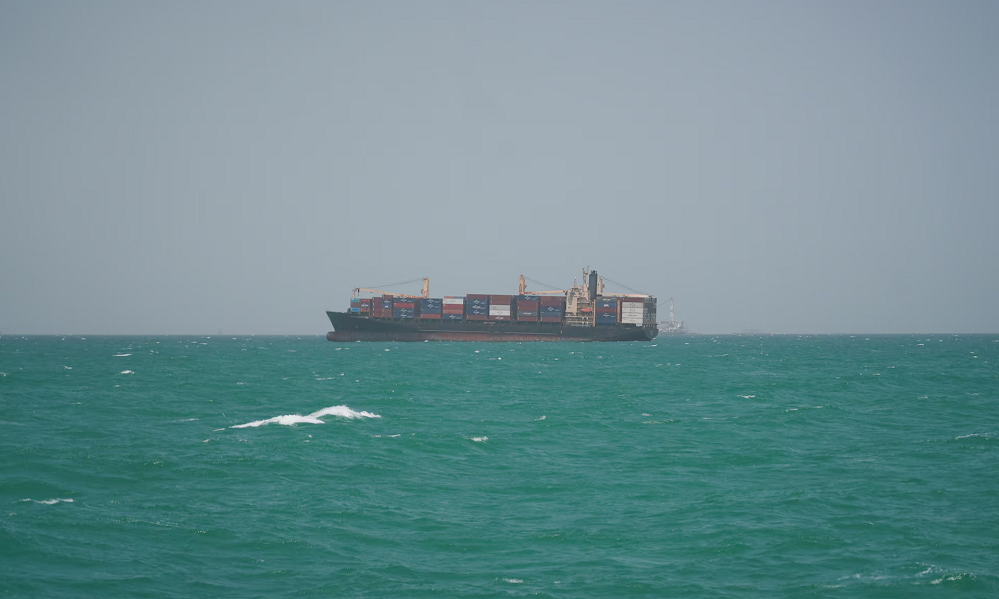
Yemen’s Houthi militia attacked two Saudi Arabian oil tankers in a military operation, the group said on Thursday, and a Saudi news agency later confirmed one of the two vessels was ablaze after an assault while sailing in the Red Sea.
The Saudi Arabian state news agency SPA, citing an official source at the General Transport Authority, said an attack caused a fire on the bow of the tanker Encelia but all crew members were safe. SPA did not say who had targeted the vessel.Authorities have secured the vessel and its crew and taken measures to protect the marine environment, describing the attack as a violation of international law, SPA reported, citing the source, Reuters reported.
In their statement, the Houthis said they attacked two tankers, the Encelia and Layla, saying the vessels had violated a naval blockade imposed by the Iran-aligned group on Saudi Arabia in the Red Sea. The Houthis said they targeted the tankers with a number of ballistic and cruise missiles as well as drones.
A maritime security source said earlier on Thursday that the Encelia had transmitted a distress call via VHF radio, reporting it had been struck by a missile while operating at the outer port limits of Saudi Arabia’s Jizan, in the Red Sea, and was on fire.
The British maritime risk-management group Vanguard also said the Saudi-flagged tanker Encelia was struck by an unknown projectile on its starboard side about 70 nautical miles (130 km) southwest of Saudi Arabia’s Al Shuqaiq at 2000 GMT.
The United Kingdom Maritime Trade Operations agency (UKMTO) also said it had received a report of an incident in the same area, saying the master of a tanker reported being struck by an unknown projectile that caused a fire onboard, which the crew were fighting. UKMTO said no casualties or environmental impact had been reported.
It was not immediately clear whether the UKMTO report referred to the Encelia, though the location and details matched the Vanguard report.
Vanguard said the Houthis had reportedly claimed the attack, as well as saying they had hit a second vessel, the Layla, which it said remained unconfirmed.
In the same statement announcing their attack on the two tankers, the Houthis also said they had forced around 10 ships to retreat and return. Reuters could not immediately verify this account.
Five tankers changed course in the Red Sea on Wednesday, with two signalling the Suez Canal as their new destination after the Houthis warned ships to avoid Saudi ports, ship-tracking data showed.


Tahawol: Trump halting major Iran escalation

Saar: Afghanistan-Uzbekistan economic ties

Afghan team arrives in England for training camp ahead of Ireland ODI series

Afghanistan can link South and Central Asia through data transit: Baradar

Afghanistan, Uzbekistan discuss expanding economic, trade and investment cooperation

India offers 1,000 online scholarships for Afghan students for 2026-27 academic year

Afghanistan eyes direct Basmati rice imports from India amid tensions with Pakistan

Cricket world pays tribute to Afghanistan fast bowler Shapoor Zadran

Turkey spent over $120 million to prepare airport for Qatar-donated U.S. presidential aircraft

Afghanistan, Uzbekistan set for friendly cricket clash in Khost
Tahawol: Trump halting major Iran escalation
Saar: Afghanistan-Uzbekistan economic ties

Tahawol: New developments ahead in the Middle East discussed

Saar: Rising tensions between Kabul and Islamabad discussed

Tawsia: Factors behind rising fuel prices in Afghanistan discussed
-

 Latest News4 days ago
Germany defends Afghan deportation policy after fatal Trier knife attack
-
 Sport4 days ago
FIFA updates world rankings; Spain climbs to No. 1, Afghanistan ranked 171st
-
 Latest News4 days ago
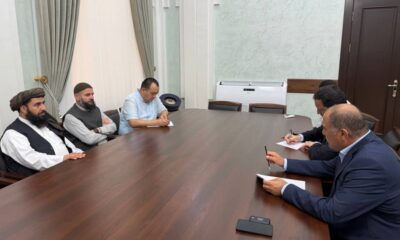
Afghanistan and Uzbekistan advance railway cooperation, discuss Trans-Afghan project
-

 World5 days ago
War in Iran has cost the US $37.5 billion so far, Pentagon says
-
 Latest News4 days ago
Amnesty International calls for probe into Pakistan airstrike on Kabul rehabilitation centre
-
 Business4 days ago
Pakistan’s trade deficit with neighbours surges to nearly $16 billion as exports to Afghanistan plunge
-

 Sport4 days ago
Rahmat Shah Zurmati appointed Afghanistan’s new Test and ODI captain
-
 Latest News2 days ago
Five armed men killed while attempting to cross Durand Line into Badakhshan