
Latest News
Over 5.2 million Afghans return from Iran, Pakistan in 2025; IFRC warns of growing crisis
According to the Afghan Red Crescent Society (ARCS), the highest daily influx of returnees from Pakistan was recorded in November.

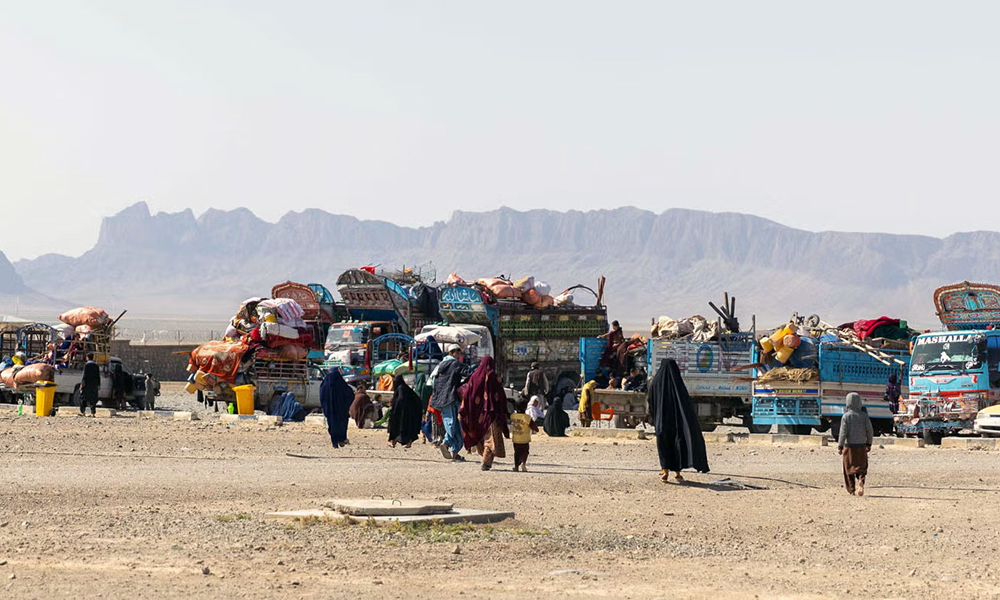
More than 5.2 million Afghans have returned home from neighbouring Iran and Pakistan since the beginning of 2025, placing unprecedented strain on an already fragile humanitarian situation, the International Federation of Red Cross and Red Crescent Societies (IFRC) said in a new report.
According to IFRC, the massive wave of returnees and deportees between January and the end of November 2025 represents one of the largest population movements in Afghanistan’s recent history. Of the total, over 3.6 million Afghans returned from Iran alone, including at least 1.2 million who were forcibly deported.
The report noted that the bulk of returns began after April 1, reflecting intensified policy enforcement in host countries. Despite the onset of winter—traditionally a period of reduced movement—return numbers have remained high, particularly from Iran, indicating that protection concerns and policy pressures are outweighing seasonal constraints.
Returns from Pakistan
Citing data from the International Organization for Migration (IOM), IFRC said that between January 1 and November 30, 2025, an estimated 804,830 Afghans returned from Pakistan, with around 116,100—about 14 percent—deported.
Pakistan launched the second phase of its Illegal Foreigners Repatriation Plan (IFRP) in April 2025, targeting undocumented Afghans and holders of Afghan Citizen Cards. In July, the plan was expanded to include Proof of Registration card holders, and the end of the grace period on August 31 further heightened fear and uncertainty among Afghan communities.
According to the Afghan Red Crescent Society (ARCS), the highest daily influx of returnees from Pakistan was recorded in November. Most crossed through the Torkham crossing in Nangarhar and Spin Boldak in Kandahar, with smaller numbers entering through Angur Ada in Paktika and unofficial routes in Helmand.
Sustained Returns from Iran
IFRC reported that returns from Iran remained substantial throughout 2025, accounting for nearly 65 percent of all returnees recorded during the year. More than 1.8 million Afghans returned from Iran, arriving mainly through key border points such as Islam Qala and Milak–Zaranj.
The peak of returns occurred mid-year, driven by the expiry of temporary residency arrangements and intensified enforcement measures. Many returnees arrived with limited belongings, placing immediate pressure on reception facilities and essential services in border provinces.
Although daily crossings declined after the mid-year peak, IFRC said returns continued at scale through late 2025, compounding Afghanistan’s humanitarian needs.
Concerns in Tajikistan
The report also raised alarm over the situation in Tajikistan, where borders remain open only to Afghans holding valid passports and visas. At the same time, IFRC noted that arbitrary deportations—including of recognized refugees and asylum-seekers—have been reported, fueling anxiety and distress within Afghan communities.
IFRC warned that the surge in returns has placed severe pressure on host communities inside Afghanistan, many of which are struggling with poverty, limited shelter, food insecurity, and inadequate access to healthcare and protection services.
The organization urged sustained international support to address the growing humanitarian emergency and to ensure safe, dignified, and voluntary returns for Afghan migrants.
In December 2025, Islamic Emirate of Afghanistan said that 2.8 million Afghan migrants and citizens returned during the year. Their repatriation was efficiently managed, with essential services provided and residential settlements being distributed to support returnees.
These achievements underscore the IEA’s efforts to advance diplomacy, strengthen security, manage natural resources, support vulnerable communities, and facilitate the safe return of Afghan migrants.








The Asian Football Confederation (AFC) has confirmed the postponement of all second-leg knockout matches in the West Region of its club competitions, extending an earlier decision to delay first-leg fixtures amid ongoing regional instability.
The governing body announced Tuesday that the second-leg matches originally scheduled between March 9 and 11, 2026, will be postponed until further notice. The affected fixtures include the Round of 16 second legs in the AFC Champions League Elite, as well as the quarter-final second legs in the AFC Champions League Two and the AFC Challenge League involving West Region clubs.
The move follows the AFC’s March 1 decision to postpone the first-leg knockout matches in the West Region, citing safety and security concerns.
The confederation stated that the wellbeing of players, officials, supporters and commercial partners remains its top priority. The AFC also stated that updated schedules will be announced in due course.
Teams Affected
In the AFC Champions League Elite Round of 16 (West Region), the postponed second legs involve leading clubs from Saudi Arabia, Qatar, the United Arab Emirates, Iran, and Uzbekistan, including:
- Al Hilal SFC (Saudi Arabia)
- Al Nassr FC (Saudi Arabia)
- Al Sadd SC (Qatar)
- Al Duhail SC (Qatar)
- Shabab Al Ahli (United Arab Emirates)
- Persepolis FC (Iran)
- Sepahan SC (Iran)
- Navbahor Namangan (Uzbekistan)
In the AFC Champions League Two and AFC Challenge League quarter-finals (West Region), postponed ties involve clubs such as:
- Al Kuwait SC (Kuwait)
- Al Wehdat SC (Jordan)
- Al Riffa SC (Bahrain)
- Istiklol Dushanbe (Tajikistan)
(Final match pairings are subject to AFC confirmation once new dates are set.)
The AFC Champions League Elite represents the top tier of Asian club football following the competition’s restructuring, while the AFC Champions League Two serves as the second-tier tournament.
The AFC Challenge League provides continental competition opportunities for emerging football nations.
The West Region encompasses clubs from West and Central Asia, while East Region teams — including clubs from Japan, South Korea, China, Thailand, and Australia — remain unaffected.
The AFC confirmed that all East Region matches across its competitions will proceed as scheduled.
Latest News
Bayat Foundation expands Ramadan aid to Maidan Wardak families
In addition to emergency food aid, the Bayat Foundation has implemented long-term development projects across Afghanistan, including the construction of schools, health centers, and mosques, as well as drilling deep-water wells to improve access to safe drinking water in underserved communities.
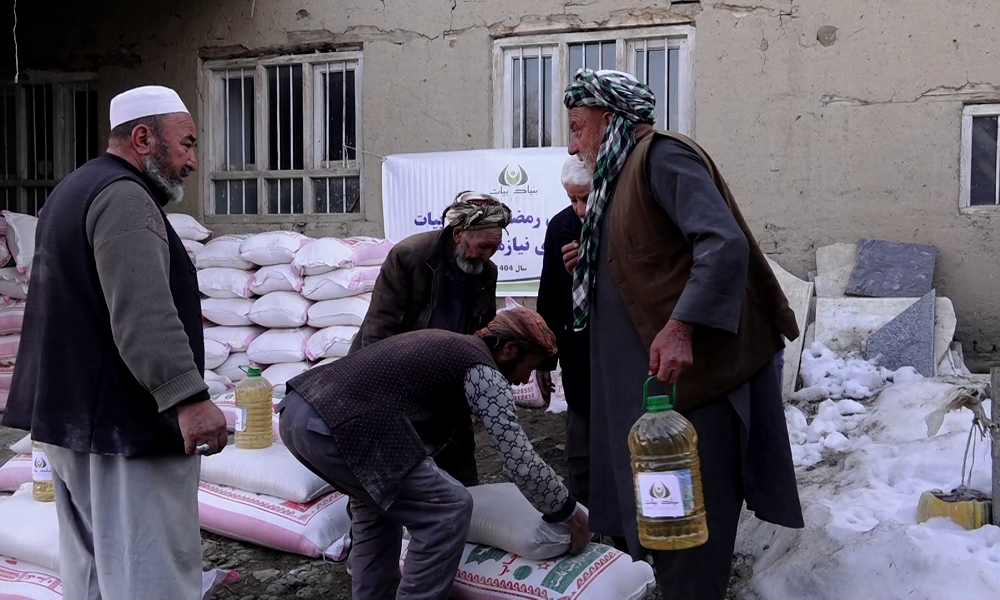
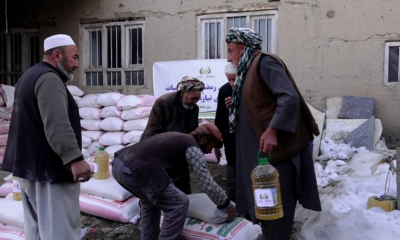
The Bayat Foundation has distributed food packages to dozens of needy families in Maidan Wardak province as part of its ongoing nationwide Ramadan assistance campaign.
Foundation officials said the packages — which included flour, rice, and cooking oil — were delivered following a needs assessment to ensure support reached the most deserving households, including displaced and low-income families struggling to meet basic needs.
Haji Mohammad Ismail, Deputy of the Bayat Foundation, said the initiative builds on similar Ramadan efforts already carried out in provinces. “We are pleased to extend assistance today to deserving and displaced families in Maidan Wardak,” he said, emphasizing the foundation’s commitment to continuing support throughout the holy month.
Afghanistan continues to face severe economic hardship, with high unemployment and reduced income opportunities pushing many families into poverty.
Years of conflict, natural disasters, and economic instability have left millions reliant on humanitarian assistance, particularly during Ramadan, when food insecurity becomes even more acute for vulnerable households.
Aid recipients expressed gratitude for the support and urged other charitable organizations and donors to expand assistance to communities in need. “We sincerely thank the Bayat Foundation for this support,” one beneficiary said.
In addition to emergency food aid, the Bayat Foundation has implemented long-term development projects across Afghanistan, including the construction of schools, health centers, and mosques, as well as drilling deep-water wells to improve access to safe drinking water in underserved communities.
International Sports
Ronaldo’s private jet flies out of Saudi Arabia following US Embassy drone strike in Riyadh

Football superstar Cristiano Ronaldo is thought to have left Saudi Arabia amid rising security concerns following a drone strike on the United States Embassy Riyadh on Tuesday.
Saudi authorities confirmed that two drones struck the embassy compound in the capital, causing minor structural damage and a small fire.
Officials said there were no casualties, but security measures were immediately heightened across the city. The embassy issued safety advisories to U.S. citizens, urging caution and limiting movement near diplomatic facilities.
Flight tracking data indicated that Ronaldo’s private jet departed Riyadh shortly after the incident. While it has not been officially confirmed whether the Portuguese star and his family were on board, the timing of the departure has fueled speculation that the move was prompted by escalating regional tensions.
Ronaldo, who currently plays for Al-Nassr FC, has been based in Saudi Arabia since joining the Saudi Pro League. Neither the player nor his representatives have publicly commented on the reported departure.
The embassy attack comes amid broader instability in the region, with increased drone and missile activity targeting diplomatic and strategic sites.
Saudi security forces remain on high alert as authorities investigate the source of the strike and assess the wider implications for regional stability.


FIFA unveils official tournament poster to mark 100 days until World Cup kicks off

Tahawol: Discussion on ongoing conflicts between Afghanistan and Pakistan

Asian Football Confederation postpones 2nd-leg knockout ties in West Region

Saar: Ongoing retaliatory operations against Pakistan discussed

Bayat Foundation expands Ramadan aid to Maidan Wardak families

Pakistani military jet downed in Afghanistan’s Jalalabad, pilot captured alive

Afghan Air Force conducts airstrikes in Islamabad, other cities

IEA releases three Pakistani soldiers to mark Ramadan

Afghanistan’s Chief of Armed Forces underscores readiness and equipment for national defense

Afghanistan welcomes investment and technology partnerships with India
Tahawol: Discussion on ongoing conflicts between Afghanistan and Pakistan
Saar: Ongoing retaliatory operations against Pakistan discussed

Saar: Afghan forces’ operation against Pakistani military

Tahawol: Afghanistan and the Region Under the Shadow of Rising Tensions

Tahawol: Joint Israeli-US attacks on Iran discussed
-
 Latest News4 days ago
Pakistani military jet downed in Afghanistan’s Jalalabad, pilot captured alive
-
 Latest News5 days ago
Afghan Air Force conducts airstrikes in Islamabad, other cities
-

 Latest News2 days ago
Afghan air force strikes key Pakistani military installations in retaliatory operation
-

 Latest News5 days ago
IEA: Special circle in Pakistan has launched mission to destabilize region
-

 Latest News5 days ago
Turkey launches initiative to diffuse Afghanistan-Pakistan tension
-

 Latest News5 days ago
Afghans say they are united against Pakistan aggression
-
 Latest News4 days ago
Afghan forces conduct fresh airstrikes on Pakistani military targets
-
 World3 days ago
US lawmakers, world leaders react to death of Ayatollah Ali Khamenei after Iran strikes