
Business
Pakistan’s Airspace Opened For Afghan Flights

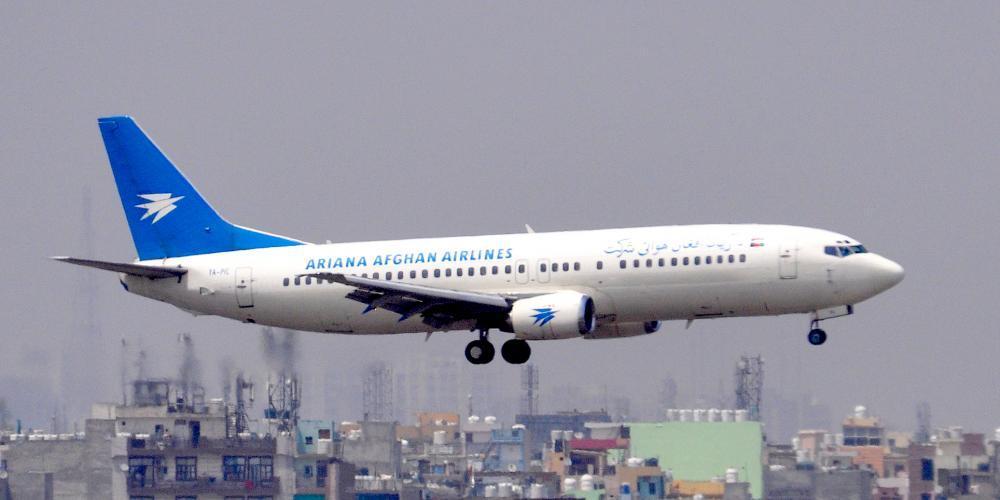
 Pakistan opened its airspace for all civilian traffic including the Afghan flights after over four months of closure on Tuesday.
The Ministry of Transport says that though alternative ways were used for the flights from Afghanistan to India, Afghanistan lost 27 million dollars due to the closure of Pakistan’s airspace.
“We lost more than 27 million dollars. We are trying to have alternative ways in addition to Pakistan’s airspace,” said Mahdi Rohani, the Spokesperson of Transport Ministry.
Meanwhile, the Afghanistan Chamber of Commerce and Investment (ACCI) welcomes the opening of Pakistan’s airspace and says that it will increase the export of Afghan fruits through this way.
“We hope the decision of Pakistan to be permanent otherwise it would not be helpful to the private sector,” said Shafiqullah Attayi, the Deputy of the ACCI.
At the same time, the economic experts stress that the opening of Pakistan’s airspace to Afghanistan benefits both countries.
They believe that good relations between the two countries can result in the region’s economic growth.
Though Pakistan’s airspace has opened, the flight tickets’ price has not changed yet.
However, the officials of private companies say that the price of flight tickets will reduce and the number of passengers will increase after the 18th of July.







Business
Iranian private sector delegation arrives in Kabul to boost trade and investment cooperation
The Iranian delegation is expected to continue consultations with a wide range of Afghan business representatives and private sector stakeholders during its seven-day stay.
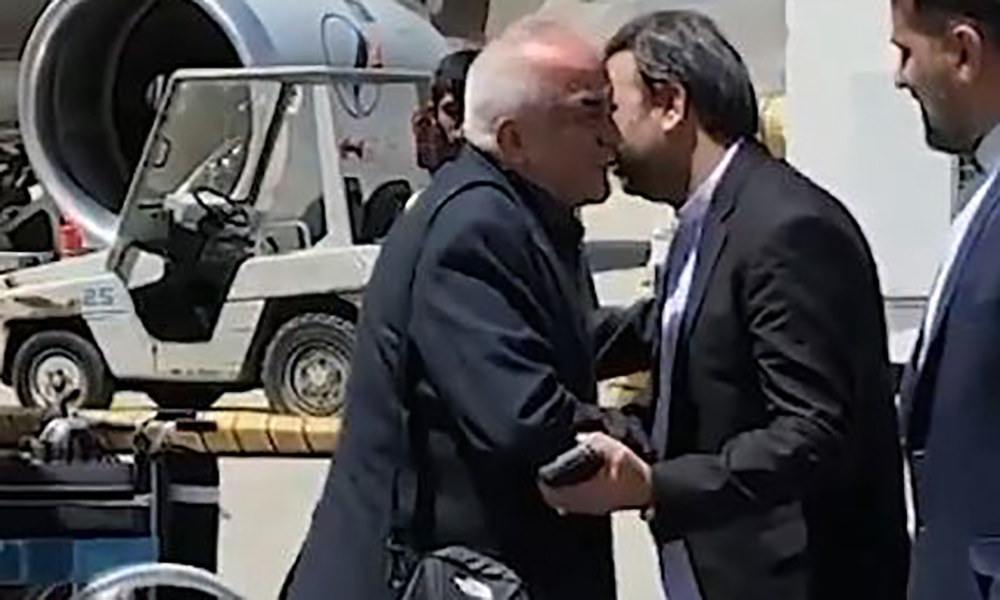
A high-level Iranian private sector delegation, led by the head of the Iran–Afghanistan Joint Chamber of Commerce, has arrived in Kabul for a week-long visit aimed at expanding trade and investment cooperation between Afghanistan and Iran.
According to the Iranian Embassy in Kabul, the delegation will hold a series of meetings with Afghan business leaders and officials in Kabul before traveling to Mazar-i-Sharif. Discussions will focus on strengthening bilateral trade relations, increasing trade volumes, and exploring new investment opportunities in key economic sectors.
Officials from the Afghanistan Chamber of Commerce and Investment (ACCI) said talks with the visiting delegation have already centered on enhancing commercial cooperation, supporting private sector partnerships, and increasing Afghan exports to Iranian markets.
Sayed Karim Hashimi, head of the ACCI, highlighted Afghanistan’s growing investment potential, stating that the country currently offers favorable conditions and significant opportunities for regional and international investors.
Meanwhile, Iran’s ambassador to Kabul said the delegation will assess existing trade-related challenges and work with Afghan counterparts to identify practical measures for improving economic cooperation and facilitating cross-border commerce.
Afghan trade officials noted that one of the primary objectives of the visit is to secure greater market access for Afghan products in Iran while laying the groundwork for stronger long-term economic partnerships between the two neighboring countries.
The Iranian delegation is expected to continue consultations with a wide range of Afghan business representatives and private sector stakeholders during its seven-day stay.
Business
Afghanistan highlights investment opportunities at China–South Asia Cooperation Forum
The China–South Asia Cooperation Forum brings together government officials, diplomats, and experts to discuss trade, economic integration, and regional development.
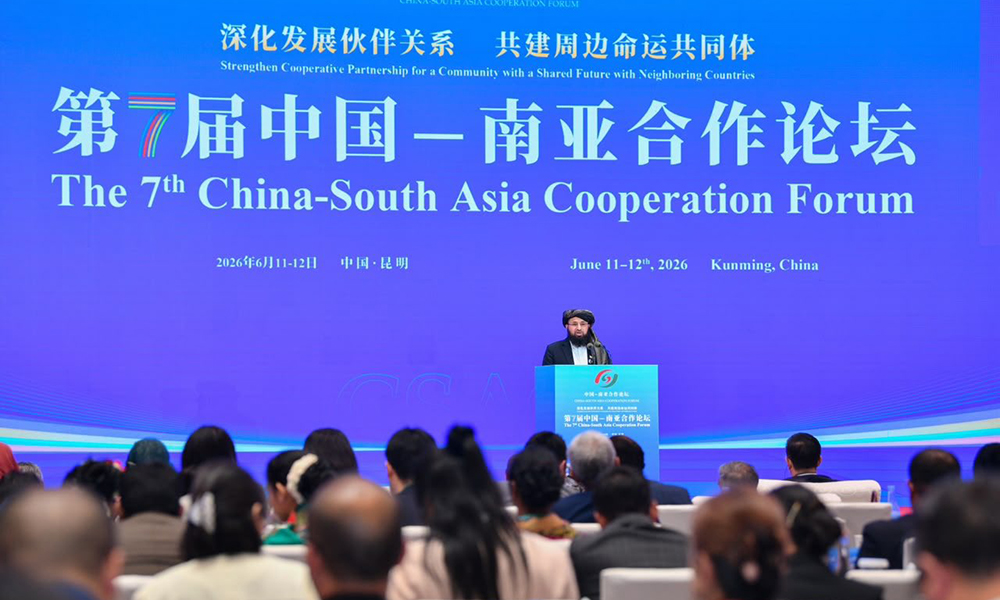
Afghanistan’s ambassador to China, Bilal Karimi, has promoted the country’s investment potential and strategic role in regional connectivity during the Seventh China–South Asia Cooperation Forum.
According to the Afghanistan Embassy in Beijing, Karimi participated in the forum and delivered remarks focused on Afghanistan’s economic opportunities and the importance of strengthening regional cooperation.
Speaking at the event, the Afghan envoy described Afghanistan as an attractive destination for investment, pointing to what he said were improvements in security, stability, and economy-focused policies. He called for greater trade, investment, and connectivity initiatives involving Afghanistan, China, and other countries across the region.
Karimi emphasized that expanded economic cooperation could help promote sustainable development and shared prosperity. He also highlighted Afghanistan’s geographic position, describing the country as a vital link connecting South Asia, Central Asia, and neighboring markets.
“Afghanistan serves as an important hub for regional connectivity,” Karimi said, expressing optimism about stronger economic partnerships and increased collaboration among regional stakeholders.
The China–South Asia Cooperation Forum brings together government officials, diplomats, and experts to discuss trade, economic integration, and regional development. Afghanistan’s participation reflects ongoing efforts to deepen economic engagement with regional partners and attract foreign investment.
Analysts say enhanced regional connectivity and economic cooperation projects could play an important role in facilitating trade, improving infrastructure links, and supporting long-term economic development across the region.
Business
New Kabul city project faces delays as officials call for greater oversight
Officials from the Ministry of Urban Development and Housing say infrastructure work is ongoing and expanding.

Construction of key infrastructure for the New Kabul City project is progressing slowly, raising concerns about delays to one of Afghanistan’s largest urban development initiatives.
The project, designed to accommodate nearly three million residents, was expected to begin distributing residential units during the current solar year. However, officials from the company responsible for implementation say the project has not advanced according to its operational timeline.
Company representatives stated that despite having the necessary financial and technical capacity, several challenges continue to hinder progress. They have called on the leadership of the Islamic Emirate and the Economic Commission to increase oversight and help remove obstacles affecting implementation.
The New Kabul City project was launched three years ago, and under the original plan, around 3,000 housing units were expected to be distributed this year. So far, however, no significant progress has been made toward that goal.
Meanwhile, officials from the Ministry of Urban Development and Housing say infrastructure work is ongoing and expanding. According to the ministry, construction activities, including the Kabul–Bagram road and other essential infrastructure, are underway across four sections of the new city. Authorities aim to complete key infrastructure before moving forward with large-scale residential development.
Economic experts describe the project as crucial for Afghanistan’s long-term economic and social growth. They urge authorities to strengthen supervision and address delays in order to accelerate implementation.
Experts believe that once the project enters its operational phase, it could create thousands of jobs, attract investment, and contribute significantly to national development and urban expansion.


ACCI chairman embarks on regional tour to boost trade and investment

Iranian private sector delegation arrives in Kabul to boost trade and investment cooperation

Central Asia–Afghanistan dialogue underscores regional connectivity and stability

IEA’s supreme leader chairs cabinet meeting in Kandahar, urges stronger religious education and public service

Iran warns Afghan migrants against unauthorized anti-IEA protests

Norway’s Viking-inspired World Cup team photo goes viral

Large blast near Beit Shemesh part of pre-planned test: Israeli defense firm

Trump returns from China with stability but little progress

Afghanistan announce squad for India series

Afghanistan, Russia sign military cooperation agreement

Tawsia: Increase in Afghanistan’s saffron exports discsused

Tahawol: Middle East crisis and future of Islamic world discussed

Saar: Kabul-Islamabad informal talks in Istanbul discussed

Tahawol: Fresh Pakistani military attacks on Afghanistan discussed

Saar: Emphasis on continued Indian support for Afghanistan discussed
-
 International Sports4 days ago
Norway’s Viking-inspired World Cup team photo goes viral
-

 International Sports3 days ago
One Day to Go: Everything you need to know about FIFA World Cup 2026
-

 International Sports4 days ago
Upsets and historic milestones highlight men’s action at Rome Taekwondo Grand Prix
-

 Latest News4 days ago
Karzai, UK envoy react after protest dispersed in Herat
-
 Latest News4 days ago
Uzbek company keen to establish mineral processing plant in Afghanistan
-
 Latest News3 days ago
Pakistani airstrikes on civilian areas in three Afghan provinces kill 13
-

 Sport2 days ago
Afghanistan A edge India A by four runs in rain-hit Tri-Nation opener
-
 Latest News4 days ago
Afghan central bank, AACC discuss expanding banking, trade and investment ties