
World
Rubio says Iran deal could take days as US launches fresh strikes
Rubio told reporters in New Delhi earlier that the U.S. would give diplomacy every chance to succeed before considering whether to deal with Iran in “another way”.

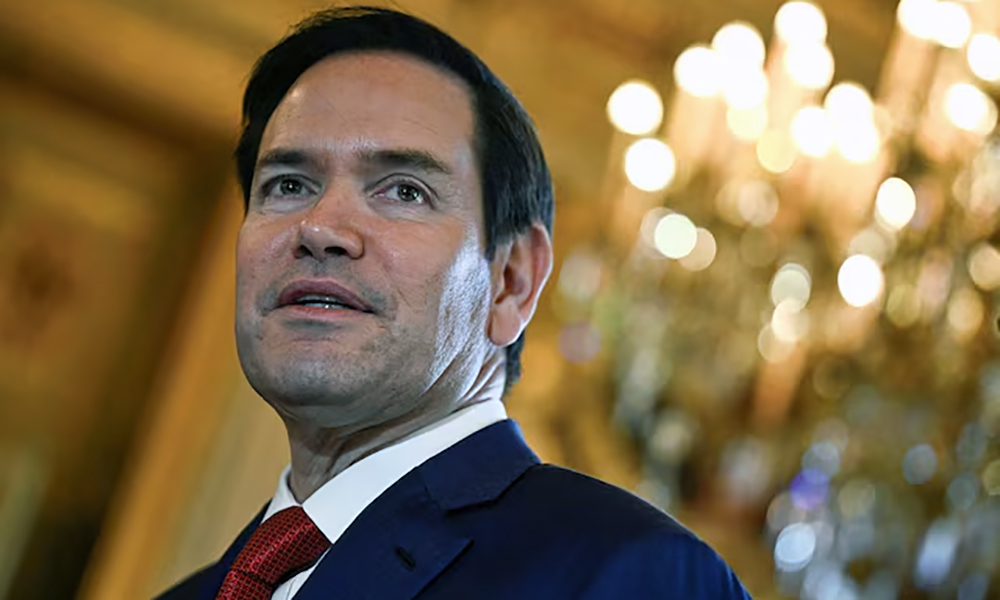
U.S. Secretary of State Marco Rubio said on Tuesday negotiating a deal with Iran could “take a few days,” quashing hopes for an imminent end to the conflict a day after U.S. forces conducted what Washington called defensive strikes in southern Iran.
Describing the strikes against targets including boats attempting to lay mines and missile launch sites, Rubio said the Strait of Hormuz has to be open “one way or the other.”
“The straits have to be open, they’re going to be open one way or the other, so they need to be open,” Rubio told reporters on his plane in India’s Jaipur.
Despite a ceasefire in place since early April, U.S. Central Command said in a statement on Monday it had carried out fresh strikes designed “to protect our troops from threats posed by Iranian forces.”
Iran said on Monday it had downed a “hostile” stealth drone using a new air defence system, Iranian news agencies reported, without saying where it had come from.
The U.S. attacks came as Iran’s top negotiator and its foreign minister were in Doha for talks with Qatar’s prime minister on a potential deal with the U.S. to end the three-month-old war, an official briefed on the visit said.
Rubio told reporters in New Delhi earlier that the U.S. would give diplomacy every chance to succeed before considering whether to deal with Iran in “another way”.
He said there was a “pretty solid thing on the table,” referring to talks over reopening the strait and a “very real, significant, time-limited negotiation on the nuclear matter.”
In a lengthy post on Truth Social on Monday, U.S. President Donald Trump said talks with Iran were going “nicely”, but warned of fresh attacks if they failed. It “will only be a Great Deal for all, or no Deal at all,” he wrote.
In another indication of the region’s tensions, Israeli Prime Minister Benjamin Netanyahu said on Monday Israel would intensify strikes against the Iran-backed Hezbollah militia in Lebanon.
Israel’s military soon thereafter said it was attacking Hezbollah infrastructure in Lebanon’s eastern Bekaa Valley and other areas.
Israel and Lebanon agreed to a ceasefire in mid-April, but Israel has continued airstrikes it says are acts of self-defence against Hezbollah, which was not party to the truce.
The official briefed on the Iranians’ Doha visit told Reuters the discussions focused on the Strait of Hormuz and Iran’s stockpile of highly enriched uranium, while Iran’s central bank governor attended to discuss the potential release of frozen Iranian funds as part of a final deal.
Iranian foreign ministry spokesperson Esmaeil Baghaei said earlier that nuclear issues would only be negotiated after the framework accord was agreed.
Trump has said his key aim in the war is to prevent Iran from developing a nuclear weapon with its highly enriched uranium. Tehran has consistently denied it has plans to do that.
Baghaei said the potential Iran deal contained no specific details on management of the Strait of Hormuz, through which about a fifth of the world’s oil and liquefied natural gas usually flows.
Iran would not charge tolls for ships to pass through but there would be a cost for services offered such as navigation and steps to protect the environment, he said, under a protocol to be agreed with Oman, which lies on the opposite shore of the waterway.
Citing a Middle East diplomatic source, Japan’s Nikkei newspaper reported the U.S. and Iran were discussing a plan to open the strait about 30 days after reaching a deal to end hostilities.
Since the U.S. and Israel launched strikes on Iran on February 28, only a few dozen vessels have been passing through the Strait of Hormuz compared with 125 to 140 daily previously.
The stand-off has caused a spike in oil prices and driven up the costs of fuel, fertiliser and food.
In early Asian trade on Tuesday, U.S. West Texas Intermediate crude was up slightly from Monday’s last traded price but down 5.5% from Friday’s close.




World
Zelenskiy says letting Russia sell diesel to US is ‘investment in war’
“Gifts to Putin will not bring peace or any benefit to the civilised world,” Zelenskiy wrote on the X social media platform.
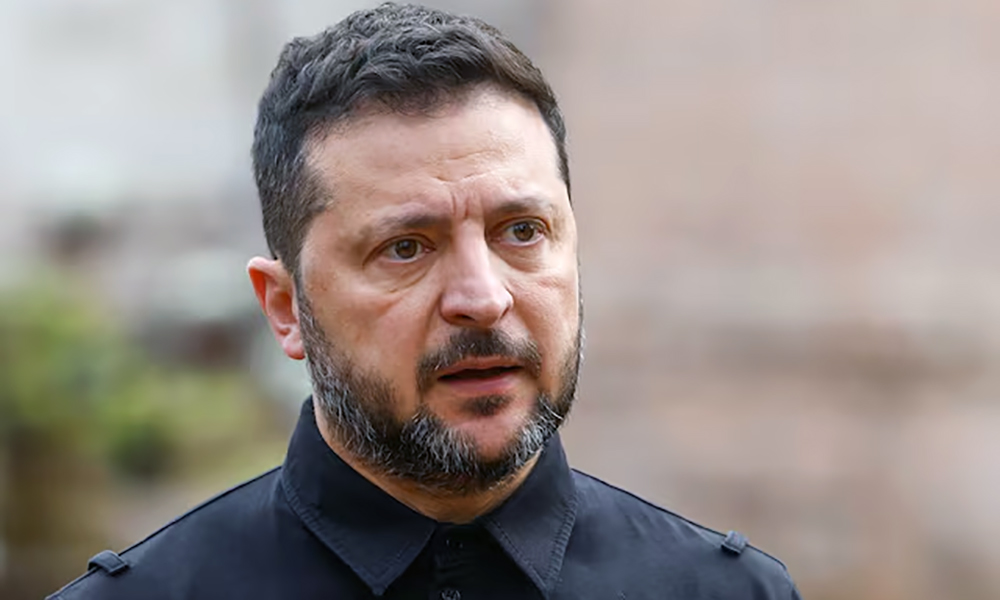
Ukrainian President Volodymyr Zelenskiy criticised an accord on Friday between the US and Russia allowing Moscow to provide the US with diesel, calling it “an investment in a war that must be ended.”
He dismissed the accord, which was announced while a Ukrainian delegation was in the US to discuss how to seek a resolution of the war with Russia, as “a weak decision on the part of strong partners”.
“Gifts to Putin will not bring peace or any benefit to the civilised world,” Zelenskiy wrote on the X social media platform.
“Russia will ‘repay’ the diesel with further terror and perfidy. Allowing Russia to sell petroleum products is an investment in a war that must be ended, not prolonged. What is needed is real de-escalation with Russia on a reciprocal basis,” Zelenskiy said.
Trump said in a post on social media that he had agreed in a call with Russian President Vladimir Putin that Russia would immediately supply diesel to the US and global marketplace. Trump said lower prices for Americans “is my Greatest Priority”.
Zelenskiy, speaking to reporters later on WhatsApp, said the accord would provide Moscow with additional funds to wage war and undermine any attempts to work towards a settlement.
“I believe our team is simply being used as a front. And that is certainly not fair, nor is it how partners should treat each other,” he said. “In my view, it is a weak decision on the part of strong partners.”
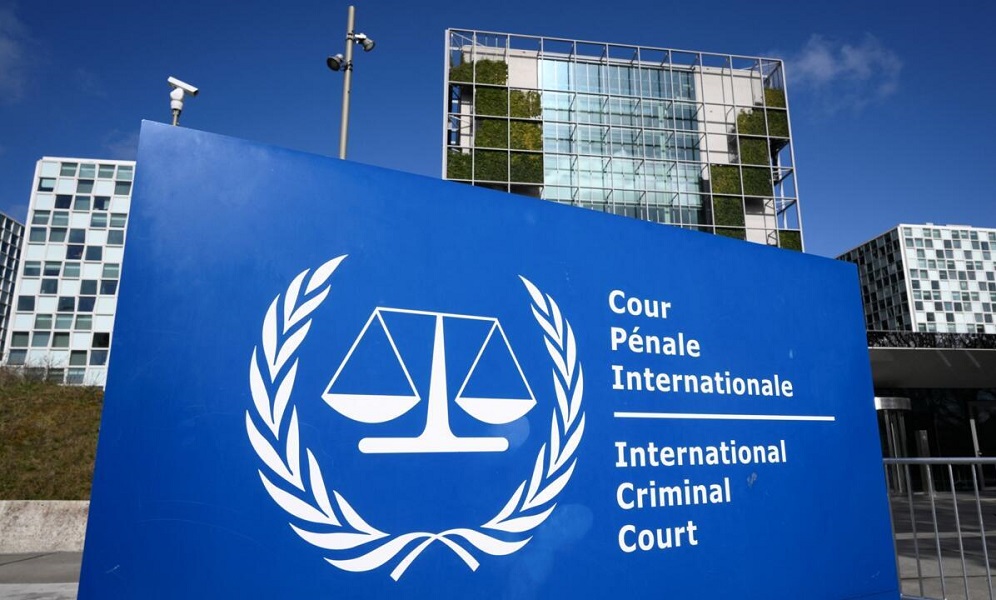
The administration of US President Donald Trump imposed sanctions on the International Criminal Court (ICC) on Friday, escalating tensions with the international judicial body and potentially straining relations with European allies.
US Secretary of State Marco Rubio said the measures aim to prevent the ICC from prosecuting American citizens and restrict the court’s resources and operations.
Washington has criticised the ICC over arrest warrants issued for Israeli Prime Minister Benjamin Netanyahu and other Israeli officials, as well as its past investigation into alleged crimes by US personnel in Afghanistan.
The ICC condemned the sanctions as an “assault on the rule of law” and vowed to continue its investigations and prosecutions. It also urged its 125 member states to defend the court’s independence.
The announcement came hours after former ICC judge Navi Pillay was awarded the Nobel Peace Prize, with the Nobel committee highlighting the importance of international justice amid political pressure on legal institutions.
The sanctions threaten to deepen the dispute between Washington and the ICC, raising concerns about international judicial cooperation and the court’s ability to carry out its work.
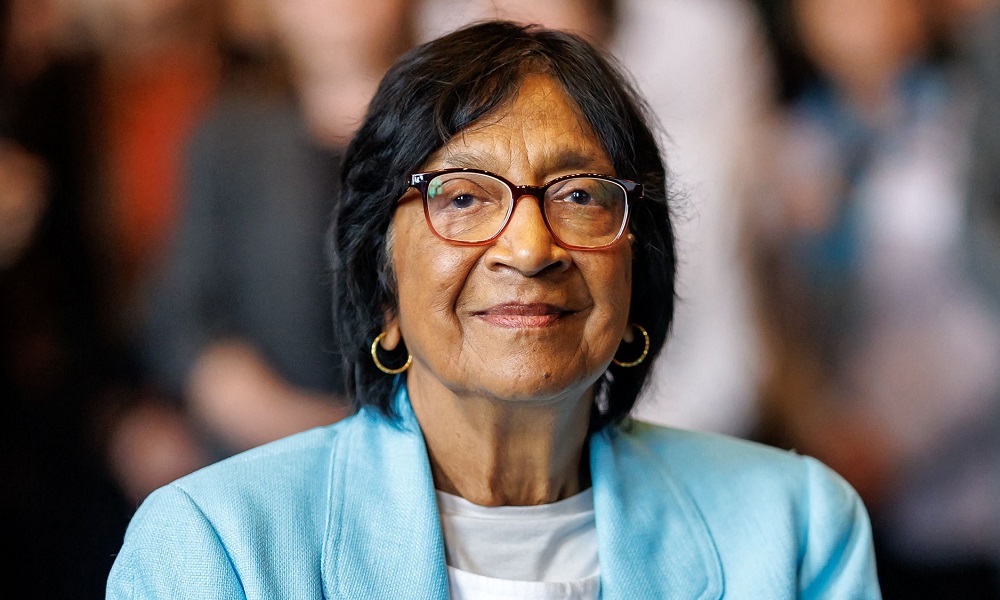
South African jurist Navi Pillay, a former judge at the International Criminal Court (ICC), won the 2026 Nobel Peace Prize on Friday for her efforts to promote peace and international law, as international justice institutions face growing political pressure.
The Nobel Committee announced the award hours before the United States imposed sanctions on the ICC, saying the recognition highlighted the importance of preserving an international order based on law and justice.
Pillay, 85, has served as a judge on several international courts, including the ICC and the International Criminal Tribunal for Rwanda. She also chaired a United Nations Commission of Inquiry on the Occupied Palestinian Territory, which concluded last year that Israel had committed genocide in Gaza. Israel rejected the report as “scandalous.”
The Nobel Committee warned that international law and its institutions were under significant pressure, cautioning that a shift towards power politics at the expense of legal frameworks threatened stability and peaceful coexistence.
The award comes amid escalating tensions between Washington and the ICC. US President Donald Trump has repeatedly criticised the court, particularly over its arrest warrants for Israeli Prime Minister Benjamin Netanyahu and his former defence minister.
Netanyahu’s office condemned the Nobel decision, accusing the committee of awarding its highest honour to someone it said had promoted allegations against Israel.
The award and the US sanctions have renewed international debate over the role of legal institutions in addressing alleged war crimes and protecting accountability under international law.


Energy and Water Minister heads to Saudi Arabia for World Energy Forum

Saar: Ongoing expulsion of Afghan refugees from Iran and Pakistan discussed

Afghanistan trail Bangladesh by 135 runs at stumps on Day Two

Afghanistan placed in Tier 3 in US human trafficking report

WHO calls for greater mental health support in Afghanistan

EU and FAO launch €5m programme to strengthen Afghanistan’s agrifood sector

Omar Zawak, Toofan Herat secure victories in Afghanistan Champions League

Houthi advance in Yemen puts U.S. in a new bind

Cricket Bonanza: Afghanistan set for packed international schedule

New warnings reignite debate over AI threat to humanity
Saar: Ongoing expulsion of Afghan refugees from Iran and Pakistan discussed

Tahawol: CSTO meeting on Afghanistan reviewed

Saar: Guterres’s talks with Pakistani officials on Afghanistan discussed

Tahawol: Consequences of US war in Afghanistan reviewed

Saar: Expulsion of Afghan refugees from Pakistan discussed
-

 Latest News5 days ago
Ariana Afghan Airlines ends 15-year control of ticketing and operational systems by Pakistani firm
-
 World5 days ago
▶️Saudi Arabia, Turkey, Pakistan activate Mecca defense pact
-
 Latest News5 days ago
IEA rejects ICC arrest warrants, says Afghanistan does not recognize court
-
 Regional5 days ago
Yemeni government forces seize strategic strait from Houthis
-

 Sport4 days ago
Aino Mina Kandahar defeat Istiqlal Kabul 3–2
-
 Health5 days ago
Russia investigates suspected pneumonic plague; Trump ready to ‘help’
-

 Latest News5 days ago
Thirty US states seek access to Afghan assets for 9/11 victims
-
 Regional2 days ago
Trump says US will not attack Iran before midterm elections in November