
Regional
Trump threatens to strike Iran’s Kharg Island oil network if shipping lanes remain blocked
Trump told reporters on Friday the U.S. Navy will “soon” start escorting tankers through the waterway.

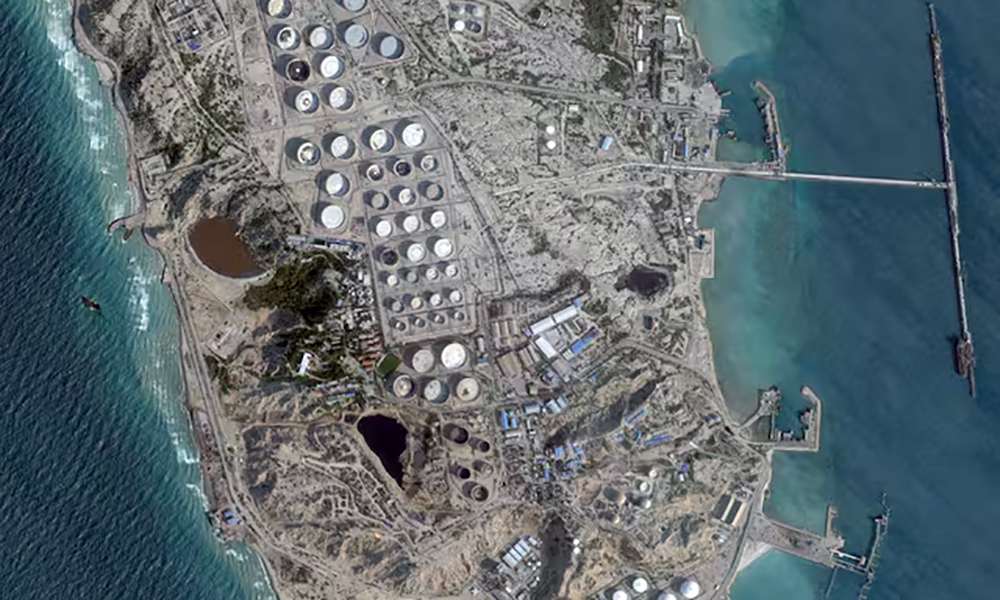
U.S. President Donald Trump threatened to order strikes on the petroleum infrastructure of Iran’s Kharg Island oil hub unless Tehran stopped attacking vessels in the vital Strait of Hormuz, a warning that could further roil markets already coping with a historic disruption in supply, Reuters reported.
Trump paired his ultimatum with a social media post saying the United States had “totally obliterated” military targets on the island, the export terminal for 90% of Iran’s oil shipments, which lies about 300 miles (483 km) northwest of the strait.
U.S. strikes did not target Kharg’s oil infrastructure, but “should Iran, or anyone else, do anything to interfere with the Free and Safe Passage of Ships through the Strait of Hormuz, I will immediately reconsider this decision,” Trump wrote.
Iran had no ability to defend against U.S. attacks, the president added. “Iran’s Military, and all others involved with this Terrorist Regime, would be wise to lay down their arms, and save what’s left of their country, which isn’t much!” he posted on Truth Social.
Iran’s armed forces responded on Saturday by saying any strike on their country’s oil and energy infrastructure would lead to strikes on facilities owned by oil companies cooperating with the United States in the region, Iranian media reported.
Iran’s semi-official Fars news agency reported, citing sources, that more than 15 explosions were heard on Kharg Island during the U.S. attacks. The sources said the attacks targeted air defenses, a naval base, and airport facilities, but caused no damage to oil infrastructure.
Markets were watching for any sign that U.S. strikes had damaged the island’s intricate network of pipelines, terminals and storage tanks. Even minor disruptions could further tighten global supply, adding pressure to an already volatile market.
In other strikes across the region, Iran’s Revolutionary Guard said early Saturday that it had carried out additional attacks on Israel with Lebanon’s Hezbollah militia, Iran’s Tasnim news agency reported.
On Friday, the Israeli military said its air force had struck more than 200 targets in western and central Iran over the past day, including ballistic missile launchers, air-defence systems and weapons production sites.
U.S. forces have suffered casualties. The U.S. military on Friday confirmed that all six crew members aboard a refuelling aircraft that crashed in western Iraq were dead, read the report.
Five U.S. Air Force tankers at a base in Saudi Arabia had been damaged by an Iranian missile strike and were being repaired, reported The Wall Street Journal, citing U.S. officials.
Oil prices have swung sharply on Trump’s changing comments about the likely duration of the war, which began on February 28 with massive U.S. and Israeli bombardments of Iran and quickly spread into a regional conflict with broad consequences for worldwide energy and stock markets.
Lebanon became an escalating flashpoint in the war with Israel’s military and Hezbollah forces exchanging strikes in and around Beirut.
In addition to Iran’s missile and aerial drone attacks on Israel and Gulf state allies of the U.S., Iran’s Islamic Revolutionary Guard Corps has sought to disrupt shipping through the Strait of Hormuz, a conduit for 20% of the world’s fossil energy supplies.
Trump told reporters on Friday the U.S. Navy will “soon” start escorting tankers through the waterway.
Although he has previously said the war would last only weeks, Trump on Friday declined to publicly project an end date for the conflict.
“I can’t tell you that,” he said to reporters. “I mean, I have my own idea, but what good does it do? It’ll be as long as it’s necessary.”
Iran continued to export crude oil while other producers in the Gulf halted their shipments for fear of Iranian attacks.
Multiple very large crude oil tankers were loading at Kharg on Wednesday, according to satellite imagery reviewed by TankerTrackers.com. Iran exported between 1.1 million barrels per day and 1.5 million bpd from February 28 to Wednesday.
Bob McNally, president of Rapidan Energy Group, said Trump’s comments on Friday “will focus the market’s mind on pathways that this energy disruption, already history’s largest, could expand and last longer.”
Some energy industry observers expressed doubts that Kharg’s oil facilities would stay intact.
“Bombing Kharg Island but not the oil infrastructure is like going to McDonald’s and getting a hamburger with no meat,” said Josh Young, chief investment officer at Bison Interests. “What’s the point?”
Iran’s new supreme leader, Mojtaba Khamenei, in his first public comments on Thursday, vowed to keep the Strait of Hormuz shut and urged neighbouring countries to close U.S. bases on their territory or risk being attacked themselves.
European powers are trying to work out how to defend their interests, and France has been consulting with European, Asian and Gulf Arab states over the past week with a view to putting together a plan for warships eventually to escort tankers through the strait, French officials said.
After nearly two weeks of war, 2,000 people have been killed, most in Iran, but many in Lebanon and a growing number in the Gulf, which has for the first time in decades of Middle East conflicts found itself on the front line.
Several million people have been displaced from their homes. As Israeli warplanes pounded Beirut’s suburbs with air strikes, Lebanon’s interior minister said authorities were unable to accommodate the hundreds of thousands of people who have sought refuge in the capital.




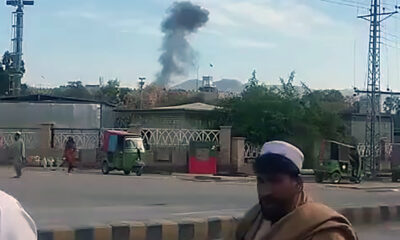

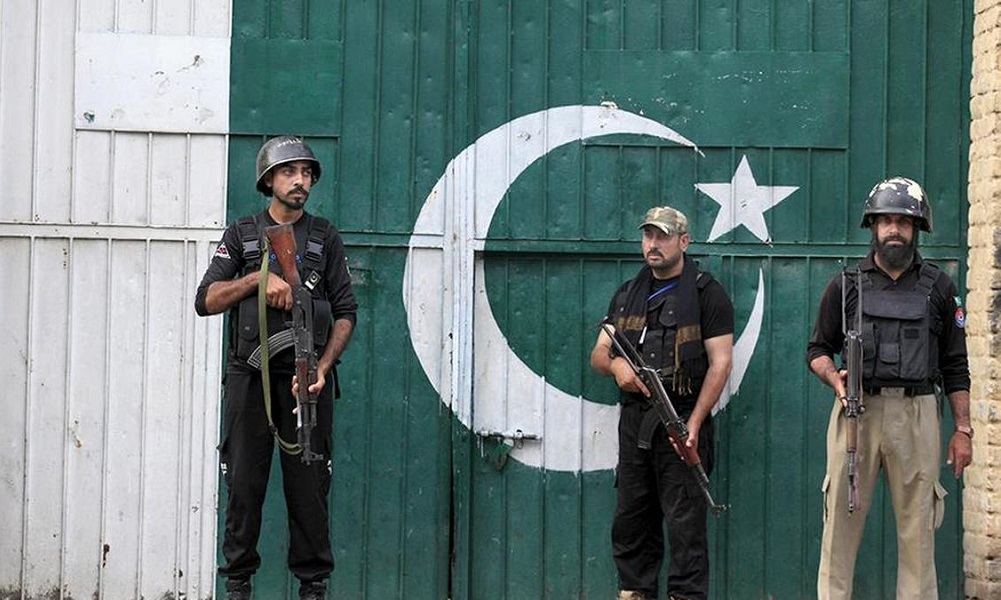
At least seven police personnel were killed when an improvised explosive device (IED) targeted a police vehicle in northwest Pakistan on Friday (March 13, 2026), according to local authorities.
The blast occurred in the Shadi Khel Bettani area of Lakki Marwat District when a police mobile van on routine patrol near the Rasool Khel check post was struck by a roadside IED.
Police said the explosive device detonated with a powerful blast as the vehicle passed through the area, directly hitting the patrol unit.
Station House Officer (SHO) Azam, police driver Shah Bahram, and four other police personnel were killed instantly in the explosion. Another policeman, identified as Insafuddin, was critically injured and later died in hospital while receiving treatment.
Following the attack, police and other security forces sealed off the area and launched a search operation. Authorities are collecting forensic evidence from the blast site as part of the investigation.
Security officials said efforts are underway to identify and trace those responsible for the attack, while security measures in the area have been tightened.
Meanwhile, the Chief Minister of Khyber Pakhtunkhwa, Sohail Afridi, took notice of the incident and strongly condemned the blast.
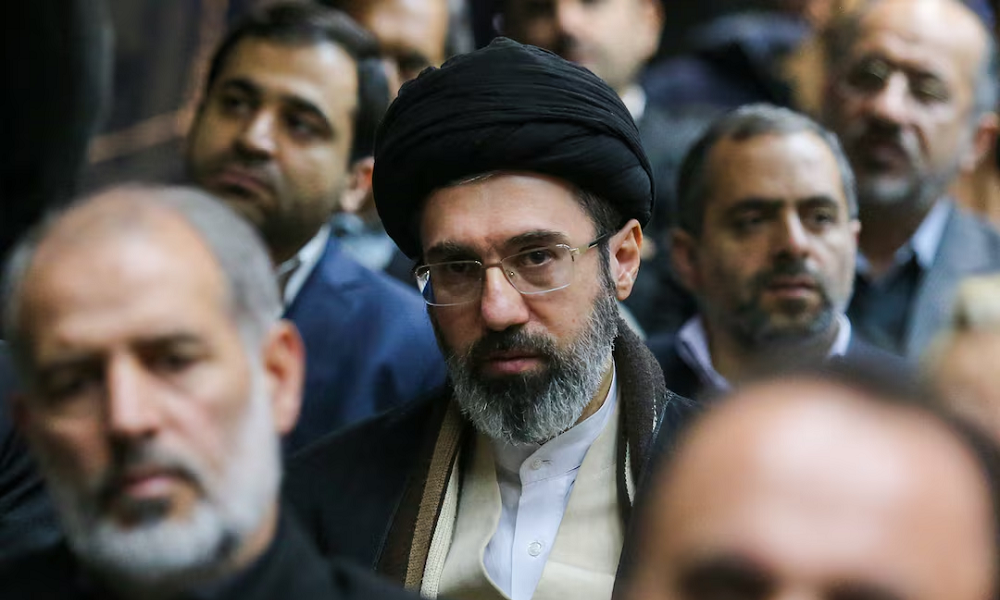
Mojtaba Khamenei, Iran’s new leader, said on Thursday that Iran’s neighbors must close all U.S. bases on their territory, as Tehran will continue its attacks against them.
In his first statement, broadcast and read out by state television, Khamenei told the Iranian people: “I assure everyone that we will not neglect avenging the blood of your martyrs.”
He added: “The popular demand is to continue our effective defence and make the enemy regret! The lever of blocking the Strait of Hormuz must continue to be used.”
However, state television did not explain why Khamenei’s first remarks were read by a presenter rather than delivered in a video.
No images of him have yet been released since the strike that killed his father, Ali Khamenei.
In these remarks, Mojtaba Khamenei also confirmed that his wife, sister, and other family members were killed.
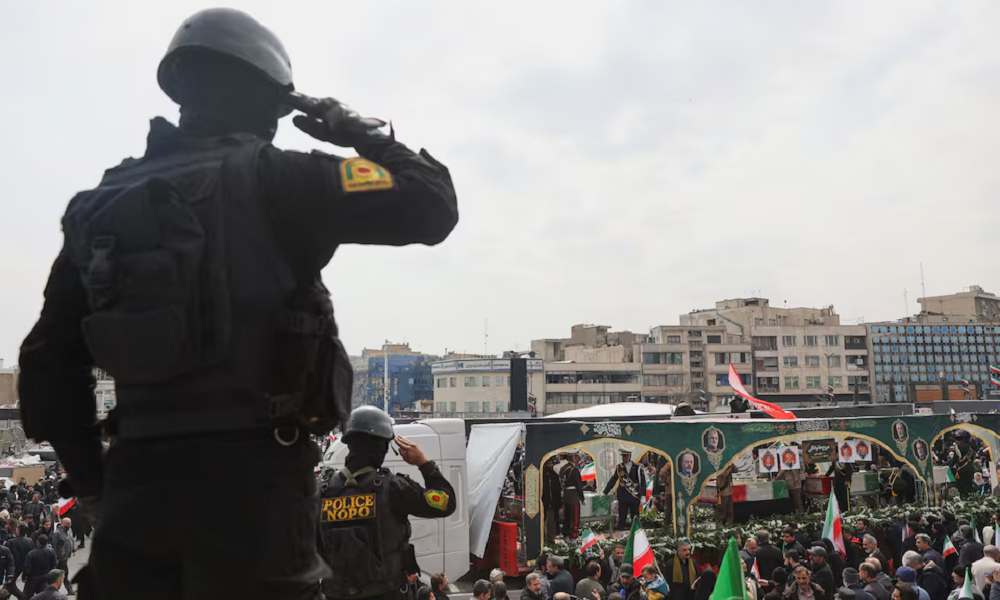
The United Nations High Commissioner for Refugees (UNHCR) says up to 3.2 million people have been displaced inside Iran since the conflict that erupted on February 28, warning that the humanitarian situation is rapidly worsening.
In a statement released Thursday, the UN refugee agency said the figure is based on preliminary assessments of uprooted households and could rise further if hostilities continue.
“This number is likely to increase as fighting persists, signaling a troubling escalation in humanitarian needs,” UNHCR said.
The agency noted that many of the displaced have fled their homes in search of safety, often moving to nearby provinces or staying with relatives and host communities. Others have sought temporary shelter in public buildings and informal settlements, placing additional pressure on local resources.
Humanitarian organizations say the sudden movement of millions of people is creating urgent needs for shelter, food, medical care and basic services. Aid agencies are working with local authorities to assess conditions and deliver assistance to affected communities.
The displacement crisis comes amid broader regional instability that has raised concerns among international organizations about the potential for further population movements both inside Iran and across borders.
UNHCR said it is continuing to monitor developments closely and is coordinating with humanitarian partners to scale up assistance as the situation evolves.


Exclusive interview with Stephen Rodriguez, UN Development Programme Representative in Afghanistan

Tawsia: Trade agreement between Afghanistan-Uzbekistan

White House AI czar says US should ‘declare victory and get out’ of Iran war

Trump threatens to strike Iran’s Kharg Island oil network if shipping lanes remain blocked

IEA, Chinese FMs hold phone talks, discuss bilateral relations

Pakistani military jet downed in Afghanistan’s Jalalabad, pilot captured alive

Afghan Air Force conducts airstrikes in Islamabad, other cities

IEA releases three Pakistani soldiers to mark Ramadan

Afghanistan’s Chief of Armed Forces underscores readiness and equipment for national defense

Afghanistan welcomes investment and technology partnerships with India
Exclusive interview with Stephen Rodriguez, UN Development Programme Representative in Afghanistan
Tawsia: Trade agreement between Afghanistan-Uzbekistan

Tahawol: Discussion on intensification of attacks in Middle East

Saar: Ongoing US-Israeli strikes on Iran discussed

Tahawol: Regional impacts of Middle East crisis reviewed
-
 Latest News5 days ago
American billionaire Tom Pritzker describes Afghanistan trip in email to Epstein
-

 Sport3 days ago
Afghanistan’s white-ball series against Sri Lanka postponed
-
 Latest News4 days ago
Russia, China and UK urge Afghanistan and Pakistan to resolve issues through dialogue
-
 Latest News5 days ago
UN warns of possible surge in Afghan returnees from Iran
-
 Latest News5 days ago
UN Security Council to hold meeting on Afghanistan
-

 Latest News4 days ago
Trump envoy warns Afghanistan could face fate similar to Iran or Venezuela over detained Americans
-
 Latest News4 days ago
Reports about closure of IEA’s Doha office denied
-
 Regional4 days ago
Iran says oil blockade will continue until attacks end, Trump threatens to hit harder