
World
Trump’s ‘Board of Peace’ takes shape amid global debate
Some European governments and humanitarian organisations have questioned the board’s mandate, warning it could undermine the role of the UN and other established multilateral frameworks.

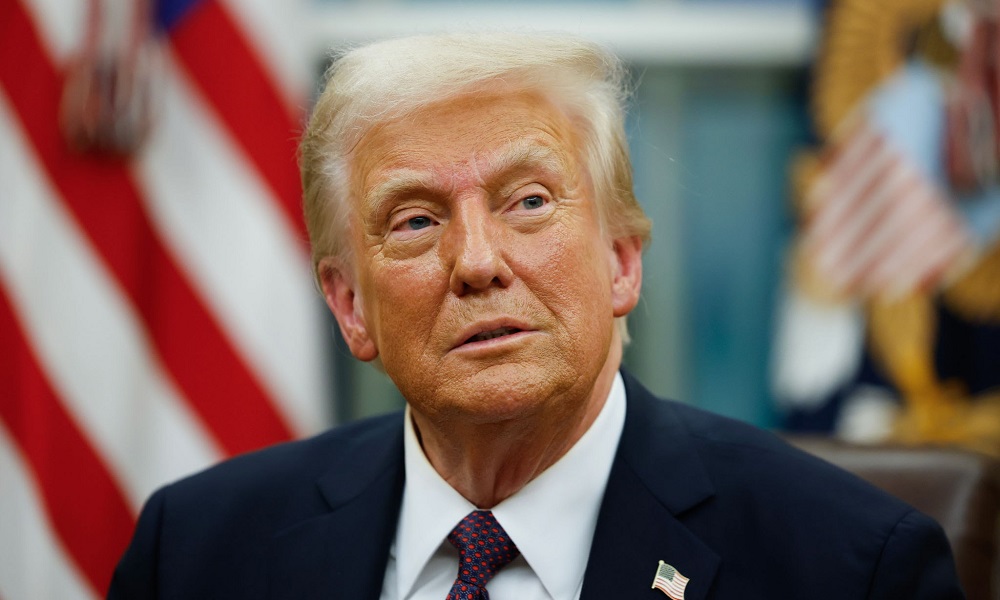
Fresh details have emerged around US President Donald Trump’s proposed “Board of Peace,” an initiative he says is aimed at advancing conflict resolution and post-war reconstruction in some of the world’s most volatile regions, including Gaza, even as the plan continues to draw mixed reactions internationally.
The initiative, first unveiled earlier this month, was formally outlined on the sidelines of the World Economic Forum in Davos this week, where Trump described the board as a new mechanism to support ceasefires, oversee peace arrangements and encourage economic recovery in conflict-affected areas.
While full operational details have yet to be released, the White House says the body is intended to work alongside existing international institutions rather than replace them.
According to US officials, several countries — including Pakistan, Saudi Arabia, Turkey, Qatar, Egypt, Jordan, Indonesia and the United Arab Emirates — have agreed to participate or expressed interest in joining the board. Supporters argue the initiative could provide an additional diplomatic platform at a time when traditional peace processes have stalled.
However, the proposal has faced skepticism from parts of the international community. Some European governments and humanitarian organisations have questioned the board’s mandate, warning that it could duplicate or undermine the role of the United Nations and other established multilateral frameworks. Others have raised concerns over transparency, funding mechanisms and the lack of clarity on how decisions would be enforced.
From Gaza to global ambitions
The Board of Peace grew out of Trump’s broader Gaza peace proposal, which followed months of devastating conflict that left tens of thousands dead and large parts of the enclave in ruins. The original concept focused on monitoring a ceasefire, coordinating reconstruction and encouraging regional cooperation.
In recent statements, however, Trump has hinted at expanding the board’s scope beyond Gaza, suggesting it could eventually engage with other long-running conflicts. This has further fueled debate over whether the initiative represents a genuine multilateral effort or a US-led political project with limited buy-in.
Human rights groups have also urged caution, stressing that any peace mechanism must prioritise civilian protection, accountability and international law.
Despite the criticism, the White House has defended the initiative, arguing that the scale of current global crises requires new approaches and broader coalitions. Officials say further announcements on the board’s structure, leadership and funding are expected in the coming weeks.
Whether Trump’s Board of Peace can gain lasting international legitimacy — or deliver tangible outcomes on the ground — remains to be seen, as governments weigh its promises against existing diplomatic pathways.






World
Trump backs down on Greenland tariffs, says framework for deal reached
European diplomats said Trump’s softened tone had helped defuse immediate tensions, though significant differences remain over his earlier demands for U.S. “ownership” of Greenland
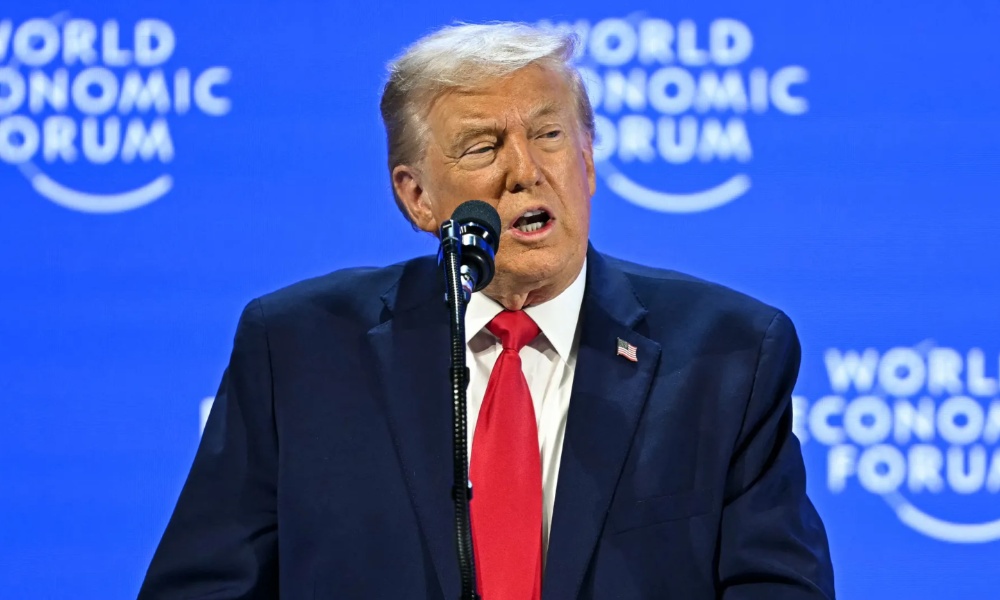
U.S. President Donald Trump on Wednesday walked back threats to impose tariffs as leverage over Greenland, ruled out the use of force, and said a framework had been reached for a deal on the strategically important Danish territory, easing tensions that had alarmed U.S. allies.
Speaking in Davos after meeting NATO Secretary General Mark Rutte, Trump said Western allies could reach a long-term agreement covering Arctic security, missile defense and access to critical minerals, while countering growing Russian and Chinese activity in the region.
“It’s a deal that everybody’s very happy with,” Trump told reporters. “It’s a long-term deal. It puts everyone in a really good position, especially on security and minerals.”
Trump added that the agreement would be permanent, calling it “a deal that’s forever.”
The remarks marked a sharp shift from weeks of rhetoric that rattled NATO partners and raised fears of a broader trade conflict. Over the weekend, Trump had threatened escalating tariffs on exports from eight European countries, moves that had unsettled financial markets and transatlantic relations.
Rutte later said Greenland’s sovereignty was not discussed in his talks with Trump, underscoring that the U.S. president’s focus was on Arctic security rather than territorial ownership.
“He is very much focused on what we need to do to protect the Arctic region, where Russia and China are increasingly active,” Rutte said in an interview with Fox News.
European diplomats said Trump’s softened tone had helped defuse immediate tensions, though significant differences remain over his earlier demands for U.S. “ownership” of Greenland—an idea firmly rejected by Greenlandic leaders and Denmark.
A NATO spokesperson said negotiations between Denmark, Greenland and the United States would continue, aimed at preventing Russia or China from gaining an economic or military foothold on the island. No timeline was provided. Trump said Vice President JD Vance, Secretary of State Marco Rubio and envoy Steve Witkoff would lead further talks.
Denmark welcomed the de-escalation but emphasized the need to respect sovereignty. Foreign Minister Lars Løkke Rasmussen said any resolution must uphold Denmark’s territorial integrity and Greenlanders’ right to self-determination.
Earlier on Wednesday, Trump told the World Economic Forum that he would not use force to pursue his aims, acknowledging that markets had reacted negatively to his recent threats. U.S. equities rallied following his remarks, with the S&P 500 posting its biggest one-day gain in two months.
Sources have previously told Reuters that Trump’s push on Greenland reflects a desire to secure a lasting legacy by expanding U.S. strategic influence in the Arctic, a region increasingly central to global security and competition.
World
Canada models hypothetical response to US attack amid rising tensions
This comes as world leaders gather at the World Economic Forum in Davos, where concerns about the erosion of the rules-based international order and rising unilateralism by major powers have dominated discussions.
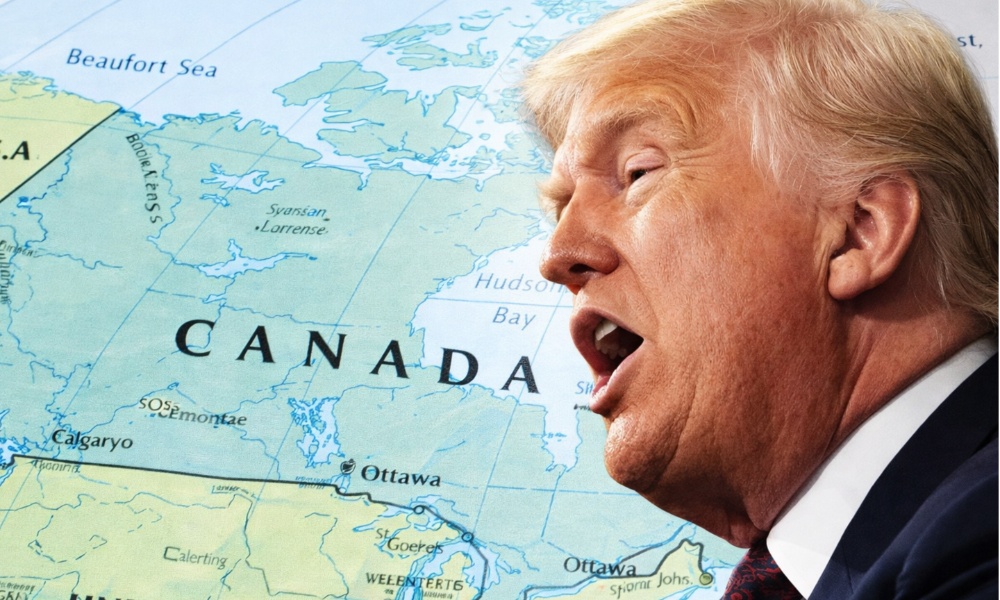
Canada has quietly developed a military response model for a hypothetical attack by the United States, marking the first time in more than a century that Ottawa has formally examined a potential conflict with its closest ally, according to a report by The Globe and Mail.
Federal officials, speaking on condition of anonymity, said the planning exercise does not reflect an expectation of war but rather a worst-case contingency scenario amid growing geopolitical uncertainty. A U.S. military attack on Canada is considered highly unlikely, they stressed.
According to the report, Canada’s armed forces would be unable to withstand a full-scale U.S. assault using conventional means.
As a result, the scenario envisions a shift toward unconventional resistance, including small, mobile cells of military personnel and civilians employing ambush tactics, drone operations, and sabotage.
Officials said Canada could be overwhelmed at key military locations within two days to a week, prompting a strategy designed to delay and disrupt occupying forces rather than defeat them outright.
The report emerged hours after U.S. President Donald Trump shared a provocative image on social media depicting the American flag covering Canada and Greenland, a post that drew criticism and concern in diplomatic circles.
Canada would also expect assistance from NATO allies, particularly nuclear-armed members such as Britain and France, in the event of any invasion, the officials said.
Canada and the United States are both NATO members and long-standing defence partners through NORAD.
Retired Major-General David Fraser, who previously commanded Canadian forces in Afghanistan, told the newspaper that an attack on Canada would likely trigger a strong international response.
“If you come after Canada, you are going to have the world coming after you,” Fraser said, adding that allied naval and air forces could be deployed to reinforce Canadian sovereignty.
The revelations come as world leaders gather at the World Economic Forum in Davos, where concerns about the erosion of the rules-based international order and rising unilateralism by major powers have dominated discussions.
Canadian officials at Davos have emphasized the importance of sovereignty, alliance solidarity, and collective security, particularly in light of tensions involving Greenland and Arctic security.
Canada’s Chief of the Defence Staff, General Jennie Carignan, has previously called for the creation of a 400,000-strong reserve volunteer force, underscoring broader efforts to strengthen national defence preparedness.
While officials insist the scenario is theoretical, the planning reflects Ottawa’s growing focus on resilience and preparedness in an increasingly unpredictable global security environment.
World
Trump links Greenland push to Nobel snub as EU readies response
Donald Trump said he no longer felt obliged to think “purely of peace” after the 2025 Peace Prize went to Venezuelan opposition leader Maria Corina Machado rather than to him.
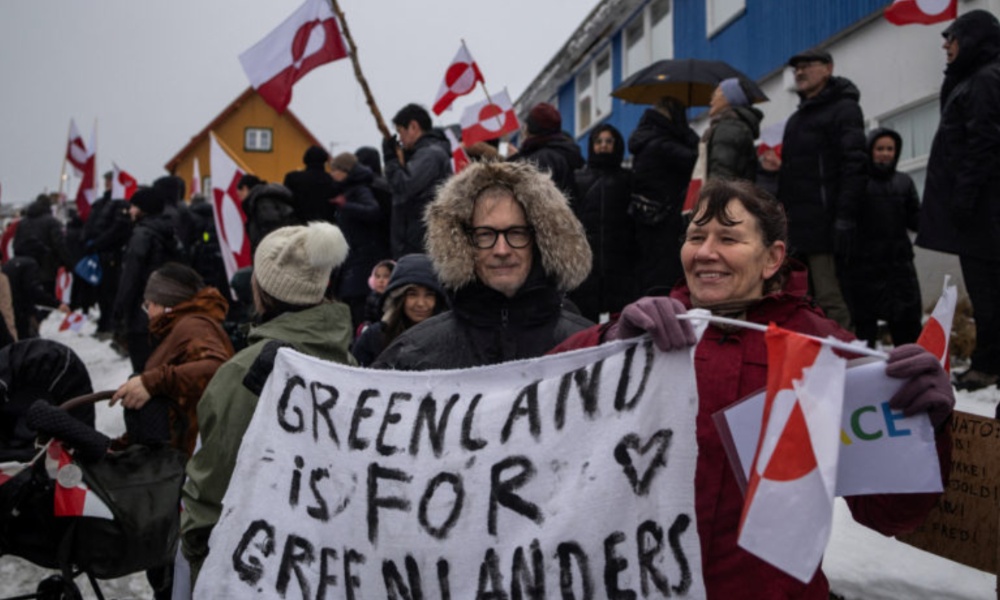
U.S. President Donald Trump has linked his renewed push to take control of Greenland to his failure to win the Nobel Peace Prize, as tensions with Europe mount and the European Union prepares possible retaliatory trade measures.
In comments reported by Reuters, Trump said he no longer felt obliged to think “purely of peace” after the Nobel Committee awarded the 2025 Peace Prize to Venezuelan opposition leader Maria Corina Machado rather than to him. The remarks came amid growing controversy over his insistence that the United States should gain “complete and total control” of Greenland, a semi-autonomous Danish territory.
Trump declined to say whether he would use force to seize the Arctic island but reiterated threats to impose tariffs on several European countries if no agreement is reached. He has accused Denmark of being unable to protect Greenland from Russia or China, a claim rejected by Copenhagen and other European leaders.
The dispute has strained relations within NATO and raised fears of a renewed transatlantic trade war.
EU officials say Brussels is considering countermeasures, including tariffs on up to 93 billion euros ($108 billion) worth of U.S. imports, should Washington move ahead with its plans. EU leaders are expected to discuss their options at an emergency summit this week.
Denmark’s Foreign Minister Lars Lokke Rasmussen said Greenland’s future must be decided by its own people, stressing that “you don’t trade people.”
Greenland’s Prime Minister Jens-Frederik Nielsen echoed that stance, saying the territory would not be pressured and would stand by dialogue and international law.
The row has unsettled European markets and industry, with investors wary of a repeat of the volatility seen during previous trade disputes. Trump is expected to attend the World Economic Forum in Davos this week, where several European leaders have indicated they will seek talks in an effort to defuse tensions.


China and Japan set for AFC U23 Asian Cup final showdown

EU launches €10 million initiative to support Afghan women entrepreneurs

Russia signals interest in expanding investment and trade ties with Afghanistan

Afghan children at risk as winter deepens earthquake hardships

Trump’s ‘Board of Peace’ takes shape amid global debate

Turkey withdraws from Afghanistan-Pakistan mediation amid rising tensions

Sharp drop in exports to Afghanistan drives Pakistan’s trade deficit surge

ICG report says Pakistan most impacted by IEA’s return in Afghanistan

Pakistan approves re-export of stranded Afghan transit trade cargo

Afghanistan–China joint market opens in Kabul

Tahawol: Pakistan’s membership in the Gaza peace board

Saar: Trump’s ‘move’ on Greenland discussed

Saar: Trump’s criticism of Afghanistan withdrawal

Tahawol: Pakistan PM’s complaint about Afghanistan

Saar: Pakistan seeking to resolve issues with Afghanistan
-

 Sport4 days ago
Tune in tomorrow to Ariana Television for AFC U23 Asian Cup semi-finals
-

 Sport5 days ago
Afghanistan U19 crush West Indies by 138 runs at World Cup
-

 Latest News3 days ago
Ariana cargo aircraft arrives in Kabul, boosting trade and exports
-

 Sport5 days ago
Afghanistan futsal team beats Vietnam 5–3 in friendly ahead of Asian Cup
-

 Latest News5 days ago
Children to be transferred from private to government orphanages in Afghanistan
-
 Regional3 days ago
Death toll in Karachi’s Gul Plaza fire rises to 27, dozens still missing
-

 Latest News4 days ago
One Chinese national and six Afghans killed in Kabul blast
-

 International Sports3 days ago
FIFA announces hosts and groups for expanded FIFA Series 2026