
Latest News
US military forces to stay decades in Afghanistan

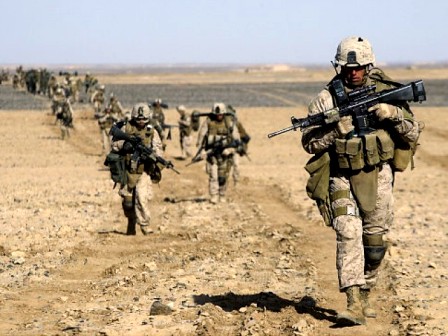
Published by Washington Post
Top U.S. military commanders, who only a few months ago were planning to pull the last American troops out of Afghanistan by year’s end, are now quietly talking about an American commitment that could keep thousands of troops in the country for decades.
The shift in mind-set, made possible by President Obama’s decision last fall to cancel withdrawal plans, reflects the Afghan government’s vulnerability to continued militant assault and concern that terrorist groups such as al-Qaeda continue to build training camps whose effect could be felt far beyond the region, said senior military officials.
President Obama will keep 9,800 troops in Afghanistan through most of 2016
At a news conference Thursday, Oct. 15, President Obama says the U.S. will maintain 9,800 troops in Afghanistan through most of 2016 and will not go down to a normal embassy presence by the end of 2016, but instead will keep 5,500 troops at a small number of bases. (AP)
The new American outlook marks a striking change for Obama, who campaigned on a promise to bring American troops home and has said repeatedly that he does not support the “idea of endless war.” And it highlights a major shift for the American military, which has spent much of the past decade racing to hit milestones as part of its broader “exit strategy” from Afghanistan and Iraq. These days, that phrase has largely disappeared from the military’s lexicon.
In its place, there is a broad recognition in the Pentagon that building an effective Afghan army and police force will take a generation’s commitment, including billions of dollars a year in outside funding and constant support from thousands of foreign advisers on the ground.
“What we’ve learned is that you can’t really leave,” said a senior Pentagon official with extensive experience in Afghanistan and Iraq who like others spoke on the condition of anonymity to describe internal discussions. “The local forces need air support, intelligence and help with logistics. They are not going to be ready in three years or five years. You have to be there for a very long time.”
Senior U.S. commanders have also been surprised by al-Qaeda’s resilience and ability to find a haven in the Afghan countryside, as well as the Taliban’s repeated seizure of large tracts of contested territory.
[Pentagon has new authority to strike Islamic State in Afghanistan]
In November, the U.S. military sent a company of elite U.S. Rangers to southeastern Afghanistan to help Afghan counterterrorism forces destroy an al-Qaeda training camp in a “fierce fight” that lasted for several days.
The training camp was “absolutely massive,” said Brig. Gen. Wilson Shoffner, a military spokesman in Afghanistan.
“No matter what happens in the next couple of years Afghanistan is going to have wide ungoverned spaces that violent extremist organizations can take advantage of,” Shoffner said. “The camp that developed in southeastern Kandahar is an example of what can happen.”
There are now 9,800 U.S. troops in Afghanistan, some of them advising local forces and some focused on hunting down al-Qaeda and other hard-line militants. Plans call for Obama to halve that force by the time he leaves office, but he could defer the decision to the next president.
The U.S. military’s current thinking reflects its painful experience in Iraq, where Iraqi army forces collapsed less than three years after American forces left in 2011.
And it’s echoed in the arguments made by many Republican and Democratic foreign policy advisers, looking beyond the Obama presidency, for a significant long-term American presence. “This is not a region you want to abandon,” said Michèle Flournoy, a former Pentagon official who would probably be considered a top candidate for defense secretary in a Hillary Clinton administration. “So the question is what do we need going forward given our interests?”
[Taliban is targeting Afghan cities]
In Helmand province, where American troops suffered the heaviest losses of the war, Afghan units have struggled to hold on to territory taken by American forces from the Taliban in 2011 and 2012. “There’s a real will-to-fight issue there,” said a senior military official in Kabul.
Senior American commanders said that the Afghan troops in the province have lacked effective leaders as well as the necessary weapons and ammunition to hold off persistent Taliban attacks. Some Afghan soldiers in Helmand have been fighting in tough conditions for years without a break to see family, leading to poor morale and high desertion rates.
Gen. John F. Campbell, the top American commander, has sent Special Operations forces to the province to help direct American airstrikes and provide help with planning. An American soldier was killed and two others were wounded this month fighting alongside the Afghans.
In addition, about 300 U.S. troops in Helmand are advising Afghan commanders at the corps level, well removed from the front lines.
The American support is designed to arrest the immediate losses, but building an effective and sustainable fighting force that can manage contested areas such as Helmand province, will take many years, U.S. military officials said.
Foreign officials say the Afghan units lack effective mid-level officers and sergeants who can lead troops in combat and are not captive to patronage networks that dominate the country and sap soldier morale. Seeding the force with mid-level officers often requires bringing in young leaders from outside the current system and training them from scratch.
“I think a generational approach has value,” Shoffner said.
Senior U.S. officials point to improvements in areas such as evacuating wounded troops from the battlefield. As recently as 2013, it took the Afghan army 24 hours on average to get medical assistance to wounded troops. Now help usually arrives in four hours, still longer than desired. But other critical goals, such as building an effective resupply system for the country or a capable air force, cannot be accomplished in a few years. Many of the American pilots flying in Afghanistan have 10 to 15 years of experience.
“How long does it take to grow a 15-year pilot? It takes about 15 years,” Shoffner said. “We’re starting a little late with the air force.”
Senior U.S. military officials and some former Obama administration officials increasingly compare the U.S. government’s plans for Afghanistan to its approach to South Korea, where it has maintained tens of thousands of troops for decades. Other top officials cite the example of Colombia, where the United States has long provided training, money and contractors.
[The war in Afghanistan is turning even more chaotic. Read these stories to catch up.]
“Our presence right now helps serve as a significant bulwark against instability and at a cost that I think is reasonable to bear,” said Daniel Feldman, who until recently served as the Obama administration’s special representative for Afghanistan and Pakistan. “Particularly if we’re not proposing a significant combat role, I think the American people would be open to the argument of sticking with Afghanistan.”
U.S. officials said that in Afghan President Ashraf Ghani they have a willing and reliable partner who can provide bases to attack terrorist groups, not just in Afghanistan but also throughout South Asia, for as long as the threat in the chronically unstable region persists.
The difference between Afghanistan and other long-term American commitments in South Korea and Colombia is that Afghanistan remains a far more dangerous and unstable place for American personnel. Even though Afghan troops have assumed the lead combat role throughout the country, with U.S. troops in an advisory role, Americans still face real dangers and have taken recent casualties there.
In some cases, senior U.S. officials have been surprised by the Taliban comeback in the past year. Emboldened by the departure of most foreign forces, Taliban fighters have seized district centers, inflicted heavy losses on government forces and temporarily overrun a provincial capital. Now, Afghan forces must also grapple with an aggressive local branch of the Islamic State.
Some officials hold out hope that a long-term military presence might be unnecessary, if hoped-for peace talks with the Taliban make progress. The Afghan government has asked Pakistan, home to many Taliban leaders, to push the militants into talks.
A generational U.S. footprint “doesn’t need to be the case,” said Jeff Eggers, a former senior White House official with long experience working on Afghanistan and Pakistan. “The Korea model is not necessary if the peace process moves forward — that’s the preferred path for all parties.”
The obstacles to peace talks, though, are huge. Senior officials in Kabul and Islamabad, Pakistan, are riven by suspicion, and the Taliban remains deeply fractured following the revelation that its longtime leader, Mohammad Omar, has been dead for more than two years.

Latest News
Russia claims Asia-based drug network expanding toward Russia and the West
Islamic Emirate of Afghanistan have said that they have reduced the cultivation, production, and trafficking of narcotics in Afghanistan to close to zero.
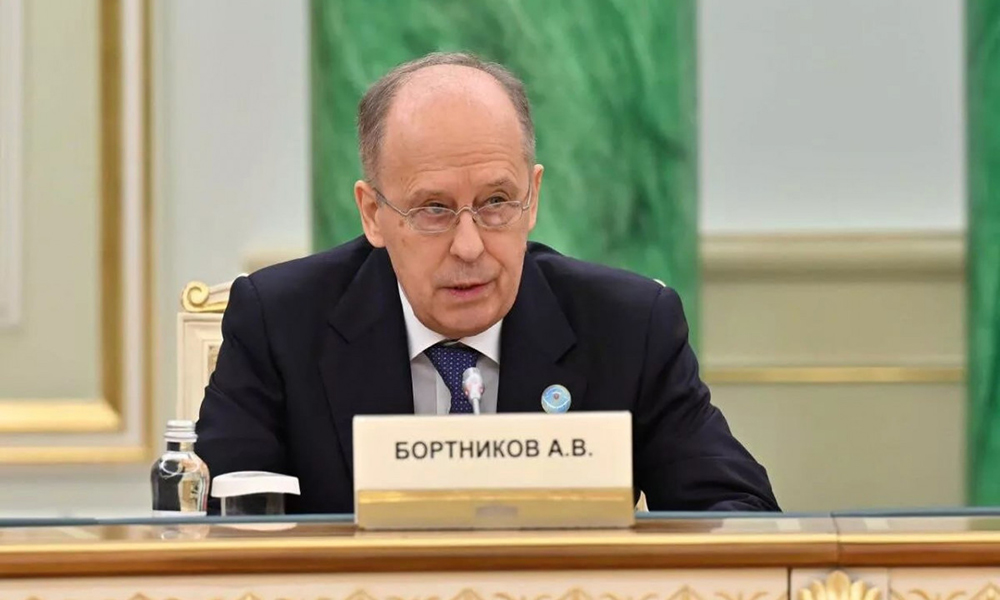
Russia’s security chief has warned that a growing synthetic drug production network is emerging across parts of Asia, with potential trafficking routes extending toward Russia and Western countries.
Alexander Bortnikov, Director of the Federal Security Service, said a “drug production belt” is taking shape across Southeast Asia, Afghanistan, and Iran, as criminal groups increasingly shift toward synthetic narcotics manufacturing.
Speaking at a meeting of the Council of Heads of Security Agencies of the Commonwealth of Independent States, Bortnikov argued that cooperation with the Islamic Emirate on counter-narcotics efforts could be “reasonable,” citing changes in the regional drug trade.
He said Afghan traffickers are moving away from traditional narcotics toward synthetic drug production, contributing to what he described as an expanding transnational supply chain linking Southeast Asia, Afghanistan, and Iran.
According to him, this network is increasingly extending into Central Asian states, where more illicit laboratories are reportedly being established to produce new synthetic substances.
Bortnikov also claimed that organized crime groups linked to Ukraine have recently become involved in both production and transit operations, allegedly remotely managing drug laboratories in CIS countries. He added that proceeds from these activities are being used, in part, to fund recruitment for attacks in Russia and to acquire weapons.
The FSB chief said Russian security services, working with partner agencies, had dismantled nearly 170 drug laboratories across the CIS in 2025 and seized around nine tons of synthetic drugs.
Latest News
China and Pakistan deepen Afghanistan cooperation after Beijing talks
In the joint declaration, China and Pakistan stressed that Afghan territory should not be used by militant organisations to threaten neighbouring countries or regional interests.
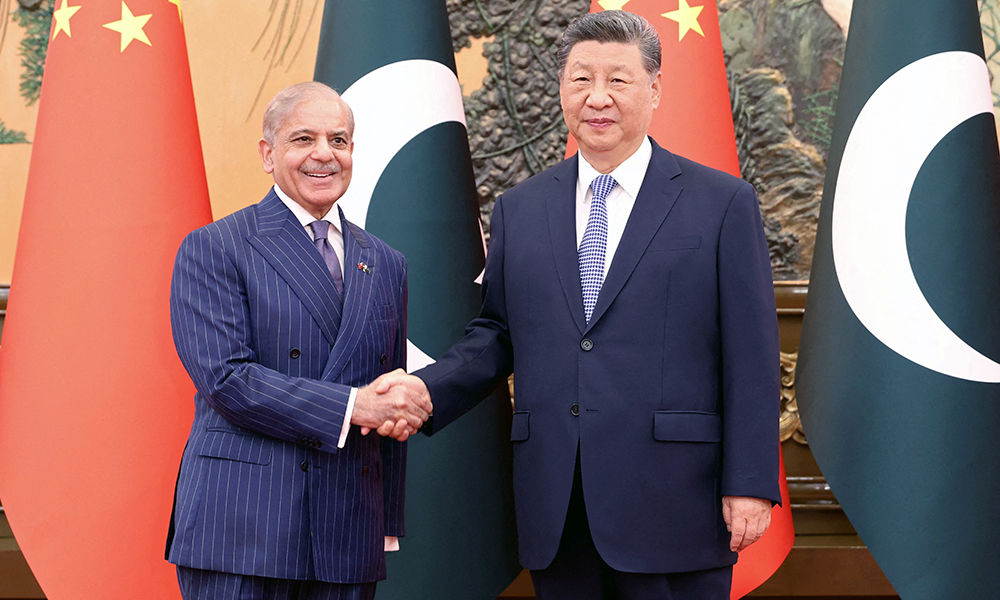
Following high-level talks in Beijing between China and Pakistan, the two allies have pledged closer coordination on Afghanistan and warned against militant groups using Afghan territory to threaten regional security.
The commitment came in a joint statement issued after Pakistani Prime Minister Shehbaz Sharif concluded a four-day official visit to China, where he met Chinese President Xi Jinping and Premier Li Qiang.
A significant section of the statement focused on Afghanistan and regional security, underlining growing concern from both Beijing and Islamabad about instability spilling across borders.
The two countries welcomed recent trilateral discussions involving Afghanistan, Pakistan and China held in Urumqi, Xinjiang, in April 2026. Pakistan praised China for facilitating dialogue between Islamabad and Kabul, while both sides agreed to maintain close coordination on Afghan-related issues.
In the joint declaration, China and Pakistan stressed that Afghan territory should not be used by militant organisations to threaten neighbouring countries or regional interests.
The statement specifically named the Tehreek-e-Taliban Pakistan (TTP) and the Eastern Turkistan Islamic Movement (ETIM), saying no individual or group should be allowed to carry out attacks or destabilising activities from within the region.
Security concerns linked to Afghanistan have become increasingly important for both countries. Pakistan has repeatedly accused militants of launching cross-frontier attacks from Afghan territory, while China has voiced concern about extremist networks operating near its western Xinjiang region.
Beyond Afghanistan, the joint statement reaffirmed the deepening strategic partnership between China and Pakistan, including cooperation on infrastructure, counter-terrorism, trade, artificial intelligence and regional connectivity under the China-Pakistan Economic Corridor (CPEC).
The two sides also agreed to strengthen military and counter-terrorism cooperation through what they described as a new China-Pakistan Security Partnership.
The visit coincided with celebrations marking 75 years of diplomatic relations between China and Pakistan.
Latest News
IEA defense minister arrives in Moscow for international security conference
The ministry added that participants are expected to exchange views on key international and regional security issues during the gathering.
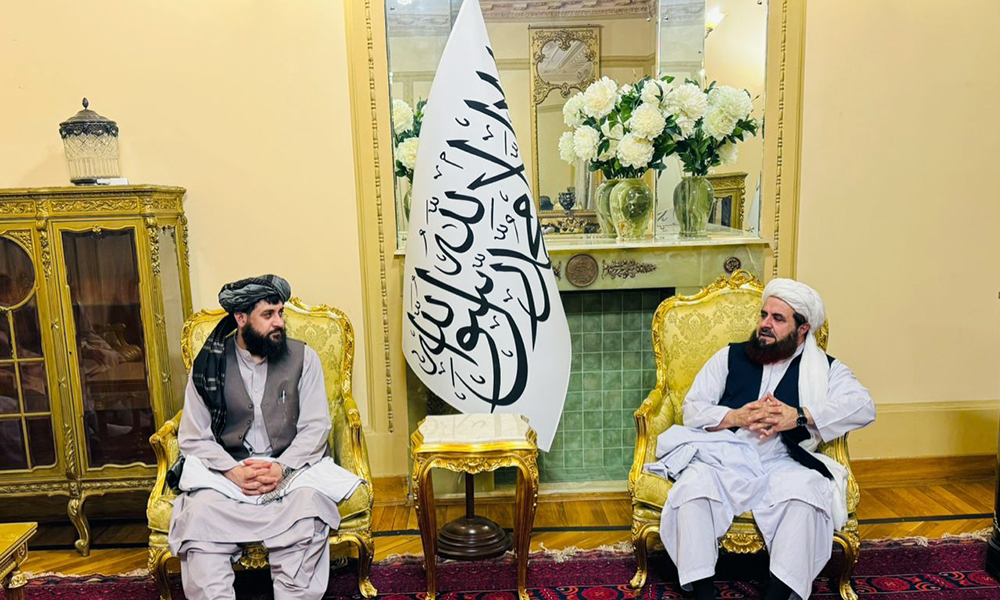
Afghanistan’s Ministry of Defense says Mawlawi Mohammad Yaqoob Mujahid, Defense Minister of the Islamic Emirate of Afghanistan, has arrived in Moscow to participate in the International Security Conference hosted by the Russian Federation.
According to the ministry, the conference will bring together defense and security officials from various countries to discuss regional security, shared challenges, and ways to strengthen cooperation.
The ministry added that participants are expected to exchange views on key international and regional security issues during the gathering.


Tahawol: Islamic Emirate defense minister’s visit to Russia

Saar: Calls to expand Afghanistan-Qatar ties discussed

More than 220 riders launch Hellas Rally Raid 2026 in Greece

Afghanistan expands drug imports as Russian pharma company enters market

Russia claims Asia-based drug network expanding toward Russia and the West

New Afghanistan-China transport corridor launched via Turkmenistan

Afghanistan signs $46 million deal to develop standard laboratory complexes

Germany to launch online visa system for Afghan study and work applicants in Pakistan

Afghanistan launches first 5G trial in Kabul to boost telecom services

Large blast near Beit Shemesh part of pre-planned test: Israeli defense firm
Tahawol: Islamic Emirate defense minister’s visit to Russia
Saar: Calls to expand Afghanistan-Qatar ties discussed

Tahawol: Afghanistan-Japan relations reviewed

Saar: Afghanistan’s relations with regional countries, incl Russia and China discussed

Saar: Shahbaz Sharif’s trip to China
-
 Latest News3 days ago
China restricts export of chemical substances to Afghanistan
-
 Business2 days ago
Major pharma firms eye investment in Afghanistan
-

 World4 days ago
One dead, 36 injured in explosion at New York dry dock
-

 Sport4 days ago
Mohammadi crowned champion of 2nd season of Ariana Snooker Championship
-
 Latest News2 days ago
Deadly shooting near Kabul’s Sarai Shahzada leaves four dead
-

 Latest News4 days ago
Britain says recognition of IEA conditional on women’s rights, counterterrorism
-

 Sport5 days ago
Chennai Super Kings eliminated as Gujarat Titans register record IPL victory
-
 Regional3 days ago
At least 24 killed in deadly train bombing in Pakistan’s Balochistan