
Business
Uzbekistan sets $5 billion trade target with Afghanistan
“In just five years, bilateral trade has increased 2.5 times — from $653 million in 2021 to $1.7 billion in 2025. Our objective now is to raise this figure to $5 billion,” Khodjaev said.

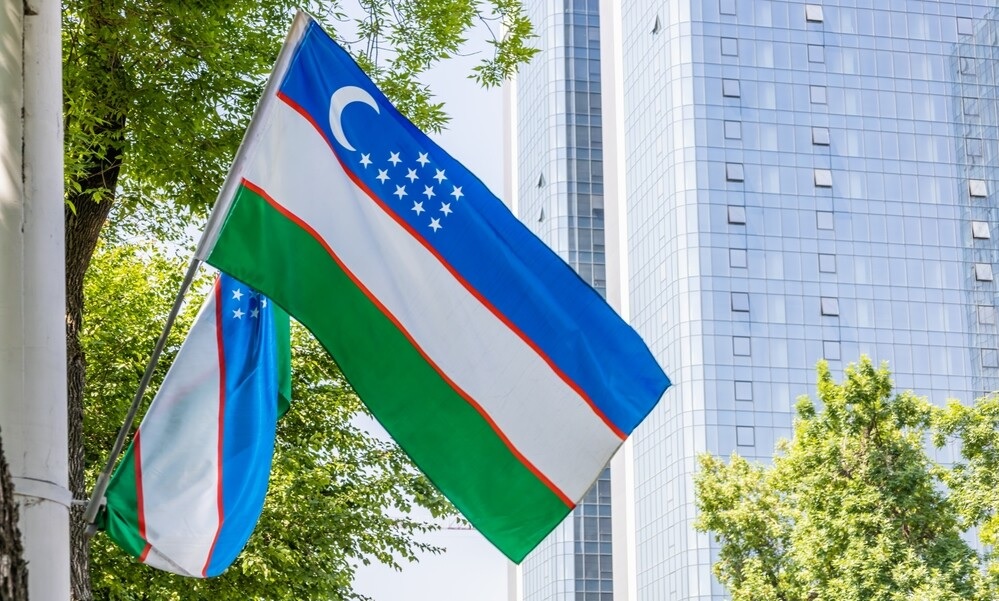
Uzbekistan and Afghanistan have agreed to significantly expand economic ties, setting an ambitious target of increasing bilateral trade to $5 billion, according to Uzbekistan’s Deputy Prime Minister, Jamshid Khodjaev.
Khodjaev announced the goal following a video conference with Afghanistan’s Minister of Industry and Trade, Nuriddin Azizi, during which both sides reviewed current cooperation and outlined plans for future growth.
“In just five years, bilateral trade has increased 2.5 times — from $653 million in 2021 to $1.7 billion in 2025. Our objective now is to raise this figure to $5 billion,” Khodjaev said.
The two officials discussed practical measures to deepen trade and economic cooperation, including preparations for an upcoming visit by an Afghan delegation to Uzbekistan. Following Ramadan, both sides plan to organize a business forum in Kabul and develop a detailed roadmap identifying priority sectors for collaboration.
The talks also focused on accelerating the implementation of a Preferential Trade Agreement, which both countries agreed should enter into force as soon as possible. Officials further explored expanding joint investment and industrial projects.
Key areas highlighted for cooperation include the processing of agricultural products, construction materials, textiles, and initiatives aimed at strengthening food security. The two sides also reviewed infrastructure needs to facilitate trade, including the establishment of showrooms, logistics centers, and warehouses to improve product promotion and distribution.
Trade between Uzbekistan and Afghanistan has grown steadily despite regional challenges, with total turnover rising sharply over the past five years — a trend both governments now hope to accelerate through structured economic partnerships and closer regional integration.







Business
Pakistan allows re-export of stranded Afghan transit cargo
The suspension of Afghan Transit Trade operations left thousands of containers stuck, causing heavy financial losses for Afghan traders and disrupting regional commerce.

Pakistan’s Federal Board of Revenue (FBR) has allowed the re-export of Afghan transit trade consignments that had been stranded for months at Chaman and Quetta, enabling their movement to Karachi Port and Port Qasim.
The shipments were halted after crossings between Afghanistan and Pakistan were closed in October 2025 amid escalating security tensions.
The suspension of Afghan Transit Trade operations left thousands of containers stuck, causing heavy financial losses for Afghan traders and disrupting regional commerce.
Under the new directive, stranded goods will be transported under customs supervision to Karachi for re-export. Pakistani authorities said the process will follow strict monitoring and inspection procedures to ensure compliance with transit regulations.
The decision offers limited relief to Afghan businesses affected by the prolonged disruption, though regular trade between the two countries has yet to resume.
Business
Afghanistan’s 2026 Development Framework meeting highlights self-reliance and economic stability
The Ministry said these measures helped preserve relative economic stability and deliver stronger economic growth compared with the previous year.
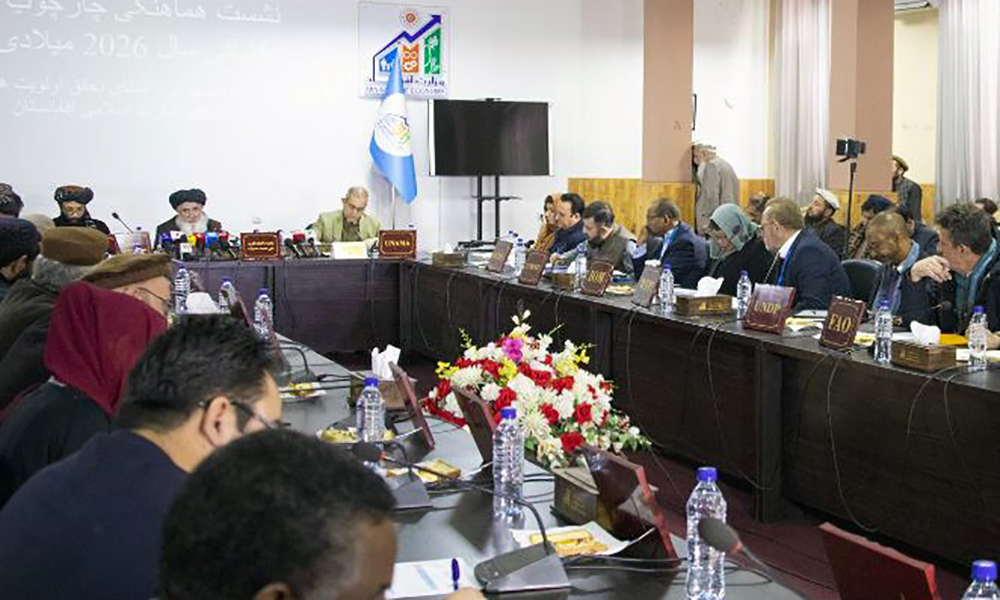
The Ministry of Economy of Afghanistan says a coordination meeting on the United Nations’ 2026 Development Framework for Afghanistan was held under the chairmanship of Qari Din Mohammad Hanif, Minister of Economy, focusing on advancing national development priorities and long-term economic stability.
The meeting was attended by representatives from the Ministry of Foreign Affairs, the United Nations Assistance Mission in Afghanistan (UNAMA), heads of UN agencies operating in the country, delegates from the European Union, and a range of international organizations.
During the session, the Minister of Economy outlined Afghanistan’s current situation, recent achievements, and key economic priorities, while expressing appreciation for the continued support of international partners during challenging years.
According to the Ministry, Afghanistan faced severe economic, social, and climate-related pressures in 2025.
These included the impacts of climate change and natural disasters, the forced return of more than two million Afghan migrants from neighboring countries, ongoing sanctions, frozen foreign reserves, and a sharp decline in development and humanitarian assistance. Together, these factors have significantly affected the livelihoods of vulnerable communities.
Despite these challenges, the Islamic Emirate has implemented a series of economic and development programs centered on prudent policymaking and national priorities.
The Ministry said these measures helped preserve relative economic stability and deliver stronger economic growth compared with the previous year.
Improved economic governance, support for domestic production and the private sector, exchange rate stability, export growth, national infrastructure projects, inflation control, and increased domestic revenues were cited as key contributors.
The Ministry also highlighted the role of the United Nations in addressing urgent humanitarian needs, noting that UN assistance has been critical in responding to climate impacts, supporting migrants and returnees, strengthening food security and livelihoods, delivering basic health services, and reducing overall human suffering.
Data from the Ministry of Economy show that around $1.009 billion in international assistance was allocated to Afghanistan in 2025 across various sectors, with approximately $590 million earmarked for project expenditures. However, figures from the UN Office for the Coordination of Humanitarian Affairs indicate a significant drop in humanitarian funding, with only 36 percent of the $2.4 billion required having been secured.
The Ministry emphasized that sustainable economic stability can only be achieved through self-reliance, growth-driven economic policies, and constructive engagement with the international community.
Afghanistan’s Development Strategy, a long-term framework developed under the leadership of the Economic Deputy of the Prime Minister and coordinated by the Ministry of Economy, aims to promote balanced development, job creation, poverty reduction, infrastructure expansion, private sector support, and environmental protection.
Business
Afghan delegation visits Belarus to strengthen economic and industrial ties
The delegation also visited major state and industrial enterprises, including, the State Chemical Service, and agricultural farms under the Ministry of Agriculture.
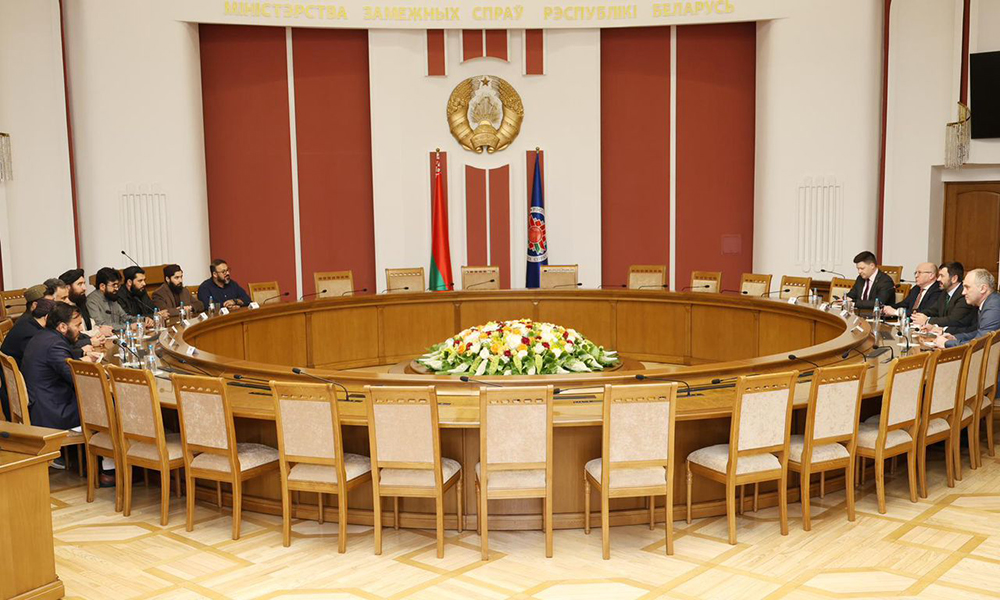
A high-level delegation from the Islamic Emirate of Afghanistan, led by Ahmad Jan Balal, head of the Emirati Companies, and Abdul Rahman Atash, CEO of the National Development Company, accompanied by representatives from the Ministry of Foreign Affairs and technical teams, visited Belarus to advance bilateral cooperation.
According to Nabiullah Arghandiwal, spokesperson for the National Development Company, the Afghan delegation held meetings with officials from Belarus’ Ministries of Foreign Affairs, Agriculture, and Industry to discuss political, economic, and trade-related issues.
The delegation also visited major state and industrial enterprises, including, the State Chemical Service, and agricultural farms under the Ministry of Agriculture.
Arghandiwal added that both sides agreed to strengthen and expand technical collaboration in the fields of industry, agricultural machinery, construction materials, food safety, public health, and education, aiming to enhance long-term economic and industrial partnerships between the two nations.
give me english hashtags with coma in between the words


An Afghan child’s cry from Behsud, Nangarhar: “Take Me to My Mother”

Uzbekistan sets $5 billion trade target with Afghanistan

Trump pushes presidency reset in record 108-minute address to Congress

Tahawol: Reactions to Pakistan’s attacks on Afghanistan discussed

Richard Pybus appointed as head coach of Afghanistan’s national cricket team

AFC Futsal Asian Cup 2026: Day One Review

IEA releases three Pakistani soldiers to mark Ramadan

AFC Futsal Asian Cup: Afghanistan to face Iran in crucial Group D clash

Afghanistan’s Chief of Armed Forces underscores readiness and equipment for national defense

Afghanistan welcomes investment and technology partnerships with India
Tahawol: Reactions to Pakistan’s attacks on Afghanistan discussed

Saar: Consequences of Pakistani attacks on Afghanistan discussed

Tahawol: Tahawol: Pakistan’s Attacks on Afghanistan Raise Serious Questions

Saar: Reactions to Pakistan’s airstrikes on Afghanistan discussed

Tahawol: Repeat crimes by Pakistani military in Afghanistan discussed
-

 Latest News5 days ago
Indian customs seize Chinese walnuts falsely declared as Afghan
-
 Latest News3 days ago
Mujahid: Afghanistan will target perpetrators, not civilians
-
 Latest News4 days ago
Moldova bans Afghan airlines over safety concerns
-
 Latest News3 days ago
Afghanistan vows retaliation after Pakistan launches air strikes
-
 Latest News2 days ago
Russia estimates up to 23,000 terrorists present in Afghanistan
-

 Sport4 days ago
José Antonio Nogueira appointed new Afghanistan head football coach
-
Latest News2 days ago
IEA rejects Russia’s claims of foreign militants in Afghanistan
-
 Latest News2 days ago
UK’s Reform party pledges visa ban affecting Afghanistan and five other states