
Latest News
Governors of Afghanistan’s seven administrative zones hold coordination meeting in Kandahar

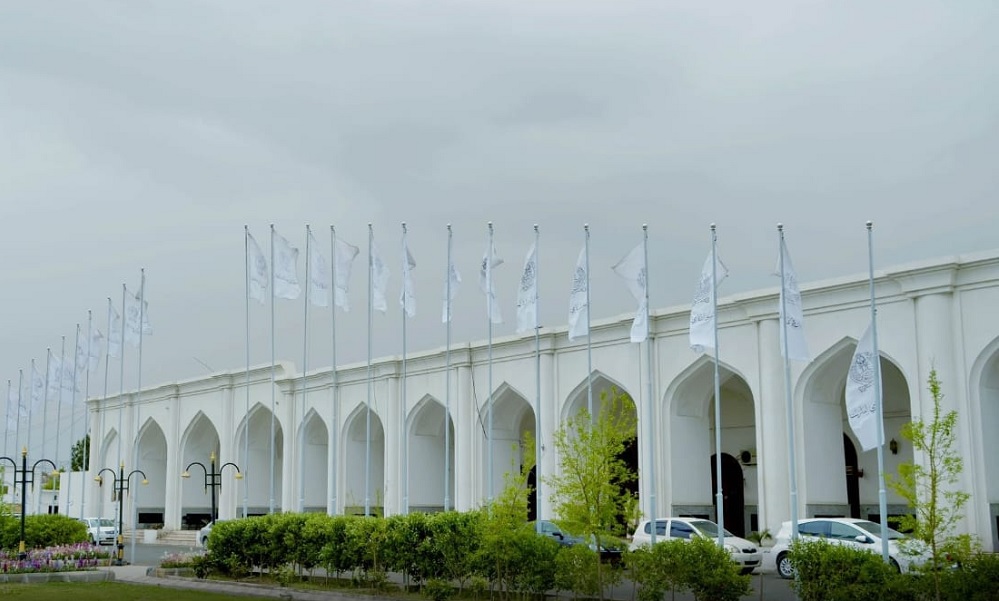
Governors representing Afghanistan’s seven administrative zones met in Kandahar on Saturday for a regular coordination session focused on security, governance and social issues across the country.
The meeting brought together the governors of Kandahar, Herat, Balkh, Nangarhar, Kunduz, Kabul and Paktia.
Under a decree issued by the leader of the Islamic Emirate, these officials are tasked not only with administering their respective provinces but also with coordinating affairs among provinces within their designated zones.
According to a statement from the Kandahar governor’s office, participants reviewed reports from meetings previously held in different zones and discussed common challenges facing provincial administrations.
The governors also examined measures implemented in various provinces and agreed that successful initiatives could be expanded to other zones where applicable.
The discussions covered a range of issues, including the implementation of decrees and directives issued by the Islamic Emirate’s leadership, efforts to strengthen security, crime prevention, improved coordination between civilian and security institutions, counter-narcotics measures and anti-corruption efforts.
Participants also discussed support for disabled Mujahideen and orphans, assistance for vulnerable families, and ways to accelerate responses to public concerns and requests.
The statement added that several issues raised during the meeting would be referred to the office of the leader of the Islamic Emirate for further guidance and consideration.

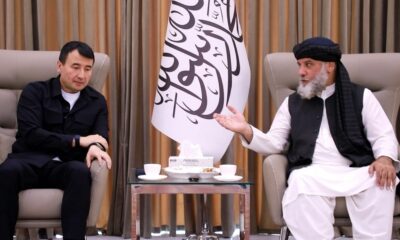




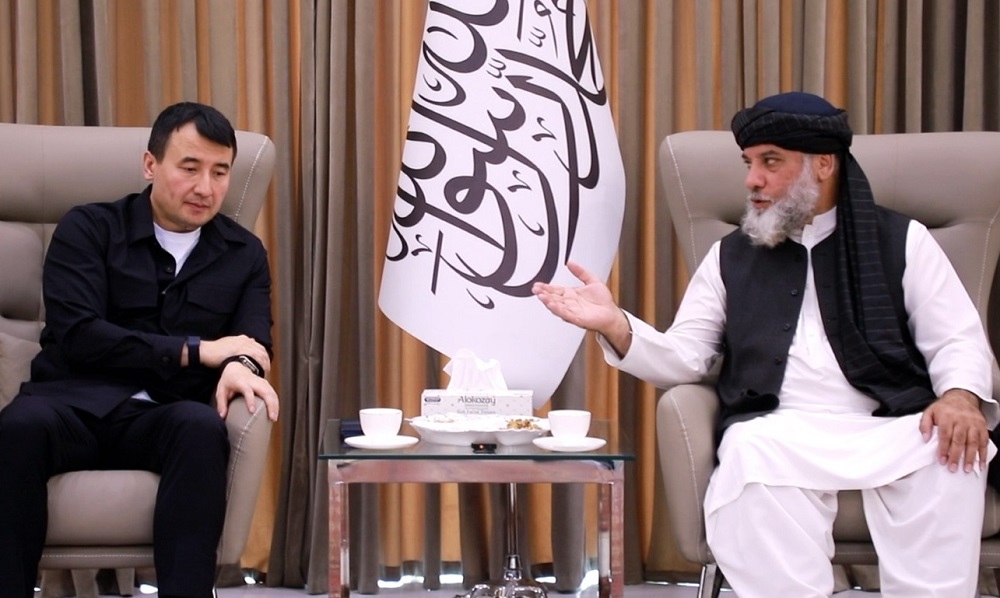
Afghanistan’s Ministry of Industry and Commerce has announced that a high-level delegation from Uzbekistan, comprising government officials and private sector representatives, led by Jamshid Khojaev, Deputy Prime Minister of Uzbekistan, arrived in Kabul on Saturday.
According to the ministry’s statement, the delegation was welcomed at Kabul International Airport by Nooruddin Azizi, Minister of Industry and Commerce.
The Ministry of Industry and Commerce added that the purpose of the Uzbek delegation’s visit to Kabul is to hold meetings and discussions with officials of the Islamic Emirate and representatives of Afghanistan’s private sector, as well as to participate in the trade forum.
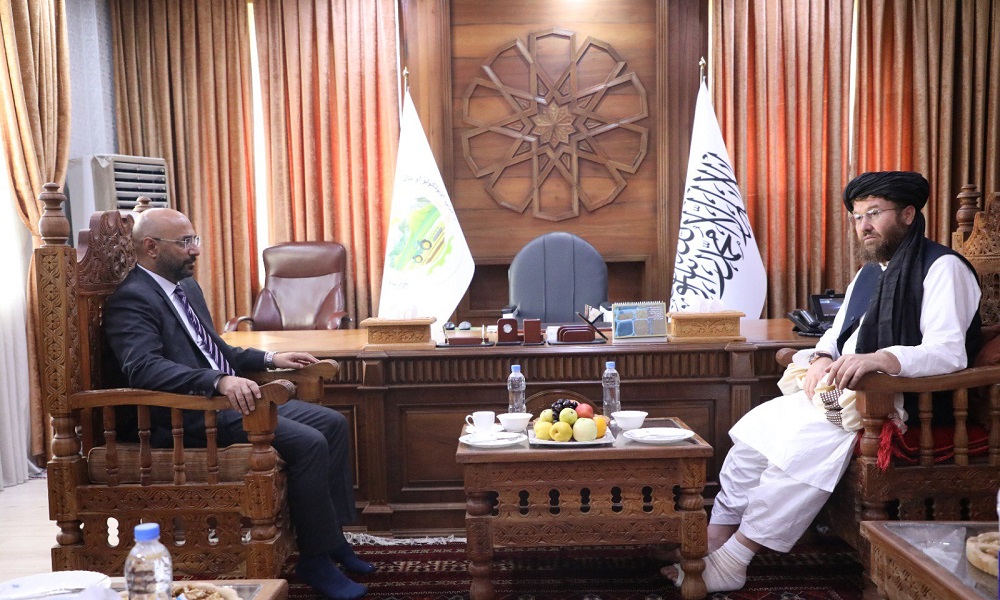
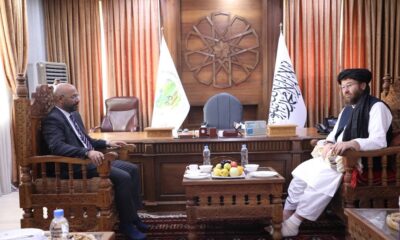
Sadin Ayyıldız, Chargé d’Affaires of the Turkish Embassy in Kabul, held a courtesy meeting on Saturday with Attaullah Omari, Minister of Agriculture, Irrigation and Livestock of the Islamic Emirate of Afghanistan.
The Turkish Embassy in Kabul said in a post on X that during the meeting, the two sides held constructive and fruitful discussions on expanding cooperation in the agriculture sector.
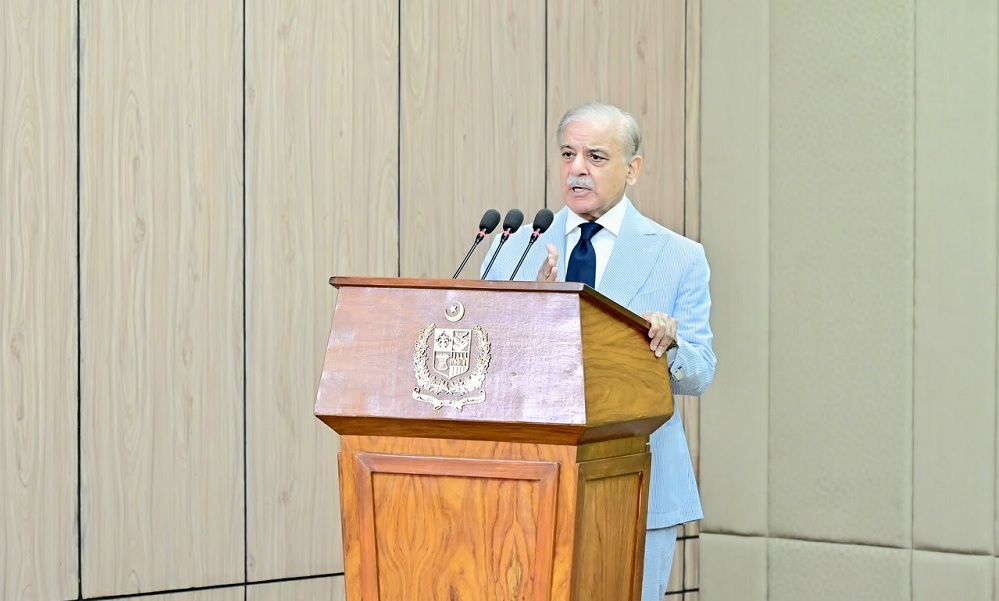
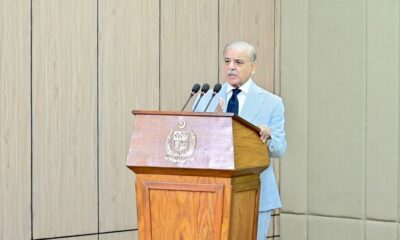
Pakistan Prime Minister Shehbaz Sharif on Friday renewed his call for Afghanistan to take action against militant groups, saying Afghan territory should not be used to launch attacks against Pakistan.
“Pakistan shares over 2,600-kilometre border with its neighbour and has repeatedly urged the Afghan authorities to act against terrorist organisations and prevent Afghan territory from being used against Pakistan,” Sharif said speaking at an event in Balochistan province. “However, the Afghan interim government has failed to take effective action against these groups.”
Pakistan has repeatedly accused the Islamic Emirate of Afghanistan of failing to curb the activities of militant groups that Islamabad says carry out attacks inside Pakistan. The Islamic Emirate has consistently rejected the allegations, insisting that Afghan territory is not used against any country and calling on Pakistan to address its own security challenges internally.


Tahawol: New developments ahead in the Middle East discussed

Saar: Rising tensions between Kabul and Islamabad discussed

Uzbekistan delegation arrives in Kabul to attend trade forum

Afghanistan, Turkey discuss expanding agricultural cooperation

Modi’s education minister resigns in major win for Indian youth protesters

Afghanistan eyes direct Basmati rice imports from India amid tensions with Pakistan

India offers 1,000 online scholarships for Afghan students for 2026-27 academic year

TAPI project sees rapid progress in Afghanistan

Cricket world pays tribute to Afghanistan fast bowler Shapoor Zadran

Turkey spent over $120 million to prepare airport for Qatar-donated U.S. presidential aircraft
Tahawol: New developments ahead in the Middle East discussed
Saar: Rising tensions between Kabul and Islamabad discussed

Tawsia: Factors behind rising fuel prices in Afghanistan discussed

Tahawol: US-Kabul engagement on security issues discussed

Saar: Continued exchange of attacks between US-Iran discussed
-

 Latest News4 days ago
Germany defends Afghan deportation policy after fatal Trier knife attack
-
 Latest News5 days ago
Fazlur Rehman accuses Pakistan of enabling US strikes on Afghanistan
-
 Sport4 days ago
FIFA updates world rankings; Spain climbs to No. 1, Afghanistan ranked 171st
-
 Latest News3 days ago
Afghanistan and Uzbekistan advance railway cooperation, discuss Trans-Afghan project
-
 Latest News5 days ago
India says UN sanctions on Afghanistan no longer effective
-
 Latest News5 days ago
Widespread reaction to Nuristan floods; from messages of sympathy to requests for urgent assistance
-
 Latest News5 days ago
Deadly Nuristan floods death toll climbs to 23 and nearly 100 missing
-
 Regional5 days ago
Hamas names Khalil Al-Hayya as new overall leader