
Latest News
Afghanistan, Uzbekistan discuss expanding transit cooperation and advancing railway projects


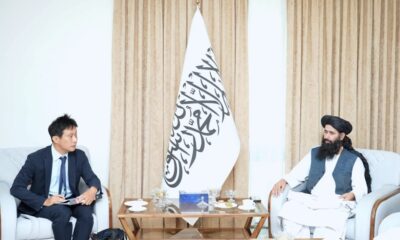


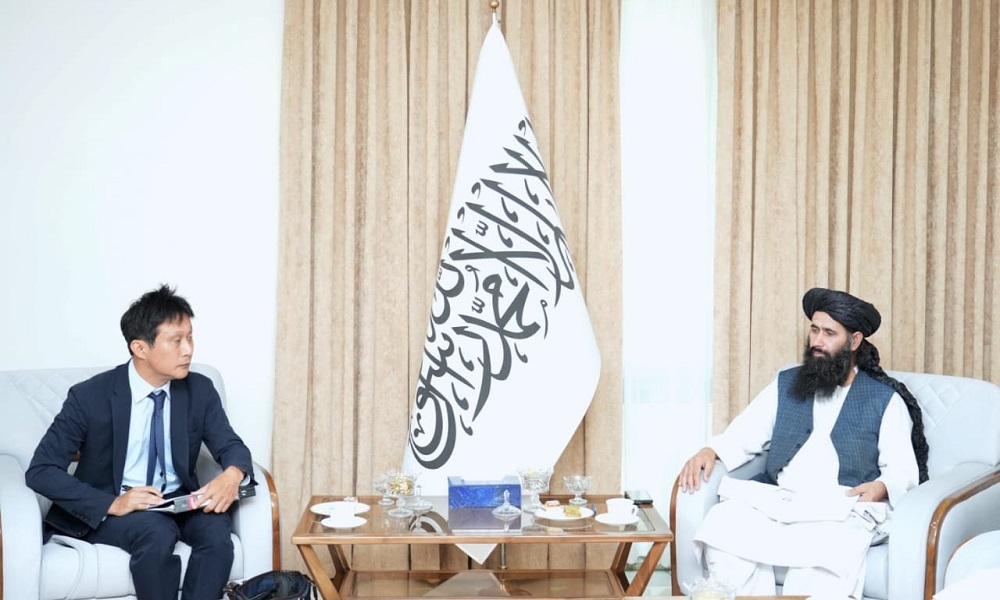
Mohammad Naeem, Deputy Minister of Foreign Affairs for Finance and Administration of the Islamic Emirate, met on Tuesday with Japanese Ambassador to Kabul, Kenichi Matsumoto.
According to the Ministry of Foreign Affairs, the two sides discussed Afghanistan-Japan bilateral relations, areas of mutual interest, and ways to strengthen continued cooperation between Kabul and Tokyo.
The Japanese ambassador expressed hope for further strengthening ties between the two countries. He also praised the Islamic Emirate’s efforts to combat narcotics, the improved security situation, and other developments in Afghanistan. He additionally welcomed the Brussels meeting between the Islamic Emirate and the European Union.
Naeem thanked Japan for what he described as its positive approach and continued cooperation with the Afghan people, stressing the importance of expanding bilateral relations and enhancing mutual engagement.
The two sides concluded the meeting by emphasizing the importance of holding regular consultations to strengthen coordination and bilateral cooperation.
Latest News
Mujahid: Afghanistan’s borders secure, territory will not be used against other countries
Mujahid said the country’s border forces are fully responsible for safeguarding Afghanistan’s territorial integrity and national interests.
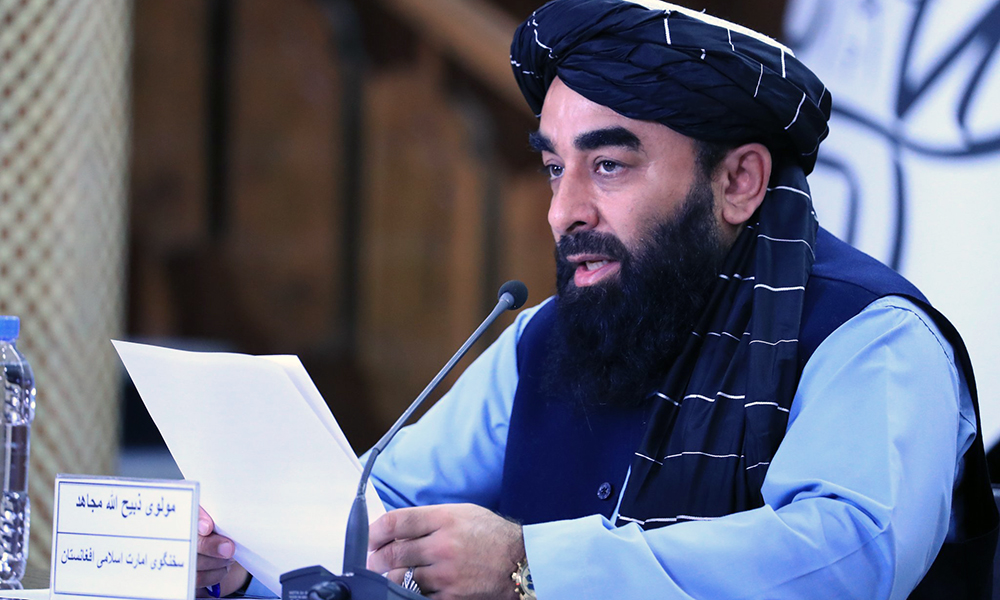
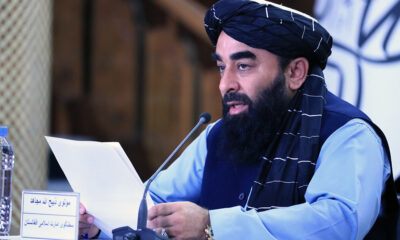
Islamic Emirate spokesman Zabihullah Mujahid says Afghanistan’s border security remains under control, stressing that attempts by smugglers and what he described as “criminal elements” to create instability are swiftly neutralized by border forces.
Speaking at the “Government Program Through the Lens of the Media” briefing on Tuesday, Mujahid said the country’s border forces are fully responsible for safeguarding Afghanistan’s territorial integrity and national interests, adding that the security situation along the borders is stable and reliable.
He said smugglers and “criminal elements” occasionally attempt to create security challenges in border areas, but maintained that such incidents are brought under control within minutes by Islamic Emirate forces.
Mujahid also highlighted the performance of the Ministry of Borders, Ethnicities and Tribes, saying it has made significant progress in strengthening national unity and resolving disputes over the past year.
According to him, the ministry settled 432 disputes during the past year and organized 33 major tribal and public gatherings across the country’s provinces aimed at promoting reconciliation and social cohesion.
Reiterating the Islamic Emirate’s foreign policy, Mujahid said the government follows an economy-oriented and connectivity-based approach and seeks positive relations with all countries in the region and beyond.
He also reaffirmed that Afghan territory will not be used against any other country, describing the policy as a key principle of the Islamic Emirate’s engagement with the international community.
Latest News
UNAMA: 57 civilians killed in Pakistan attacks in three months
The report comes as Afghan rights organization Rawadari released a separate assessment claiming that at least 472 civilians have been killed and 715 others injured in Pakistani attacks over the past 18 months.
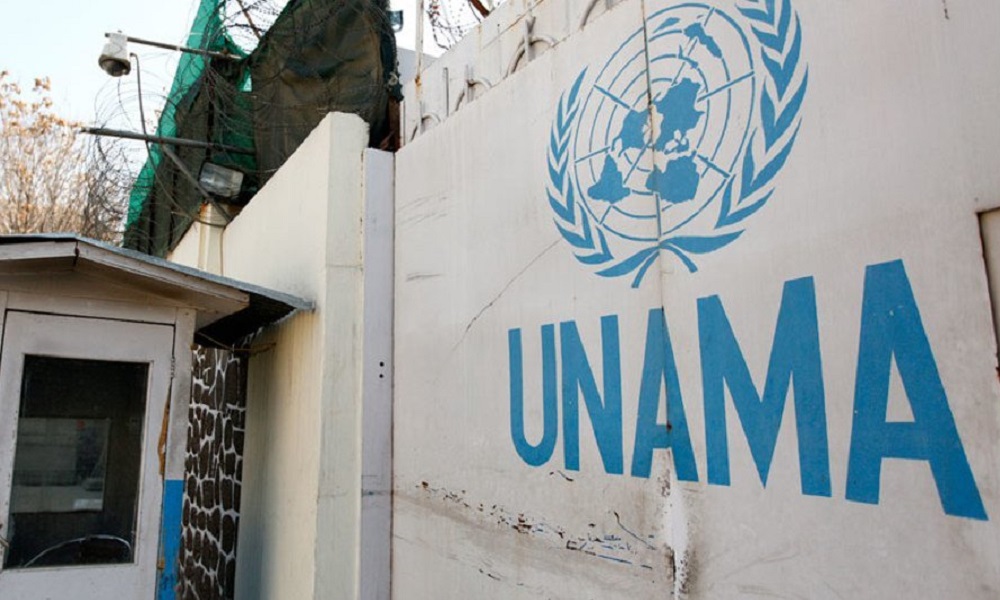
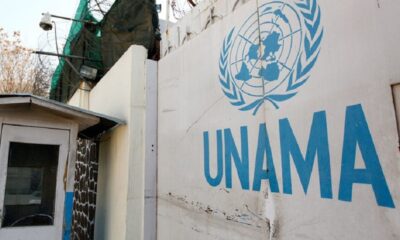
The United Nations Assistance Mission in Afghanistan (UNAMA) says 57 civilians were killed and 342 others injured in Pakistani security forces attacks between April 1 and June 30, 2026, according to its latest quarterly human rights report.
UNAMA said the casualties occurred as a result of armed violence along the Afghanistan-Pakistan frontier, with the dead including six women and 31 children. The mission noted that the highest number of civilian casualties was recorded during Pakistani airstrikes on the eastern provinces of Paktika, Kunar, and Paktia on June 28.
According to the report, UNAMA documented a total of 399 civilian casualties during the three-month period, comprising 57 deaths and 342 injuries. Overall, the victims included 40 women and 112 children. The mission said airstrikes and ground engagements were the primary causes of civilian harm and attributed all civilian casualties recorded during the reporting period to Pakistani security forces.
The report comes as Afghan rights organization Rawadari released a separate assessment claiming that at least 472 civilians have been killed and 715 others injured in Pakistani attacks over the past 18 months.
Rawadari said the attacks displaced more than 29,000 families and damaged or destroyed hundreds of civilian facilities, including healthcare centers, schools, mosques, and residential homes, in at least 50 separate incidents across Afghanistan.
The organization identified the attack on the Omid Drug Treatment Center in Kabul as the deadliest incident during the reporting period, saying at least 300 people were killed or wounded. It added that other human rights organizations have previously described such attacks as potential war crimes and called for those responsible to be held accountable.
Meanwhile, Afghanistan’s Ministry of Foreign Affairs described Pakistan’s attacks as a violation of the country’s sovereignty and rejected Islamabad’s claims that the strikes targeted armed militants. The ministry urged the international community to condemn what it called Pakistan’s “aggressive actions.”
For its part, the Pakistani Embassy in Kabul told UNAMA that armed groups opposed to the Pakistani government continue to use Afghan territory to launch attacks against Pakistan.
The Islamic Emirate has repeatedly rejected the allegation, calling it baseless.


Naeem, Japanese ambassador discuss continued Kabul-Tokyo cooperation

Zidane appointed France head coach after 2026 World Cup

Economic Commission approves expansion of Sher Khan port to boost regional trade

Mujahid: Afghanistan’s borders secure, territory will not be used against other countries

UNAMA: 57 civilians killed in Pakistan attacks in three months

India offers 1,000 online scholarships for Afghan students for 2026-27 academic year

Cricket world pays tribute to Afghanistan fast bowler Shapoor Zadran

Turkey spent over $120 million to prepare airport for Qatar-donated U.S. presidential aircraft

Thousands pay final respects as Afghan cricketer Shapoor Zadran buried in Kabul

Afghanistan U-15 team qualifies for FIFA U-15 World Cup

Tahawol: Afghanistan–Uzbekistan Economic Cooperation Enters New Phase

Saar: Growing Criticism in Pakistan Over Islamabad’s Afghanistan Policy

Tahawol: Trump halting major Iran escalation

Saar: Afghanistan-Uzbekistan economic ties

Tahawol: New developments ahead in the Middle East discussed
-
 Latest News2 days ago
Badakhshan Governor, Army Chief reaffirm commitment to Afghanistan’s security
-
 Latest News4 days ago
Five armed men killed while attempting to cross Durand Line into Badakhshan
-
 Latest News3 days ago
U.S. government plan to interview Afghan refugees raises deportation concerns
-
 Latest News4 days ago
Iran reiterates call for inclusive government in Afghanistan
-
 Latest News3 days ago
Afghanistan, Turkey discuss expanding agricultural cooperation
-
 Business4 days ago
Over 205,000 Afghans visit Uzbekistan for trade and business in six months
-

 Regional2 days ago
US pauses strikes on Iran as diplomatic efforts gather pace amid regional tensions
-

 World5 days ago
Trump links Saudi nuclear deal to Israel normalization through Abraham Accords