
Latest News
Kabul faces deepening water crisis as supplies dwindle and demand surges
At the same time, Kabul’s population has surged dramatically — from around 2.5 million in 2001 to an estimated 6 million today — placing unprecedented strain on already limited resources.

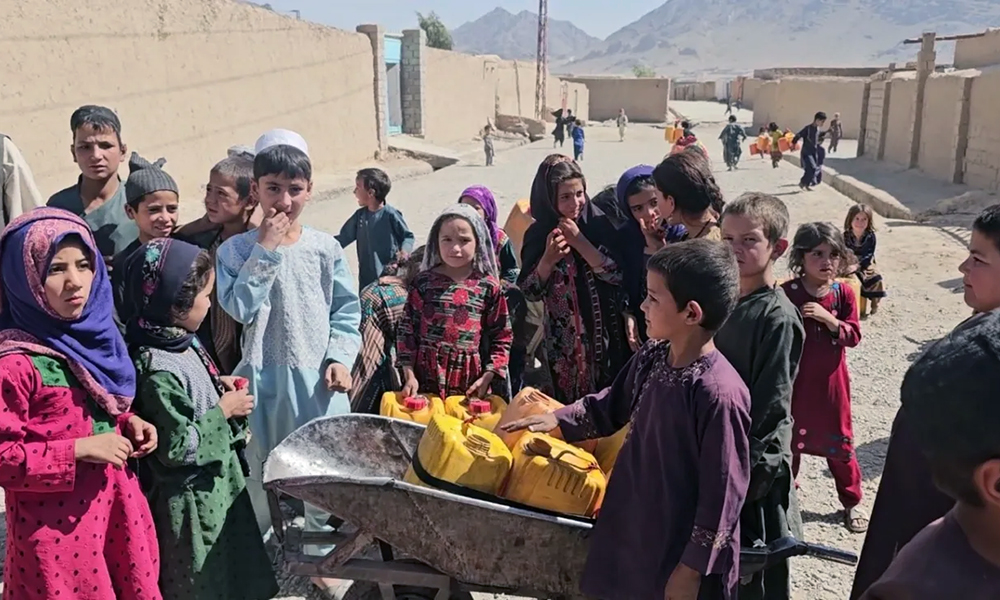
Residents of Kabul are grappling with a worsening water shortage, as falling groundwater levels, rapid population growth and climate pressures push the Afghan capital toward a looming humanitarian crisis.
In poorer neighbourhoods such as Deh Mazang, access to clean water has become a daily struggle. Many residents rely on distant wells or must purchase water delivered by small tankers — an expense that is increasingly out of reach.
“We have no money for food. How can we get water?” said one elderly resident, reflecting growing frustration among communities forced to carry heavy containers across long distances.
Groundwater depletion accelerates
Kabul, situated in the Hindu Kush, depends heavily on groundwater extracted from wells. But years of overuse have caused water levels to drop sharply, with some wells now drilled as deep as 150 metres.
A 2025 report by Mercy Corps found that aquifer levels in the city have fallen by as much as 25 to 30 metres over the past decade, raising concerns that current supplies may soon become unsustainable.
Experts warn that without urgent intervention, Kabul could face severe water shortages within years.
Climate and urban growth worsen shortages
Climate change has intensified the crisis as reduced snowfall and recurring droughts have limited the natural replenishment of groundwater, while heavier, short bursts of rain often lead to flooding rather than absorption into the soil.
At the same time, Kabul’s population has surged dramatically — from around 2.5 million in 2001 to an estimated 6 million today — placing unprecedented strain on already limited resources.
According to water management specialist Najibullah Sadid, the crisis was inevitable even without climate change due to rapid urbanisation and population growth. In many areas, shallow aquifers have already run dry, and expanding urban infrastructure has reduced the land available for water to seep back underground.
Mismanagement and overuse add pressure
Water mismanagement has further compounded the problem. Large-scale users, including commercial enterprises, have been criticised for excessive groundwater extraction, worsening depletion.
Officials acknowledge the severity of the situation and a spokesperson for the Ministry of Water and Energy described Kabul’s water supply as “critical,” citing population growth, declining rainfall and rising consumption as key drivers.
Authorities have introduced restrictions on groundwater use, including quotas for businesses and monitoring systems aimed at limiting excessive consumption.
Infrastructure projects fall short
Efforts to address the crisis include the construction of small check dams and absorption wells to help recharge groundwater, as well as upgrades to existing infrastructure such as the Shah wa Arous and Qargha dams.
However, experts say these measures are insufficient without major long-term investments.
Two key projects — a pipeline from the Panjshir River and the long-planned Shah Toot Dam — could significantly ease shortages by supplying water to millions. But both have been delayed due to funding and planning challenges.
Analysts warn however that without prioritising water infrastructure, Kabul risks a severe crisis that could affect millions of residents.
“Water is essential,” Sadid said. “It is more important than roads.”
As the city continues to expand and climate pressures intensify, the gap between supply and demand is widening — leaving many residents struggling daily for one of life’s most basic necessities.



Latest News
Four members of one family killed in Helmand in Pakistan airstrike
The family, originally from Ghazni province, reportedly operated a small restaurant in the area.
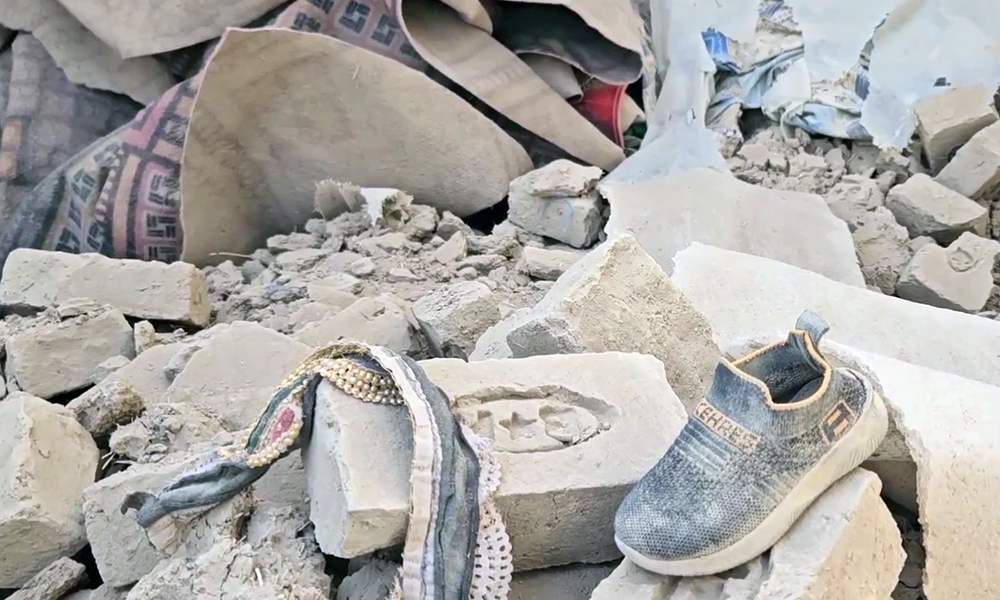
Four members of a family were killed and seven others wounded in an airstrike in Safar area of Garmser district in southern Afghanistan’s Helmand province, according to local reports.
The family, originally from Ghazni province, reportedly operated a small restaurant in the area.
The bodies of those killed and the wounded were transported by helicopter to Ghazni province for burial and medical treatment, according to the reports.
Latest News
UNAMA acting chief visits Islam Qala border to assess support for returnees
UN launched a $529 million response plan aimed at assisting around 2.7 million Afghans expected to return from Iran and Pakistan between April and December 2026.
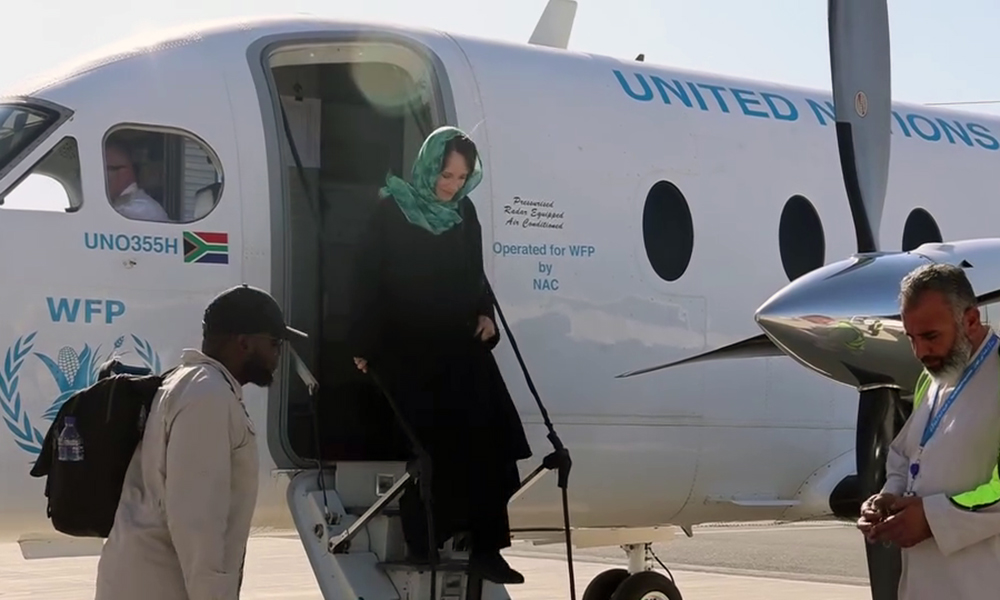
Georgette Gagnon, UNAMA’s acting head, visited western Afghanistan, including the Islam Qala border crossing, to see firsthand UN efforts to support millions of Afghans returning from neighboring Iran and Pakistan.
Earlier this year, the UN launched a $529 million response plan aimed at assisting around 2.7 million Afghans expected to return from Iran and Pakistan between April and December 2026.
Latest News
Trump: Unlike Afghanistan, US took all equipment from Iraq
Trump said the withdrawal from Iraq marked the end of what he described as a costly military involvement, adding that he had set a clear mission and instructed commanders to complete it without allowing the US presence to become permanent.
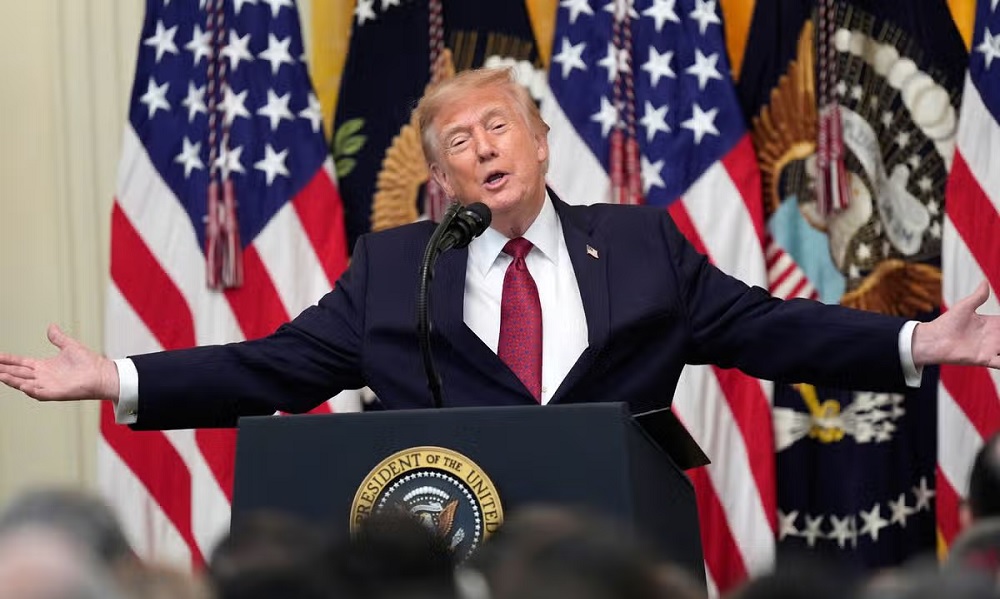
US President Donald Trump on Wednesday compared the withdrawal of US forces from Iraq with the 2021 US withdrawal from Afghanistan, saying military equipment had been left behind in Afghanistan, while US forces leaving Iraq took their equipment with them.
Speaking at a White House event, Trump referred to the final departure of US-led coalition forces and equipment from Erbil Air Base in northern Iraq, which marked the end of the US military mission against Daesh in Iraq.
“I said, take a little longer. Take everyone. We left all of the equipment, if you remember, in Afghanistan. Everything was left behind,” Trump said.
“I said, ‘I want every screw taken. If there’s a screw lying on the ground, take it. If we have a canvas tent, take it.’ We took everything,” he added.
He also mentioned the August 2021 attack at Kabul airport that killed 13 US soldiers.
Trump said he had become acquainted with the families of the US service members killed in the attack and also highlighted those who were seriously wounded.
“What happened to those—to their children should never have been allowed to happen,” he said, adding that 48 wounded service members were severely injured and “never get mentioned.”
Trump said the withdrawal from Iraq marked the end of what he described as a costly military involvement, adding that he had set a clear mission and instructed commanders to complete it without allowing the US presence to become permanent.
The US military announced on Wednesday that its forces and equipment had completed an orderly departure from Erbil Air Base, formally ending Operation Inherent Resolve in Iraq. The US-led mission began in 2014 to fight Daesh after the group seized large areas of Iraq and Syria. The US is continuing its counter-Daesh mission in Syria from a headquarters in Jordan.
Trump said the US had entered Iraq to fight the Islamic State and that the group no longer controlled a territorial “caliphate.”
“We came to fight a caliphate, and there is no longer a caliphate, so we are going home indeed,” he said.


Four members of one family killed in Helmand in Pakistan airstrike

UNAMA acting chief visits Islam Qala border to assess support for returnees

Rashid Khan, Azmatullah Omarzai maintain top spots in ICC ODI rankings

Trump: Unlike Afghanistan, US took all equipment from Iraq

Afghanistan, Belarus discuss expanding industrial and trade cooperation

Saudi energy group signs major Afghanistan deals covering gas exploration and pipeline plans

Iranian clubs to face Gulf opponents at neutral venues in Asian Champions League Elite

Khalilzad: Afghanistan ready to attract major investment

Ariana Television Network secures exclusive rights to Afghanistan’s 2026/27 cricket series

El Niño likely to intensify, may become strongest ever recorded, WMO says

Tahawol: Improvement in Afghanistan-China relations discussed

Saar: Expanding ties with regional and global countries discussed

Tahawol: Absence of Afghanistan’s envoy at UNGA discussed

Saar: Assessment of war between Afghanistan and US discussed

Saar: Afghanistan’s image at UNGA
-

 Sport4 days ago
Afghan bodybuilder Ali Bilal finishes runner-up at Mr Olympia for third straight year
-
 Latest News4 days ago
Afghanistan says 28 killed, 32 captured in Nuristan operation
-
 World4 days ago
Trump rejects Iranian proposal to open Hormuz and end fighting
-

 Sport5 days ago
Afghanistan Champions League: Omar Zawak Herat beat Toofan Herat 1-0
-
 Sport3 days ago
Afghanistan vs India Asian Games quarter-final abandoned without a toss
-
 Latest News4 days ago
UNDP, UN Women launch financing initiative for Afghan women entrepreneurs
-
 Latest News4 days ago
Germany reports 488 Afghans for possible deportation, 267 have no criminal convictions
-
 Regional4 days ago
Aimal Wali Khan calls Dera Ismail Khan attack a ‘state failure’