
Latest News
Noor Warns of Any Option if Agreement Is Not Implemented

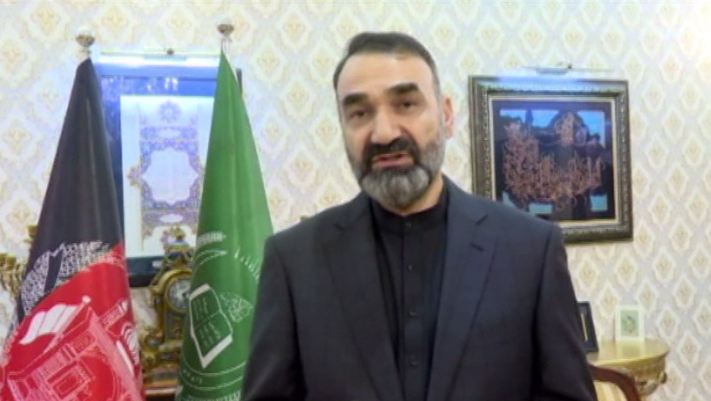
Atta Mohammad Noor, the former governor of Balkh province and Chief Executive of Jamiat Islami party on Tuesday said that he is looking for the implementation of the agreement made between him and the acting ministers of Defense and Interior Affairs.
He made the remarks in a video message sent to media on the eve of Nawruz.
Noor warned that he will use any option if the agreement is not implemented.
Without elaborating further, Noor said that they have agreed on a “third option”.
“We have all options on the table. Of course, we do not want war until the war is imposed on us,” he stressed.
In addition, Noor said that the appointment of the new police chief in Balkh was a plot against him.
This comes a week after tensions break out between Noor and the government over the appointment of Gen. Abdul Raqib Mubariz as new police chief of Balkh.
At that time, the new police chief accompanied by Special Forces units was introduced despite strong opposition by Mr. Noor. The move led to hours of gunfight and chaos in Mazar-e-Sharif City.







Latest News
UNAMA voices concern over reported detention of women in Herat
UNAMA said it had received reports of multiple arrests and detentions of women in Herat linked to alleged violations of dress regulations and was closely monitoring the situation.

The United Nations Assistance Mission in Afghanistan (UNAMA) has expressed concern over reports that several women in Herat province have been detained for allegedly failing to comply with dress requirements, warning that the incidents raise serious human rights concerns.
In a statement issued on Sunday, UNAMA said it had received reports of multiple arrests and detentions of women in Herat linked to alleged violations of dress regulations and was closely monitoring the situation.
“UNAMA is concerned over multiple arrests and detentions of women in Herat for alleged non-compliance with dress requirements, which raises serious human rights concerns,” the mission said.
The UN mission reiterated that freedom of movement is a fundamental right and stressed that both women and men are entitled to equal protection under the law.
The statement comes as the rights of women and girls in Afghanistan continue to be a key issue in discussions between the Islamic Emirate and the international community. International organizations have repeatedly called for the protection of fundamental rights, while the Islamic Emirate maintains that women’s rights are safeguarded in accordance with Sharia law.
Authorities have not yet publicly responded to UNAMA’s statement.
Latest News
IEA’s Supreme Leader says implementation of Sharia depends on revival of religious education
In his address, the Islamic Emirate leader further urged officials to remain vigilant in administrative, political, economic and military affairs.
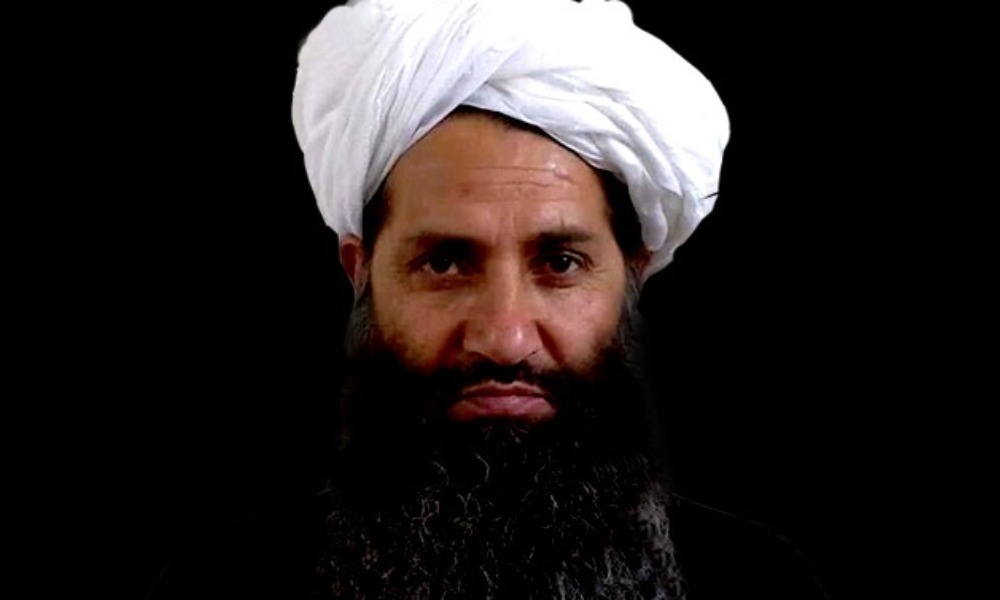
Sheikh Hibatullah Akhundzada, the supreme leader of the Islamic Emirate, has emphasized the importance of religious education, saying that the implementation of Sharia and the reform of society are only possible through the revival and strengthening of Islamic sciences.
The remarks came during a meeting with administrators of jihadist religious schools, teachers, officials responsible for reviewing religious publications, orphanage administrators and a number of religious scholars, according to a statement released by the Islamic Emirate.
Akhundzada described religious scholars as the heirs of the prophets and said they carry the responsibility of preserving the faith, guiding society and raising public awareness. He urged scholars to play a greater role in educating people and promoting Islamic values through teaching, preaching and religious outreach.
He also called on officials and educators to focus on the intellectual and moral development of students, strengthen their religious knowledge and beliefs, and encourage study and learning within religious institutions.
In his address, the Islamic Emirate leader further urged officials to remain vigilant in administrative, political, economic and military affairs, warning against negligence and stressing the need for stronger cooperation and mutual trust among state institutions.
Latest News
UN Security Council to review Afghanistan situation as UNAMA mandate nears expiry
According to the Security Council, Afghanistan remains one of the world’s most severe humanitarian crises, with an estimated 21.9 million people requiring assistance this year.
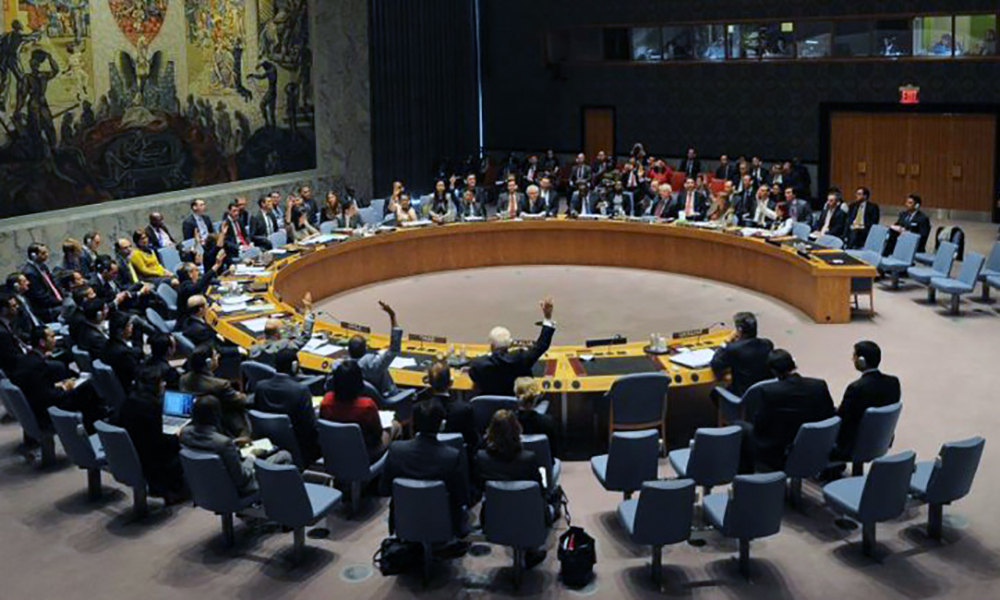
The United Nations Security Council will hold its quarterly meeting on Afghanistan on Monday, with members set to assess recent developments in the country and discuss the future of international engagement.
During the session, the head of the United Nations Assistance Mission in Afghanistan (UNAMA) is expected to present the UN Secretary-General’s latest report, outlining political, humanitarian and social developments over the past three months.
The discussions are expected to focus on key issues including the humanitarian situation, political developments, and the rights of women and girls, particularly access to education.
According to the Security Council, Afghanistan remains one of the world’s most severe humanitarian crises, with an estimated 21.9 million people requiring assistance this year.
While council members broadly support an Afghanistan free of terrorism, governed inclusively and committed to international obligations, differences remain over how best to achieve those goals.
Analysts say the meeting could offer important indications of the Security Council’s assessment of Afghanistan and the international community’s future approach toward the country. The talks are also expected to address UNAMA’s role in facilitating engagement between Afghanistan and the wider international community.
Officials of the Islamic Emirate have repeatedly urged the United Nations and other international actors to present what they describe as a balanced and impartial picture of Afghanistan, while acknowledging developments on the ground.
The meeting comes ahead of the expiration of UNAMA’s current mandate on June 16. The Security Council is expected to decide on the mission’s extension the same day.
UNAMA remains the United Nations’ primary presence in Afghanistan, coordinating humanitarian assistance, monitoring human rights issues and supporting diplomatic efforts aimed at fostering dialogue between Afghanistan and the international community.


SAAR: UN Security Council Holds Quarterly Meeting on Afghanistan

UNAMA voices concern over reported detention of women in Herat

IEA’s Supreme Leader says implementation of Sharia depends on revival of religious education

UN Security Council to review Afghanistan situation as UNAMA mandate nears expiry

Iran receives 417 million cubic meters of water from Afghanistan this year

Afghanistan signs $46 million deal to develop standard laboratory complexes

Large blast near Beit Shemesh part of pre-planned test: Israeli defense firm

Trump returns from China with stability but little progress

Afghanistan announce squad for India series

Afghanistan, Russia sign military cooperation agreement
SAAR: UN Security Council Holds Quarterly Meeting on Afghanistan

Tahawol: Impact of Middle East crisis on aid transfers to Afghanistan

Saar: Calls to strengthen economic and trade cooperation discussed

Tawsia: Signing of $20 million Herat salt mining deal discussed

Tahawol: Discussion on fear of internal disputes in Iran
-
 Business5 days ago
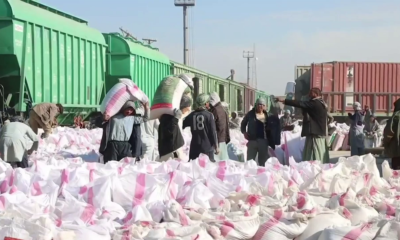
Afghanistan’s trade with Central Asia records sharp growth
-

 Sport3 days ago
Gaikwad set to replace injured Kohli for Afghanistan ODI Series
-

 Latest News5 days ago
Three Afghans among four farmworkers burned alive in Italy; two Pakistanis arrested
-
 Sport4 days ago
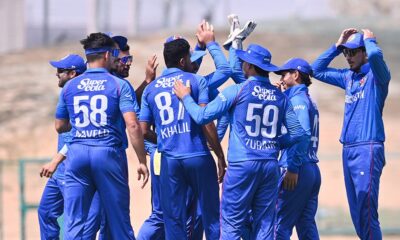
Afghanistan name squad for A-team tri-series in Sri Lanka
-
 Business4 days ago
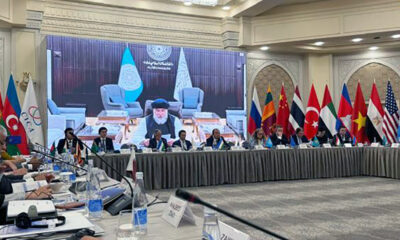
Afghanistan highlights strategic connectivity role at Termez Dialogue
-

 Latest News4 days ago
Kohli ruled out of Afghanistan ODI series with hamstring injury
-

 Latest News5 days ago
Rubio says at least five countries willing to accept stranded Afghans in Qatar
-

 International Sports3 days ago
Eight Goalkeepers Set to Shine at the 2026 FIFA World Cup