
Regional
Qatar PM to visit Tehran to pursue mediation efforts
The U.N.’s International Maritime Organization has reported 70 incidents in the Strait of Hormuz since February 28 that have killed 19 seafarers.

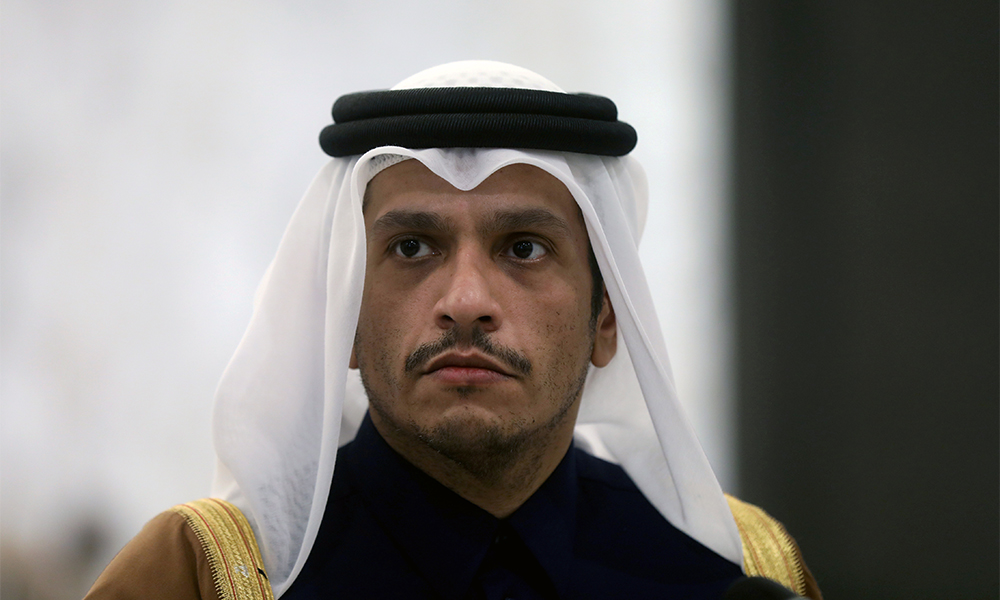
Qatar’s prime minister will visit Tehran on Thursday in an effort to relaunch diplomacy after the U.S. and Iran traded recriminations over Washington’s promise to increase economic pressure on Tehran by targeting its trade partners for sanctions, Reuters reported.
Qatar, a Gulf neighbour of Iran and a US ally, has served as a back-channel negotiator for the warring parties and played a direct role in securing the June ceasefire that briefly led to a cessation of hostilities.
The visit comes as the war nears its sixth month with fighting largely paused but no diplomatic breakthrough in sight. The two sides remain at odds over control of the Strait of Hormuz, a chokepoint for global oil supplies that Tehran has used as leverage.
The memorandum of understanding broke down in part because of differences over the narrow waterway between Iran and Oman where one-fifth of the world’s oil supplies passed before the war began on February 28.
The guns have gone mostly silent — the US military’s Central Command has not reported any attacks on Iran for nearly a month. Washington appears to be leaning more on economic pressure by announcing plans to cut Iran off from its trading partners with increased sanctions.
Hormuz oil flows have fallen to a three-month low, with just 5 million barrels per day transiting on Monday, according to the latest ship-tracking data. Before the war, the strait carried roughly 20 million barrels per day of crude oil.
Iran’s Revolutionary Guards said on Wednesday that Iran and Oman had agreed how to share the waterway and its revenues, but a senior Iranian source later said the two countries were still working on the details of an agreement.
Despite an aerial bombardment earlier in the war that severely diminished Iran’s conventional forces, Tehran has maintained enough missile and drone capability to attack Gulf neighbours that house US military bases and disrupt oil tankers in the strait, read the report.
The U.N.’s International Maritime Organization has reported 70 incidents in the Strait of Hormuz since February 28 that have killed 19 seafarers.
Thousands of others have died, mostly in Iran and Lebanon, since the US and Israel attacked Iran with the stated goals of denying Iran a nuclear weapon, helping Iranians topple their government, and destroying Iran’s missile programme.
Qatari Prime Minister Sheikh Mohammed bin Abdulrahman al-Thani will discuss the continuation of Qatar’s mediation efforts and other developments in the region during his visit to Tehran on Thursday, Iranian Foreign Ministry spokesperson Esmaeil Baghaei said.
Qatar’s Foreign Ministry spokesperson said on X that Sheikh Mohammed would also address freedom of navigation in the Strait of Hormuz and the need to return to the status quo before February 28, while also discussing with Iranian officials ways to “de-escalate tensions and create the conditions conducive to dialogue.”
The international waterway was open to free navigation before the war, but Iran has since clung to its control of the strait as leverage and a revenue source, seeking to charge ships a commission, which the US has opposed.
“An agreement with Oman over the Strait of Hormuz has not been finalised,” the senior Iranian source told Reuters, adding that the talks were continuing on the details of an accord.
That seemed to contradict a statement by Brigadier General Hossein Mohebbi, a spokesperson for the Islamic Revolutionary Guard Corps, who said Iran and Oman had “reached results that are acceptable to both sides” on controlling the strait and its revenues, Reuters reported.
Mohebbi said the strait would remain shut unless the US met Tehran’s conditions under the interim ceasefire, or memorandum of understanding, that the two sides signed in June before it unravelled. Those conditions include an end to the US blockade on Iranian ports, compensation and removal of sanctions.
Iran and Oman have held on-and-off talks for weeks about controlling traffic through the strait. Tehran and Washington have each tried to assert control over the channel, imposing separate blockades.







Regional
Houthis warn airlines to avoid Saudi airports after deadly Riyadh attack
Saudi authorities said the 12 people killed in Saturday’s attack included four Saudi nationals, two Bangladeshi nationals and one citizen each from the US, Jordan, Palestine, Syria, Sudan and Egypt.
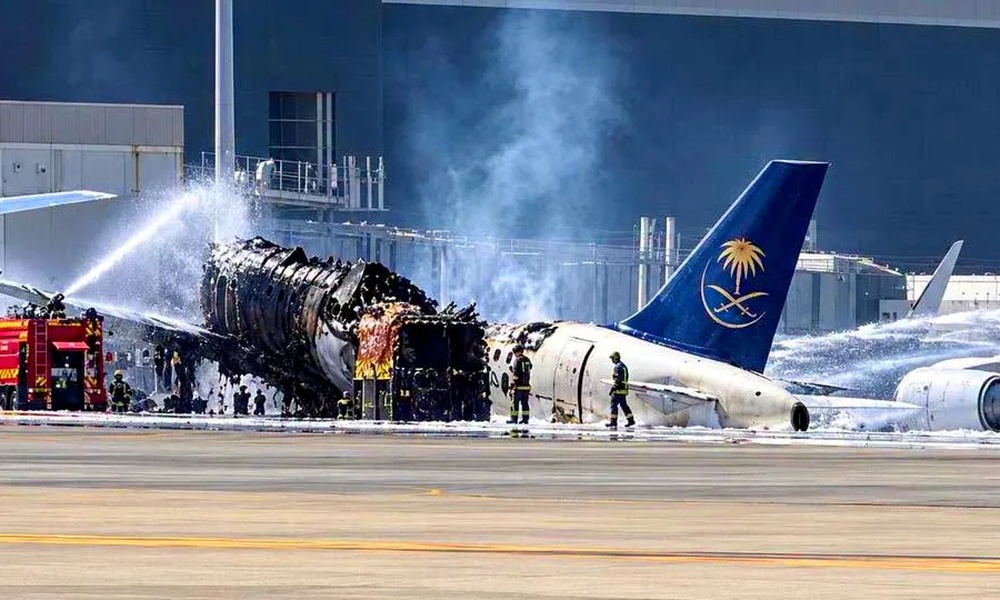
Yemen’s Houthi movement has warned airlines and passengers against using Saudi Arabia’s airports and airspace, declaring them potential targets following a deadly attack on Riyadh’s King Khalid International Airport that killed 12 people and injured more than 300.
In a statement issued on Sunday, Houthi military spokesman Yahya Saree reiterated the group’s warning to airline companies, saying Saudi airports and airspace could be targeted in further military operations.
The warning excluded the holy cities of Mecca and Medina. Saree urged airlines and passengers to take the threat seriously, while blaming Saudi Arabia for what he described as unsuccessful interception attempts.
The statement did not directly claim responsibility for Saturday’s attack. However, the Iran-backed group had previously said it was behind separate strikes on the same airport on Thursday, which killed three people and damaged an aircraft.
Saudi authorities said the 12 people killed in Saturday’s attack included four Saudi nationals, two Bangladeshi nationals and one citizen each from the United States, Jordan, Palestine, Syria, Sudan and Egypt.
The attack has raised serious concerns about the security of Saudi Arabia’s critical infrastructure and the potential for the widening regional conflict to disrupt international aviation.
Eyewitnesses described scenes of panic at the airport, with passengers fleeing as smoke rose above the terminal. Video footage showed smoke billowing over the facility following the strike.
The incident is being described as the deadliest single attack on a Gulf Arab state since the war involving Israel, the United States and Iran began in February.
The Houthis have intensified their attacks on Saudi targets in recent weeks, threatening infrastructure vital to the kingdom’s economy. Saudi Arabia has responded with air strikes against Houthi positions in Yemen.
US President Donald Trump said Washington was considering joining Saudi Arabia in further military action against the group.
Asked whether the United States would participate in strikes, Trump said a decision had not yet been made, adding that his administration had only recently learned of the latest attack.
US Secretary of State Marco Rubio condemned the attacks and confirmed that an American citizen had been killed.
Britain has also condemned the strike. Defence Secretary Wes Streeting said the United Kingdom was already providing Saudi Arabia with air-to-air refuelling support and indicated that further assistance could potentially be considered. However, he stressed that Britain was not currently planning offensive military operations.
Streeting said the attack on a civilian target could not be justified under any circumstances, adding that there was no military solution to the wider conflict.
United Nations Secretary-General António Guterres expressed shock at the attack, describing it as a violation of international law. European Commission President Ursula von der Leyen also condemned the incident as a dangerous escalation and expressed solidarity with Saudi Arabia.
Pakistan, Egypt and Qatar joined the international condemnation, warning that the attack threatened regional stability and civilian safety.
Despite the violence, a major energy conference scheduled to take place in Riyadh near the airport was expected to proceed, with organisers confirming that the World Petroleum Congress would run from October 11 to 15.
The latest escalation comes amid growing fears that the wider conflict involving Iran, Israel and the United States could intensify further. With the Houthis continuing to threaten Saudi infrastructure, concerns are mounting over the security of regional air travel, energy facilities and key economic centres.
Regional
Houthi attack on Saudi airport kills 12, over 300 wounded, authorities say
Hospitals were flooded with wounded brought by ambulance and helicopter, people briefed on the matter said. Some were in critical condition.
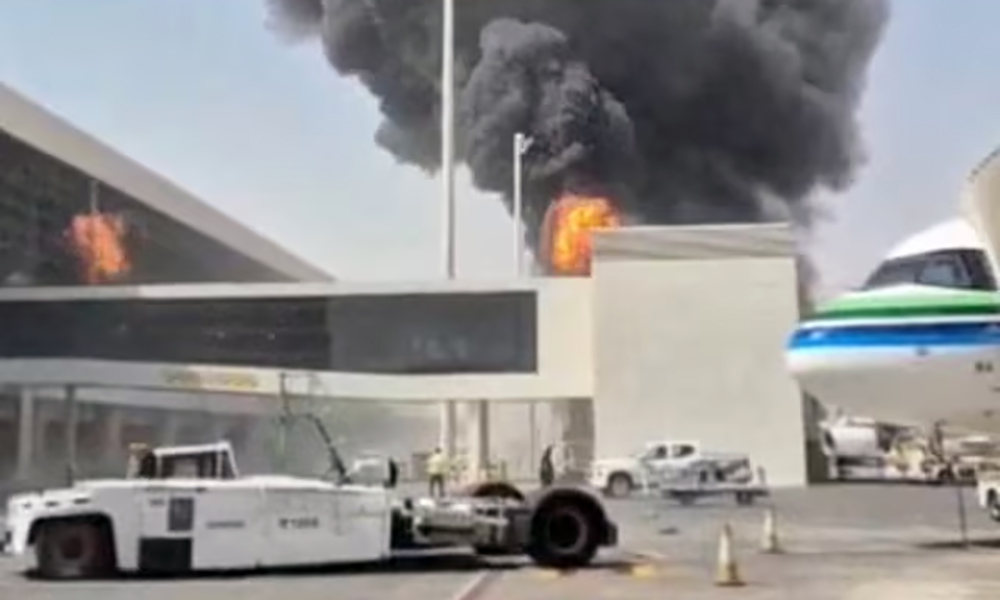
The third attack this week on Riyadh’s international airport on Saturday left at least 12 people dead and more than 300 wounded, Saudi authorities said, as Iran-backed Houthis escalated the campaign they launched this summer against the kingdom, Reuters reported.
The dead included four Saudis, two people from Bangladesh and one person each from the US, Jordan, Palestine, Syria, Sudan and Egypt, the Saudi civil aviation authority said. At the latest count, officials said, 309 were wounded.
Hospitals were flooded with wounded brought by ambulance and helicopter, people briefed on the matter said. Some were in critical condition.
Saturday’s attack, the deadliest in the kingdom in more than a decade, occurred without warning, with no alert issued by Saudi Arabia’s threat warning system. This week’s two previous attacks on King Khalid International Airport left four people dead and caused heavy damage to a Saudi commercial plane parked on the tarmac.
The deadly strikes exposed vulnerabilities in the kingdom’s defence capabilities as it wages an air campaign against the Houthis to support a ground war by the Yemeni government against the Iran-backed group.
Hospitals were flooded with wounded brought by ambulance and helicopter, people briefed on the matter said. Some were in critical condition.
Saturday’s attack, the deadliest in the kingdom in more than a decade, occurred without warning, with no alert issued by Saudi Arabia’s threat warning system. This week’s two previous attacks on King Khalid International Airport left four people dead and caused heavy damage to a Saudi commercial plane parked on the tarmac.
The deadly strikes exposed vulnerabilities in the kingdom’s defence capabilities as it wages an air campaign against the Houthis to support a ground war by the Yemeni government against the Iran-backed group.
US President Donald Trump, speaking to reporters outside the White House, was asked whether Washington planned to join Saudi strikes on the Houthis, read the report.
“We may. We’re going to look at it. We just found out about the recent attack, so we’ll make a decision. We move very quickly,” he said.
US Secretary of State Marco Rubio condemned the attacks, saying they “demonstrate a blatant disregard for innocent civilian life.”
One eyewitness at the airport on Saturday reported seeing an explosion and then multiple people lying injured on the ground inside. More than a dozen ambulances were seen rushing towards the facility. A video verified by Reuters showed ambulances at the airport.
An injured traveller told Reuters they saw something fly across the sky outside the airport before part of the ceiling near a departure gate collapsed.
The US embassy in Riyadh said it was “aware of attacks” and “strongly recommends all US citizens avoid this airport and surrounding areas.”
Saudi Arabia entered the Yemen war in 2015 at the head of an Arab coalition to try to force the Houthis out of the Yemeni capital Sanaa. The Houthis had stormed Sanaa the previous year, pushing out government forces, Reuters reported.
The war was fought to a bloody stalemate, with hundreds of thousands of Yemenis killed by fighting and famine. Saudi Arabia struck a 2022 deal with the Houthis, freezing the conflict.
That ceasefire unravelled over the summer, culminating in a lightning Houthi advance that took the Red Sea chokepoint of Bab el-Mandeb from Saudi-backed government forces.
The Saudi-backed Yemeni government began an offensive this week to try to retake that territory, which has so far made slow gains, even as the Houthis put the country’s third-largest city, Taiz, under siege.
Flight-tracking site flightradar24 showed all flights to Riyadh had either been diverted or cancelled, with only a helicopter hovering over the airport at one point.
Houthi attacks on Thursday and earlier in the week had already prompted a number of carriers to suspend or cancel services to the Saudi capital, shortly before Riyadh is due to host major energy and investment conferences.
Organizers of those conferences said ahead of the strikes on Saturday they would go ahead as planned.
Regional
Trump says US will not attack Iran before midterm elections in November
Some 60% of Americans — including one in four Republicans — disapprove of how Trump is handling the situation in Iran.
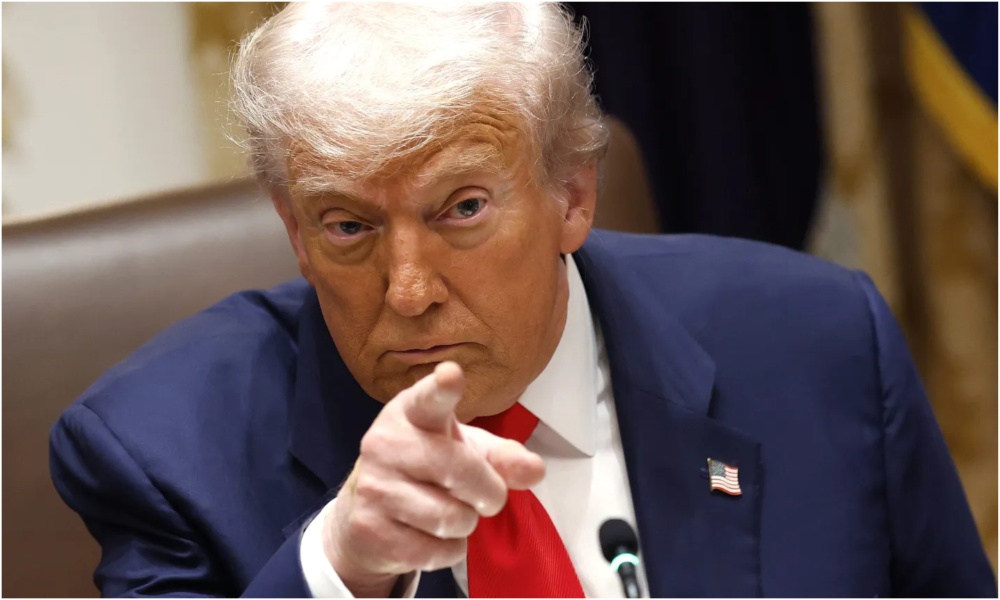
President Donald Trump said on Thursday that the US will not launch an attack on Iran before November’s US midterm congressional elections, asserting that the two countries are having “productive” talks about ending the six-month-old war, Reuters reported.
“We are having productive discussions with the Islamic Republic of Iran,” Trump wrote in a post on Truth Social. “We will not be attacking Iran at any time prior to the midterm elections to be held in the United States on November 3rd.”
The war, which began in February when the US and Israel launched strikes on Iran, has helped drive Trump’s domestic approval ratings downward and is weighing heavily on his fellow Republicans as they seek to preserve their narrow legislative majorities in November’s election.
Some 60% of Americans — including one in four Republicans — disapprove of how Trump is handling the situation in Iran, according to a recent Reuters/Ipsos poll. The conflict has pushed gasoline prices sharply higher at a time when voters say their top concern is the cost of living.
Trump has repeatedly said he expects oil prices to drop after the elections, but he has not offered a detailed plan for exiting the war, read the report.
Iran and the US have exchanged proposals in recent weeks aimed at ending the war and reopening the Strait of Hormuz, a vital global energy shipping route. Trump rejected Tehran’s latest offer.
Iran’s state media reported on Thursday that Tehran would not abandon uranium enrichment or hand over its uranium stockpile, citing the head of the country’s Atomic Energy Organization, days after US Vice President JD Vance told Reuters that Iran must make “meaningful” reductions in its enrichment capacity.
The US, Israel and Western allies have long accused Iran of seeking nuclear weapons, an accusation Iran has denied.


Saar: Pakistan’s political, security and economic crises

Bangladesh take 329-run lead against Afghanistan in one-off Test

Afghanistan Champions League second half to kick off on October 16

Karzai calls for reopening schools and universities to Afghan girls on International Day of the Girl

Muttaqi meets OIC deputy secretary-general to discuss expanding cooperation with Afghanistan

EU and FAO launch €5m programme to strengthen Afghanistan’s agrifood sector

Omar Zawak, Toofan Herat secure victories in Afghanistan Champions League

Cricket Bonanza: Afghanistan set for packed international schedule

Houthi advance in Yemen puts U.S. in a new bind

New warnings reignite debate over AI threat to humanity
Saar: Pakistan’s political, security and economic crises

Saar: Ongoing expulsion of Afghan refugees from Iran and Pakistan discussed

Tahawol: CSTO meeting on Afghanistan reviewed

Saar: Guterres’s talks with Pakistani officials on Afghanistan discussed

Tahawol: Consequences of US war in Afghanistan reviewed
-

 Regional2 days ago
Trump says US will not attack Iran before midterm elections in November
-

 Business4 days ago
Baradar opens Fifth Imam Abu Hanifa International Exhibition in Kabul
-

 International Sports4 days ago
Lionel Messi bids tearful farewell to Argentina after 3-0 win over Benin
-

 Business3 days ago
Russia-Afghanistan trade surges 150% in first seven months of 2026
-

 World3 days ago
Denmark says Russia has conducted sabotage attacks against its defense firms
-

 World4 days ago
Vance says Iran must cut enrichment to end war
-
 World2 days ago
Witkoff, Kushner to meet Ukrainians for talks on the war, says US source
-

 Sport3 days ago
Arman FC defeat Istiqlal Kabul 3-2 in thrilling comeback