
World
Trump links Greenland push to Nobel snub as EU readies response
Donald Trump said he no longer felt obliged to think “purely of peace” after the 2025 Peace Prize went to Venezuelan opposition leader Maria Corina Machado rather than to him.


U.S. President Donald Trump has linked his renewed push to take control of Greenland to his failure to win the Nobel Peace Prize, as tensions with Europe mount and the European Union prepares possible retaliatory trade measures.
In comments reported by Reuters, Trump said he no longer felt obliged to think “purely of peace” after the Nobel Committee awarded the 2025 Peace Prize to Venezuelan opposition leader Maria Corina Machado rather than to him. The remarks came amid growing controversy over his insistence that the United States should gain “complete and total control” of Greenland, a semi-autonomous Danish territory.
Trump declined to say whether he would use force to seize the Arctic island but reiterated threats to impose tariffs on several European countries if no agreement is reached. He has accused Denmark of being unable to protect Greenland from Russia or China, a claim rejected by Copenhagen and other European leaders.
The dispute has strained relations within NATO and raised fears of a renewed transatlantic trade war.
EU officials say Brussels is considering countermeasures, including tariffs on up to 93 billion euros ($108 billion) worth of U.S. imports, should Washington move ahead with its plans. EU leaders are expected to discuss their options at an emergency summit this week.
Denmark’s Foreign Minister Lars Lokke Rasmussen said Greenland’s future must be decided by its own people, stressing that “you don’t trade people.”
Greenland’s Prime Minister Jens-Frederik Nielsen echoed that stance, saying the territory would not be pressured and would stand by dialogue and international law.
The row has unsettled European markets and industry, with investors wary of a repeat of the volatility seen during previous trade disputes. Trump is expected to attend the World Economic Forum in Davos this week, where several European leaders have indicated they will seek talks in an effort to defuse tensions.





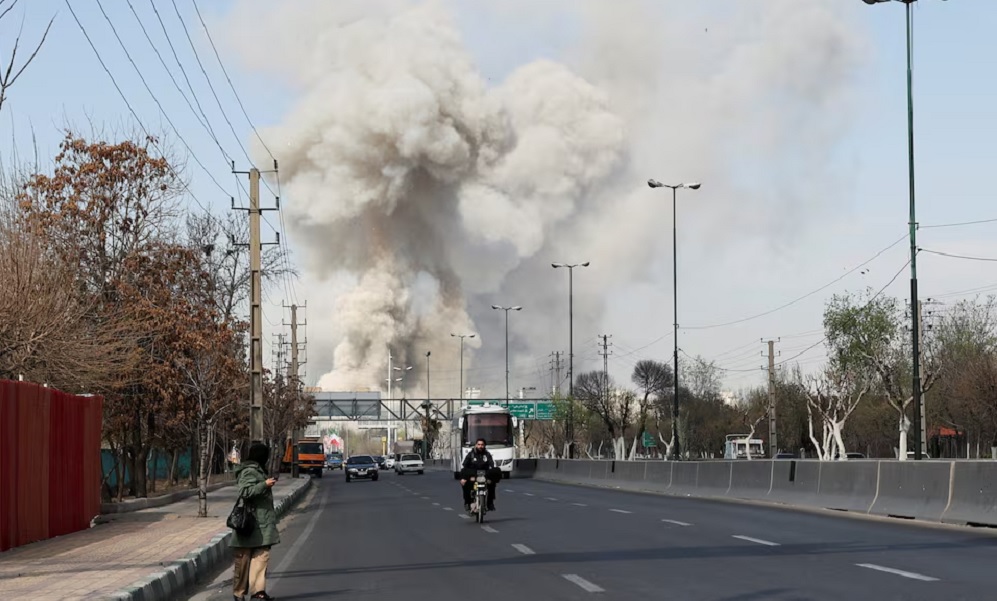
U.S. President Donald Trump claimed the right to join Iran in deciding its next leader as the war escalated on Thursday, with U.S. and Israeli jets hitting areas across the country and Gulf cities coming under renewed bombardment.
In a phone interview with Reuters, Trump said Mojtaba Khamenei, the son of the late Supreme Leader Ali Khamenei – a hardliner who has been considered a favorite to succeed his father – was an unlikely choice.
“We want to be involved in the process of choosing the person who is going to lead Iran into the future,” he said.
Trump also encouraged Iranian Kurdish forces to go on the offensive.
“I’d be all for it,” said Trump, whose administration has had contact with Iranian Kurdish groups since the U.S.-Israeli strikes began. He would not say whether the United States would provide air cover for any Kurdish offensive.
The attack is a major political gamble for the Republican president, with opinion polls showing little public support and Americans concerned about the rise in gasoline prices caused by disruption to energy supplies. Trump dismissed that concern.
ISRAELIS WARN TEHRAN RESIDENTS
On the war’s sixth day, Iran launched a series of attacks on Israel, the United Arab Emirates and Qatar. Fire crews in Bahrain extinguished a blaze at a refinery following a missile strike.
Two drone attacks targeted an Iranian opposition camp in Iraqi Kurdistan, as well as an oil field operated by an American firm, security sources said.
The Israeli military warned residents to evacuate areas including eastern Tehran, while Iranian media reported blasts were heard in various parts of the capital. An air attack killed 17 people in a guest house on a road northwest of the capital, Iranian state television said.
“Today is worse than yesterday. They are striking northern Tehran. We have nowhere to go. It is like a war zone. Help us,” said Mohammadreza, 36, by phone from Tehran, with a shaky voice as explosions rang out from what Israel described as its latest wave of strikes on Iranian government targets.
MANY MUNITIONS, IRAN’S ATTACKS DROPPED
U.S. Defense Secretary Pete Hegseth and Admiral Brad Cooper, who leads U.S. forces in the Middle East, said that the U.S. has enough munitions to continue its bombardment indefinitely.
“Iran is hoping that we cannot sustain this, which is a really bad miscalculation,” Hegseth told reporters at Central Command headquarters in Florida. “Our munitions are full up and our will is ironclad.”
Cooper said the U.S. had now hit at least 30 Iranian ships, including a large drone carrier that he said was the size of a World War Two aircraft carrier. He added that B-2 bombers had in the past few hours dropped dozens of 2,000 penetrator bombs targeting deeply buried ballistic missile launchers, and that bombings were also targeting Iran’s missile production facilities.
Iran’s ballistic missile attacks had decreased by 90% since the first day of the war, while drone attacks had decreased by 83% in that time frame, he said.
WARNING SIRENS BLARE IN MULTIPLE NATIONS
Azerbaijan on Thursday became the latest country drawn in, as it accused Iran of firing drones at its territory and ordered its southern airspace closed for 12 hours. Iran, which has a significant Azeri minority, denied it had targeted its neighbor, but the episode underlined how rapidly the war has spread since the surprise U.S. and Israeli airstrikes that killed Khamenei on Saturday.
Along with the gleaming cities of the Gulf, in easy range of Iranian drones and missiles, Cyprus and Turkey have both been targeted. European nations have pledged to deploy ships to the eastern Mediterranean and hostilities have been seen as far afield as waters off Sri Lanka, where a U.S. submarine sank an Iranian warship on Tuesday, killing 80 crew members.
In Iran, at least 1,230 people have been killed, according to the Iranian Red Crescent Society, including 175 schoolgirls and staff killed at a primary school in Minab in the country’s south on the first day of the war. Another 77 have been killed in Lebanon, its Health Ministry says. Thousands fled southern Beirut on Thursday after Israel warned residents to leave.
NETANYAHU SAYS ‘MUCH WORK STILL LIES AHEAD’
Shares on Wall Street fell on Thursday, weighed by surging oil prices, as the economic impact, opens new tab of the campaign intensified, with countries around the world cut off from a fifth of global supplies of oil and liquefied natural gas and air transport still facing chaos and global logistics increasingly snarled.
On Thursday, Iran’s Revolutionary Guards said they had hit a U.S. tanker in the northern part of the Gulf and the vessel was on fire, the latest of numerous reports of such attacks.
Visiting an air force base in the south of the country, Israeli Prime Minister Benjamin Netanyahu said Israel’s achievements so far in Iran had been “great” but that “much work still lies ahead.”
Iran’s foreign minister said Washington would “bitterly regret” the precedent it had set by sinking a ship in international waters without warning. A commander of the Revolutionary Guards, General Kioumars Heydari, told state TV: “We have decided to fight Americans wherever they are.”
The body of Supreme Leader Ayatollah Ali Khamenei, killed in the first hours of the U.S.-Israeli air campaign in the first assassination of a country’s top ruler by an airstrike, had been due to lie in state in a Tehran prayer hall from Wednesday evening to launch three days of mourning.
But the memorial, expected to draw many thousands of mourners to the streets, was abruptly postponed.
Two sources familiar with Israel’s battle plans said that Israel, having killed many Iranian leaders, was now planning to enter a second phase when it would target underground bunkers where Iran stores its missiles.

A Pakistani man accused of planning to kill President Donald Trump told jurors on Wednesday that he did not willingly work with Iran’s elite Islamic Revolutionary Guards Corps to devise the plot, media said.
The Justice Department accused Asif Merchant of trying to recruit people in the United States in the plan targeting Trump and other U.S. politicians in retaliation for Washington’s killing of the Corps’ top commander, Qassem Soleimani, Reuters reported.
The Corps has a central role in Iran, with its combination of military and economic power and an intelligence network.
“I was not wanting to do this so willingly,” the New York Times quoted Merchant as telling a court during his trial for terrorism and murder-for-hire charges, adding that he participated to protect his family in Tehran.
Prosecutors rejected Merchant’s claim, citing a “lack of evidentiary support for a true duress or coercion,” according to a letter sent on Tuesday to the judge in the case dating from 2024.
According to the newspaper, Merchant said he had never been ordered to kill a specific person but that his Iranian handler named three people in the course of conversations in the Iranian capital.
In addition to Trump, these were Joe Biden, the president at the time; Nikki Haley, who unsuccessfully sought the Republican nomination for the 2024 presidential election.
Lawyers for Merchant did not immediately respond to a request for comment. The White House did not immediately comment.
The trial started last week, days before Trump ordered strikes on Iran carried out with Israel that killed Supreme Leader Ayatollah Ali Khamenei and top officials in the Middle Eastern nation.
Trump cited an alleged Iranian plot when he spoke to ABC News on Sunday about a joint U.S.-Israeli operation that killed Khamenei, saying, “I got him before he got me.”
Tehran has denied accusations that it targeted Trump and other U.S. officials.
World
US orders immediate evacuations across Middle East amid escalating conflict
Officials described “serious safety risks” following coordinated weekend strikes on Iranian targets and subsequent retaliatory operations.
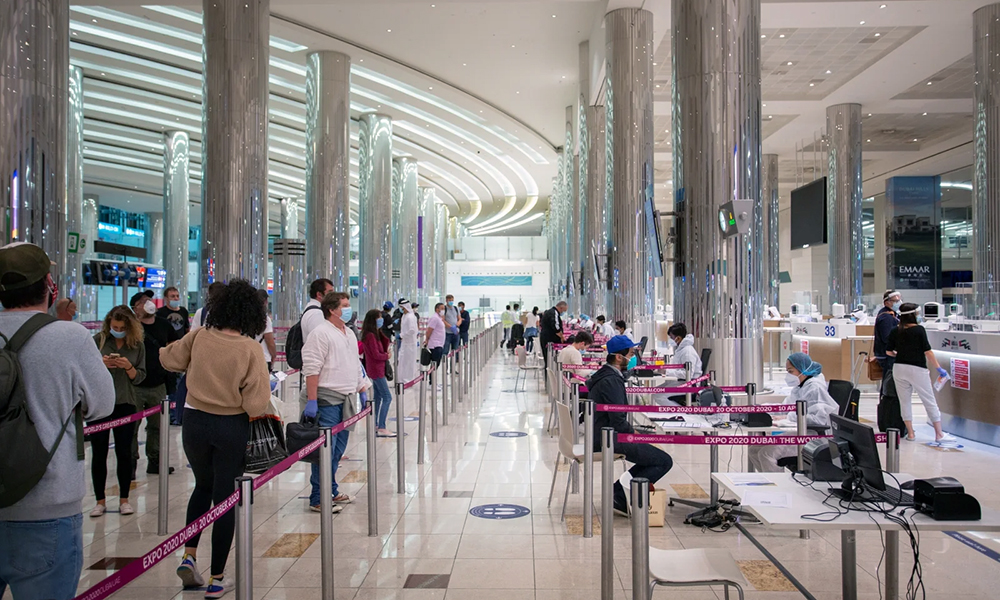
The U.S. Department of State has issued an extraordinary directive urging American citizens to immediately depart more than a dozen countries across the Middle East, citing rapidly deteriorating security conditions following joint U.S.-Israeli strikes that killed Iran’s Supreme Leader, Ayatollah Ali Khamenei.
The sweeping advisory comes as retaliatory attacks, embassy closures and major air travel disruptions fuel growing instability across the region.
U.S. officials say the move reflects Washington’s assessment that the crisis could become prolonged and highly volatile, with potential consequences for global security and energy markets.
Broad Regional Advisory
The evacuation notice covers 14 countries and territories, including close U.S. partners such as Israel, Saudi Arabia and the United Arab Emirates. It marks one of the most expansive regional security alerts in recent history.
Officials described “serious safety risks” following coordinated weekend strikes on Iranian targets and subsequent retaliatory operations.
Americans have been urged to leave using commercial flights while they remain available, rather than waiting for potential government-organized evacuations should conditions worsen.
From Targeted Strike to Regional Crisis
The evacuation order follows the killing of Khamenei in coordinated operations that reportedly also targeted other senior Iranian officials. Tehran’s response has included strikes on U.S. and Israeli-linked sites, as well as threats directed at Gulf states and key energy infrastructure.
Concerns have intensified over security in the Strait of Hormuz, a vital shipping route for global oil supplies. Rising tensions in the waterway have already driven up energy prices amid fears of further disruption.
The United States has activated an inter-agency emergency task force to manage the unfolding crisis. President Donald Trump indicated the confrontation could extend beyond a month, underscoring expectations of sustained instability.
International Appeals for Restraint
Global leaders have called for urgent de-escalation. European Commission President Ursula von der Leyen and United Nations Secretary-General António Guterres both urged restraint and renewed diplomatic engagement, warning of severe humanitarian and security consequences.
Russia and China condemned the strike that killed Khamenei as a breach of international law, while France pressed Iran to return to negotiations over its nuclear and ballistic missile programs. The European Union has placed its Red Sea naval mission on heightened alert to safeguard maritime routes amid fears of spillover attacks.
Guidance for U.S. Citizens
Americans in affected countries are advised to contact 24-hour State Department assistance lines and enroll in the Smart Traveler Enrollment Program (STEP) to receive updates. Officials stress the urgency of departing while commercial flights are still operating, as mounting airspace closures and cancellations have already left large numbers of travelers stranded.
Analysts warn that transport disruptions and security risks could persist for days or weeks, urging U.S. citizens to prepare contingency plans in case of extended regional instability.


Afghans among those injured in Iranian attacks on UAE

Iran war enters second week as Trump demands ‘unconditional surrender’

Prominent Muslim scholar issues fatwa calling for Afghanistan-Pakistan ceasefire

Tawsia: Impact of regional crisis on Afghan projects discussed

Russian foreign minister urges diplomatic solution to Kabul–Islamabad tensions

Pakistani military jet downed in Afghanistan’s Jalalabad, pilot captured alive

Afghan Air Force conducts airstrikes in Islamabad, other cities

IEA releases three Pakistani soldiers to mark Ramadan

Afghanistan’s Chief of Armed Forces underscores readiness and equipment for national defense

Afghanistan welcomes investment and technology partnerships with India
Tawsia: Impact of regional crisis on Afghan projects discussed

Saar: Sixth day of US–Israel war with Iran reviewed

Tahawol: Discussion on ongoing US–Israel war with Iran

Saar: Turkiye’s efforts to revive ceasefire between Kabul-Islamabad

Tahawol: Discussion on ongoing conflicts between Afghanistan and Pakistan
-
 Regional5 days ago
Middle East conflict intensifies; UK base in Cyprus targeted
-

 Regional5 days ago
Ayatollah’s wife dies from injuries sustained in airstrike on Tehran residence
-
 Latest News3 days ago
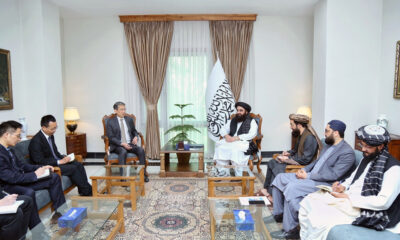
Amir Khan Muttaqi, Zhao Xing discuss regional security and violations of Afghan territory
-
 Latest News4 days ago
UNAMA calls for immediate halt to Afghanistan–Pakistan cashes
-

 International Sports5 days ago
AFC postpones Champions League matches amid escalating Middle East tensions
-

 Business5 days ago
Afghanistan records 33% rise in railway cargo transport
-

 Regional4 days ago
US Embassy, Consulates in Pakistan suspend visa services over security concerns
-

 Latest News4 days ago
Indian cleric comments on rising Afghanistan–Pakistan tensions