
Latest News
UNHCR: Afghan returnees from Iran better off than those returning from Pakistan
In its Afghanistan Post-Return Monitoring Survey Report, released on Tuesday, UNHCR highlighted stark differences in the living conditions and challenges faced by returnees depending on their country of return.

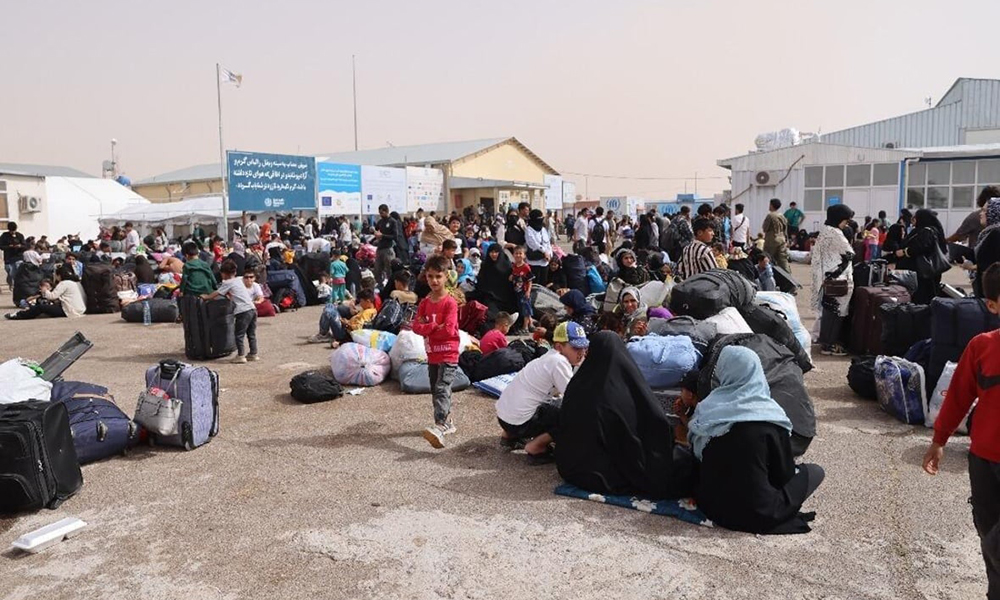
The United Nations High Commissioner for Refugees (UNHCR) says Afghan refugees returning from Iran generally have higher levels of education, better food security, and more stable housing compared to those returning from Pakistan.
In its Afghanistan Post-Return Monitoring Survey Report, released on Tuesday, UNHCR highlighted stark differences in the living conditions and challenges faced by returnees depending on their country of return.
According to the report, Afghans returning from Iran often have greater access to education, improved food security, and better housing conditions. In contrast, returnees from Pakistan face severe economic hardship, are more dependent on daily wage labor, and carry heavier debt burdens.
UNHCR noted that returnees from Iran were slightly less likely to hold debt than those returning from Pakistan, while the gap between female-headed households (90 percent) and male-headed households (87 percent) remained relatively small.
The report further found that Afghan returnees from Pakistan—particularly recent arrivals—are more likely to rent accommodation and struggle to meet rental costs. By comparison, many returnees from Iran own homes or have inherited property. Access to safe drinking water and sanitation services was also found to be more limited among those returning from Pakistan.
On Monday alone, 2,827 Afghan migrants were repatriated from Iran and Pakistan, underscoring the continued scale of return movements.
Over the past four decades, Iran has remained one of the world’s largest host countries for refugees and migrants, despite facing significant economic and social pressures. The majority of these refugees are Afghans who fled conflict, insecurity, poverty, and prolonged crises in their homeland.
UNHCR data shows that Iran currently hosts around 773,000 registered Afghan refugees holding Amayesh cards, along with more than 2.7 million Afghans living in refugee-like conditions. With over 3.5 million refugees, Iran ranks as the world’s second-largest refugee-hosting country.
However, field reports and unofficial estimates suggest that as many as seven million Afghans may be residing in Iran, including around four million without legal documentation.
UNHCR has warned that Iran faces mounting challenges as the international community has provided less than one-third of the funding required to meet the humanitarian needs of refugees.
In a press release issued on October 27, UNHCR reported that more than 1.7 million Afghan refugees returned from Iran to Afghanistan during the first nine months of 2025, highlighting the growing pressure on both returnees and host communities.

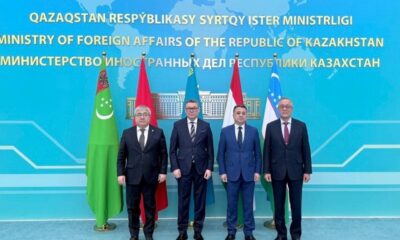





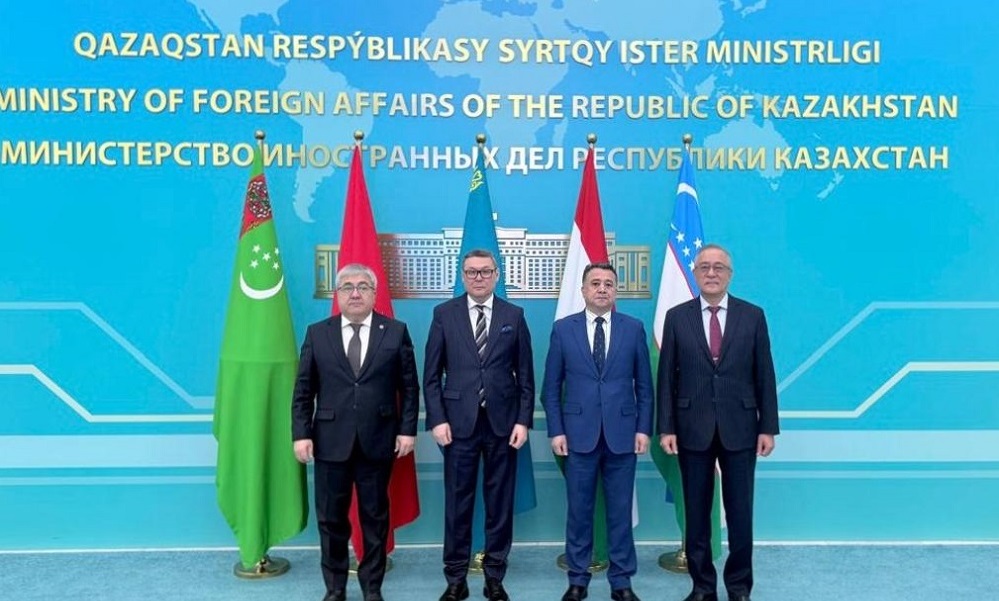
An extraordinary meeting of the Regional Contact Group of Special Representatives of Central Asian countries on Afghanistan was held at Kazakhstan’s Ministry of Foreign Affairs.
The gathering brought together representatives from Kazakhstan, Kyrgyzstan, Tajikistan, and Uzbekistan to discuss the situation in Afghanistan and explore avenues for practical cooperation, Kazakh foreign ministry said in a statement.
Yerkin Tukumov, Special Representative of the President of Kazakhstan for Afghanistan, emphasized the country’s commitment to constructive dialogue and identifying practical solutions to address pressing issues related to engagement with Kabul.
Discussions focused on enhancing trade and economic ties, expanding transit and transport corridors through Afghanistan, and addressing regional security concerns. Participants stressed the need for coordinated efforts among Central Asian states to ensure stability and promote sustainable development in Afghanistan.
The meeting concluded with a reaffirmation of the participants’ readiness to continue regular consultations and maintain working-level contacts under the framework of the Regional Contact Group.
Latest News
Afghanistan’s defense ministry unveils new military uniforms for armed forces
Speaking at the ceremony, Qari Fasihuddin said the uniform is designed to reinforce order, discipline, and a shared sense of purpose within the ranks.
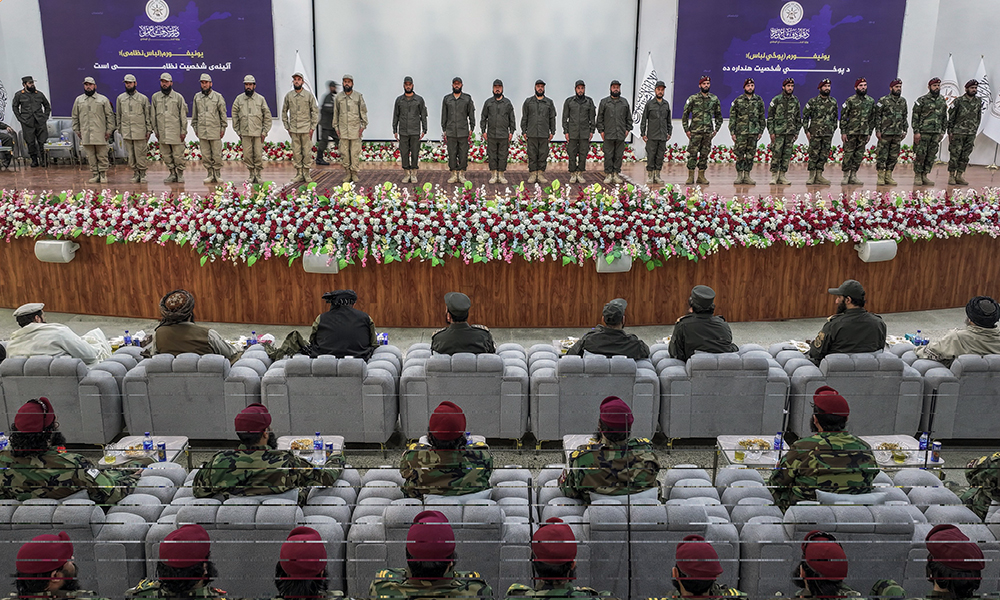
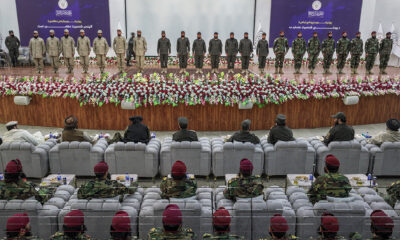
The Ministry of National Defense of the Islamic Emirate of Afghanistan officially unveiled a new uniform for the country’s armed forces on Monday.
The new attire, selected for commandos, border police, and the Afghan National Army, was introduced during a special ceremony held at the Ministry’s headquarters.
The event was attended by the Chief of Staff of the Armed Forces, Qari Mohammad Fasihuddin Fitrat, senior ministry officials, and commanders of central units. Officials emphasized that the new uniform represents discipline, cohesion, and a unified identity among all personnel.
Speaking at the ceremony, Qari Fasihuddin said the uniform is designed to reinforce order, discipline, and a shared sense of purpose within the ranks.
“This new uniform symbolizes unity and solidarity of our armed forces,” he said. “All those joining the ranks must see defending the country as their primary responsibility and commitment.”
Meanwhile, Enayatullah “Khowarzmi,” Head of Strategic Information and Publications at the Ministry, highlighted the importance of professionalism and ethical conduct.
He said; “Every soldier must have strong willpower, high moral standards, and strict adherence to military principles. Forces must remain resolute against enemies while serving the people with integrity and responsibility.”
According to ministry officials, the introduction of the new uniform is part of ongoing efforts to strengthen cohesion, discipline, and a unified identity among Afghanistan’s defense forces.
Latest News
Tashkent and Kabul discuss strengthening strategic partnership
The discussions come amid continued efforts by neighboring countries to maintain pragmatic engagement with Kabul despite ongoing political and economic challenges.
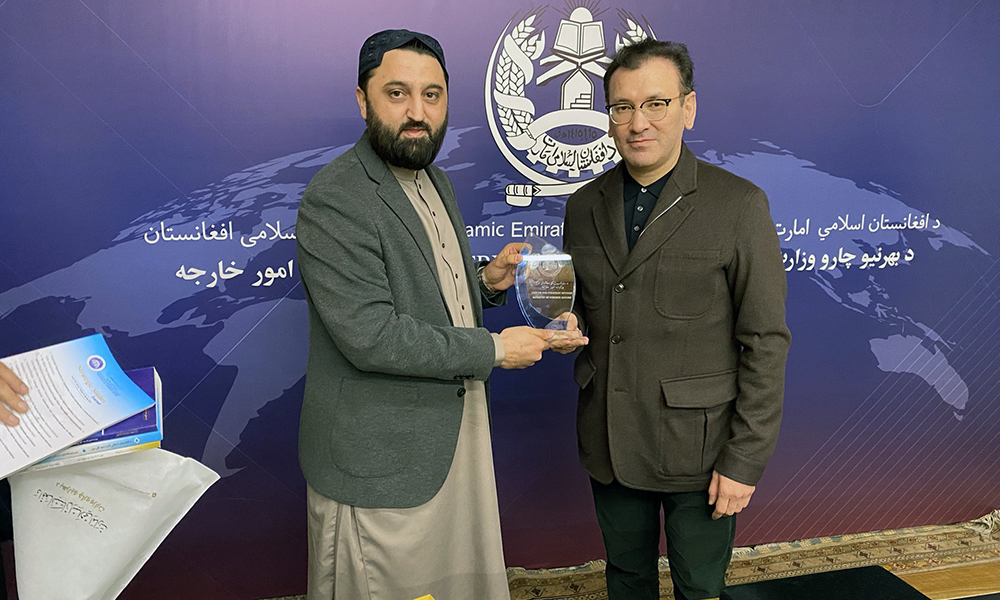
A senior Uzbek official has held talks in Kabul aimed at deepening political, economic and regional cooperation between Uzbekistan and Afghanistan, as both sides seek to translate long-term strategic goals into practical outcomes.
Javlon Vakhabov, Deputy Adviser to the President of Uzbekistan, met with Abdulhai Qanet, Head of the Strategic Studies Center at Afghanistan’s Ministry of Foreign Affairs, to discuss ways to enhance cooperation and advance joint agendas under the Uzbekistan–Afghanistan partnership.
In a post on X, Vakhabov said the two sides also explored initiatives to raise public awareness of developments in both countries and across the wider region, highlighting the importance of communication and public engagement alongside diplomatic efforts.
Uzbekistan has in recent years positioned itself as an active regional partner on Afghanistan, advocating dialogue, economic cooperation, and connectivity as key tools for promoting stability. Tashkent has supported regional infrastructure and trade initiatives aimed at linking Central and South Asia, while stressing that economic engagement can contribute to long-term security.
Vakhabov added that both sides are keen to turn long-term strategic objectives into concrete initiatives, with a focus on strengthening regional stability, collaboration, and shared interests.
The discussions come amid continued efforts by neighboring countries to maintain pragmatic engagement with Kabul despite ongoing political and economic challenges.


Tahawol: Afghanistan’s claim of Pakistan nurturing Daesh

Saar: Central Asian envoys’ meeting on Afghanistan

Central Asian envoys meet in Astana for talks on Afghanistan

Rashid says South Africa heartbreak echoes 2023 Australia loss: ‘It never leaves your mind’

Afghanistan’s defense ministry unveils new military uniforms for armed forces

Afghan traders sign deal to import pharmaceuticals from Bangladesh

AFC Futsal Asian Cup 2026: Day One Review

AFC Futsal Asian Cup: Afghanistan to face Iran in crucial Group D clash

Russia signals interest in expanding investment and trade ties with Afghanistan

Afghanistan shine on Day Two of AFC Futsal Asian Cup Indonesia 2026
Tahawol: Afghanistan’s claim of Pakistan nurturing Daesh
Saar: Central Asian envoys’ meeting on Afghanistan

Tahawol: 37th anniversary of Soviet exit from Afghanistan

Saar: 37th anniversary of Soviet withdrawal from Afghanistan

Tahawol: Impact of continued sanctions on Afghanistan reviewed
-
 Sport5 days ago
Afghanistan’s semi-final hopes hang in the balance after two T20 World Cup defeats
-

 Sport5 days ago
AFC U17 Men’s Asian Cup Saudi Arabia 2026 Draw sets stage for continental showdown
-

 World5 days ago
Pressure rises on Dubai port giant DP World over chief’s alleged Epstein ties
-

 Sport5 days ago
Winter Olympics 2026: Wednesday brings records, first-ever golds and thrilling action
-
 Latest News2 days ago
Tajikistan: Recent attacks from Afghanistan aimed at damaging our relations with China
-
 Latest News5 days ago
Afghanistan moving toward development and industrialization every day: Azizi
-
 Latest News3 days ago
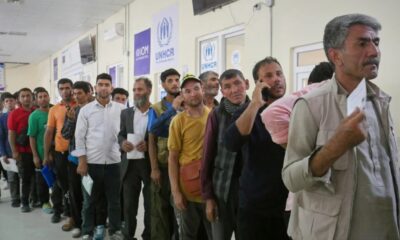
UN warns mass return of Afghans from Pakistan and Iran is pushing Afghanistan to the brink
-
 Latest News2 days ago
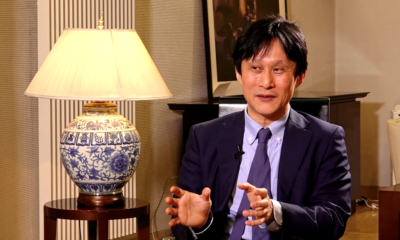
Japan maintains direct contacts with IEA officials through Kabul Embassy