
Regional
US Embassy, Consulates in Pakistan suspend visa services over security concerns
As a precaution, U.S. government personnel were instructed to restrict their movements until further notice.

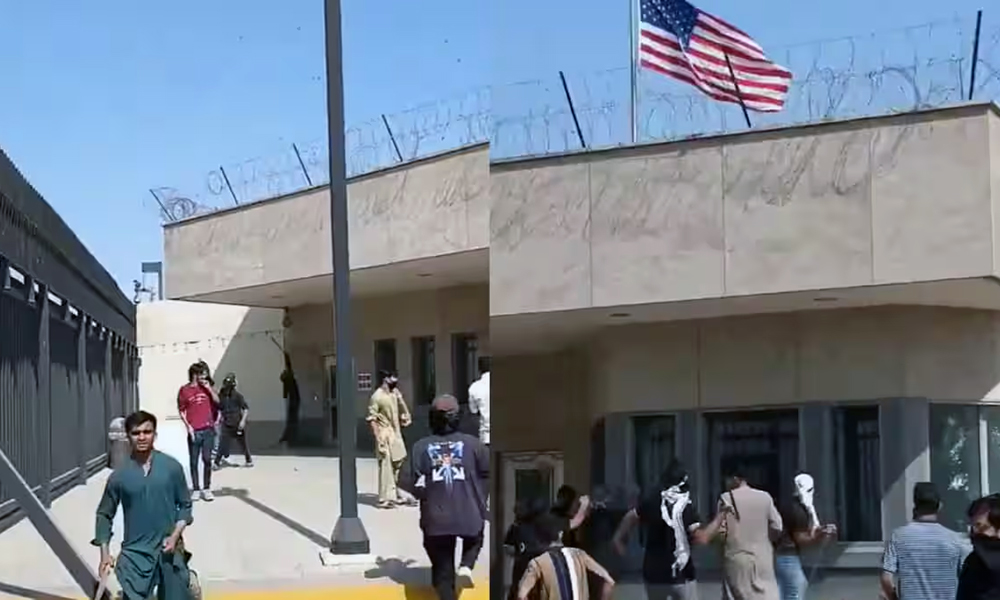
The U.S. Mission to Pakistan has suspended all visa appointments at its embassy in Islamabad and consulates in Lahore and Karachi through Friday, March 6, citing the current security situation.
In a notice to applicants, the mission said routine visa services would remain paused during this period. Officials did not elaborate on the specific security concerns but confirmed that affected applicants would receive instructions on how to reschedule once operations resume.
“Due to the current security situation, the U.S. Embassy in Islamabad and the Consulates General in Lahore and Karachi have cancelled all visa appointments through Friday, March 6,” the embassy said in a post on X, advising applicants to monitor official channels for further updates.
The extended suspension follows an earlier decision to cancel all visa and American Citizen Services (ACS) appointments scheduled for March 2.
In a security alert issued March 1, the mission said it was tracking reports of demonstrations outside the U.S. Consulate General in Lahore and protests near the consulate in Karachi, as well as calls for further gatherings near the embassy in Islamabad and the consulate in Peshawar.
As a precaution, U.S. government personnel were instructed to restrict their movements until further notice.
The mission also urged American citizens in Pakistan to follow local media coverage, remain vigilant, avoid large crowds and ensure their Smart Traveler Enrollment Program (STEP) registration is up to date.
The suspension comes amid nationwide protests triggered by U.S. and Israeli strikes that killed Iran’s Supreme Leader, Ali Khamenei. Violent clashes erupted outside the U.S. Consulate in Karachi on Sunday, leaving multiple people dead and dozens injured, according to local authorities.
Demonstrations were also reported in major cities including Islamabad, Lahore, Peshawar and Quetta, where protesters confronted law enforcement.
In Islamabad, authorities imposed Section 144 and sealed routes leading to the capital’s diplomatic enclave.
In Karachi, demonstrators attempted to advance toward the consulate compound, prompting police to use tear gas and other crowd-control measures to disperse them. Officials reported at least 10 fatalities and 36 injuries in the unrest.






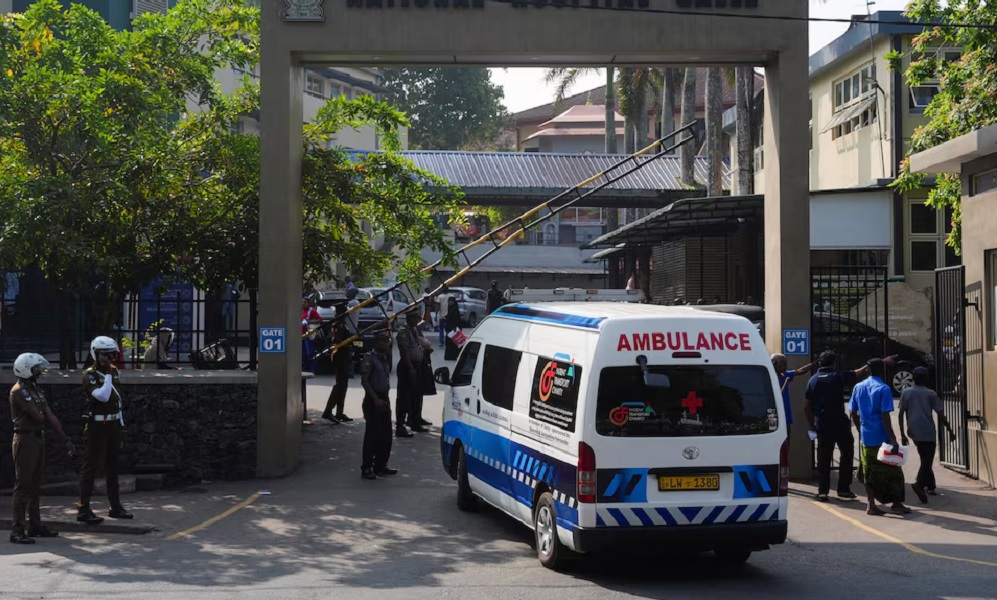
Iranian sailors rescued from a torpedo attack on an Iranian warship in the Indian Ocean are recovering in a hospital in southern Sri Lanka, officials said on Thursday, a day after the strike killed dozens of crew members and left many others missing.
Sri Lankan authorities said 32 sailors who survived the attack were taken to Karapitiya Teaching Hospital in the port city of Galle for treatment of injuries and exhaustion following the explosion and sinking of the vessel.
Hospital officials indicated that most of the survivors suffered relatively minor wounds and were expected to recover, Reuters reported.
The Iranian warship, identified by Sri Lankan officials as the frigate IRIS Dena, was sunk on Wednesday after being struck by a torpedo fired from a U.S. submarine in the Indian Ocean, roughly 40 nautical miles off Sri Lanka’s southern coast.
The incident occurred far from the main theatres of fighting between Iran, Israel and the United States, marking a dramatic widening of the conflict at sea.
Rescue teams responding to a distress call recovered at least 87 bodies from the water, while around 60 crew members remain missing from the roughly 180 people believed to have been aboard the ship.
Sri Lankan navy personnel reported finding survivors floating in the sea amid debris and oil slicks after the vessel sank.
U.S. Defense Secretary Pete Hegseth confirmed that an American submarine carried out the strike, saying the Iranian warship had been targeted with a torpedo while operating in international waters.
A video released by the Pentagon appeared to show a large explosion ripping through the rear of the vessel before it began to sink.
The IRIS Dena, commissioned in 2021, had recently participated in multinational naval exercises in India before beginning its return voyage to Iran when it was attacked.
Sri Lankan authorities said search operations for missing crew members are continuing in the waters south of the island.
The strike is one of the most significant naval incidents of the escalating confrontation involving Iran, the United States and Israel, extending hostilities into the wider Indian Ocean region.
Regional
Iran postpones Khamenei mourning ceremony amid Israeli threats
When Ayatollah Ruhollah Khomeini, founder of the Islamic Republic, died in 1989, an estimated 10 million people attended his funeral.
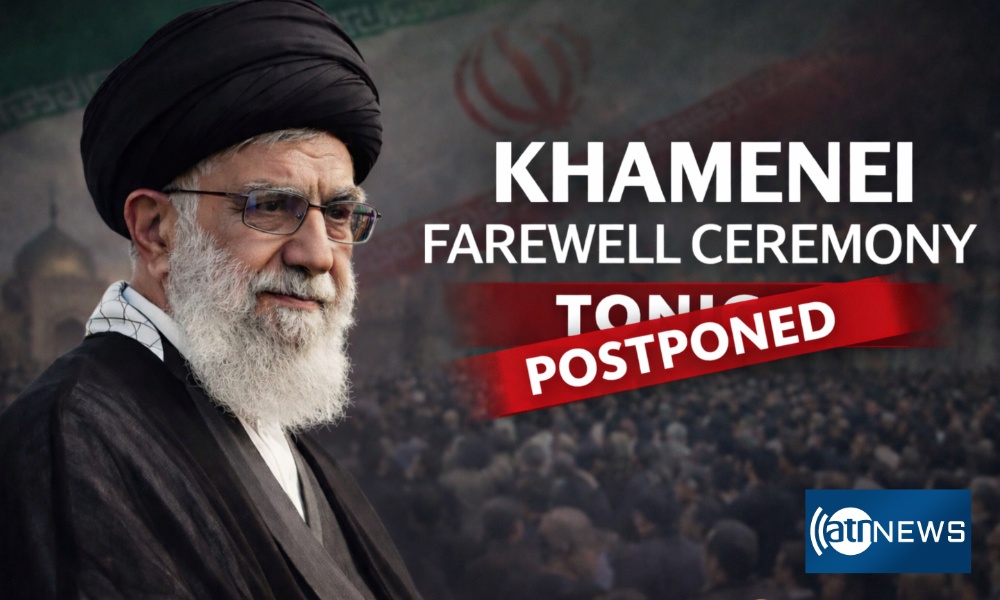
Iran has postponed a planned public mourning ceremony for Supreme Leader Ayatollah Ali Khamenei in Tehran, days after he was killed alongside several family members in joint US-Israeli air strikes.
State-affiliated Tasnim news agency reported that the delay was due to logistical challenges, including requests from people across multiple provinces who wish to attend. Analysts meanwhile stated security risks were also a consideration.
The ceremony had initially been scheduled to begin at 10pm local time at Tehran’s Imam Khomeini Prayer Hall and to continue over three days. Hojjatoleslam Mahmoudi, head of Iran’s Islamic Propagation Council, had earlier urged citizens to attend in large numbers to pay their respects.
Security concerns are however looming over the event. With millions expected to mourn, authorities face the risk of potential further attacks amid escalating hostilities between Iran, Israel and the United States.
When Ayatollah Ruhollah Khomeini, founder of the Islamic Republic, died in 1989, an estimated 10 million people attended his funeral.
Khamenei, 86, had served as Iran’s supreme leader since 1989, succeeding Khomeini after the 1979 revolution. As supreme leader, he held ultimate authority over the armed forces, judiciary and key state institutions, while serving as the country’s highest religious authority.
Attention has now shifted to the question of succession. Ayatollah Ahmad Khatami, a senior cleric and member of both the Guardian Council and the Assembly of Experts, said the process of selecting a new leader is nearing completion but acknowledged that the country remains in a “war situation.”
Under Iran’s constitution, the 88-member Assembly of Experts is responsible for appointing the supreme leader by simple majority vote. Candidates must be senior Islamic jurists with strong political judgment, administrative capability and religious credentials. Among those widely considered a leading contender is Khamenei’s second son, Mojtaba Khamenei.
Meanwhile, Israel’s Defence Minister warned that any successor who continues policies hostile to Israel would face the threat of assassination.
In a statement posted online on Wednesday, he said any future Iranian leader pursuing the destruction of Israel or threatening the United States and regional allies would be considered a target.
US President Donald Trump also commented publicly on Iran’s future leadership, saying the “worst-case scenario” would be another figure opposed to US interests.
Regional analysts say Iran’s political system has long prepared for the possibility of Khamenei’s death, with institutional structures designed to ensure continuity of command during crises.
Even so, the coming days are expected to be pivotal, as the country navigates both mass public mourning and a high-stakes transition of power under the shadow of war.
Regional
NATO condemns Iran’s targeting of Türkiye, reaffirms strong defense posture
Türkiye’s Defense Ministry reported that a ballistic projectile launched from Iran toward Turkish airspace was intercepted and destroyed by NATO air and missile defense units operating in the Eastern Mediterranean.
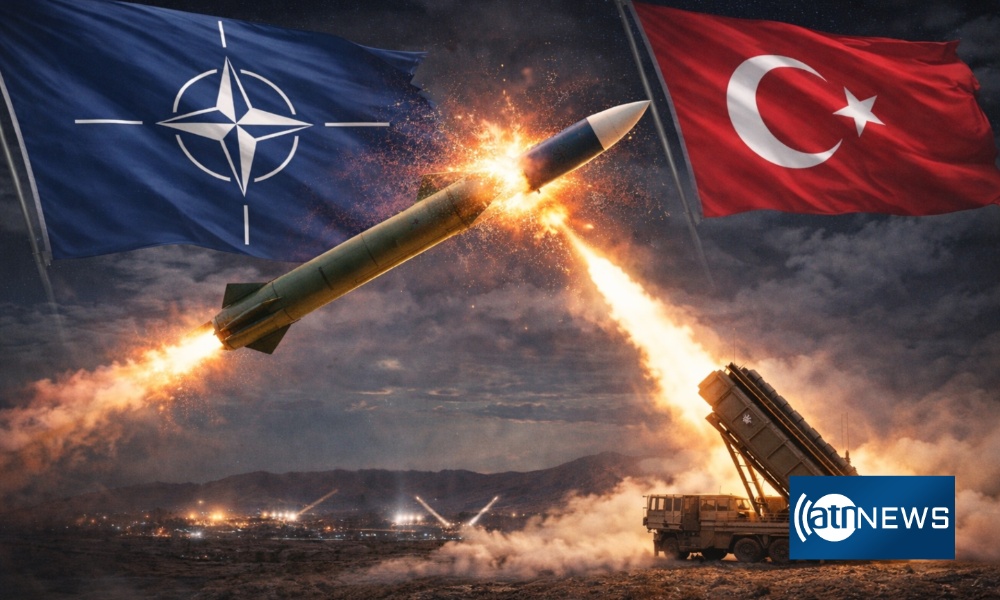
NATO on Wednesday strongly condemned Iran’s targeting of Türkiye and reiterated its firm commitment to defending all member states amid escalating regional tensions.
A NATO spokesperson said the alliance “stands firmly with all Allies, including Türkiye,” as Iran continues strikes across the region.
“Our deterrence and defense posture remains strong across all domains, including air and missile defense,” the spokesperson added, underscoring the alliance’s readiness to respond to threats.
Earlier, Türkiye’s Defense Ministry reported that a ballistic projectile launched from Iran toward Turkish airspace was intercepted and destroyed by NATO air and missile defense units operating in the Eastern Mediterranean.
According to the ministry, the munition was tracked after transiting Iraqi and Syrian airspace before being successfully neutralized.
The incident marks a further escalation in regional hostilities and highlights NATO’s heightened alert posture along its southeastern flank.


KP Chief Minister says inclusive Pakistani delegation needs to visit Afghanistan for talks

Ministry of Public Works: Railway transport operating smoothly across all ports

Pakistan’s Fazlur Rehman calls for Afghan dialogue during PM Sharif briefing

Iranian sailors recovering in Sri Lankan hospital after US submarine attack

Afghan consulate in Bonn resumes passport services after IEA takeover

Pakistani military jet downed in Afghanistan’s Jalalabad, pilot captured alive

Afghan Air Force conducts airstrikes in Islamabad, other cities

IEA releases three Pakistani soldiers to mark Ramadan

Afghanistan’s Chief of Armed Forces underscores readiness and equipment for national defense

Afghanistan welcomes investment and technology partnerships with India

Tahawol: Discussion on ongoing US–Israel war with Iran

Saar: Turkiye’s efforts to revive ceasefire between Kabul-Islamabad

Tahawol: Discussion on ongoing conflicts between Afghanistan and Pakistan

Saar: Ongoing retaliatory operations against Pakistan discussed

Saar: Afghan forces’ operation against Pakistani military
-
 Latest News3 days ago
Afghan air force strikes key Pakistani military installations in retaliatory operation
-
 World4 days ago
US lawmakers, world leaders react to death of Ayatollah Ali Khamenei after Iran strikes
-

 Regional3 days ago
Middle East conflict intensifies; UK base in Cyprus targeted
-
 Regional4 days ago
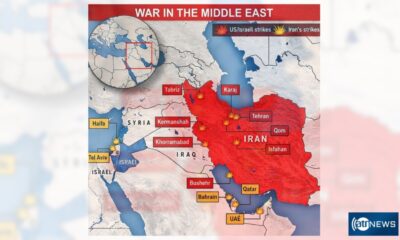
Iran launches widespread drone and missile strikes on Gulf states amid US-Israeli attacks
-
 Regional4 days ago
Iran to form interim leadership council as officials vow retaliation after Ayatollah’s death
-
 Latest News4 days ago
Pakistan’s night strikes hit residential areas in Afghanistan, civilian casualties reported
-

 Regional3 days ago
Ayatollah’s wife dies from injuries sustained in airstrike on Tehran residence
-

 International Sports4 days ago
FIFA calls for ‘all teams to participate’ in 2026 World Cup amid US–Iran conflict