
Latest News
WFP warns of worsening humanitarian crisis as insecurity escalates in Afghanistan
Air and ground strikes have reportedly impacted more than 30 districts in Nangarhar, Nuristan, Kunar, Laghman, Paktika, Paktya, Khost, Kandahar and Helmand provinces.

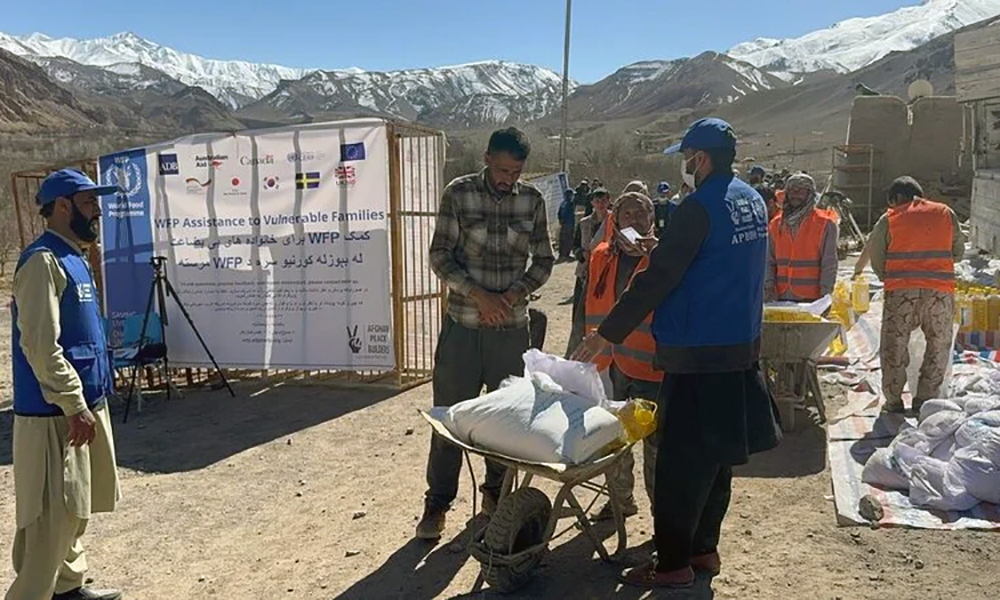
The World Food Programme (WFP) has warned that escalating violence along Afghanistan’s eastern, southern and western borders is deepening an already severe humanitarian crisis, placing hundreds of thousands of vulnerable families at greater risk of hunger and displacement.
Speaking via video link from Bangkok at a press briefing in Geneva, WFP Afghanistan Representative and Country Director John Aylieff said renewed fighting along the disputed Durand Line frontier with Pakistan and ongoing violence in Iran are compounding years of conflict, economic collapse and natural disasters.
Afghanistan shares a roughly 2,400-kilometre frontier with Pakistan, affecting nearly one-third of its provinces. Since late February, intensified violence along the Durand Line has displaced an estimated 20,000 families across eastern, southeastern and southern regions.
Air and ground strikes have reportedly impacted more than 30 districts in Nangarhar, Nuristan, Kunar, Laghman, Paktika, Paktya, Khost, Kandahar and Helmand provinces.
As a result, WFP has temporarily suspended emergency food distributions, school feeding programmes, social protection initiatives and livelihood support activities in several affected areas. Approximately 160,000 people have been impacted by the suspension of emergency food assistance.
The renewed conflict has struck communities still recovering from the August 31 earthquake that devastated parts of eastern Afghanistan, particularly in mountainous Kunar and Nangarhar provinces. Many families who lost homes and livelihoods in that disaster now find themselves once again on the frontline of violence.
WFP noted that more than half of the affected districts were already facing emergency levels of hunger, while four of the impacted provinces are experiencing critical levels of acute child malnutrition.
On Afghanistan’s western border, ongoing instability in Iran is raising concerns about a new wave of returnees. Afghanistan recorded more than 2.5 million returns from Iran and Pakistan in 2025, and projections for 2026 had already anticipated similar numbers before the latest escalation.
Increased fighting could drive even higher returns, further straining limited resources.
WFP said it supported over half a million returnees at border crossings in 2025 with cash assistance, fortified biscuits and specialized nutrition support for women and children.
For many returnees, coming home means confronting unemployment, food shortages and renewed insecurity.
WFP shared the example of a father of four who returned from Iran after losing his factory job, only to find no work and insufficient food for his family in Afghanistan. Such cases underscore the growing vulnerability of returnees amid deteriorating conditions.
Funding shortfalls threaten aid response
Afghanistan remains one of the world’s most severe hunger crises, with 17.4 million people — roughly one in three Afghans — in urgent need of food assistance. An estimated 3.7 million children are projected to require treatment for acute malnutrition in 2026.
WFP warned that its emergency operations face a critical funding shortfall. By April 2026, funding for life-saving assistance is expected to run out unless additional support is secured.
The agency requires $313 million over the next six months to sustain operations.
With rising displacement, potential mass returns and ongoing conflict, WFP urged the international community not to scale back support at what it described as a pivotal moment for Afghanistan’s humanitarian response.







Latest News
Amir Khan Muttaqi, Zhao Xing discuss regional security and violations of Afghan territory
Respect for Afghanistan’s sovereignty and territorial integrity, he said, remains essential for fostering regional stability and building trust among neighboring states.
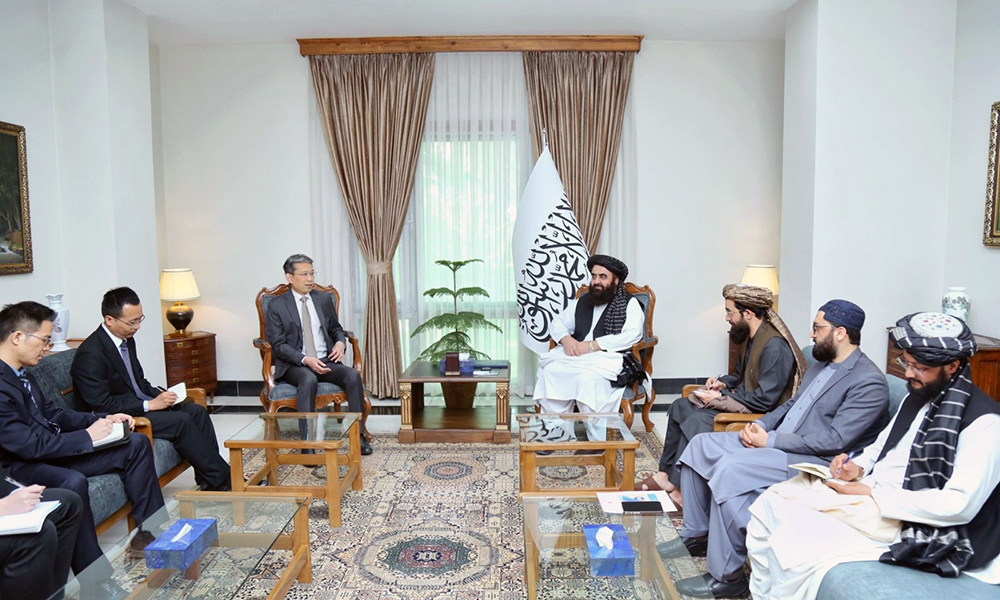
Afghanistan’s Foreign Minister Amir Khan Muttaqi met with Chinese Ambassador Zhao Xing in Kabul to review bilateral relations and address recent regional security developments, including what Afghan officials described as violations of Afghan sovereignty by Pakistan.
According to a statement issued after the meeting, the two sides discussed strengthening political and economic cooperation between Afghanistan and China, alongside broader concerns about escalating tensions in the region.
Muttaqi reiterated the Islamic Emirate’s foreign policy approach, describing it as balanced and focused on economic engagement. He emphasized that Afghanistan seeks constructive relations with all countries based on mutual respect, non-interference, and good neighborly ties.
Respect for Afghanistan’s sovereignty and territorial integrity, he said, remains essential for fostering regional stability and building trust among neighboring states.
The discussions reportedly included concerns raised by Afghan officials over incidents involving Pakistan along the disputed Durand Line, which Kabul has characterized as infringements on Afghan soil.
Zhao expressed concern over the evolving regional situation and reaffirmed that China views stability in Afghanistan and the broader region as a shared interest. He underscored Beijing’s support for resolving disputes through dialogue and diplomatic channels rather than escalation.
Zhao also noted that external forces sometimes attempt to disrupt regional stability and development, adding that countries in the region can counter such challenges through closer coordination and cooperation.
China and Afghanistan have maintained diplomatic engagement in recent years, with economic cooperation — particularly in trade, mining and infrastructure — forming a central pillar of their bilateral relationship.
Latest News
United Kingdom halts visa routes from four countries, including Afghanistan
According to Home Office figures, approximately 39 percent of the 100,000 people who claimed asylum in 2025 had initially arrived in the UK through legal routes, including study visas.

The UK government has suspended key visa routes for nationals from four countries, including Afghanistan, in what officials describe as an unprecedented move aimed at curbing misuse of the immigration system.
Home Secretary Shabana Mahmood announced that study visas for nationals of Afghanistan, Cameroon, Myanmar, and Sudan have been halted. In addition, work visa routes for Afghan nationals have also been suspended.
The Home Office said the decision follows evidence that a growing number of individuals from these countries have entered the UK through legal migration channels — such as student visas — before claiming asylum. Officials argue that this trend amounts to an exploitation of the visa system.
“Britain will always provide refuge to people fleeing war and persecution, but our visa system must not be abused,” Mahmood said in a statement. She described the move as necessary to “restore order and control” to the country’s borders.
According to Home Office figures, approximately 39 percent of the 100,000 people who claimed asylum in 2025 had initially arrived in the UK through legal routes, including study visas.
Authorities said asylum applications from nationals of the four affected countries have accounted for a significant share of the increase recorded between 2021 and September 2025.
The suspension, set to take effect through a formal change to immigration rules on Thursday, marks the first time the UK has imposed such targeted visa bans.
The move follows earlier warnings from Mahmood that visa restrictions could be introduced against other nations unless they cooperated in accepting the return of irregular migrants.
In November, similar threats were made toward Angola, Namibia, and the Democratic Republic of Congo, which later reached return agreements with the UK government.
The Home Secretary is expected to outline additional measures to tighten the asylum system in a speech later this week. Proposed reforms include reviewing refugee status every 30 months and requiring individuals to return to their home countries if conditions are deemed safe.
The policy shift comes as the government faces mounting political pressure to reduce asylum backlogs and irregular migration, while balancing its legal obligations under international refugee conventions.
Latest News
Turkey’s Erdoğan urges diplomacy in call with Shehbaz Sharif amid Middle East crisis
Ankara has previously supported mediation and diplomatic engagement aimed at reducing violence along the Durand Line.
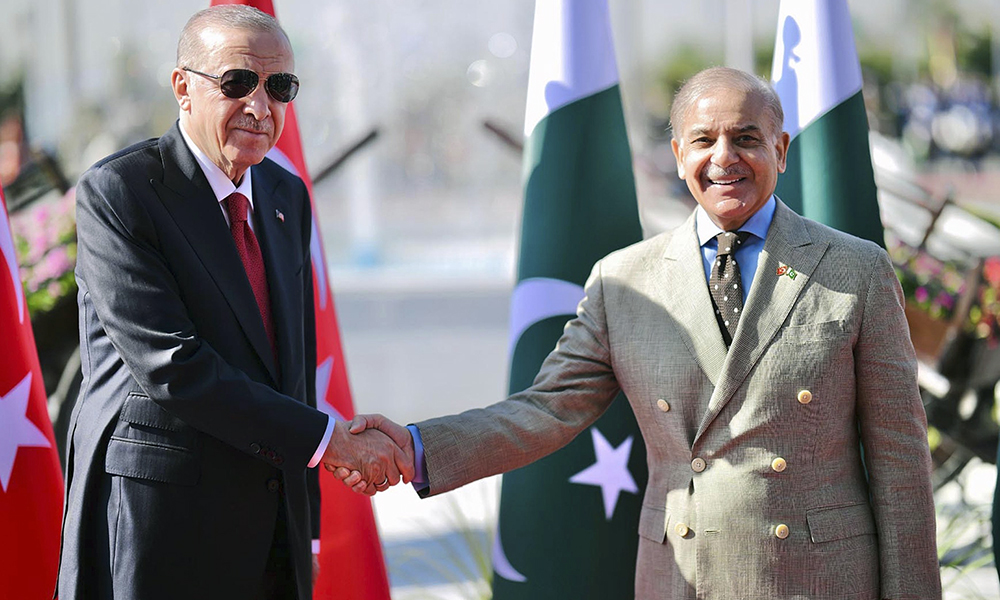
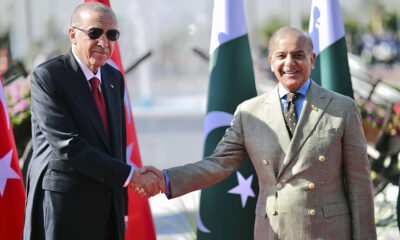
Turkish President Recep Tayyip Erdoğan held a telephone conversation Tuesday with Pakistani Prime Minister Shehbaz Sharif, calling for an urgent return to diplomacy as tensions escalate across the Middle East following recent U.S.-Israeli strikes on Iran.
According to Türkiye’s Directorate of Communications, the two leaders discussed bilateral relations as well as rapidly developing regional events.
Erdoğan stressed that renewed diplomatic engagement offers the most viable path to de-escalation and warned that continued military confrontation risks further destabilizing an already fragile region.
The call comes amid heightened tensions after joint U.S.-Israeli strikes targeted senior Iranian figures, dramatically increasing fears of wider conflict. Ankara has consistently advocated dialogue and political solutions in regional disputes, positioning itself as a potential mediator.
Condemnation of Attacks in Pakistan
During the conversation, Erdoğan condemned recent terrorist attacks in Pakistan and reaffirmed Türkiye’s solidarity with Islamabad in its counterterrorism efforts. He underscored the close strategic partnership between the two countries and reiterated Ankara’s commitment to supporting Pakistan’s security and stability.
Türkiye and Pakistan maintain strong diplomatic, economic, and defense ties, with regular high-level exchanges and cooperation across multiple sectors.
Support for Pakistan-Afghanistan Ceasefire
Erdoğan also addressed tensions along the Durand Line, the disputed Afghanistan-Pakistan frontier, expressing Türkiye’s readiness to assist in efforts to restore and maintain a ceasefire between the two neighbors.
Ankara has previously supported mediation and diplomatic engagement aimed at reducing violence along the Durand Line.
The leaders additionally reviewed broader regional developments and reaffirmed their commitment to strengthening Türkiye-Pakistan relations.
As instability spreads across the Middle East, Erdoğan’s outreach underscores Ankara’s diplomatic push to contain the crisis and prevent further escalation through dialogue rather than military confrontation.


Israel defense forces launch 10th wave of strikes on Tehran as Middle East conflict widens

WFP warns of worsening humanitarian crisis as insecurity escalates in Afghanistan

Amir Khan Muttaqi, Zhao Xing discuss regional security and violations of Afghan territory

Iranians to hold farewell ceremony for Ayatollah Khamenei in Tehran

United Kingdom halts visa routes from four countries, including Afghanistan

Pakistani military jet downed in Afghanistan’s Jalalabad, pilot captured alive

Afghan Air Force conducts airstrikes in Islamabad, other cities

IEA releases three Pakistani soldiers to mark Ramadan

Afghanistan’s Chief of Armed Forces underscores readiness and equipment for national defense

Afghanistan welcomes investment and technology partnerships with India

Tahawol: Discussion on ongoing conflicts between Afghanistan and Pakistan

Saar: Ongoing retaliatory operations against Pakistan discussed

Saar: Afghan forces’ operation against Pakistani military

Tahawol: Afghanistan and the Region Under the Shadow of Rising Tensions

Tahawol: Joint Israeli-US attacks on Iran discussed
-
 Latest News4 days ago
Pakistani military jet downed in Afghanistan’s Jalalabad, pilot captured alive
-

 Latest News2 days ago
Afghan air force strikes key Pakistani military installations in retaliatory operation
-
 Latest News5 days ago
IEA: Special circle in Pakistan has launched mission to destabilize region
-
 Latest News4 days ago
Afghan forces conduct fresh airstrikes on Pakistani military targets
-
 World3 days ago
US lawmakers, world leaders react to death of Ayatollah Ali Khamenei after Iran strikes
-
 Latest News4 days ago
UAE and Iran call for diplomatic resolution to Afghanistan–Pakistan tensions
-
 Regional3 days ago
Iran to form interim leadership council as officials vow retaliation after Ayatollah’s death
-
 Regional3 days ago
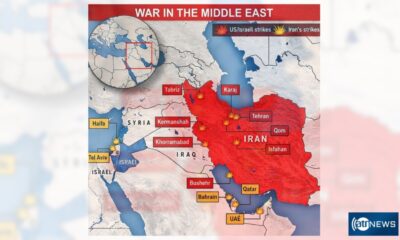
Iran launches widespread drone and missile strikes on Gulf states amid US-Israeli attacks