
Latest News
Afghan energy minister leaves for international energy conference in Uzbekistan

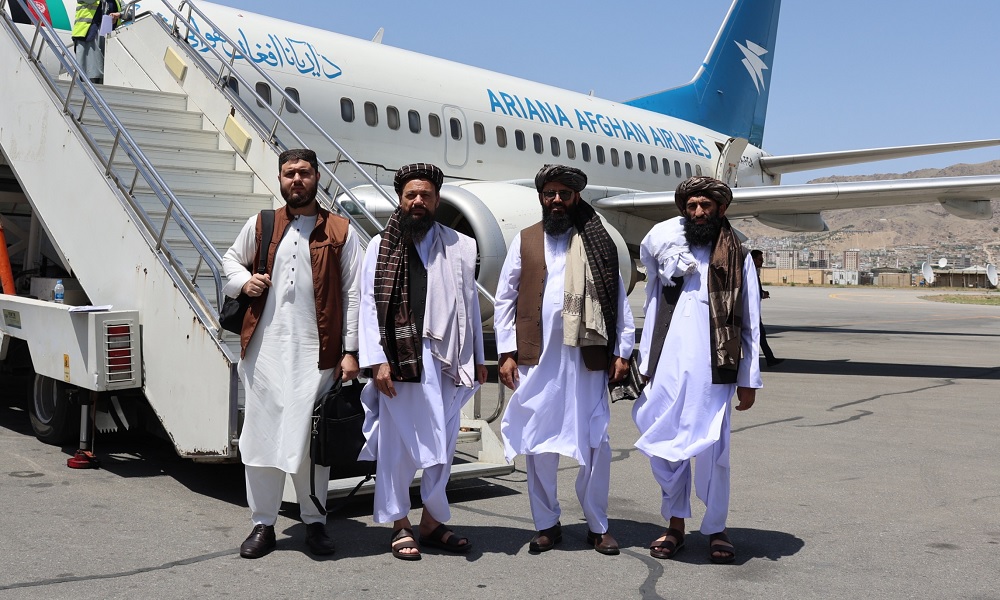
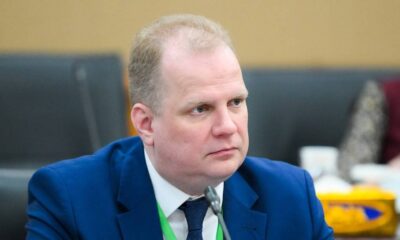
Acting Minister of Energy and Water Abdul Latif Mansoor has left Kabul for Tashkent to participate in the fifth Uzbekistan International Energy Conference.
The event is part of Energy Week of Uzbekistan 2025 that is focused on regional partnership for sustainable energy. It will be held from May 13 to 15.
The aim of the summit is to strengthen regional cooperation, attract investment in joint energy projects, exchange experiences and promote green technology, the Ministry of Energy and Water said in a statement.
During the conference, Mansoor is expected to emphasize expanding cooperation with regional countries, attracting foreign investment and using successful international experiences in the field of energy resource management, the statement said.
Representatives of regional countries, including Uzbekistan, Kazakhstan, Turkmenistan, Russia, as well as organizations s such as the International Atomic Energy Agency and the World Bank, are expected to attend the conference.




Latest News
UNHCR chief calls for greater support for Afghan returnees, urges protection of girls’ rights
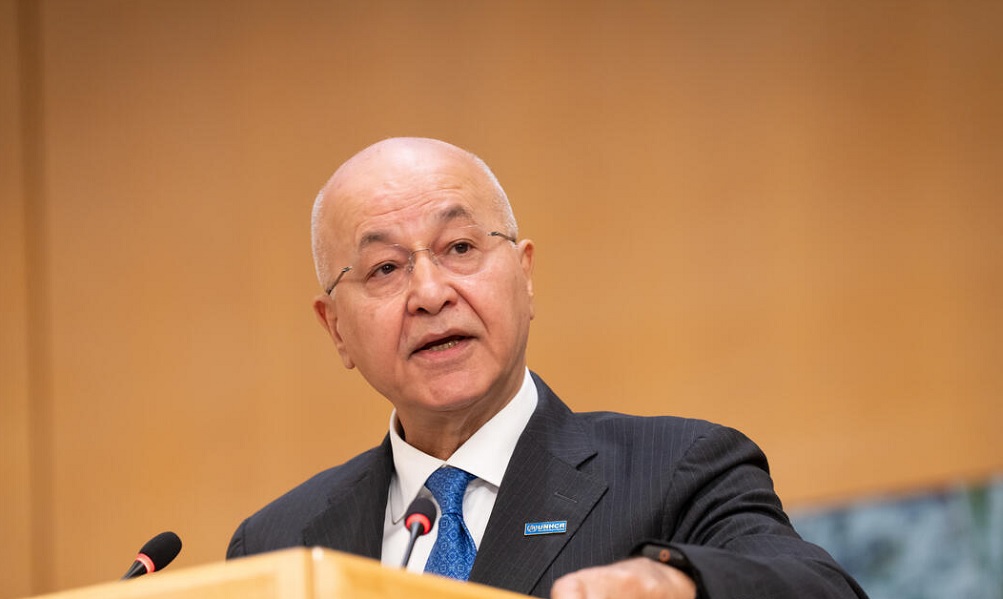
The United Nations High Commissioner for Refugees has called for greater international investment to support the reintegration of Afghan returnees, warning that millions are returning under difficult circumstances while communities face poverty, limited services and restrictions on women and girls.
Speaking at the 77th session of UNHCR’s Executive Committee, the High Commissioner said nearly seven million people had returned to Afghanistan from neighboring countries since late 2023, often under difficult conditions and not always voluntarily.
He said UN agencies and other partners, including the UN Refugee Agency and the United Nations Development Programme, were supporting reintegration efforts, but stressed that the scale of the challenges required significantly greater international assistance.
The High Commissioner also highlighted the restrictions imposed on Afghan women and girls, sharing the words of a young Afghan girl he met in Kabul earlier this year.
The girl had written a poem for another Afghan girl about education, courage and hope, emphasizing that personal ability and worth were greater than any limitation.
“Never forget you’re not alone. Your voice matters and your dreams are valuable,” the girl wrote.
The High Commissioner said the young girl’s words had stayed with him, adding that Afghan girls should not have to be exceptional to enjoy what should be an ordinary future, including access to education, the freedom to make their own choices and the opportunity to become who they want to be.
He said Afghan girls and millions of others like them were not asking the international community to dream on their behalf, but to give them opportunities to fulfil their own aspirations.
He urged world leaders to ensure their commitments were reflected in concrete decisions and actions, saying the ability to make a difference was in their hands.
“History will remember how we choose to use it,” he said.
Latest News
Muttaqi tells EU envoy global community has failed to support alternative livelihoods for farmers
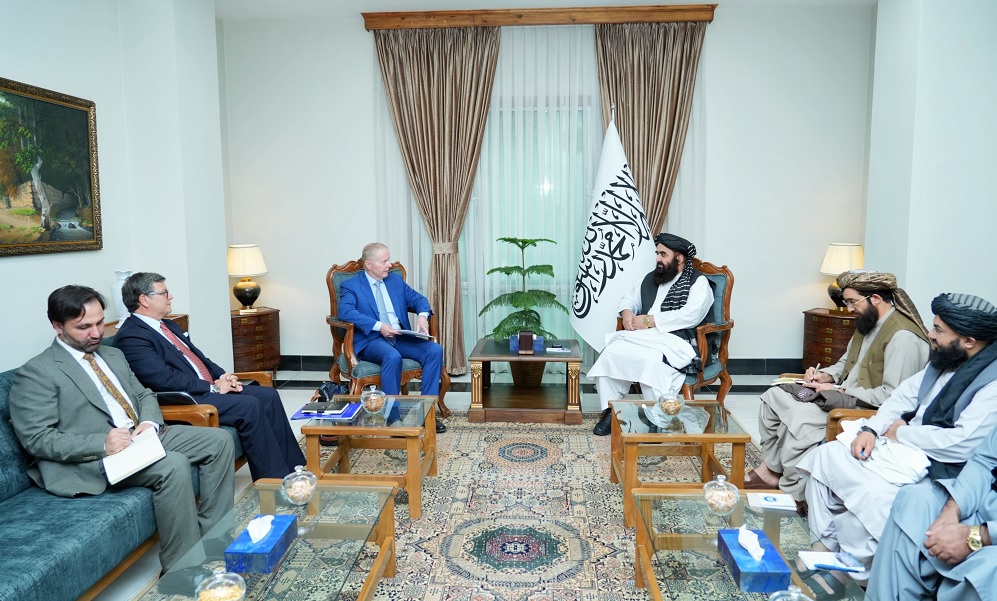
Amir Khan Muttaqi, foreign minister of the Islamic Emirate of Afghanistan (IEA), says the international community has failed to provide Afghan farmers with the necessary support for alternative livelihoods to sustain the country’s achievements in combating narcotics.
Afghanistan’s Ministry of Foreign Affairs said the issue was raised during Muttaqi’s meeting with Thomas Frellesen, the newly appointed European Union special envoy for Afghanistan.
According to a statement from the ministry, the two sides exchanged views on Afghanistan’s security situation, counter-narcotics efforts, and a range of humanitarian and political issues.
Frellesen acknowledged the IEA’s achievements in ensuring security and combating narcotics, saying that supporting security in Afghanistan and fighting drugs were part of the European Union’s official position.
He also assured Muttaqi that the EU would seek to expand cooperation with Afghanistan across various sectors.
Russia has warned that the return of US military infrastructure to Afghanistan would pose a direct threat to all countries in the region, as Moscow continues to strengthen security and economic cooperation with Kabul.
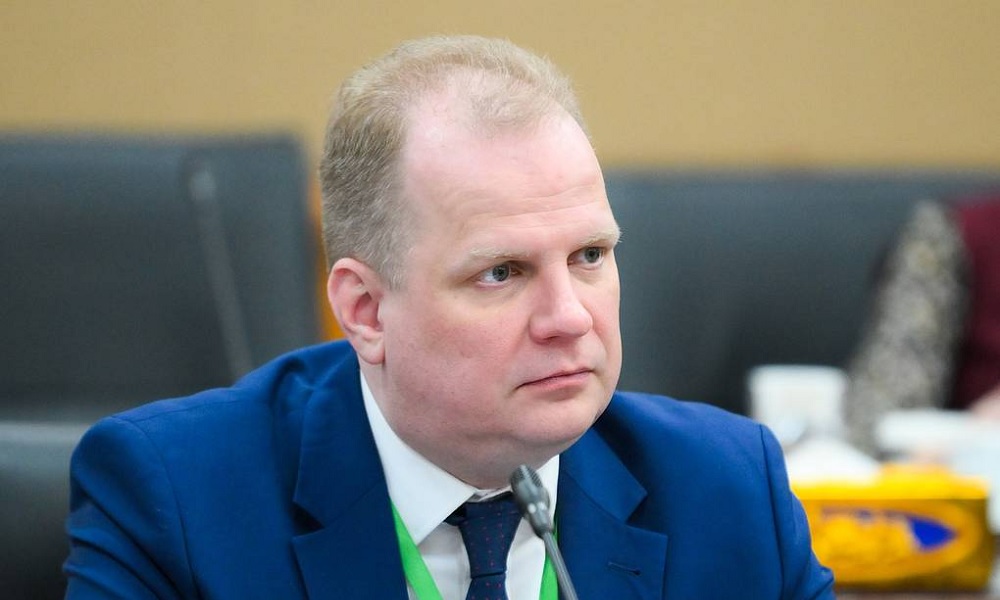
Alexander Venediktov, deputy secretary of Russia’s Security Council, said the United States had made no secret of its plans to restore military infrastructure in Afghanistan.
“The emergence of such a foothold would pose a direct threat to all countries in the region,” Venediktov said, according to a statement from the Russian Security Council’s press service.
He said Russia’s security dialogue with Kabul also aimed to prevent the return of military infrastructure belonging to countries outside the region.
Venediktov described cooperation with Afghanistan as multifaceted and in line with Russia’s national interests, both in terms of security and efforts to establish a peaceful and stable Eurasian region.
He added that Russia was not alone in engaging with Afghanistan’s current leadership, noting that almost all countries in the region maintained direct contacts with Kabul.
Venediktov also said the Shanghai Cooperation Organisation (SCO) was discussing the restoration of cooperation with Afghanistan through a previously established contact group.
According to the Russian official, Moscow-Kabul relations were developing across several channels, including foreign ministries, government institutions and business communities.
He said the two sides had also established a bilateral working group on trade and economic cooperation, while efforts were underway to strengthen the legal framework governing their relations.
Venediktov added that economic cooperation with Kabul was important for advancing regional transport and energy projects.


UNHCR chief calls for greater support for Afghan returnees, urges protection of girls’ rights

Muttaqi tells EU envoy global community has failed to support alternative livelihoods for farmers

Hairatan railway port sees over 280 wagon arrivals daily from Central Asia

NASA’s Perseverance rover breaks record for off-planet driving on Mars

Russia warns against return of US military infrastructure to Afghanistan

Cricket Bonanza: Afghanistan set for packed international schedule

New warnings reignite debate over AI threat to humanity

UN warns of mounting humanitarian and human rights pressures in Afghanistan

Afghanistan faces cancer treatment crisis

Afghanistan says 28 killed, 32 captured in Nuristan operation

Tahawol: Kabul’s criticism of Islamabad’s policy toward Afghanistan

Saar: Pakistan deploying army in KP

Tahawol: EU appointing new envoy for Afghanistan

Saar: Pakistan’s political, security and economic crises

Saar: Ongoing expulsion of Afghan refugees from Iran and Pakistan discussed
-

 Regional4 days ago
Trump says US will not attack Iran before midterm elections in November
-
 Latest News3 days ago
Pakistan issues new directives for Afghan medical students and doctors
-
 Business5 days ago
Russia-Afghanistan trade surges 150% in first seven months of 2026
-
 World4 days ago
Witkoff, Kushner to meet Ukrainians for talks on the war, says US source
-

 Sport5 days ago
Arman FC defeat Istiqlal Kabul 3-2 in thrilling comeback
-
 Latest News3 days ago
Iranian lawmaker praises Afghanistan’s support, accuses Pakistan of ‘hypocrisy’
-
 Business5 days ago
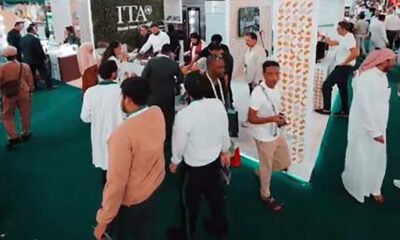
Afghan products attract Saudi buyers at major food expo in Jeddah
-
 Latest News4 days ago
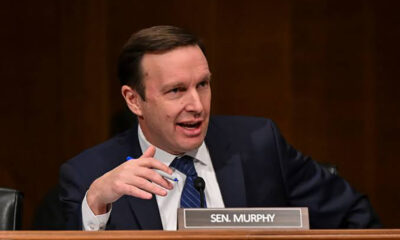
US senator cites Afghanistan visits in Pentagon ‘cover-up’ allegations over Iran war