
China, Afghanistan, Pakistan, Nepal agree to jointly fight COVID-19

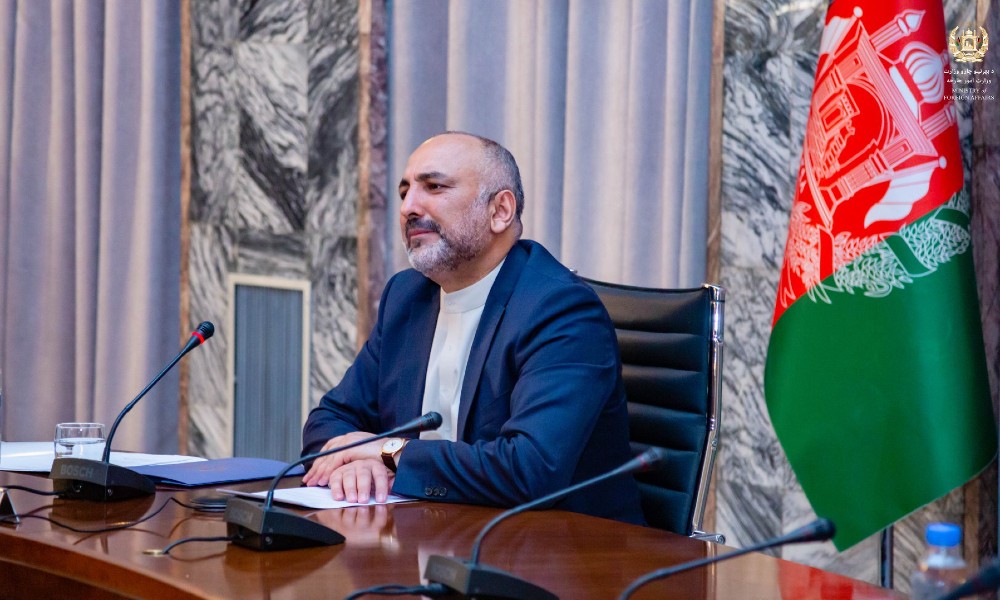
China, Pakistan, Afghanistan and Nepal have agreed to work together to strengthen cooperation and boost economic recovery during their fight against the COVID-19 pandemic.
The agreement was reached during a video conference on Monday night between Afghanistan’s Acting Foreign Minister Haneef Atmar, China’s State Councilor and Foreign Minister Wang Yi, Pakistan’s Foreign Minister Shah Mahmood Quresh and Nepal’s Foreign Minister Pradeep Kumar Gyawali.
وزرای خارجه افغانستان، چین، پاکستان و نیپال در جریان اجلاس چهارجانبه خویش روی همکاری صحی، اقتصادی و تامین آتش بس بشردوستانه در افغانستان تاکید نمودند.@Granhewad pic.twitter.com/oPsXFC4GrG
— MFA Afghanistan 🇦🇫 (@mfa_afghanistan) July 27, 2020
During the conference, the ministers discussed ways to boost cooperation in their countries’ fight against coronavirus and ways to boost economic recovery in light of the pandemic, the Associated Press of Pakistan reported.
Wang Yi said that as a neighbor and partner, China stands ready to continue to work with Afghanistan, Pakistan, and Nepal to overcome difficulties, safeguard people’s health, promote the resumption of work and production and enhance people’s livelihood until the pandemic is over.
The ministers from Afghanistan, Pakistan and Nepal said the three sides are willing to deepen cooperation with China to fight COVID-19, ensure the flow of trade and transport corridors, facilitate people-to-people and trade connection, build a “silk road of health” and community of a shared future for humanity.
According to the Associated Press of Pakistan, the foreign ministers also stressed the importance of promoting the resumption of key cooperation projects and expanding new areas of digital cooperation.
More efforts are needed to promote the joint efforts of the Belt and Road and explore ways to synergize the China-Pakistan Economic Corridor (CPEC) and the Trans-Himalayan Multi-Dimensional Connectivity Network, the foreign ministers said.
Wang Yi said: “We should support the international system with the United Nations at its core and the international order based on international law, and safeguard the common interests of developing countries.”

Latest News
UNHCR chief calls for greater support for Afghan returnees, urges protection of girls’ rights

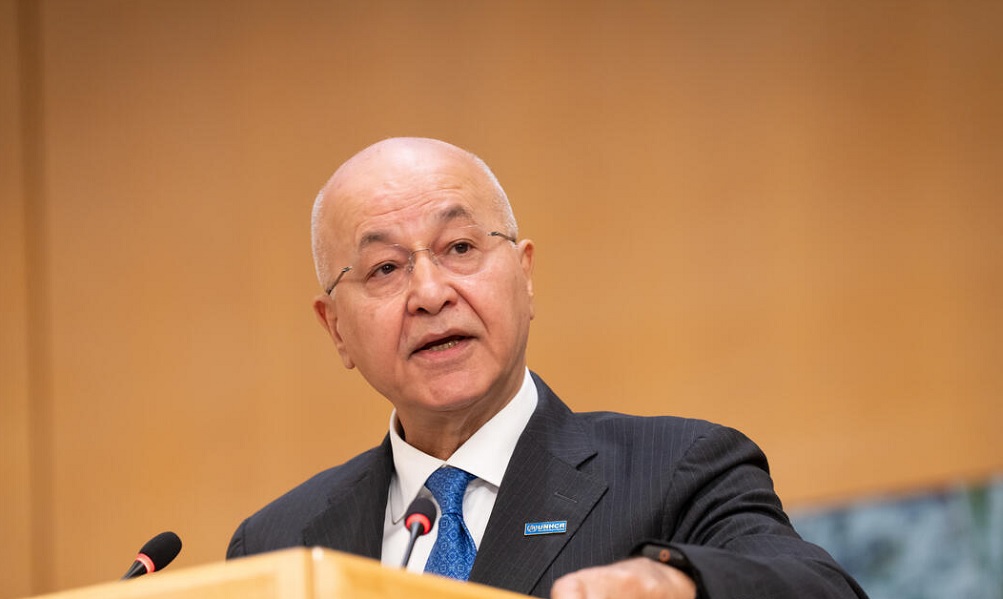
The United Nations High Commissioner for Refugees has called for greater international investment to support the reintegration of Afghan returnees, warning that millions are returning under difficult circumstances while communities face poverty, limited services and restrictions on women and girls.
Speaking at the 77th session of UNHCR’s Executive Committee, the High Commissioner said nearly seven million people had returned to Afghanistan from neighboring countries since late 2023, often under difficult conditions and not always voluntarily.
He said UN agencies and other partners, including the UN Refugee Agency and the United Nations Development Programme, were supporting reintegration efforts, but stressed that the scale of the challenges required significantly greater international assistance.
The High Commissioner also highlighted the restrictions imposed on Afghan women and girls, sharing the words of a young Afghan girl he met in Kabul earlier this year.
The girl had written a poem for another Afghan girl about education, courage and hope, emphasizing that personal ability and worth were greater than any limitation.
“Never forget you’re not alone. Your voice matters and your dreams are valuable,” the girl wrote.
The High Commissioner said the young girl’s words had stayed with him, adding that Afghan girls should not have to be exceptional to enjoy what should be an ordinary future, including access to education, the freedom to make their own choices and the opportunity to become who they want to be.
He said Afghan girls and millions of others like them were not asking the international community to dream on their behalf, but to give them opportunities to fulfil their own aspirations.
He urged world leaders to ensure their commitments were reflected in concrete decisions and actions, saying the ability to make a difference was in their hands.
“History will remember how we choose to use it,” he said.
Latest News
Muttaqi tells EU envoy global community has failed to support alternative livelihoods for farmers
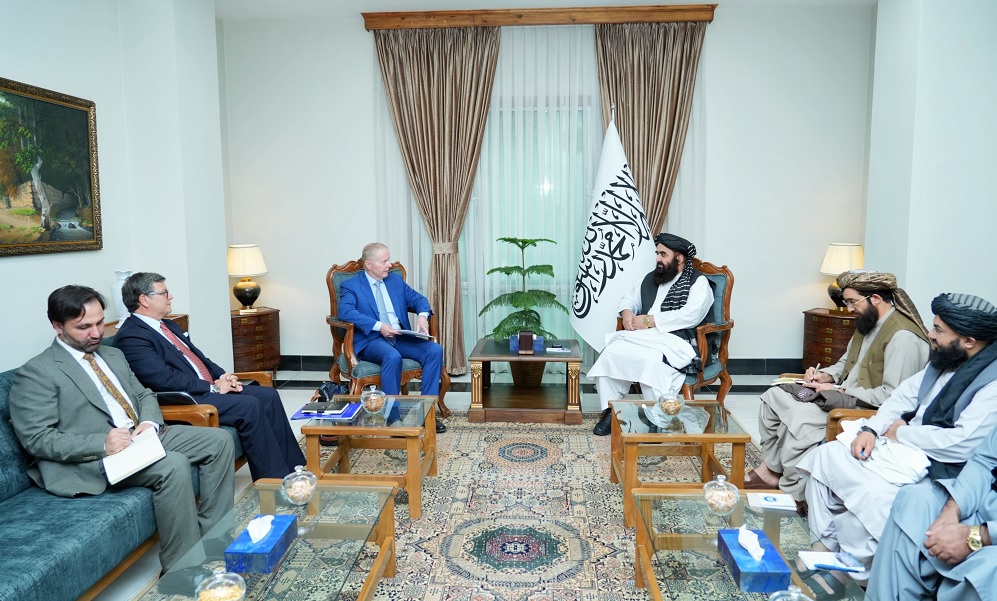
Amir Khan Muttaqi, foreign minister of the Islamic Emirate of Afghanistan (IEA), says the international community has failed to provide Afghan farmers with the necessary support for alternative livelihoods to sustain the country’s achievements in combating narcotics.
Afghanistan’s Ministry of Foreign Affairs said the issue was raised during Muttaqi’s meeting with Thomas Frellesen, the newly appointed European Union special envoy for Afghanistan.
According to a statement from the ministry, the two sides exchanged views on Afghanistan’s security situation, counter-narcotics efforts, and a range of humanitarian and political issues.
Frellesen acknowledged the IEA’s achievements in ensuring security and combating narcotics, saying that supporting security in Afghanistan and fighting drugs were part of the European Union’s official position.
He also assured Muttaqi that the EU would seek to expand cooperation with Afghanistan across various sectors.
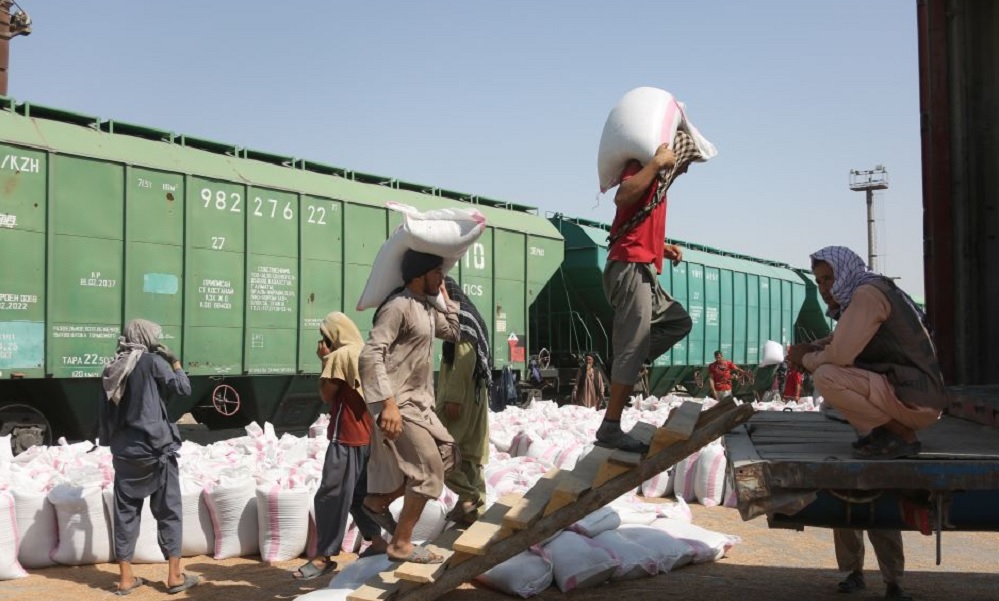
The Hairatan railway port in northern Afghanistan receives between 280 and 300 freight wagons daily from Central Asian countries, highlighting its growing role in connecting Afghanistan to regional and international markets.
The 75-kilometer Hairatan–Mazar-e-Sharif railway links Afghanistan with Uzbekistan and provides a key route for transporting goods from Central Asia, China and other international markets into the landlocked country.
Sayed Qadim Karimi, head of railway transportation at Hairatan port, told China’s Xinhua news agency that trade activity had increased this year, with an average of 280 to 300 wagons arriving at the port each day.
He said the railway transports a wide range of goods to Afghanistan, including clothing, medical equipment, machinery and electrical equipment, adding that trade with China had expanded in recent years.
Afghan traders say the railway connection has helped strengthen commercial ties with China and other regional countries while making it easier to transport imported goods.
“We transport our goods from China by freight train via Kazakhstan and Uzbekistan and receive them at Hairatan port,” businessman Ahmad Agha told Xinhua.
Agha said trade with Chinese businesses offered promising opportunities and expressed hope that further railway development would strengthen commercial ties with Kazakhstan, Russia and European countries.
He added that rising cargo volumes had created employment opportunities for local residents, with hundreds of workers handling containers at the port daily to support their families.
Another Afghan businessman, Ahmad Farid Fardan, who imports women’s clothing and colorful fabrics from China, said the railway connection had strengthened trade relations between the two countries.
Fardan expressed hope that expanding railway networks would help Afghanistan broaden its trade and economic relations with China and other countries in the region.
The railway’s role in China-Afghanistan trade dates back to 2016, when the first cargo train from China reached Hairatan as part of a pilot project. In 2019, Afghanistan sent its first export train to China, carrying several containers of talc powder.
The Hairatan railway remains an important transport link for Afghanistan’s import and export activities, offering access to regional markets and broader trade networks extending to Kazakhstan, Kyrgyzstan, Russia, China and Europe.


UNHCR chief calls for greater support for Afghan returnees, urges protection of girls’ rights

Muttaqi tells EU envoy global community has failed to support alternative livelihoods for farmers

Hairatan railway port sees over 280 wagon arrivals daily from Central Asia

NASA’s Perseverance rover breaks record for off-planet driving on Mars

Russia warns against return of US military infrastructure to Afghanistan

Cricket Bonanza: Afghanistan set for packed international schedule

New warnings reignite debate over AI threat to humanity

UN warns of mounting humanitarian and human rights pressures in Afghanistan

Afghanistan faces cancer treatment crisis

Afghanistan says 28 killed, 32 captured in Nuristan operation

Tahawol: Kabul’s criticism of Islamabad’s policy toward Afghanistan

Saar: Pakistan deploying army in KP

Tahawol: EU appointing new envoy for Afghanistan

Saar: Pakistan’s political, security and economic crises

Saar: Ongoing expulsion of Afghan refugees from Iran and Pakistan discussed
-

 Regional4 days ago
Trump says US will not attack Iran before midterm elections in November
-
 Latest News3 days ago
Pakistan issues new directives for Afghan medical students and doctors
-
 Business5 days ago
Russia-Afghanistan trade surges 150% in first seven months of 2026
-
 World4 days ago
Witkoff, Kushner to meet Ukrainians for talks on the war, says US source
-

 Sport5 days ago
Arman FC defeat Istiqlal Kabul 3-2 in thrilling comeback
-
 Latest News3 days ago
Iranian lawmaker praises Afghanistan’s support, accuses Pakistan of ‘hypocrisy’
-
 Business5 days ago
Afghan products attract Saudi buyers at major food expo in Jeddah
-
 Latest News4 days ago
US senator cites Afghanistan visits in Pentagon ‘cover-up’ allegations over Iran war