
Iran seeks broad expansion of cooperation with Afghanistan
Aref added that strengthening bilateral ties will help remove barriers and create new avenues for cooperation.

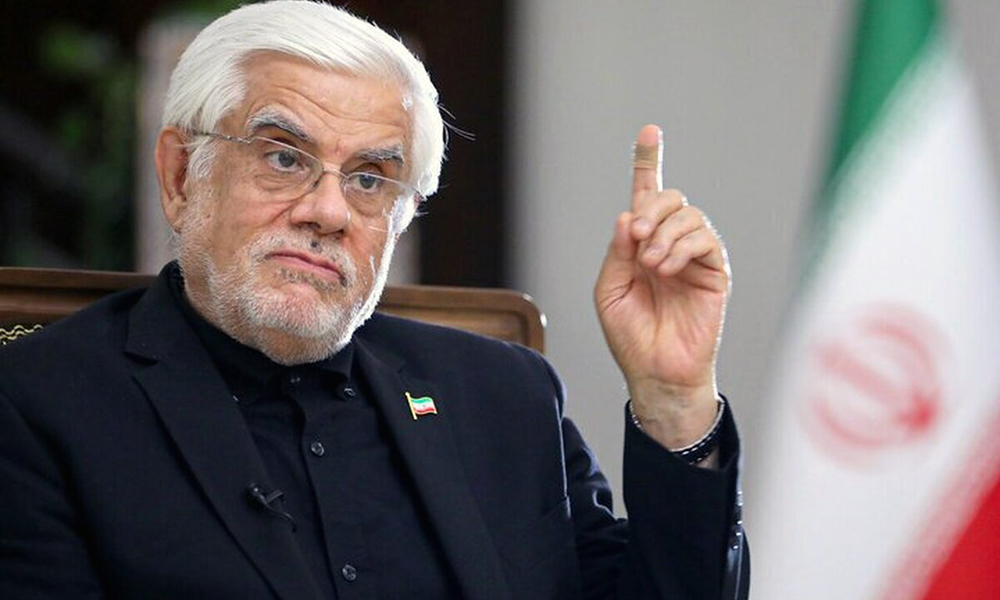
Iran’s First Vice President Mohammad Reza Aref says Tehran plans to significantly broaden its cooperation with Afghanistan, citing the long-standing cultural, economic, and social ties between the two neighbors.
Speaking at a coordination meeting on Afghanistan, Aref emphasized the need for a comprehensive cooperation framework between Iran and the Islamic Emirate of Afghanistan. He instructed all relevant ministries and institutions to submit their sector-specific proposals within a month so the plan can be finalized.
“The Comprehensive Iran–Afghanistan Cooperation Program should be drafted by the Joint Cooperation Commission and the Ministry of Foreign Affairs,” Aref said. “All ministries must send their specialized proposals within the set timeframe so the program can be completed and used as the basis for bilateral engagement.”
He noted that Afghan authorities have shown clear willingness to deepen relations with Iran. Over the past year, he said, increased trade exchanges, official communications, and sustained diplomatic engagement all point to a more constructive approach from Kabul.
Aref added that strengthening bilateral ties will help remove barriers and create new avenues for cooperation.
His remarks come as economic and trade relations between the two countries continue to grow. Annual trade has now reached $3.6 billion, making Iran one of Afghanistan’s biggest trading partners. Afghan economic officials say expanded cooperation with Tehran is mutually beneficial for both sides.
Aref also underscored the importance of cultural, academic, scientific, and technological collaboration, calling these pillars essential to Iran’s broader strategy toward Afghanistan. He stressed that engagement should extend beyond technical fields to include education and cultural exchange.
His comments coincide with the recent visit of Afghanistan’s Minister of Higher Education, Nida Mohammad Nadim, who traveled to Tehran at Iran’s invitation to discuss strengthening academic cooperation and sharing expertise.
As work continues on a comprehensive cooperation roadmap, officials from both countries express optimism that deeper engagement will support economic growth and contribute to greater regional stability.







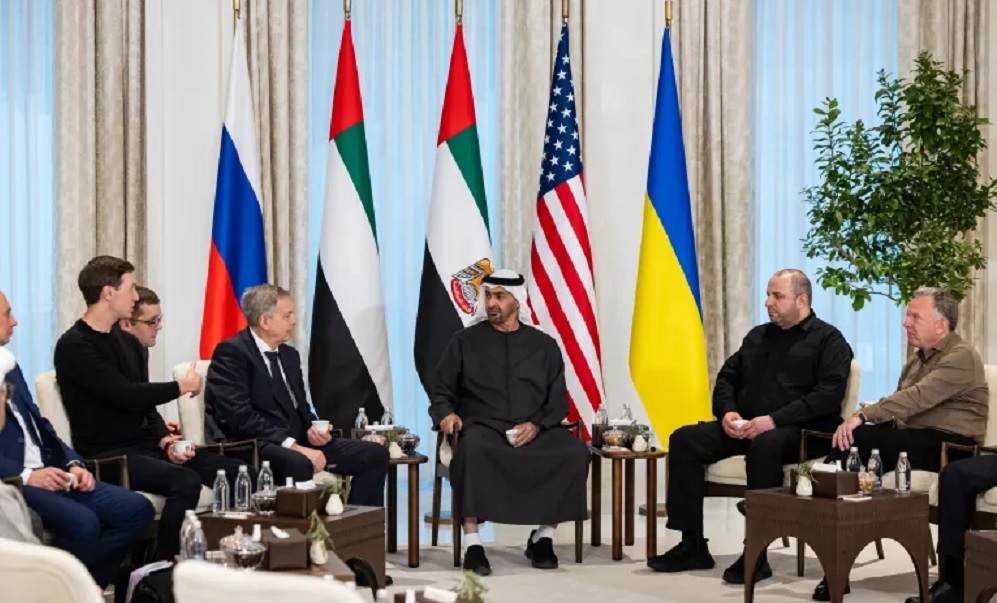
Ukrainian and Russian negotiators met in Abu Dhabi on Friday to tackle the vital issue of territory, with no sign of a compromise, as Russian airstrikes plunged Ukraine into its worst energy crisis of the nearly four-year war.
Kyiv is under mounting U.S. pressure to reach a peace deal in the war triggered by Russia’s full-scale invasion in February 2022, with Moscow demanding Kyiv cede its entire eastern industrial area of Donbas before it stops fighting, Reuters reported.
Ukrainian President Volodymyr Zelenskiy said the territorial dispute was a central issue for the tripartite talks, including Russian, Ukrainian and U.S. officials, which were scheduled to conclude on Saturday.
“The most important thing is that Russia should be ready to end this war, which it started,” Zelenskiy said in a statement on the Telegram app, adding he was in regular contact with the Ukrainian negotiators, but it was too early to draw conclusions from Friday’s talks.
“We’ll see how the conversation goes tomorrow and what the outcome will be.”
Rustem Umerov, the secretary of Ukraine’s National Security and Defence Council and the head of its delegation, said in a statement the talks had discussed parameters for ending the war and the “further logic of the negotiation process.”
The negotiations come a day after Zelenskiy met with U.S. President Donald Trump at the World Economic Forum in Davos, Switzerland.
Zelenskiy said on Friday that a deal on U.S. security guarantees for Ukraine was ready, and that he was only waiting on Trump for a specific date and place to sign it.
Ukraine has sought robust security guarantees from Western allies in the event of a peace deal to prevent Russia, which has shown little interest in ending the war, from invading again.
RUSSIA STEPS UP ATTACKS ON POWER INFRASTRUCTURE
The tripartite talks, brokered by the U.S., are unfolding against a backdrop of intensified Russian strikes on Ukraine’s energy system that have cut power and heating to major cities such as Kyiv, as temperatures dip well below freezing.
The head of Ukraine’s top private power producer, Maxim Timchenko, told Reuters on Friday the situation was nearing a “humanitarian catastrophe” and that Ukraine needs a ceasefire that halts attacks on energy infrastructure.
Kyiv’s energy minister said on Thursday that Ukraine’s power grid had endured its most difficult day since a widespread blackout in November 2022, when Russia began bombing energy infrastructure.
Russia says it wants a diplomatic solution but will keep working to achieve its goals by military means as long as a negotiated solution remains elusive.
Russian President Vladimir Putin’s demand that Ukraine surrender the 20% it still holds of the Donetsk region of the Donbas – about 5,000 sq km (1,900 sq miles) – has proven a major stumbling block to a breakthrough deal.
Zelenskiy refuses to give up land that Russia has not been able to capture in four years of grinding, attritional warfare. Polls show little appetite among Ukrainians for territorial concessions.
Kremlin spokesman Dmitry Peskov said on Friday that Russia’s insistence on Ukraine yielding all of Donbas was “a very important condition.”
A source close to the Kremlin told Reuters that Moscow considers an “Anchorage formula” – which Russia says was agreed between Trump and Putin at a summit in Alaska last August – would hand Russia control of all of Donbas and freeze the front lines elsewhere in Ukraine’s east and south.
Donetsk is one of four Ukrainian regions Moscow said in 2022 it was annexing after referendums rejected by Kyiv and Western nations as bogus. Most countries recognise Donetsk as part of Ukraine.
MOSCOW WANTS USE OF FROZEN ASSETS
Russia has also floated the idea of using the bulk of nearly $5 billion of Russian assets frozen in the United States to fund a recovery of Russian-occupied territory inside Ukraine. Ukraine, backed by European allies, demands that Russia pay it reparations.
Asked about Russia’s idea, Zelenskiy dismissed it as “nonsense.”
Zelenskiy said on Thursday in Davos that the Abu Dhabi talks would be the first trilateral meetings involving Ukrainian and Russian envoys and U.S. mediators since the war began.
Last year, Russian and Ukrainian delegations had their first face-to-face meeting since 2022 when they met in Istanbul. A top Ukrainian military intelligence officer also had talks with U.S. and Russian delegations in Abu Dhabi in November.
Latest News
Failed Afghan asylum seekers need to return home, Sweden’s migration minister says
He also proposed that Afghan nationals facing deportation in different EU countries could be grouped together and returned on chartered flights.
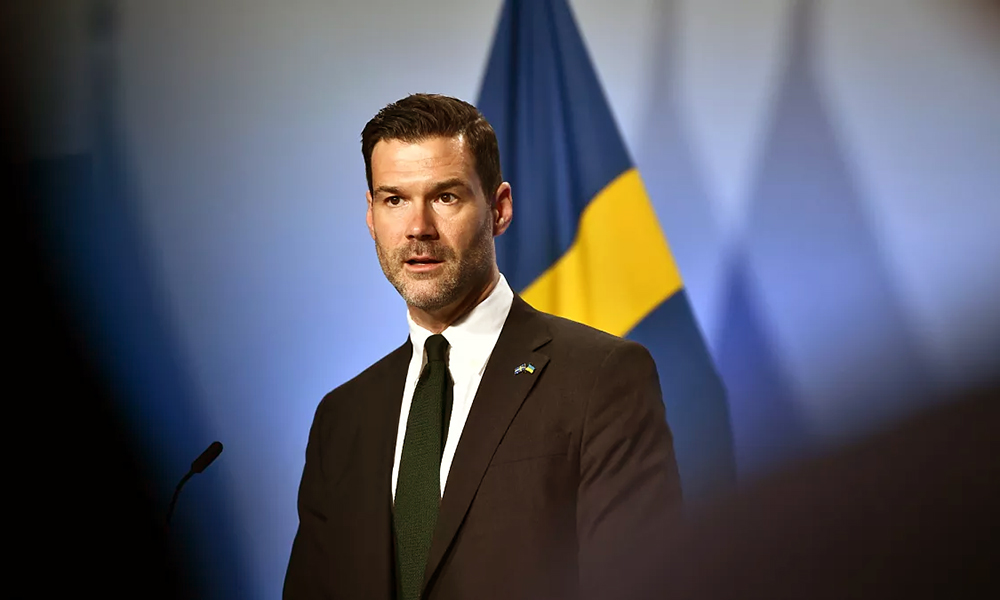
Sweden’s migration minister on Thursday called on the European Union to establish a common procedure for issuing identification and travel documents to Afghan nationals whose asylum applications have been rejected or who have committed crimes in their host countries.
Minister Johan Forssell said it is currently “more or less impossible” to deport Afghan nationals who do not meet asylum criteria because many lack valid ID or travel documents.
Although the EU has no interest in making “any political arrangements” that could lend legitimacy to Afghanistan’s rulers, Forssell said the bloc’s 27 member states could still reach a technical agreement to issue documentation that would speed up deportations.
“It is a major concern for us that we are seeing quite a few cases of people that have committed crimes, Afghan people that committed crimes in Sweden, and it is more or less impossible to expel them today,” Forssell told The Associated Press on the sidelines of an informal meeting of EU justice and home affairs ministers in the Cypriot capital.
“If you come to Europe and you commit crimes, you have chosen yourself not to be part of our society. And we need to do everything we can to make sure that you are expelled,” he said.
Forssell added that similar challenges exist with failed Syrian asylum seekers, but said Afghan nationals remain the priority.
He said Afghan nationals are largely unable to obtain IDs or passports from their home country because most Afghan embassies in Europe are not recognized by the Islamic Emirate authorities. Forssell noted that the EU’s executive arm has recently had contacts in Kabul on the issue, describing it as a “very positive first step.”
According to him, there is “broad consensus” among many EU countries facing similar challenges to take further steps to accelerate the deportation of failed Afghan asylum seekers or those who have committed crimes.
Forssell said more than half of Afghan asylum applications are expected to be rejected and that “they need to go back home,” warning that public support for accepting refugees who do meet asylum criteria could erode otherwise.
He also proposed that Afghan nationals facing deportation in different EU countries could be grouped together and returned on chartered flights.
European Commissioner for Internal Affairs and Migration Magnus Brunner said EU member states are engaging at a technical level with Afghanistan’s “effective authorities” to better facilitate repatriations.
Sweden’s traditionally generous asylum policy has tightened over the past decade, amid what Forssell described as growing public concern over the “problems” associated with mass migration. He said these concerns played a key role in the formation of the current government three years ago, which relies on support from the hard-right Sweden Democrats.
Forssell noted that asylum applications in Sweden are at their lowest level since 1985. “So I think we are doing very well and we are really delivering what the Swedish population wants to see from us,” he said.


Russia, Ukraine sit for tense talks on thorny territorial issue

Tawsia: Reducing Afghanistan’s Reliance on Pakistan Trade

Failed Afghan asylum seekers need to return home, Sweden’s migration minister says

West Indies win third T20I as Afghanistan clinch series 2–1

Trump criticised over claim NATO allies avoided Afghanistan frontlines

Turkey withdraws from Afghanistan-Pakistan mediation amid rising tensions

Sharp drop in exports to Afghanistan drives Pakistan’s trade deficit surge

ICG report says Pakistan most impacted by IEA’s return in Afghanistan

Pakistan approves re-export of stranded Afghan transit trade cargo

Afghanistan–China joint market opens in Kabul
Tawsia: Reducing Afghanistan’s Reliance on Pakistan Trade

Tahawol: Pakistan’s membership in the Gaza peace board

Saar: Trump’s ‘move’ on Greenland discussed

Saar: Trump’s criticism of Afghanistan withdrawal

Tahawol: Pakistan PM’s complaint about Afghanistan
-

 Sport5 days ago
Tune in tomorrow to Ariana Television for AFC U23 Asian Cup semi-finals
-

 Latest News4 days ago
Ariana cargo aircraft arrives in Kabul, boosting trade and exports
-
 Regional4 days ago
Death toll in Karachi’s Gul Plaza fire rises to 27, dozens still missing
-

 Latest News5 days ago
One Chinese national and six Afghans killed in Kabul blast
-

 International Sports4 days ago
FIFA announces hosts and groups for expanded FIFA Series 2026
-

 Sport4 days ago
Afghanistan defeats West Indies by 38 runs, take early lead in T20I series
-

 Sport19 hours ago
China and Japan set for AFC U23 Asian Cup final showdown
-

 Business2 days ago
Afghan traders sign deal to import pharmaceuticals from Bangladesh